(EN)
(EN)
 (ES)
(ES)
 (IT)
(IT)

Reflection by Bishop Enrique Díaz: A Spring Capable of Giving Eternal Life
Third Sunday of Lent


Monsignor Enrique Díaz Díaz shares with Exaudi readers his reflection on the Gospel of this Sunday, March 8, 2026, entitled: “A spring capable of giving eternal life” .
***
Exodus 17:3-7: “We are thirsty: give us water to drink”
Psalm 94: “Lord, may we not be deaf to your voice”
Romans 5:1-2, 5-8: “God has poured his love into our hearts through the Holy Spirit”
John 4:5-42: “A spring of life welling up to eternal life”
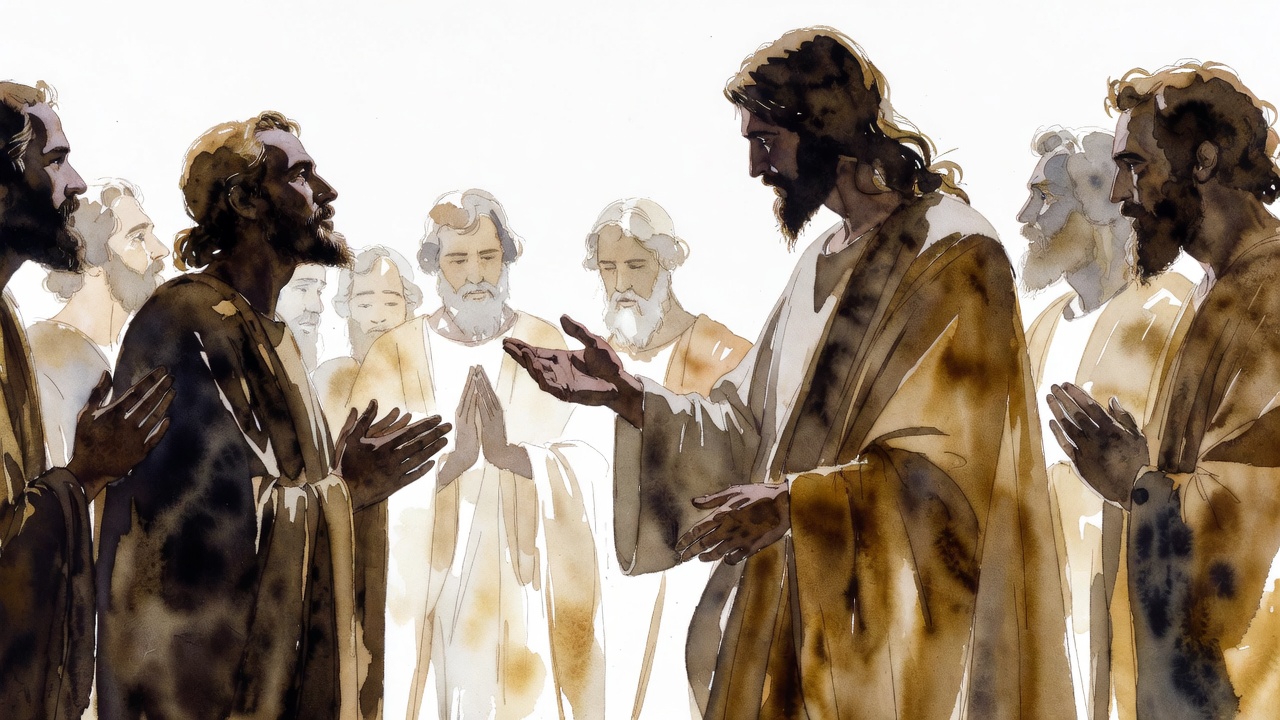
Today’s Gospel speaks to us of a precious stream and the importance of the inner spring. It draws us closer to a Jesus who breaks all the molds and to a woman who allows herself to be seduced by the words of a stranger to find beauty in her own heart. In the signs presented by Saint John, each object becomes a lesson: Jesus’ weariness and thirst as he sits at the well’s edge, the Samaritan woman’s pitcher, cracked and dry like her soul. Thirst, water, husbands, the place of worship… these might seem like words that skirt around and avoid the real issue, which Jesus, with great gentleness, guides us to the central point: the inner spring. Nothing can be understood if, within a person, one finds only emptiness, ambition, and the lust for power. Intentions may be disguised, pretexts for fighting may be sought, and the differences between peoples may be exploited, but it will always be necessary to reach the heart of the person to discover if it has its true source or if it is supplied by externalities and appearances.
What lies behind those impassive faces that, in their haste, preoccupied and oblivious to their surroundings, seem to be heading for a safe haven? A sense of disillusionment and frustration is readily apparent. It’s not merely the realization of an economic crisis we can’t seem to resolve, nor the violence that destabilizes us and leaves us feeling powerless; it goes much deeper… social fear is growing, along with defensiveness and aggression, impotence, and emptiness. It’s as if we’ve hit rock bottom and want to take refuge behind a mask or within our own four walls. But even there, nostalgia, nausea, and boredom reach us. Suicides, drugs, alcohol, unchecked ambition, the refuge in cell phones, pornography, and excesses are nothing more than expressions of this emptiness that we try to fill with external things, yet our hearts remain cracked and thirsty, searching for truth and love. For many, this would be the condemnation of modern man and the beginning of his extermination, but for Jesus, it is a moment of opportunity, a favorable time brimming with possibilities. Because when a person recognizes their need, when they see that external securities cannot fill their heart, they can be willing to seek higher realities. Jesus perceives this dryness in the Samaritan woman’s heart and offers her “the water that gives life.” Jesus also perceives the cracks in our anxious hearts and offers us ” living water” so that we will never thirst again.
“Why, you being a Jew, ask me, a Samaritan woman, for a drink?” This question masks a fear of opening oneself to the Other, hiding behind religious, political, and social arguments to express rejection of those who are different. Jesus does not fall into this trap and continues the dialogue, overcoming the barriers imposed by human selfishness. He offers a new way of living, a new relationship, and acceptance regardless of differences. Samaritans and Jews had become embroiled in arguments and disputes, using the place of worship as a pretext, as if God were someone external and more concerned with his own worship. Jesus breaks this cycle of violence and reveals that beyond external sacrifices, God dwells and resides in the heart of every person. Each one becomes a sanctuary of God, and that Samaritan woman, a sinner, despised, is also a temple of God. She will not be nourished by external sources, but will have within herself a well that gives her the water of life. The armor that hid her wounds and disguised her insecurities—her brokenness, her hurt, and her depression—has vanished, and now she doesn’t have to overcome it with aggression, false love, or hypocritical appearances. She can open her heart and discover that deep down she finds her own wellspring of living water: the unconditional love of God who accepts her, loves her, and provides her with a fountain of life.
Jesus offers God’s gift; he doesn’t judge the person. He looks into the Samaritan woman’s heart and there reveals all his love. It’s not her outward beauty, nor even the goodness of that empty woman, that makes him love her. The tenderness of the Father who loves everyone, who makes his sun rise on the good and the bad, compels him to show his mercy, respect, and affection to the one who had received only crumbs. And in loving, Jesus liberates; in offering God’s gift, he saves; and in accepting her lowliness, he recognizes the dignity of the person. That is why that Samaritan woman, lifting her head and walking with great confidence, addresses her brothers and sisters to offer from her own wellspring a hope of life: “Come and see… could this be the Messiah?” She overcomes her own fears, she is rebuilt, and she can now approach her brothers and sisters with complete confidence. Whoever has a wellspring within always overflows with fruitfulness and radiates love. She no longer wants people selfishly for herself; she is capable of offering Good News and directing her feelings toward a new love. He has understood that happiness is not found in the selfish accumulation of possessions for himself, but in building the happiness of others, and he contributes to their discovering a new life.
This third Sunday of Lent, let us allow Jesus to discover our inner selves, to see our broken hearts, to heal our wounds and insecurities. Let us recognize ourselves as sanctuaries of God and discover our own wellspring.
Lord Jesus, look upon our infinite thirst for happiness, for bread and love, for total liberation, for fraternity and justice, for solidarity and human rights, and grant us to discover you in the depths of our desires, so that we may be filled with you. Amen

Enrique Díaz
Nació en Huandacareo, Michoacán, México, en 1952. Realizó sus estudios de Filosofía y Teología en el Seminario de Morelia. Ordenado diácono el 22 de mayo de 1977, y presbítero el 23 de octubre del mismo año. Obtuvo la Licenciatura en Sagrada Escritura en el Pontificio Instituto Bíblico en Roma. Ha desarrollado múltiples encargos pastorales como el de capellán de la rectoría de las Tres Aves Marías; responsable de la Pastoral Bíblica Diocesana y director de la Escuela Bíblica en Morelia; maestro de Biblia en el Seminario Conciliar de Morelia, párroco de la Parroquia de Nuestra Señora de Guadalupe, Col. Guadalupe, Morelia; o vicario episcopal para la Zona de Nuestra Señora de la Luz, Pátzcuaro. Ordenado obispo auxiliar de san Cristóbal de las Casas en 2003. En la Conferencia Episcopal formó parte de las Comisiones de Biblia, Diaconado y Ministerios Laicales. Fue responsable de las Dimensiones de Ministerios Laicales, de Educación y Cultura. Ha participado en encuentros latinoamericanos y mundiales sobre el Diaconado Permanente. Actualmente es el responsable de la Dimensión de Pastoral de la Cultura. Participó como Miembro del Sínodo de Obispos sobre la Palabra de Dios en la Vida y Misión de la Iglesia en Roma, en 2008. Recibió el nombramiento de obispo coadjutor de San Cristóbal de las Casas en 2014. Nombrado II obispo de Irapuato el día 11 de marzo, tomó posesión el 19 de Mayo. Colabora en varias revistas y publicaciones sobre todo con la reflexión diaria y dominical tanto en audio como escrita.
Related
The Sorrow of the Return from Egypt and the Joy of Life in Nazareth
Miguel Morales Gabriel
08 March, 2026
1 min

A Fountain of Water Spouting to Eternal Life: Commentary by Fr. Jorge Miró
Jorge Miró
07 March, 2026
3 min

“The Madwomen of the Obelisk” bursts onto the scene to honor female courage during Women’s History Month
Exaudi Staff
05 March, 2026
2 min
When Faith Is the Message
Exaudi Redazione
04 March, 2026
3 min