(EN)
(EN)
 (ES)
(ES)
 (IT)
(IT)

On the Shoulders of Giants
Nostalgia, Gratitude, and True Freedom: Lessons from My Grandmother
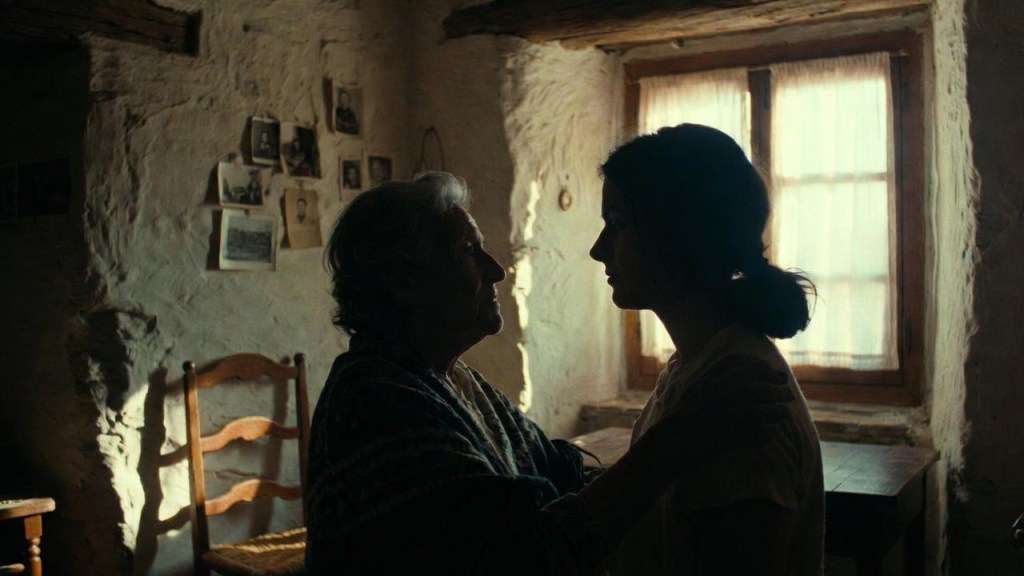

A few days ago I returned from Ávila, from my grandmother’s house. It’s not the first time I’ve written about her and her house ( https://exaudi.org/es/el-desvan-de-mi-abuela/). Going there makes me reposition myself, with great naturalness and tenderness, in my forgotten role as a granddaughter, with all that this entails.
It makes me feel more like a child, and as such, more observant. I become a little explorer. This is something inherent to childhood, but perhaps something we can no longer take for granted. Thus, the curiosity typical of childhood, or that quiet observation of the child who wants to conquer everything, seems, all too often, to have been hidden under a heavy layer of stones.
It’s a fact that the attention spans of adults, young people, and children are diminishing, making it increasingly heroic to even speak of experiencing reality as it deserves. Because if we don’t pay attention, we can’t see. If we don’t look, we can’t be amazed. If nothing amazes us, nothing makes us question, and if we don’t ask questions, we stop searching.
This diminished attention is becoming increasingly evident and much is being written about it, talking about how we are scattered and absorbed by the numerous shocks, distractions, and noise of our time.
Human beings, called to explore, understand, and seek the meaning of things, giving significance to reality and the world they inhabit, have chosen to become mere consumers. We have stopped setting out to find answers. People, called to discover, to think, to reflect, and to understand the world, increasingly live in the comfort of their own homes, as mere spectators of a reality that seems to have little to do with us. Or if it does, it’s only to comment on it like someone watching a football match, accepting it as “the way it is,” often in the name of a misguided tolerance.
We like being tolerant. In fact, right now, we consider it the worst insult to be labeled intolerant.
An absolutized tolerance that we have transformed into impartiality, and from there into indifference. And so we live indifferent. We live impartially. We live constantly in the gray areas and in the relativism of fluidity: the liquid and detached society.
And thinking about this, the question arose whether we have truly chosen to live this way consciously, or if we are simply letting ourselves be carried away by this lack of attention to what reality and the other people we live with present to us. Because if it’s the latter, a result of circumstances or of letting ourselves be swept along, it will have little to do with the freedom we so often talk about as a society.
And going down a little further, could it not be that, believing ourselves to be much freer than past generations, we are nevertheless much less than my grandmother and her contemporaries?
Because what does it mean to be free, and when am I free? Or rather, when do I cease to be free?
This trip was different from all the previous ones. My grandmother’s house, that house of my “granddaughter self,” had been sold, and we had to dismantle it so a new family could live in it.
There were so many questions, and for some I couldn’t find an answer: How do you dismantle a home filled with so many memories? How do you get rid of things you don’t need or can’t take with you, but that remind you so much of a loved one and such a happy time in your life? What transforms a simple, rickety table, worthless in monetary terms, into the most wonderful and valuable table in the world?
My heart was a jumble of emotions and feelings. Nostalgia mingled with gratitude. Sadness with joy…
I could see how my grandmother had carefully and lovingly preserved so many family treasures over the years. How she had meticulously guarded those memories so important to her, memories that, in a way, were also a part of me, of my history.
Today, when everything is disposable, when with a click you can buy what you need and have it instantly, I felt the slowness and the meticulousness with which she and her generation lived. I savored the taste of things made slowly, with care, with patience. I perceived the fragrance of the small things that no one sees, because they weren’t made to be seen.
And I realized the enormous freedom with which she lived, precisely during a time when there was a regime called a dictatorship. Her freedom had little to do with coming and going. It was the personal freedom to connect. The freedom to commit herself. A freedom not related to movement and doing “whatever she pleased,” as we would say today, but one that she lived by saying “yes” every single day.
The freedom to live in the present and to choose that life project that was her family. The freedom to have a “why” that gave meaning to her life. The freedom to know herself indebted to a tradition and to a life received as a gift.
It is the freedom that comes from not believing oneself invincible. From not believing oneself to know everything and, therefore, experiencing one’s need for others. It is the freedom of love and selflessness.
If there was one thing that characterized my grandmother, it was that she wasn’t impartial or neutral. She didn’t live indifferently.
Chesterton said, “Impartiality is a pompous name for indifference, which is a fancy name for ignorance.”
This trip has been filled with equal parts tears and smiles. Much silence, and also many stories I didn’t know or had forgotten. I’ve shared so much with my family. And I’ve looked at my mother a lot, so very much. How much I love her. How much I need her. How she takes care of us all, and how far from indifferent her presence in life is.
She always tells me I’m going too fast. She asks me to slow down because she can’t keep up. Me, run? But I spend all day hitting the brakes and talking about living more mindfully. I think I know everything and, what’s more, that I actually put it into practice. Here I am talking and writing about living more mindfully…
It turns out I don’t know everything, and I’m also a child of my time.
And this fills me with joy. What a delight. What a wonderful gift to know that I am part of the world. Of an era. Of a moment. That I am a debtor, not a creditor. That I can choose to be in robot mode or in person mode. That I am free to decide with what attitude to live and respond to what challenges me each day. That I can look attentively, searching for the meaning of things, or simply observe. That I am who I am thanks to others and a tradition, and that I can say with immense pride that if I am here, it is because I have come “on the shoulders of giants,” among them, my beloved grandmother.

Marta Luquero
@sencillamentemarta Nacida en Madrid, soy madre de dos hijos. Licenciada en Derecho por la Universidad Complutense de Madrid, actualmente estoy cursando un máster en Humanidades. Apasionada de las personas y de una buena conversación, hace años mi vida dio un giro de 180 grados cuando comprendí e hice experiencia de la necesidad vital de acompañar y ser acompañada. Trabajo en el mundo académico, en una universidad católica acompañando a jóvenes en su camino universitario donde cada día hago mía la necesidad del arte de recomenzar, y donde he reconectado con lo que significa ser universitario y el valor que tienen las grandes preguntas. Cada día pongo intención en mirar la realidad con atención para no solo ver y soy firme defensora de las pequeñas cosas hechas con amor.
Related
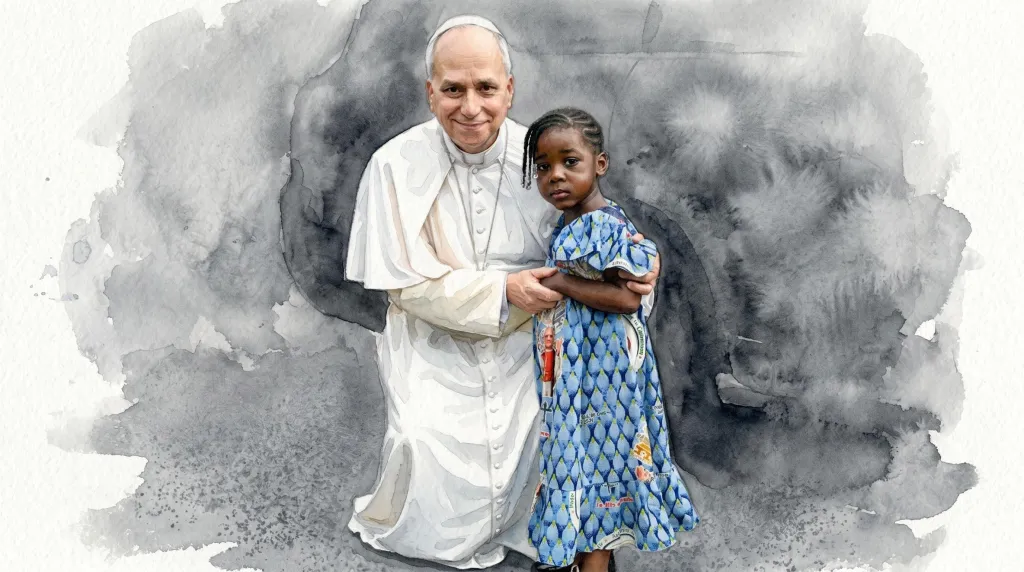
Pope Leo XIV reaches the heart of the conflict in Bamenda: a cry for peace amidst blood and suffering
Valentina Alazraki
17 April, 2026
4 min
Can kindness transform the world?
Tomasa Calvo
17 April, 2026
6 min
The Secret No One Tells About Successful Entrepreneurship: Why a Humanistic Education Changes Everything
Marketing y Servicios
17 April, 2026
4 min
Pope Leo XIV lands in Cameroon: a flight with a taste of hope and a speech that leaves no one indifferent
Valentina Alazraki
16 April, 2026
3 min
Newsletter
Exaudi reaches millions of people every month with training, truth, and support.
Join our communication channels and share them.