 (EN)
(EN)
 (ES)
(ES)
 (IT)
(IT)

Angolan Vocation: From the Countryside to the Seminary
Gonçalves Cacoma Cahinga is a young man from Angola who felt his calling as a child, at the age of eight. "My heart burned, and I dreamed of being a catechist," he says
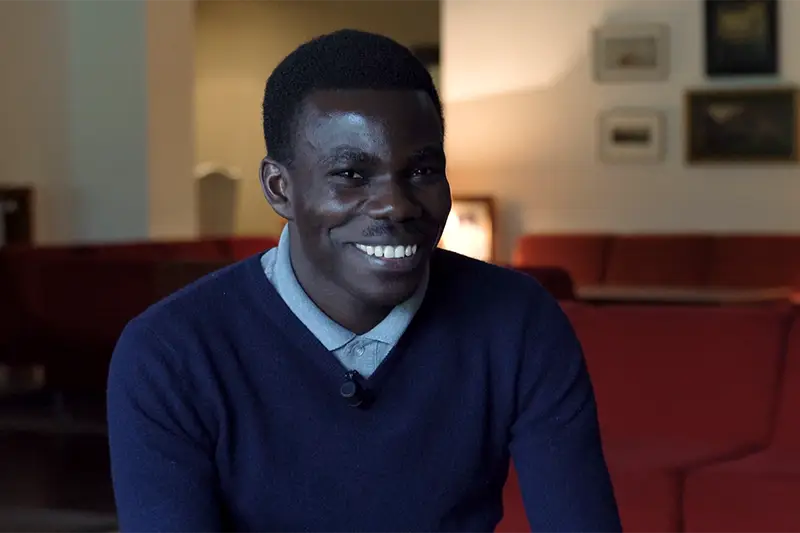

Gonçalves is a young man from Angola who discovered his vocation at a very young age, at eight. “My heart was burning, and I dreamed of being a catechist,” he recalls with emotion. Today, along with a classmate, he is one of the first Angolan seminarians to receive vocations studying at the Bidasoa International Seminary in Pamplona.
Angola is a country rich in natural resources such as diamonds and oil. However, it continues to face significant challenges. The lack of a sense of belonging among its citizens and the lack of accountability of some leaders toward the common good contribute to the persistence of poverty.
In the service of his country
Gonçalves is fully aware of the challenges his country faces. Although his priestly vocation focuses on evangelization and the administration of the sacraments, he knows that, through his ministry, he will be able to contribute to the well-being of many of his fellow citizens.
Despite the poverty, the scarcity of schools, the lack of road infrastructure, and the deficiencies in the health system, anyone who visits my country will discover, above all, the joy of its people. Hospitality, humility, the desire to learn, and the unity among diverse cultures are living signs of the Angolan spirit and privileged paths for evangelization.
“I would also highlight the deep faith of the people and their vibrant liturgy, which allows for an authentic encounter with the divine, without forgetting the charms of our nature and the richness of our cuisine,” this young man enthuses.
Angola’s first vocation in Bidasoa
He belongs to the diocese of Lwena-Moxico, the largest in Angola, with an area of 223,000 km². Along with a colleague, he is the first Angolan to study at the Bidasoa International Seminary. This year he will begin his third year of theology. “I have always defined my vocation as a true divine Providence,” and my bishop, Dom Martín Lasarte, was the one who wanted me to come to Spain to study.
Gonçalves is able to train in Bidasoa thanks to the support of the CARF Foundation, which covers the costs of his priestly formation. This commitment to formation is one of the Foundation’s fundamental pillars: to support vocations in countries with fewer resources, so that none are lost due to a lack of financial means.
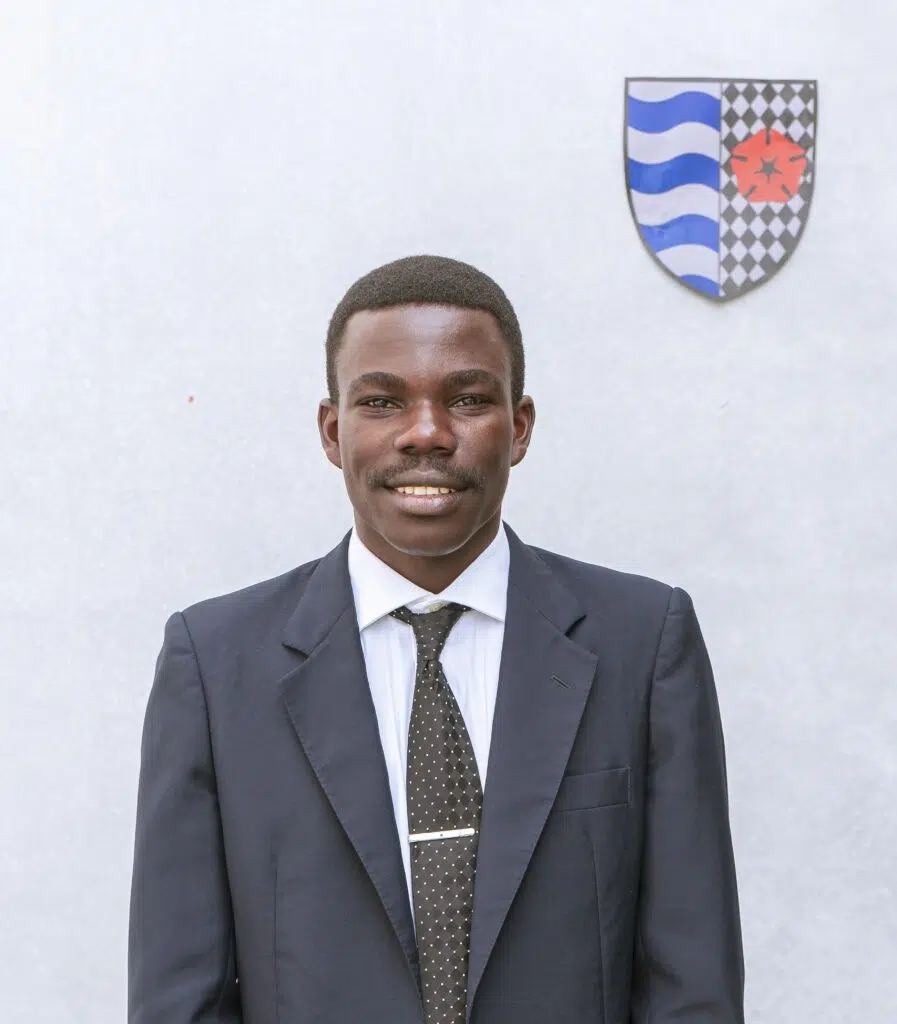
A family atmosphere full of values
“I come from a humble rural family of eight: four men and four women. I’m the seventh child and the only one still studying, as my brothers and sisters have already started their own families. My parents, although elderly, are still alive. My entire family is Christian , but only my mother, one brother, and three sisters are Catholic; the others belong to other Christian denominations. Despite our economic limitations, we grew up in an environment steeped in human and religious values that have profoundly shaped our lives,” Gonçalves recounts.
His vocation to the priesthood was born when he was eight years old. “I used to go to church every Sunday with my mother, and I was fascinated by watching the catechist explain the readings. I felt a burning in my heart and dreamed of being a catechist one day.”
That desire was strengthened in 2012, when religious priests from the Congregation of the Sacramentines of Our Lady arrived in his town from Brazil. They founded the parish of Saint Anthony of Lisbon, and with their life’s witness, their dedication to the Word of God, their service in the most remote villages, and their care for the elderly and street children, they completely transformed his vision: “From wanting to be a catechist, I went on to feel a call to the priesthood.”
Economic difficulties and tribulations
But his vocation has not been without its difficulties and tribulations, which have profoundly marked his path, to the point of being on the verge of shipwreck.
In 2014, he moved to another town to continue his studies, and during that time, he distanced himself from the Church. In 2016, he completed his second semester, returned to his hometown, and was unable to continue his studies due to a lack of financial resources.
“During that year, I had other plans: to start a family and look for work. However, the Lord had other paths for me. The priests spoke with me and my parents, and invited me to participate in vocational training with a view to entering the seminary. So, in 2018, I entered the St. John Mary Vianney Preparatory Seminary.”
Three years later, in 2020, the priests who had financed his studies returned to their country, and faced with the impossibility of continuing due to lack of funds, he decided to leave the seminary. However, thanks to the intervention of his rector and a generous woman who offered to finance his training, he was able to enter the San José Major Philosophy Seminary, where he studied for three years.

A great opportunity to mature in your vocation
Gonçalves is currently attending the Bidasoa International Seminary in Pamplona. “It was a real surprise for me, and also for my family. It’s an opportunity to grow in my vocation, in my mission, and to further mature in my formation,” he says with gratitude.
Aware of the pastoral need in his country, he adds: “In my diocese, although there are many Catholics, there are few priests and few parishes. That’s why I am deeply grateful to all the benefactors of the CARF Foundation for the opportunity they have given me. For me, being in Bidasoa is a great enrichment, because it allows me to discover the greatness of the universal Church.”
He concludes his testimony with a sincere thank you to the CARF Foundation, whose support has been key to helping him pursue his vocation.
Fundación CARF
Trabajamos para llevar la sonrisa de Dios a todos los rincones del mundo a través de los sacerdotes y ayudando a su formación. Gracias a nuestros benefactores, ayudamos a la formación de los sacerdotes, difundimos su buen nombre y rezamos por su fidelidad y las vocaciones. Trabajamos para servir a la Iglesia y que ninguna vocación se pierda y luego ellos puedan transmitir en su labor pastoral toda la luz, ciencia y doctrina recibida. Académico Las licenciaturas, programas de especialización o doctorados, otorgan a cada candidato una formación específica en Teología, Filosofía, Derecho Canónico o Comunicación Social Institucional. Espiritual Los seminaristas y sacerdotes complementan su formación académica y humana con la espiritual, ya que deben estar preparados para seguir su vocación y prestar su cuerpo y su espíritu al Señor. Humano A través del ambiente de familia y de preparación, se consigue el desarrollo de actitudes, capacidades y valores que impactan en el crecimiento personal y social de los sacerdotes.
Related

Haitian Priest: “Sometimes a year goes by without celebrating the Eucharist”
Fundación CARF
25 March, 2026
5 min
A Rebel with a Cane: The Cross That Became a Miracle
Se Buscan Rebeldes
24 March, 2026
3 min
“The only mess I want to get myself into is God”
Se Buscan Rebeldes
17 March, 2026
3 min
“I lost followers and money, but I’ve never been happier”
Se Buscan Rebeldes
12 March, 2026
3 min