 (EN)
(EN)
 (ES)
(ES)
 (IT)
(IT)

Papal Trips , Papal Trips , Papal Trips , Papal Trips , Papal Trips , Papal Trips , Papal Trips , Papal Trips , Papal Trips , Papal Trips , Papal Trips , Papal Trips , Papal Trips
29 November, 2025
6 min
Pope Leo XIV in Istanbul: A Gesture of Peace at the Blue Mosque
The Pontiff makes a silent visit that strengthens interreligious dialogue in Turkey
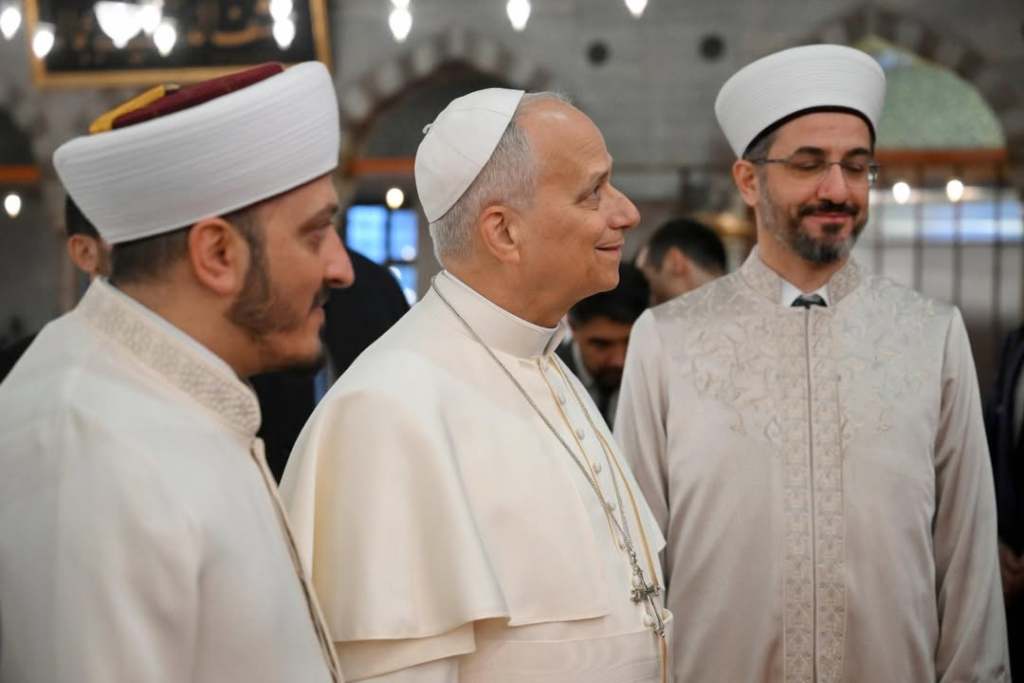

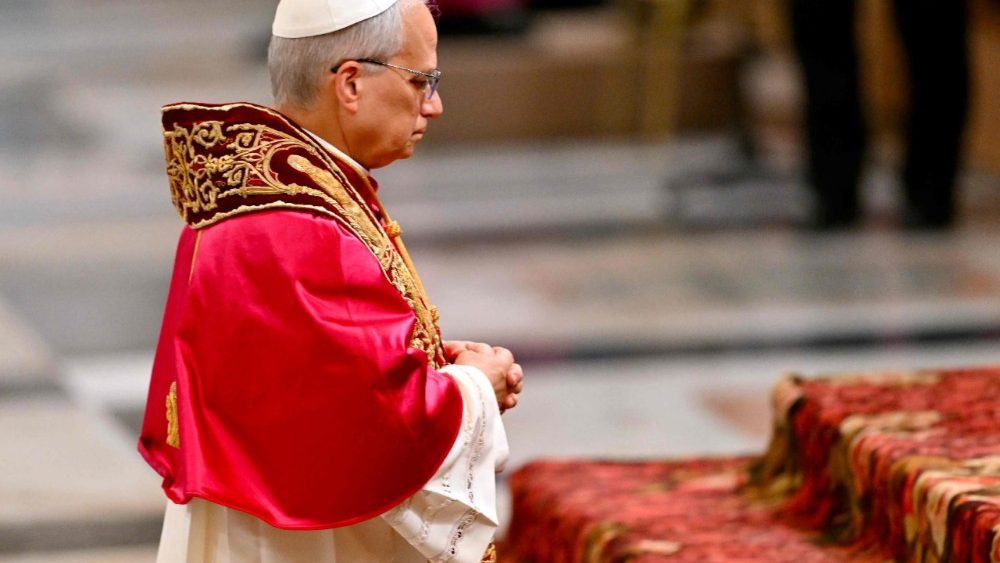
In a highly symbolic gesture, Pope Leo XIV began the third day of his apostolic journey to Turkey on Saturday with a visit to Istanbul’s iconic Blue Mosque, a place of worship that evokes centuries of Ottoman history and has witnessed pioneering encounters between Christianity and Islam. Barefoot and in profound silence, the Pontiff entered the vast space adorned with more than 21,000 turquoise tiles, following in the footsteps of his predecessors Benedict XVI and Francis, in a clear message of mutual respect and fraternity between religions. This action, part of a broader itinerary of private meetings with Christian and Muslim leaders, underscores the Holy See’s commitment to ecumenical and interreligious dialogue in a world marked by geopolitical tensions.
The Sultan Ahmed Mosque, universally known as the Blue Mosque for the celestial hue of its İznik tiles covering the walls and dome, is much more than an architectural monument. Built between 1609 and 1617 by order of Sultan Ahmed I on the ruins of the former Grand Palace of Constantinople, it stands as the principal place of worship in the Ottoman Empire. Its central dome, 23.5 meters in diameter and supported by “elephant’s feet,” is illuminated by 260 windows that filter the light in shades of blue and green, creating an ethereal atmosphere. Unique in its design, it boasts six minarets—a rarity surpassed only by the seven of the Kaaba in Mecca—the result, according to popular tradition, of a linguistic misunderstanding: the sultan requested “golden” minarets (altın in Turkish), but the architect Sedefkâr Mehmed Ağa understood “six” (altı). Eight volumes preserved in the Topkapi Library document its construction, a testament to Ottoman grandeur that attracts millions of visitors annually and has been a UNESCO World Heritage Site since 1985.
Pope Leo XIV, 78, on his first international trip as successor of Peter, arrived at the mosque around 9:10 a.m. local time, greeted by a high-level delegation that included Turkey’s Minister of Culture and Tourism, Mehmet Nuri Ersoy; the Provincial Mufti of Istanbul, Emrullah Tuncel; Imam Kurra Hafız Fatih Kaya; and Muezzin Aşkın Musa Tunca. Accompanied by Cardinals Kurt Koch and George Koovakad, the Pontiff removed his shoes as he crossed the inner courtyard, a gesture of humility preceding his entry into the prayer hall. For about 15 to 20 minutes, he remained in contemplation, his hands at his sides, his gaze fixed on the details: the marble mihrab, the niche indicating the direction of Mecca and inscribed with Surah 19 of the Quran—which mentions the Virgin Mary—the muezzin’s pulpit, and the imposing dome. Only the occasional croak of a cornacchia and the presence of two cats on the red carpet broke the silence, which was briefly interrupted by explanations in English from the muezzin, Tunca, about the architecture of the place.
“The visit was conducted in silence, in a spirit of recollection and listening, with profound respect for the place and the faith of those who gather there in prayer,” reported the Holy See Press Office through its director, Matteo Bruni. Muezzin Tunca, for his part, shared his impression: “He said he wanted to see more, that he wanted to feel the atmosphere of the mosque, and I found him very pleased. This is the house of Allah.” There was no explicit prayer or controversial gestures, unlike previous visits, which avoided potential debates and emphasized a focus on shared contemplation.
This is not the first time a Pope has set foot in this sacred place. In 2006, Benedict XVI made an impromptu visit on November 30, just days after the controversy surrounding his Regensburg address, which reignited tensions with the Muslim world. Alongside the Grand Mufti Mustafa Cagrici, the German Pope prayed silently before the mihrab, a moment he himself described in his general audience of December 6: “Within the framework of interreligious dialogue, Divine Providence has granted me the opportunity, almost at the end of my journey, to make a gesture that was initially unplanned, and which has proven to be very significant: a visit to the famous Blue Mosque in Istanbul. After spending a few minutes in prayer in this place of worship, I addressed the one Lord of heaven and earth, merciful Father of all humanity. May all believers recognize one another as his creatures and bear witness to true fraternity!” Eight years later, on November 29, 2014 – exactly the same date as today – Francis repeated the gesture, entering barefoot and praying silently beside the mufti, reinforcing the bridge between Rome and Islam.
Pope Leo XIV’s visit was part of a busy day of interfaith engagements. After the mosque, the Pope went to the Syrian Orthodox Church of Mor Ephrem in Yeşilköy—the first new church built in Turkey since the founding of the Republic, inaugurated in 2023 despite delays due to the pandemic and the earthquake of that year. There, in a private meeting with heads of churches and Christian communities, he was received by the Syriac Orthodox Patriarch Ignatius Ephrem II and the Metropolitan for the dioceses of Istanbul, Ankara, and Izmir. The meeting included a group photo, a hymn to the Holy Spirit, speeches by representatives, and a papal address behind closed doors, culminating in the recitation of the Lord’s Prayer led by the Patriarchal Vicar. Later, he had lunch at the Apostolic Delegation and concluded the morning at the Patriarchal Church of St. George, seat of the Ecumenical Patriarchate, where he joined Patriarch Bartholomew I in a doxology. The day will continue with an ecumenical round table discussion, a Mass at the Volkswagen Arena for approximately 4,000 people, and the signing of a Joint Declaration at the Phanar.
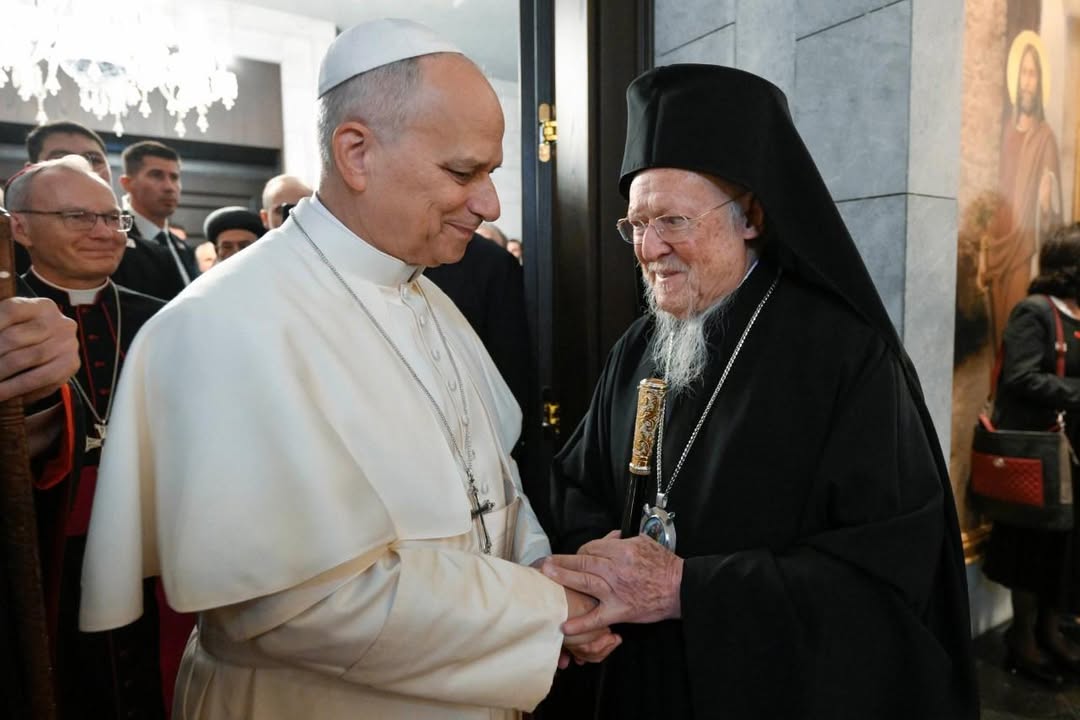
This trip, which also included stops in Lebanon and a prior meeting with the Diyanet—Turkey’s religious authority—in Ankara, highlights the Christian minority in Turkey (barely 0.15% of the population, compared to 40% in Istanbul at the beginning of the 20th century). In a context of regional tensions, such as the reconversion of Hagia Sophia into a mosque in 2020 under President Erdoğan—a move that sparked protests from the Vatican—the presence of Leo XIV evokes the legacy of Paul VI, who prayed in Hagia Sophia in 1967 when it was still a museum. “Religion and Islam, prayer,” as the German-language coverage was titled, does not seek controversy, but rather to build bridges: a silence that speaks louder than words.
With this gesture, Pope Leo XIV not only honors the Vatican’s tradition of dialogue, but also invites the world to recognize in religious diversity a common call to peace. In the Blue Mosque, under the filtered light from its windows, the message is clear: listening and respect are the true pillars of human fraternity.

Exaudi Staff
What is Exaudi News? Exaudi News is an international Catholic media outlet that informs, shapes, and transforms daily in Spanish, English, and Italian. Through news, analytical articles, and live broadcasts of the Pope's events, Exaudi seeks to strengthen Christian unity and contribute to the evangelization of the world, always guided by the Church's social doctrine. We work to bring Christian truth and values to every corner of the planet. Help us transform the world with Exaudi! At Exaudi, we believe that evangelization and quality information can change lives. To continue our mission and expand our reach, we need your help. In addition, we are looking for committed people to join our team. With your support, we will reach more people, spread the message of Christ, and strengthen Christian unity. Will you join our mission? For more information on how to collaborate, visit Exaudi.org or contact us directly: [email protected] Exaudi: Informs, educates, and transforms.
Related
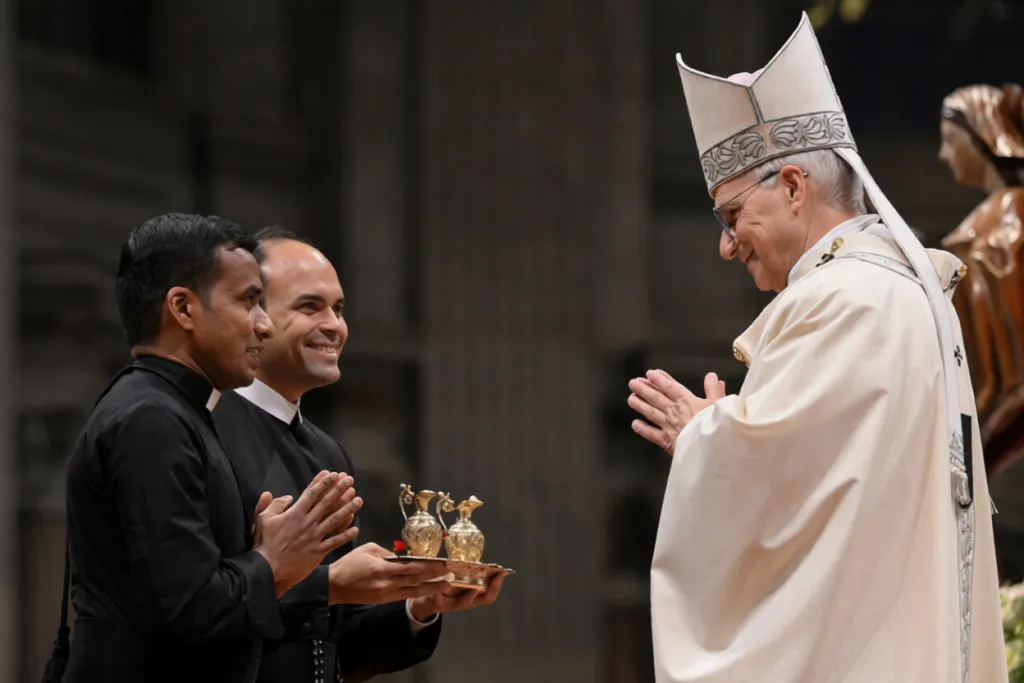
Pope Leo XIV: Consecrated Life, a Living Prophecy Awakening the World with the Light of Christte
Exaudi Staff
02 February, 2026
10 min
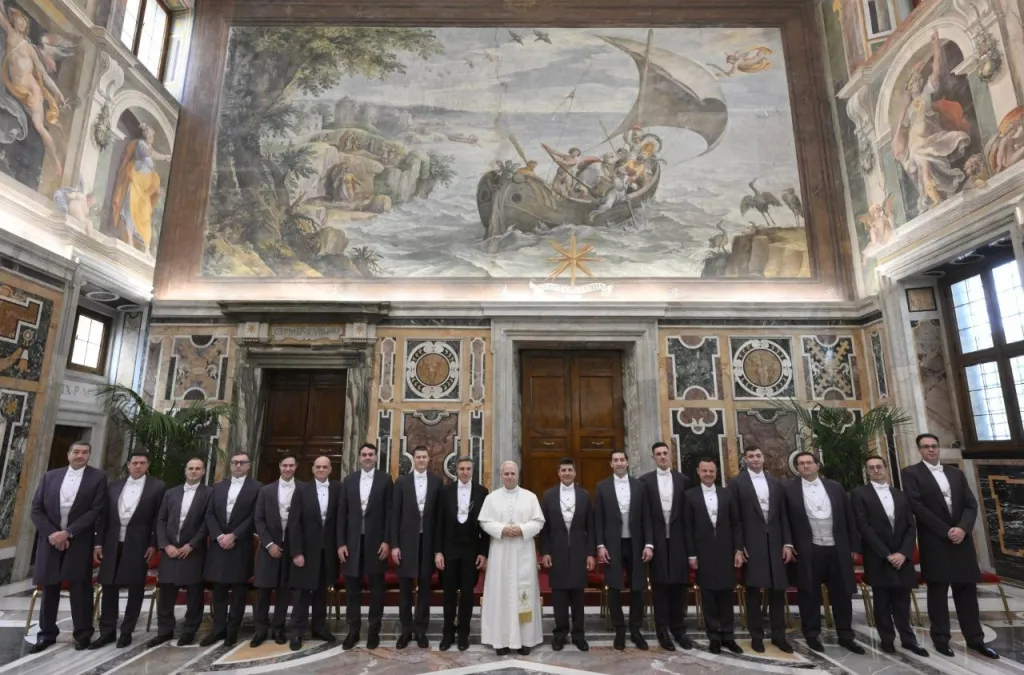
Pope Leo XIV expresses gratitude for the work of the Gentlemen of His Holiness
Exaudi Staff
02 February, 2026
3 min
Pope Leo XIV’s Prayer Intentions for 2026
Exaudi Staff
02 February, 2026
2 min
Pope Leo XIV: “The Beatitudes are lights that the Lord kindles in the half-light of history”
Exaudi Staff
01 February, 2026
7 min