(EN)
(EN)
 (ES)
(ES)
 (IT)
(IT)

Human Cryopreservation
Bioethical Reflection Based on the McCann Case
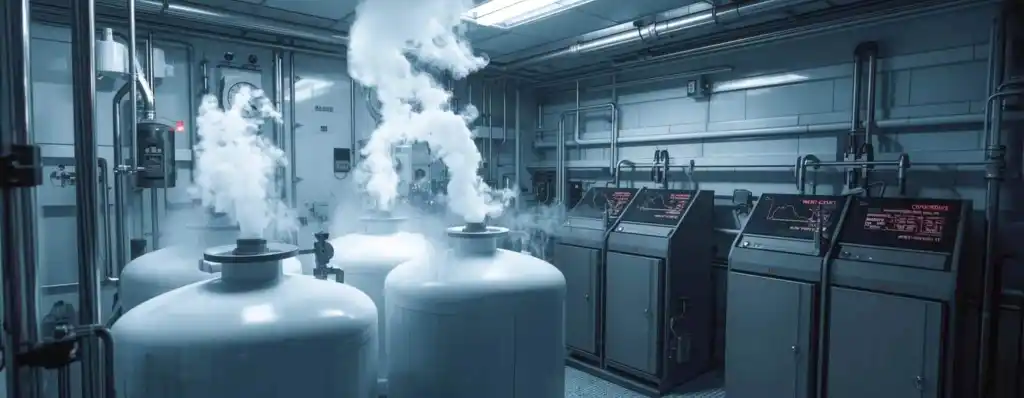

Cryopreservation is understood as the preservation of bodies or brains at ultra-low temperatures with a view to future reanimation that would bring the cryopreserved body or the part that has been subjected to this technique back to life. This constitutes a complex scientific and bioethical challenge, and this technique has garnered special media and social interest due to the advancement of companies like Alcor Life Extension Foundation [1] and the human and social impact of the case made public a few months ago, that of Australian actress Clare McCann [2] , who, after the death of her son Atreyu, a victim of bullying, began a campaign to cryopreserve his body in the hope that science could bring him back to life in the future.
From a bioethical perspective, this article seeks to analyze cryopreservation, examining controversial scientific aspects [3] and the personal and emotional motivations reflected in the McCann case. Furthermore, it addresses issues such as human nature, human dignity, identity, the meaning of death, distributive justice, and the tensions that can arise between natural human hope and technologically driven hope.
From a personalist perspective, it is concluded that cryopreservation as a promise of future reanimation currently lacks a scientific basis, introducing risks of objectification of the human body and potentially interfering with fundamental processes such as grief and end-of-life care, although the motivations behind them deserve at least to be analyzed.
Human cryopreservation, also called cryonics , is a technique based on the process of preserving cells, tissues, organs, or any biological material at -196 °C in liquid nitrogen to maintain its viability [4] . It is presented as a radical proposal within the current technoscientific imaginary, alongside transhumanism, promising a kind of time travel where the body of a deceased human being could be revived decades or centuries later. Currently, there are already companies like Alcor that offer to preserve a whole body or a brain for prices reaching $80,000 or $200,000, respectively [5] .
Although vitrification, for example, is a technique currently used on human gametes or embryos, with the bioethical dilemmas this raises [6] , there is no scientific evidence to suggest that a human body, once dead, can be thawed and subsequently revived in optimal and functional biological conditions [7] . This tension between the actual technique and the scientific impossibility of reanimating a cryopreserved body becomes even more complex when the human pain of losing a loved one comes into play, as illustrated in the case of Clare McCann, whose 13-year-old son took his own life after suffering bullying. Driven by grief, McCann declared, in her pain, that “If there is a possibility that science in the future will allow for reanimation, my son deserves that opportunity” [8] . This scenario necessitates a bioethical analysis that considers both the science and the emotional vulnerability involved in order to understand both the technical reality of cryopreservation and its anthropological and ethical implications.
Scientific context and fundamentals of cryopreservation
Human cryopreservation relies on real procedures (such as the use of cryoprotectants and vitrification at extreme temperatures), but its ultimate goals remain speculative. Although certain tissues have been vitrified and experimentation with rat kidneys [9] has shown promising results, the possibility of reanimating a complete human being is not part of the current scientific repertoire. For example, a human brain contains billions of synapses [10] , and their integrity cannot be guaranteed in a prolonged vitrified state. Furthermore, cryopreservation is performed after death, so cellular damage has already begun, and no known technology exists to reverse it.
Cryonics companies, even while acknowledging this impossibility, speak of cryopreservation as a bridge to the future [11] , generating a speculative narrative of seemingly “real” possibility that influences the emotional state of people experiencing extreme suffering. The McCann case confirms this phenomenon: $150,000 is needed for a procedure whose outcome is, objectively, uncertain and unfeasible. In this context, real science and projected hope become problematically intertwined, generating an expectation that is emotionally charged but scientifically fictitious.

Anthropological perspective: the human being facing finitude and hope
From a personalist anthropological perspective, it must be pointed out that the person is an indivisible psychophysical unity, and the body is not merely a material support (materialist reductionism) but a constitutive expression of the person’s identity [12] . Cryopreservation presupposes that personal identity is somehow stored in the brain structure [13] , as if the self could be stopped and resumed centuries later without losing that continuity that makes us who we are and that constructs our entire history. But human identity depends on biography, relationships, lived temporality, and experienced corporeality. Thus, reanimating, in a hypothetical future, an elderly person or, in this case, a 13-year-old child who lived in a specific relational context, would mean placing them in a strange world, without their mother, without their affective environment, and without their experienced, lived, and projected life horizon. In anthropological terms, they would be another human being carrying foreign memories from their new present existence.
Human temporality cannot be frozen without consequences. Life has a rhythm and a narrative that culminates in death, which is not merely a biological phenomenon but an existential event [14] . Artificially suspending this transition introduces a profound rupture with the human way of existing. In McCann’s case, the understandable desire to keep his son alive in some possible way clashes with the ontological impossibility of preserving a person’s identity by freezing a lifeless body. Thus, we see that hope, when displaced onto a technical terrain that cannot be sustained, risks becoming a denial of human reality.
Personalist bioethics in the face of cryopreservation
Personalist bioethics places the ontological dignity of the person at the center of all ethical evaluation. From this perspective, cryopreservation presents fundamental difficulties [15] . The first of these is the objectification of the human body, since a cryopreserved body becomes a technical object that must be guarded, maintained, and potentially manipulated, thus implying a rupture of the link between body and person. Even if a person consents to cryopreservation, this consent cannot legitimize practices that violate ontological dignity, because human freedom has ethical limits founded on and grounded in the truth about the person.
The principle of totality also imposes significant restrictions, since interventions on the body must be oriented toward the integral good of the person [16] . However, in cryopreservation, the body is no longer alive, and no therapeutic benefit is possible. The technique does not cure, restore, or improve; rather, it places an already dead body in an indefinite state of waiting without a scientific basis. Personalist bioethics considers death to be a human and relational process that should not be artificially interrupted [17] . Transforming death into a provisional condition leading to another time or state completely alters the experience of grief, as the McCann case demonstrates, in which the mother attempts to hold onto her son beyond life and death. This desire, which is humanly understandable, raises an ethical conflict between accepting and accompanying death or suspending it in a dubious technological sleep that lacks any real foundation.

Personal identity and continuity of self
One of the problems posed by cryopreservation is the disruption of personal continuity. A person is a continuous being from the moment of conception until the end of their life, and identity is not merely reducible to memory, the brain, or the information contained in synapses. To be a person implies being a living body, in relation to a world, a history, and a set of connections that constitute one’s biography. Even if it were technically possible to restore brain function after centuries of cryopreservation (I want to reiterate that current science considers this impossible), this existential continuity would not exist. The subject who ” awakened” in another time, space, and place would not be the deceased person, but a person whose biological entity has been reconstructed, deprived of their time, their relationships, and their context.
Scientist Sandra Ortonobes mentions that some companies envision futures in which a “new body” is created and a cryopreserved brain is attached [18] . This approach introduces a problem, since by centering identity on an isolated organ, there is a risk of reducing the person to one of their parts, thus breaking with the psychophysical unity that constitutes human nature [19] . From the perspective of ontological dualism [20] (implicit in many cryonics proposals), it is presupposed that personal identity could be detached from the living body [21] and preserved in a fragmented way. The case of Atreyu, in this sense, demonstrates how cryopreservation ends up projecting a childhood identity frozen in time that could never be recovered without generating an ontological rupture—that is, without ceasing to be the same person in the fullest sense.
Distributive justice and unequal access to cryopreservation
Cryopreservation is a clearly unequal practice. Prices range from $80,000 to $200,000 [22] , amounts inaccessible to most of the population. From an ethical and bioethical perspective that places the principle of justice [23] as a fundamental dimension of the common good, it is problematic to allocate economic resources to an experimental procedure while urgent needs persist, such as public health, psychological support, adolescent suicide prevention, or anti-bullying programs—problems that directly affect cases like Atreyu’s. Thus, the question arises: what does it mean to invest hundreds of thousands of dollars in preserving a dead body while other children suffer situations that could be avoided through real interventions? As can be seen, a mother’s pain does not eliminate the structural dimension of the problem, but it does invite us to reflect on our responsibility to offer a response that is aligned with the truth of the situation and not with a technologically driven hope lacking scientific foundation.
Existential and metaphysical dimension of cryopreservation
Cryopreservation raises not only scientific and bioethical problems, but also existential questions. At its core, it is a modern expression of the desire for immortality, an attempt to overcome the radical natural limit of death that aligns perfectly with transhumanist aspirations [24] . However, it confuses our finite nature with a vital fullness devoid of death. Cryonics promises a future in which one could return to the present, but this return would be an existence uprooted from one’s own life story. In Clare McCann’s case, this promise becomes a form of resistance to unbearable pain, but it does not constitute a human hope. Hope cannot be reduced to technological expectations linked to the meaning of life and death, and to the unique and irreplaceable value of each person. Suspending a body is not preserving a life, but rather suspending a natural process that demands to be accompanied with truth and compassion.
Conclusion
Human cryopreservation, or cryonics, as currently proposed, lacks scientific and anthropological support to consider it a viable means of preserving life or a person’s lived identity. This practice reduces the body to a biotechnological object and obscures the ontological dignity of the person, whose psychophysical unity cannot be suspended or reconstructed by a freezing technique after death.
Far from aligning with the human understanding of dying, cryopreservation introduces a technoscientific narrative that offers unfounded promises, potentially hindering grief and reinforcing inequalities by being available only to those who can afford it.
The case of Clare McCann shows the pain of a mother who clings to a minimal possibility in her imagined hope, but precisely for that reason it demands a bioethical response that, without judging the suffering, remembers that the true dignity of her son is not preserved in cryopreservation, but in the truth of our nature, accompaniment and care.
Dying is not a technical failure, but part of the mystery of existence, of our humanity, and no technology that suspends bodies in non-existent time can replace the respect and compassion that every person deserves at the end of their life.
Jose Maria Diaz Sanchez. Graduate in Philosophy from the University of Murcia. Master in Bioethics from the Catholic University of Valencia
***
Literature
AIU University. (n.d.). Mapping the human brain . Retrieved from https://www.aiu.edu/es/innovative/mapeando-el-cerebro-humano/
Alcor Life Extension Foundation. (n.d.). Homepage . Retrieved from https://www.alcor.org/
Bermeo, E. (2021). Human life from the anthropology of integral personalism and the personalist bioethics of Elio Sgreccia . Quién, (13), 7–25.
Benvenga, L. (2023). Transhumanism, technohumanism and ethics . Medicine and Ethics, 34(1), 160–193.
Burgos Velasco, JM (2013). What is personalist bioethics? An analysis of its specificity and theoretical foundations . Cuadernos de Bioética, 24(1).
Cabo, J. (n.d.). Javier Cabo: “Death cannot be reversed and corpses cannot be brought back to life .” UDIMA. Retrieved from https://www.udima.es/javier-cabo-criogenizacion-humana
Clare McCann urgently requests $200,000 to cryogenically preserve her son’s body in seven days. (May 27, 2025). Marca . Retrieved from https://us.marca.com/tiramillas/celebrities/2025/05/27/6835f83d46163f80068b4591.html
PHILOSOPHY&CO. (2025, July 4). Body and soul according to Descartes . Retrieved from https://filco.es/cuerpo-y-alma-segun-descartes/
Pablo VI Foundation. (2021, May 18). Rawls’s “Theory of Justice” and Bioethics . Retrieved from https://www.fpablovi.org/articulos-bioetica/1169-la-teoria-de-la-justicia-de-rawls-y-la-bioetica
García Acevedo, JS (2016). Mind-body relationship: Cartesian dualism and the Kantian refutation of idealism . Sin Fundamento, 21, 179–199.
García Herrera, V. (2020). Cryogenics: a science service or fiction? . REDS, (16), January–June.
García Marcos, F. (2011). Bioethical considerations regarding the diagnosis of death and the importance of the concept of human person [online]. Life and Ethics, 12(2), 145–162.
Immedicohospitalario. (2023, June 23). Long-term preservation of organs for transplantation at ultra-low temperatures can save lives . Retrieved from https://www.immedicohospitalario.es/noticia/40009/la-preservacion-a-largo-plazo-de-organos-para-trasplante-a-temperatu.html
La Vanguardia. (2025, October 30). Sandra Ortonobes, biomedical scientist: “Organ cryopreservation has a future; it could shorten transplant waiting lists and save many lives in the coming years.” Retrieved from https://www.lavanguardia.com/magazine/bienestar/20251030/11213052/sandra-ortonobes-biomedica-hay-personas-congelan-cuerpos-200-000-dolares-puedan-descongelarlos-siglos-medicina-haya-avanzado-gvm.html
Nakama-Hokamura, GK, & Rojas-Valdez, K. (2023). Nature and human person: Critical bases of the transhumanist claim . Bioethics Notes, 6(2), 5–29.
UCV Bioethics Observatory. (2014, August 13). New data on embryo freezing and in vitro fertilization . Retrieved from https://www.observatoriobioetica.org/2014/08/congelacion-de-embriones-y-fecundacion-in-vitro-nuevos-datos/5261
UCV Bioethics Observatory. (2015, December 3). Cryopreservation of human individuals. Technique and ethical and moral evaluation . Retrieved from https://www.observatoriobioetica.org/2015/12/11023/11023
Parati. (May 30, 2025). Actress Clare McCann seeks to cryopreserve her son’s body after his tragic death: “If there’s a chance, I want to give it to him.” Retrieved from https://www.parati.com.ar/news/la-actriz-clare-mccann-busca-criopreservar-el-cuerpo-de-su-hijo-tras-su-tragica-muerte-si-existe-una-chance-quiero-darsela/
Suleiman-Martos, N., García-Lara, RA, Narbona-Sánchez, I., & Domínguez-Vías, G. (2022). Project Lazarus (2016): From cellular to human cryopreservation. Myth and reality for teacher training in the area of Health Sciences . Journal of Medicine and Cinema, 18(3), 193–204.
UDIMA. (n.d.). Javier Cabo: “Death cannot be reversed and corpses cannot be brought back to life . ” https://www.udima.es/javier-cabo-criogenizacion-humana
[1] Alcor Life Extension Foundation. https://www.alcor.org/
[2] Marca. (May 27, 2025). Clare McCann urgently requests $200,000 to cryogenically preserve her son’s body in seven days . https://us.marca.com/tiramillas/celebrities/2025/05/27/6835f83d46163f80068b4591.html
[3] La Vanguardia. (October 30, 2025). Sandra Ortonobes, biomedical scientist: “Organ cryopreservation has a future; it could shorten transplant waiting lists and save many lives in the coming years . ” https://www.lavanguardia.com/magazine/bienestar/20251030/11213052/sandra-ortonobes-biomedica-hay-personas-congelan-cuerpos-200-000-dolares-puedan-descongelarlos-siglos-medicina-haya-avanzado-gvm.html
[4] Suleiman-Martos, N., García-Lara, RA, Narbona-Sánchez, I., & Domínguez-Vías, G. (2022). Project Lazarus (2016): From cellular to human cryopreservation. Myth and reality for teacher training in the area of Health Sciences . Journal of Medicine and Cinema, 18(3), 193–204, p 196.
[5] Alcor Life Extension Foundation. Membership, pricing and dues . https://www.alcor.org/membership/pricing-and-dues/
[6] UCV Bioethics Observatory. (2014, August). New data on embryo freezing and in vitro fertilization . https://www.observatoriobioetica.org/2014/08/congelacion-de-embriones-y-fecundacion-in-vitro-nuevos-datos/5261
[7] UCV Bioethics Observatory. (2015, December). Cryopreservation of human individuals. Technique and ethical and moral assessment . https://www.observatoriobioetica.org/2015/12/11023/11023
[8] Parati. (2025, May 30). Actress Clare McCann seeks to cryopreserve her son’s body after his tragic death: “If there is a chance, I want to give it to him . ” https://www.parati.com.ar/news/la-actriz-clare-mccann-busca-criopreservar-el-cuerpo-de-su-hijo-tras-su-tragica-muerte-si-existe-una-chance-quiero-darsela/
[9] Immedicohospitalario. (2023, June 23). Long-term preservation of organs for transplantation at ultra-low temperatures can save lives . https://www.immedicohospitalario.es/noticia/40009/la-preservacion-a-largo-plazo-de-organos-para-trasplante-a-temperatu.html
[10] AIU (Aliança Internacional Universitaria). (sf). Mapping the human brain . https://www.aiu.edu/es/innovative/mapping-the-human-brain/
[11] Alcor Life Extension Foundation. (sf). Research & development . https://www.alcor.org/research-development/
[12] Bermeo, E. (2021). Human life from the anthropology of integral personalism and the personalist bioethics of Elio Sgreccia . Quién, (13), 7–25, p 11.
[13] García Herrera, V. (2020). Cryogenics: a science service or fiction? . REDS, (16), January–June, p 35.
[14] UDIMA. (n.d.). Javier Cabo: “Death cannot be reversed and corpses cannot be brought back to life.” https://www.udima.es/javier-cabo-criogenizacion-humana
[15] Burgos Velasco, JM (2013). What is personalist bioethics? An analysis of its specificity and theoretical foundations . Cuadernos de Bioética, 24(1)
[16] Ibid., p. 232.
[17] García Marcos, F. (2011). Bioethical considerations about the diagnosis of death and the importance of the concept of human person [online]. Life and Ethics , 12(2), 145–162, p 160.
[18] La Vanguardia. (2025, October 30). Sandra Ortonobes, biomedical scientist: “Organ cryopreservation has a future; it could shorten transplant waiting lists and save many lives in the coming years .” La Vanguardia. https://www.lavanguardia.com/magazine/bienestar/20251030/11213052/sandra-ortonobes-biomedica-hay-personas-congelan-cuerpos-200-000-dolares-puedan-descongelarlos-siglos-medicina-haya-avanzado-gvm.html
[19] Nakama-Hokamura, GK, & Rojas-Valdez, K. (2023). Nature and human person: Critical bases of the transhumanist claim . Bioethics Notes, 6(2), 5–29.
[20] PHILOSOPHY&CO. (2025, July 4). Body and soul according to Descartes . https://filco.es/cuerpo-y-alma-segun-descartes/
[21] García Acevedo, JS (2016). Soul-body relationship: Cartesian dualism and the Kantian refutation of idealism. Sin Fundamento, 21 , 179–199, p. 181.
[22] Alcor Life Extension Foundation. (sf). Membership, pricing and dues . https://www.alcor.org/membership/pricing-and-dues/
[23] Pablo VI Foundation. (2021, May 18). Rawls’s “Theory of Justice” and Bioethics . https://www.fpablovi.org/articulos-bioetica/1169-la-teoria-de-la-justicia-de-rawls-y-la-bioetica
[24] Benvenga, L. (2023). Transhumanism, technohumanism and ethics. Medicine and Ethics, 34 (1), 160–193.

Observatorio de Bioética UCV
El Observatorio de Bioética se encuentra dentro del Instituto Ciencias de la vida de la Universidad Católica de Valencia “San Vicente Mártir” . En el trasfondo de sus publicaciones, se defiende la vida humana desde la fecundación a la muerte natural y la dignidad de la persona, teniendo como objetivo aunar esfuerzos para difundir la cultura de la vida como la define la Evangelium Vitae.
Related
The Dilemma of Frozen Human Embryos
Observatorio de Bioética UCV
05 March, 2026
40 min

God’s love cannot be explained, it can only be experienced
P Angel Espinosa de los Monteros
03 March, 2026
3 min
Thinking for Yourself When It’s Not Comfortable
Marketing y Servicios
02 March, 2026
3 min

What are we? The doctor, the soul, and the software of the cosmos
Observatorio de Bioética UCV
27 February, 2026
4 min