(EN)
(EN)
 (ES)
(ES)
 (IT)
(IT)

Do you want to be a cyborg?
How far do we want to merge with technology?
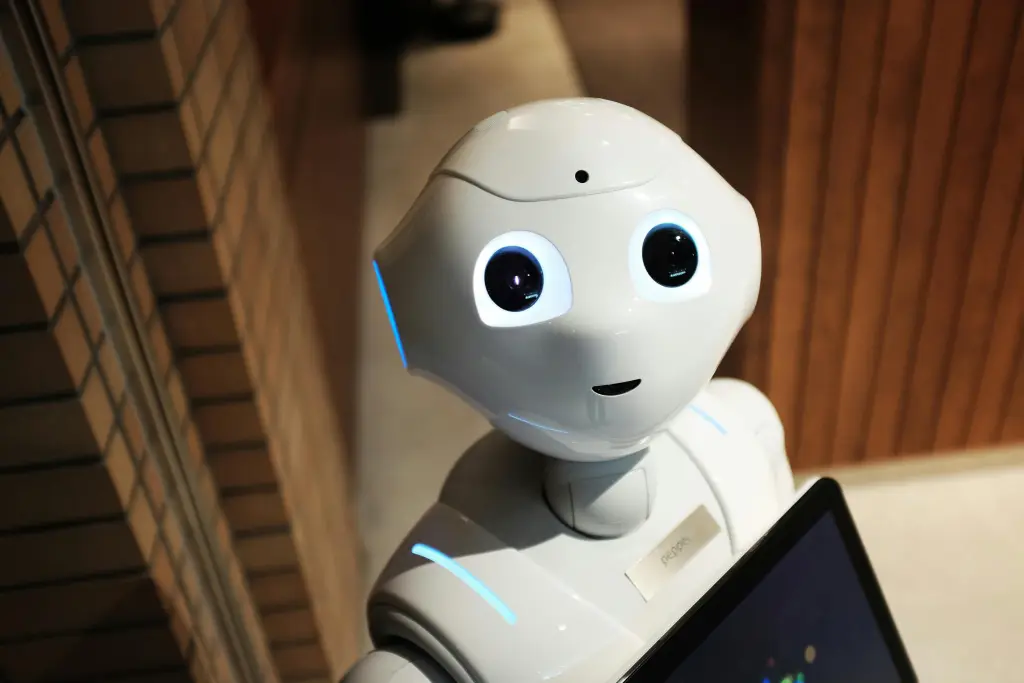

The future is not very promising for the current psychophysical structure of man. The media terminals of the technological magnates ceaselessly announce the disappearance of the human race as we know it today and the emergence of a new being that, as a result of its hybridization with machines, will become immortal in the course of a few decades. The possibility of thinking several million times faster than now, of breathing in the depths of the ocean like fish, of equipping ourselves with functional wings that allow us to fly like birds, of running faster and for longer… these are just some of the qualities described in the dystopian landscape of this new scenario of human alienation.
The fictional representation of this future society has found one of its favorite prophets in the American Raymond Kurzweil (1948). This scientist maintains that the fusion of biotechnology with artificial intelligence will lead to nanotechnology helping to completely overcome the limitations of our biological organs, with nanobots being the key that will allow humans to produce an optimized body at will, completely replace biological organs, and transcend the lifespan of 120 years.
As an expert in computing and artificial intelligence, he envisions a situation in which technology solves problems before they arise, with nanocomputers controlling the functioning of our bodies by rewriting DNA and controlling cells. Eventually, both blood and brain tissue could be replaced by nanobots that connect us directly to the controlling machines, thus keeping a person’s body in good health indefinitely.
Today, there is no technology that guarantees the imminence of what Kurzweil predicts, nor is there any guarantee that his vision will become reality. But there is also no certainty that, over time, his predictions will not be fulfilled. In our country, there are also native voices—such as that of Eudald Carbonell (1953)—that predict the entry of our species, once human evolution as we have known it until now is complete, into a new phase: that of transhumanization.
According to this Catalan anthropologist, this would be an inevitable process of dehumanization through which, in order to survive, we will leave behind many of our current characteristics and adapt by merging with technology and artificial intelligence. This will require the future coexistence of four subspecies, so that if one fails, there will be another that survives: those who will preserve their original genetics, genetically edited humans, others designed to resist disease, and cyborgs—a different lineage—who will integrate technology into their biology.
Only time will tell if Kurzweil and Carbonell are right. For now, this technological drift seems terrifying and out of control. The idea of liberation from the limitations inherent to human nature, and especially death, permeates transhumanist fantasies and places them before the abyss of extreme irrationality. The renewal of the human being cannot consist in the destruction of its nature, but only in the realization of its true meaning: while living in this world, man cannot be anything other than man and must serenely accept his condition.
Rather than being a cyborg, I prefer the ever-present problematic nature of life, its demand for incessant elucidation, and even its inevitable fall into personal contradiction. Moreover, classical and Christian wisdom has shown how the individual personality is forged in the discovery of one’s own inner conflict and inner weakness: Saint Augustine, Petrarch, Montaigne, Descartes, Pascal, and the most distinguished humanists of our Western civilization have been good examples of this.
In the face of uncritical technological idolatry, I assert the need for a complete attitude toward life that recognizes that the danger lies not in the practical use of scientific knowledge, but in the direction it is given: that of the debasement and exploitation of man or that of the fitting of his place into a cosmos forged in collusion with God.
Pedro Paricio. Give me three minutes.

Exaudi Staff
What is Exaudi News? Exaudi News is an international Catholic media outlet that informs, shapes, and transforms daily in Spanish, English, and Italian. Through news, analytical articles, and live broadcasts of the Pope's events, Exaudi seeks to strengthen Christian unity and contribute to the evangelization of the world, always guided by the Church's social doctrine. We work to bring Christian truth and values to every corner of the planet. Help us transform the world with Exaudi! At Exaudi, we believe that evangelization and quality information can change lives. To continue our mission and expand our reach, we need your help. In addition, we are looking for committed people to join our team. With your support, we will reach more people, spread the message of Christ, and strengthen Christian unity. Will you join our mission? For more information on how to collaborate, visit Exaudi.org or contact us directly: [email protected] Exaudi: Informs, educates, and transforms.
Related

In the Face of Criticism of the Faith: Responding with Charity, Truth, and Joyful Witness
Patricia Jiménez Ramírez
03 March, 2026
3 min

How to be a good university professor?
Marketing y Servicios
02 March, 2026
4 min

Contemplating a Sculpture
Cristian Álvarez
02 March, 2026
15 min

Even God Is Silent
Rosa Montenegro
02 March, 2026
4 min