(EN)
(EN)
 (ES)
(ES)
 (IT)
(IT)

Cardinal Arizmendi: Listening in the Church and in Politics
Let us learn to listen to one another, and let us listen because we are all one body, which has one Head: Christ
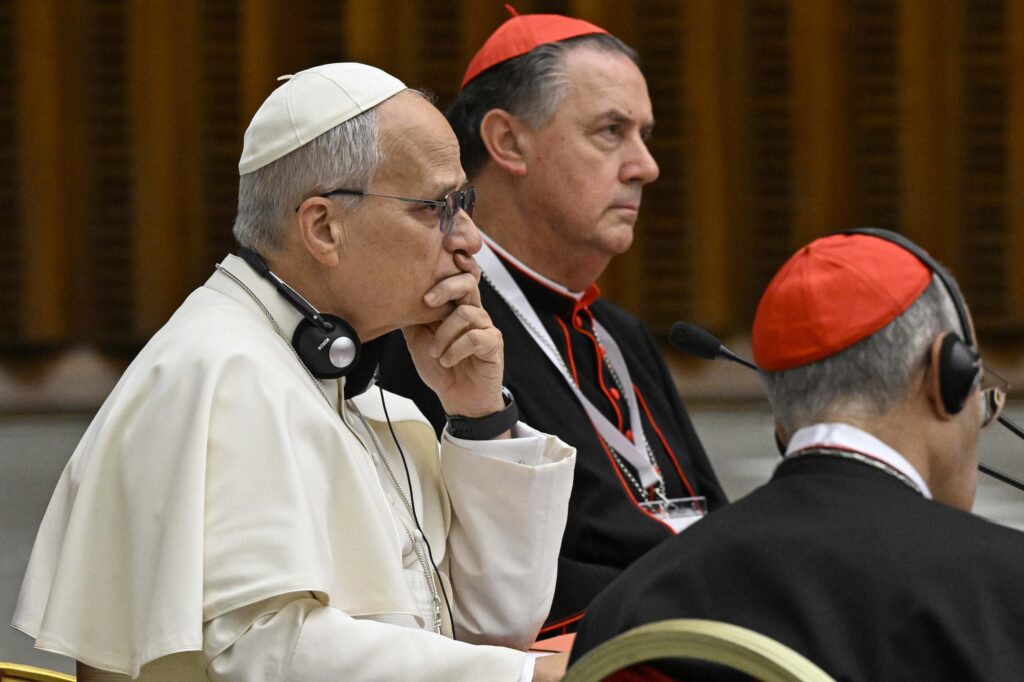

Cardinal Felipe Arizmendi, Bishop Emeritus of San Cristóbal de Las Casas and responsible for the Doctrine of the Faith at the Mexican Episcopal Conference (CEM), offers Exaudi readers his weekly article.
FACTS
At the recent Consistory of Cardinals, convened by Pope Leo XIV, a Chinese cardinal emeritus criticized Pope Francis for promoting synodality in the Church. He argued that it diminishes the authority of bishops and could lead the Holy Spirit to say things that are incorrect when decisions are made by majority vote. His concern would be legitimate if this were the case; however, it is not. Synodality does not diminish the authority of bishops; rather, it involves listening carefully to the community before making decisions. This is not new; it has been practiced for a long time, although episcopal and papal authority was emphasized more during the last century. Listening, within the hierarchical structure of the Church, does not mean agreeing to everything the majority says, but rather recognizing the action of the Holy Spirit in all the People of God and, with the help of fellow believers, discerning what is most in accordance with the Gospel before making decisions. The personal responsibility of the bishop or parish priest is not lost, but decisions are made after humbly listening to the voices of others. Sometimes, if the ecclesiastical authority considers it just, the majority may have the final say if the proposal is in accordance with the Word of God.
In our country, a new electoral law is being drafted, promoted not by the citizens but by the highest federal authority, which is already generating distrust. What are they trying to achieve? Is it simply to avoid excessive spending and reduce the number of federal deputies and senators? Forums have been held to gather public opinion, and the proposal will be submitted to a vote in the Congress of the Union, where the ruling party holds a majority, with the self-serving support of two minority parties. However, there is a sense that only members of the ruling party are being heard, and that this law will benefit not the people in general, but rather the group in power, ensuring its continued hold on power. Those who hold differing opinions are listened to, but only as a populist formality, not with a genuine willingness to listen humbly and without arrogance and then decide what is best for the people. Pride and excessive power prevent them from listening wisely.
ILLUMINATION
What Pope Francis said for the Church in his exhortation Evangelii gaudium also applies to politicians and rulers:
“The bishop must always foster missionary communion in his diocesan Church following the ideal of the first Christian communities, where believers had one heart and one soul… In his mission to foster a dynamic, open, and missionary communion, he will have to listen to everyone and not just to a few who flatter him” (31).
“We need to practice the art of listening, which is more than hearing. The first thing, in communication with the other, is the capacity of the heart that makes closeness possible. Only from this respectful listening can the paths of genuine growth be found… To reach a point of maturity, that is, for people to be capable of truly free and responsible decisions, it is necessary to give time, with immense patience” (171).
“An attitude of openness in truth and love must characterize dialogue, despite the various obstacles and difficulties, particularly the fundamentalisms of both sides. In this way we learn to accept others in their different ways of being, thinking, and expressing themselves. In this way, we can assume together the duty to serve justice and peace, which must become a basic criterion of all exchange. A dialogue in which social peace and justice are sought is in itself, beyond the merely pragmatic, an ethical commitment that creates new social conditions. Efforts around a specific issue can become a process in which, through listening to the other, both parties find purification and enrichment” (250).
“In this dialogue, always kind and cordial, true openness implies standing firm in one’s own deepest convictions, with a clear and joyful identity, but open to understanding those of the other and knowing that dialogue can truly enrich each one. A diplomatic openness, which says yes to everything to avoid problems, is not useful to us because it would be a way of deceiving the other and denying the good that one has received as a gift to share generously” (251).
“Jesus himself is the model of this evangelizing option that introduces us to the heart of the people. How good it is for us to see him close to everyone! If he spoke to someone, he looked into their eyes with deep, loving attention… Captivated by this model, we desire to integrate ourselves fully into society; we share life with everyone, we listen to their concerns, we collaborate materially and spiritually with them in their needs, we rejoice with those who rejoice, we weep with those who weep, and we commit ourselves to building a new world, side by side with others. But not out of obligation, not as a burden that wears us down, but as a personal choice that fills us with joy and gives us identity” (269).
ACTIONS
Let us learn to listen to one another within the family: let the husband, leaving behind outdated machismo, listen with his heart to his wife and children to decide what is best for everyone. Likewise, let the wife and children listen, without neglecting the elderly. And let us listen to one another in parishes and dioceses, because we are all one body, which has one Head: Christ and those who received from him the mission to preside over it

Cardenal Felipe Arizmendi
Nacido en Chiltepec el 1 de mayo de 1940. Estudió Humanidades y Filosofía en el Seminario de Toluca, de 1952 a 1959. Cursó la Teología en la Universidad Pontificia de Salamanca, España, de 1959 a 1963, obteniendo la licenciatura en Teología Dogmática. Por su cuenta, se especializó en Liturgia. Fue ordenado sacerdote el 25 de agosto de 1963 en Toluca. Sirvió como Vicario Parroquial en tres parroquias por tres años y medio y fue párroco de una comunidad indígena otomí, de 1967 a 1970. Fue Director Espiritual del Seminario de Toluca por diez años, y Rector del mismo de 1981 a 1991. El 7 de marzo de 1991, fue ordenado obispo de la diócesis de Tapachula, donde estuvo hasta el 30 de abril del año 2000. El 1 de mayo del 2000, inició su ministerio episcopal como XLVI obispo de la diócesis de San Cristóbal de las Casas, Chiapas, una de las diócesis más antiguas de México, erigida en 1539; allí sirvió por casi 18 años. Ha ocupado diversos cargos en la Conferencia del Episcopado Mexicano y en el CELAM. El 3 de noviembre de 2017, el Papa Francisco le aceptó, por edad, su renuncia al servicio episcopal en esta diócesis, que entregó a su sucesor el 3 de enero de 2018. Desde entonces, reside en la ciudad de Toluca. Desde 1979, escribe artículos de actualidad en varios medios religiosos y civiles. Es autor de varias publicaciones.
Related
Pope Leo XIV reaches the heart of the conflict in Bamenda: a cry for peace amidst blood and suffering
Valentina Alazraki
17 April, 2026
4 min

Can kindness transform the world?
Tomasa Calvo
17 April, 2026
6 min

The Secret No One Tells About Successful Entrepreneurship: Why a Humanistic Education Changes Everything
Marketing y Servicios
17 April, 2026
4 min
Pope Leo XIV lands in Cameroon: a flight with a taste of hope and a speech that leaves no one indifferent
Valentina Alazraki
16 April, 2026
3 min
Newsletter
Every month, Exaudi touches the lives of many through training, truth, and support
Join our communication channels and share them.