(EN)
(EN)
 (ES)
(ES)
 (IT)
(IT)

Cardinal Arizmendi: Final Exam: The Poor
In this past year, what did we do for them?

Cardinal Felipe Arizmendi, Bishop Emeritus of San Cristóbal de Las Casas and responsible for the Doctrine of the Faith at the Mexican Episcopal Conference (CEM), offers Exaudi readers his weekly article.
FACTS
It’s worth reflecting on the positive and negative aspects of these past twelve months. What did we do well? What good things happened to us? What do we remember fondly? Conversely, what went wrong? What do we wish hadn’t happened? What should we correct?
There are many points where this examination of life should be undertaken, but I want to emphasize the need for a personal and ecclesial review of how we have shown our love for those whose circumstances place them in poverty. I understand that for some it may be annoying that I speak so much about it, but it is the guide to knowing whether we are following the path of Jesus, and it is the examination that, according to Saint Matthew, will be given to us at the end of our lives.
LIGHTNING
I continue to share with you some categorical statements from Pope Leo XIV in his exhortation Dilexi te, on love for the poor. Reflecting on them will help us make a good end-of-year examination of conscience.
“The Lord’s call to mercy toward the poor has found its fullest expression in the great parable of the Last Judgment (cf. Mt 25:31-46), which is also a graphic description of the beatitude of the merciful. There the Lord offers us the key to attaining our fullness, because if we seek that holiness which pleases God, in this text we find precisely a protocol by which we will be judged. The strong and clear words of the Gospel should be lived without commentary, without speculations and excuses that diminish their force. The Lord made it very clear to us that holiness cannot be understood or lived apart from these demands of his” (28).
“What the revealed Word says is a message so clear, so direct, so simple and eloquent, that no ecclesial hermeneutic has the right to relativize it. The Church’s reflection on these texts should not obscure or weaken their exhortative sense, but rather help to embrace them with courage and fervour. Why complicate what is so simple? Conceptual frameworks are meant to facilitate contact with the reality they seek to explain, not to distance us from it” (31).
“The Church recognizes in the poor and suffering the image of her poor and patient Founder, strives to remedy their needs and seeks to serve Christ in them. Indeed, having been called to conform herself to the least among us, there should be no doubts in her, nor any explanations that weaken this clear message. It must be said plainly that there is an inseparable link between our faith and the poor” (36).
“From the earliest centuries, the Fathers of the Church recognized in the poor privileged access to God, a special way of encountering him. Charity toward the needy was not understood as a mere moral virtue, but as a concrete expression of faith in the Incarnate Word” (39). “The early Church did not separate belief from social action: faith that was not accompanied by the witness of works, as James had taught, was considered dead” (40). “Thus, charity is not an optional path, but the criterion of true worship” (42).
“For St. Augustine, the poor person is not only someone to be helped, but the sacramental presence of the Lord” (44). “The Gospel is only truly proclaimed when it touches the flesh of the least among us, and we must recognize that doctrinal rigour without mercy is an empty word” (48). According to St. Basil, to be close to God, one must be close to the poor. Concrete love was the criterion of holiness. Praying and caring, contemplating and healing, writing and welcoming: all are expressions of the same love for Christ (54). “The poor are not a problem to be solved, but brothers and sisters to be welcomed” (56). “For St. Bernard, compassion is not an optional extra, but the royal road to following Christ” (58).
“Christian charity, when it is incarnate, becomes liberating. And the mission of the Church, when she is faithful to her Lord, is always to proclaim liberation… When the Church kneels to break the new chains that imprison the poor, she becomes a sign of Easter” (61). “For the Christian faith, the education of the poor is not a favour, but a duty” (72). “The poorest of the poor—those who lack not only material goods, but also a voice and recognition of their dignity—occupy a special place in the heart of God. They are the chosen ones of the Gospel, the heirs of the Kingdom. It is in them that Christ continues to suffer and rise again. It is in them that the Church rediscovers the call to show her most authentic reality” (76).
“The poorest are not mere objects of compassion, but teachers of the Gospel. It is not a question of ‘bringing God to them,’ but of finding him among them. Serving the poor is not a top-down gesture, but an encounter between equals, where Christ is revealed and adored… Therefore, when the Church bends down to the ground to care for the poor, she assumes her highest position” (79).
ACTIONS
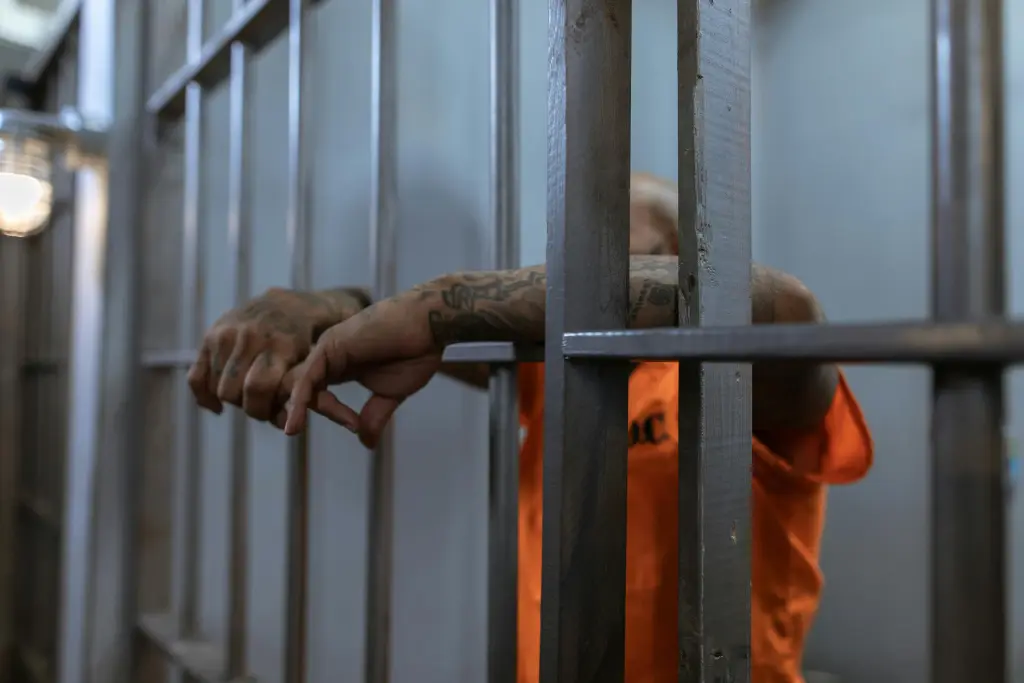
When you and I stand before the final judgment, we will be asked what we did for prisoners, migrants, the sick, and those who lack resources. In this past year, what did we do for them? May this coming year bring us greater Christian compassion in this preferential love.

Cardenal Felipe Arizmendi
Nacido en Chiltepec el 1 de mayo de 1940. Estudió Humanidades y Filosofía en el Seminario de Toluca, de 1952 a 1959. Cursó la Teología en la Universidad Pontificia de Salamanca, España, de 1959 a 1963, obteniendo la licenciatura en Teología Dogmática. Por su cuenta, se especializó en Liturgia. Fue ordenado sacerdote el 25 de agosto de 1963 en Toluca. Sirvió como Vicario Parroquial en tres parroquias por tres años y medio y fue párroco de una comunidad indígena otomí, de 1967 a 1970. Fue Director Espiritual del Seminario de Toluca por diez años, y Rector del mismo de 1981 a 1991. El 7 de marzo de 1991, fue ordenado obispo de la diócesis de Tapachula, donde estuvo hasta el 30 de abril del año 2000. El 1 de mayo del 2000, inició su ministerio episcopal como XLVI obispo de la diócesis de San Cristóbal de las Casas, Chiapas, una de las diócesis más antiguas de México, erigida en 1539; allí sirvió por casi 18 años. Ha ocupado diversos cargos en la Conferencia del Episcopado Mexicano y en el CELAM. El 3 de noviembre de 2017, el Papa Francisco le aceptó, por edad, su renuncia al servicio episcopal en esta diócesis, que entregó a su sucesor el 3 de enero de 2018. Desde entonces, reside en la ciudad de Toluca. Desde 1979, escribe artículos de actualidad en varios medios religiosos y civiles. Es autor de varias publicaciones.
Related
Pope Leo XIV reaches the heart of the conflict in Bamenda: a cry for peace amidst blood and suffering
Valentina Alazraki
17 April, 2026
4 min

Can kindness transform the world?
Tomasa Calvo
17 April, 2026
6 min

The Secret No One Tells About Successful Entrepreneurship: Why a Humanistic Education Changes Everything
Marketing y Servicios
17 April, 2026
4 min
Pope Leo XIV lands in Cameroon: a flight with a taste of hope and a speech that leaves no one indifferent
Valentina Alazraki
16 April, 2026
3 min
Newsletter
Every month, Exaudi touches the lives of many through training, truth, and support
Join our communication channels and share them.