 (EN)
(EN)
 (ES)
(ES)
 (IT)
(IT)

Blessed Álvaro of Córdoba, February 19
Dominican Reformer and Precursor of the Stations of the Cross in the West
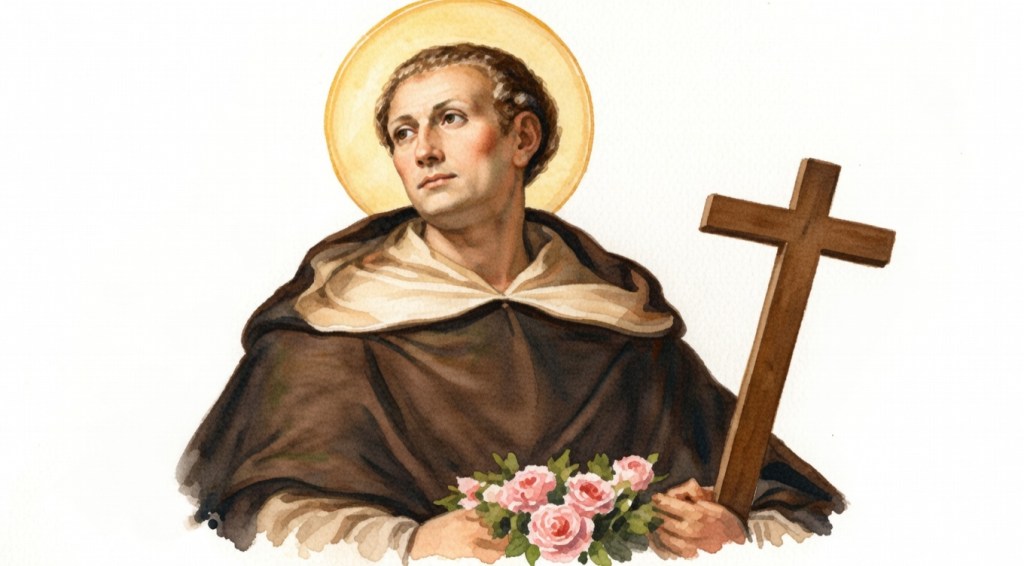

Blessed Álvaro de Córdoba (c. 1360-1430), also known as Álvaro de Zamora or Friar Álvaro Zamorensis in early ecclesiastical documents, is a prominent figure of the Order of Preachers (Dominicans) in the 15th century. Born in Zamora around 1360, belonging to the noble Cardona family (or López de Córdoba y Carrillo according to some local traditions), he entered the Dominican Order at a very young age in 1368, at the convent of San Pedro Mártir in Córdoba.
Trained in theology and holding a master’s degree from the University of Salamanca, he distinguished himself as a professor at the General Study of Saint Paul in Valladolid and as confessor to Queen Catherine of Lancaster and the future King John II of Castile. However, his life changed radically when he felt the call to a profound reform of religious life, in a time marked by the crisis of the Western Schism, the Black Death, and laxity in many monasteries.
He actively collaborated in the reform of the Dominican Order promoted by Blessed Raymond of Capua (Master General and disciple of Saint Catherine of Siena). After a pilgrimage to the Holy Land between 1418 and 1420, where he directly witnessed the sites of the Lord’s Passion, he was deeply moved by the Way of the Cross. Upon his return, he founded the convent of Escalaceli (Scala Coeli, “Stairway to Heaven”) in the foothills of the Sierra Morena mountains, near Córdoba, conceived as a place of strict observance and contemplative prayer.
In this convent, Blessed Álvaro established the first known Stations of the Cross in the West: a route with stations that retraced Jesus’ steps to Golgotha, allowing the faithful to meditate on the Passion without having to travel to Jerusalem. This spiritual innovation spread rapidly and became one of the Church’s most beloved devotions, especially among Hispanic popular piety.
Appointed by Pope Martin V as superior of the reformed convents in Spain, Friar Álvaro preached tirelessly throughout the cities and roads of the Iberian Peninsula, Provence, Savoy, and Italy, defending the unity of the Church and combating moral corruption. He died in the odor of sanctity in Escalaceli on February 19, 1430. His relics are preserved in the same convent, where his memory is venerated with devotion.
Pope Benedict XIV confirmed his veneration on September 22, 1741, beatifying him and adding him to the martyrologies. In Córdoba, popular devotion refers to him as “Saint Álvaro,” and he is the patron saint of numerous brotherhoods and confraternities, who see him as the inspiration for their spirituality centered on the Passion of Christ.
His exemplary life reminds us that true reform of the Church always begins with personal conversion, prayer, and ardent love for the Cross. As a Dominican faithful to the charism of Saint Dominic, he combined preaching with contemplation, leaving a legacy that lives on in devotion to the Stations of the Cross and in the pursuit of a more evangelical religious life.

Exaudi Staff
What is Exaudi News? Exaudi News is an international Catholic media outlet that informs, shapes, and transforms daily in Spanish, English, and Italian. Through news, analytical articles, and live broadcasts of the Pope's events, Exaudi seeks to strengthen Christian unity and contribute to the evangelization of the world, always guided by the Church's social doctrine. We work to bring Christian truth and values to every corner of the planet. Help us transform the world with Exaudi! At Exaudi, we believe that evangelization and quality information can change lives. To continue our mission and expand our reach, we need your help. In addition, we are looking for committed people to join our team. With your support, we will reach more people, spread the message of Christ, and strengthen Christian unity. Will you join our mission? For more information on how to collaborate, visit Exaudi.org or contact us directly: [email protected] Exaudi: Informs, educates, and transforms.
Related
Incarnatus Est: A New Horizon for the Holistic Formation of Young People
Exaudi Staff
19 February, 2026
3 min

The Sacred Rite of Confirmation
Miguel Morales Gabriel
19 February, 2026
1 min
Two Tough Guys Who Found God: Tattoos, the Gym, and the Courageousest Rebellion
Se Buscan Rebeldes
19 February, 2026
4 min
The Christ who doesn’t take away the pain… but accompanies it and transforms you forever
Exaudi Staff
18 February, 2026
3 min