(EN)
(EN)
 (ES)
(ES)
 (IT)
(IT)

Valentine’s Day: Do We Know How to Love?
Today we're thinking especially about romantic love… to help each of us appreciate our own
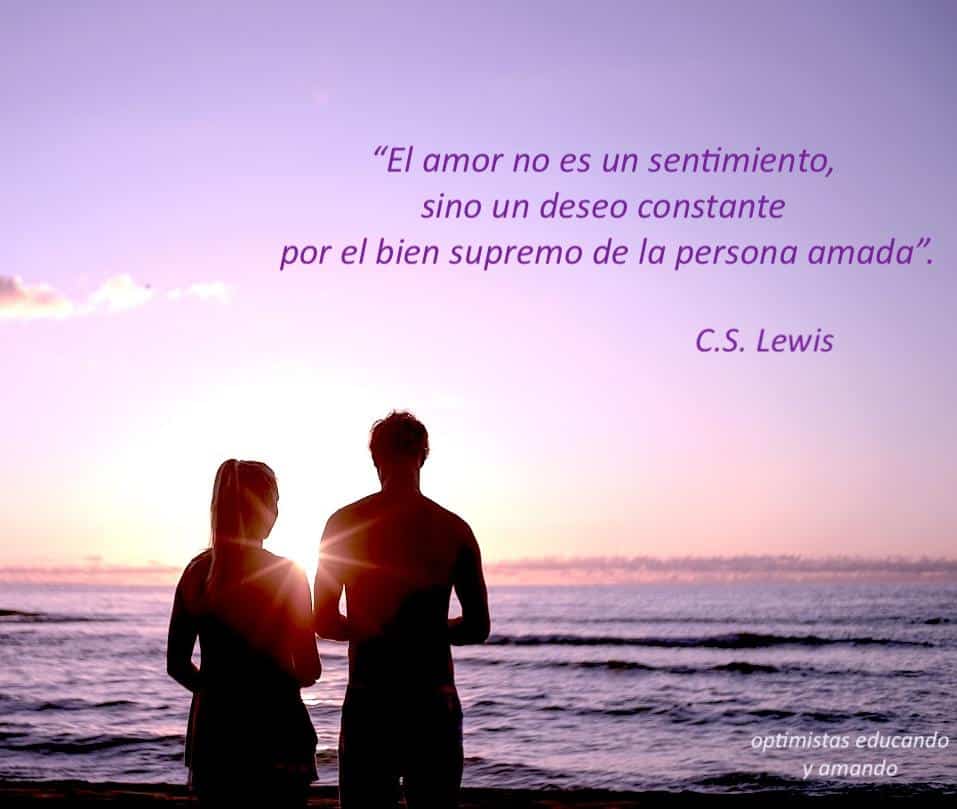

We have a guest author from the blog ” Marketing and Services “: José Miguel Ponce , professor at several universities and Mentor, with some ideas on the subject.
“Love is present in conversations, advertising, and the media in general. However, in the mentoring sessions I have with young people and adults , I’ve realized that people don’t know how to love. They confuse love with a feeling. This is one reason why so many relationships break up. They forget that feelings and emotions change frequently.”
” The deepest need of human beings is to love and feel loved.”
I’ve read this phrase in quite a few books and documents, and it’s a universal experience. I like to say that to be happy you need: to know how to love, to feel loved, and to have a clear life plan.
After reflecting on what it means to “love and feel loved,” I’ve come to the conclusion that it’s a prerequisite for happiness . It seems that feeling loved is easier to achieve, since it largely depends on the affection shown by those who love us. But it’s also important to allow ourselves to be loved . In this case, what matters isn’t what I do for others, my service, or my generosity. Allowing ourselves to be loved is gratefully acknowledging what those who love me do for me. This feeling of being loved can vary from person to person. Each individual has their own way of understanding and preferring these expressions of affection.
Happiness is linked to love, and love involves giving and serving others . Loving often entails sacrifice, generosity, forgiveness, and selflessness. Only when we are willing to give everything in return for nothing do we come closest to happiness, to living a full life and experiencing love.
If I had to sum up how to show love in two words, I would emphasize time and affection. Dedicating time, not just in quantity, but quality time, since the relationship, the interaction, is the foundation of mutual understanding, and that requires time. And mutual understanding is the foundation of love.
Affection is shown in the details . It means helping, pleasantly surprising, giving gifts, even if it doesn’t involve spending money. How much is a smile worth? It’s also shown with words, saying them when necessary.
Loves that are driven by emotion without reason often cause much suffering . Emotion, yes. Intelligence, too. Willpower, undoubtedly. If you fall in love and go through difficult times, don’t let yourself be guided solely by feelings. These are fickle, dependent on many factors and circumstances. Reasons are more stable: they endure over time.
Although in Spanish the terms “amar” and “querer” are often used interchangeably , we can distinguish between these two terms: to love as true love.
Thank you, José Miguel. That line from The Little Prince comes to mind : “I love you,” said the Little Prince. “I love you too,” said the rose. “It’s not the same,” he replied…
Walking together means resorting to forgiveness when we fail … Not having a list of past grievances, not holding grudges.
On the day you say “I do,” you promise to be there for each other, to support each other when you fail… or when you fail. The imperfections we all have give us room to rehearse, learn, and grow as individuals and as a couple, as a team. To grow in love. And they awaken tenderness in each other… something that strengthens and revitalizes love. It warms hearts.
* If we want to be happy, it’s important to ask ourselves:
- Am I trying to learn how to truly love? Am I dedicating time to others?
- Do I frequently show affection to the people I love?
As a great humanist, Tomás Melendo , points out, he who knows how to love is very happy, he who loves more or less is more or less happy, and he who only worries about himself ends up sad, alone , without joy , without the happiness of loving and feeling loved.
Loving someone means shifting your perspective from “I” to “you .” It’s like finding a great treasure and devoting yourself to it. Then, that person captures all your interest, and you want them by your side always: in good times and bad, when things are easy and difficult, but that’s precisely why they’re so valuable: your affection deepens.
And to think that, in love, you only “have” what you “give,” and what’s important is always the other person!
In this way, you help them achieve their best self, but also their own. Furthermore, when you manage to forget yourself a little, you love the other person better, and you are happier .
I’ll leave you with a few points to think about, or to draw up an action plan, because, “actions speak louder than words”…

María José Calvo
Soy Mª José, Médico de familia. Estudié en la Universidad de Navarra, y allí conocí a mi marido. Pronto la familia suscitó un gran interés en mi. Tuve la suerte de conocer y formarme con grandes pedagogos, entre ellos el Profesor Oliveros F. Otero, uno de los fundadores del Instituto de Ciencias de la Educación de la Universidad de Navarra. También hice diplomados en Orientación Familiar en Madrid, en IPAO, con grandes profesionales y amigos, y un Asesoramiento familiar con Edufamilia. Hace tiempo comencé la aventura de escribir para compartir tantas cosas que tenía en mi cabeza y en mi corazón, e iba haciendo vida en mi propia familia, a la vez que escribía en la Revista Hacer Familia, de Palabra. Pinceladas sobre la familia, el amor de pareja, y el arte de educar, con una mirada antropológica humanística, basada en la ciencia, la biología, la medicina… Asimismo, colaboro con otras revistas y diversas webs. En familia creamos un ambiente de confianza y libertad, donde se construye y re-construye cada persona, y donde se quiere a los demás de forma natural. Y ese ambiente va humanizando nuestro entorno. Aquí me tienes: optimistaseducando.blogspot.com.es
Related