 (EN)
(EN)
 (ES)
(ES)
 (IT)
(IT)

Transhumanism and Prophetic Knowledge
Human Transformation, Christian Ethics, and the Challenges of the Future
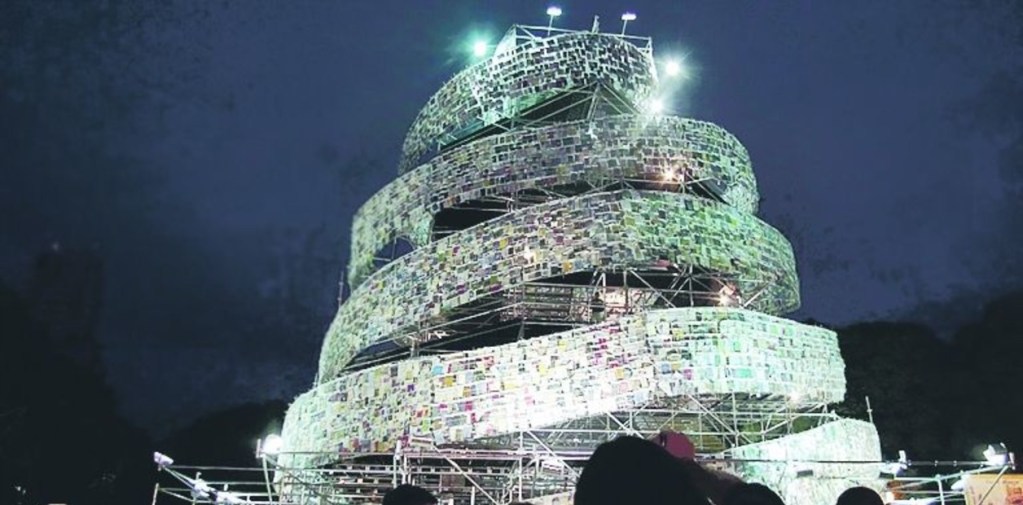

Transformation and restoration of human nature
Although transhumanism is a movement that encompasses very diverse orientations, this emerging ideology, characteristic of the current cultural and anthropological revolution of hypermodernity, could well be characterized as the pursuit of human improvement (physical, mental, moral) through technological means, primarily through biotechnology, gene editing, artificial intelligence, and robotics.
In its most radical version, this new technological messianism promotes the advent of a posthuman species, that is, the extinction of the common human subject to give way to an entity (neo-entities) with exceptional characteristics that would place it above all other creatures. The “new man” and the “new humanity” would achieve this posthuman condition thanks to emerging biotechnologies once the Singularity manifests itself, a phenomenon that transhumanists predict will occur with the emergence of Superintelligence, a clearly disruptive moment in the biocultural evolution of human beings and in the history of humanity.
The promises made in the name of transhumanism/posthumanism are very ambitious, such as the ultimate victory over death; and some of them are extremely disturbing. Ultimately, the aim is to take control of our own evolution and, with it, culminate a process of artificialization of all nature.
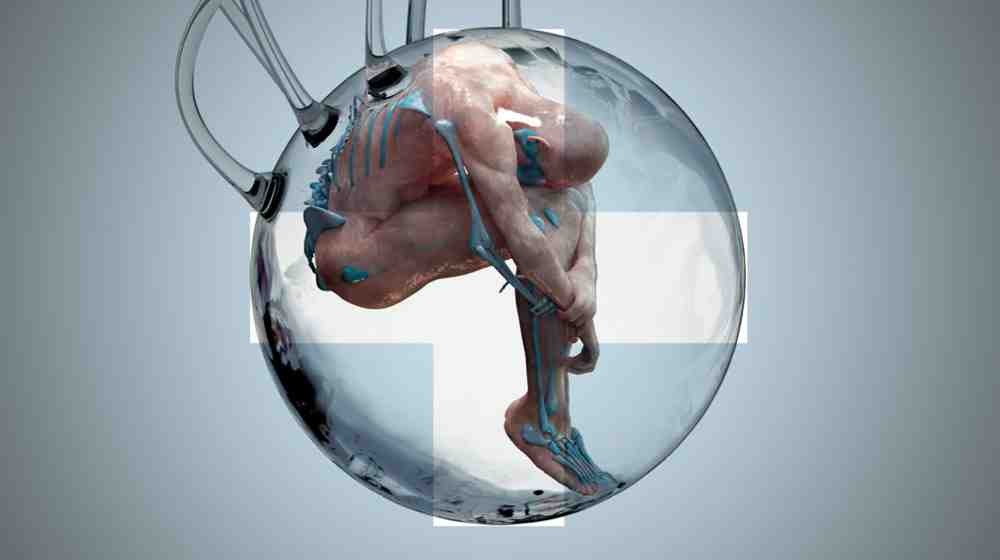
For all these reasons, it is increasingly necessary to take the transhumanist discourse seriously and reflect on its true scope and the assumptions it contains.
As the Spanish philosopher Antonio Diéguez points out, a significant portion of transhumanism’s critics have based their objections on the thesis that there is some fundamental property of human beings (whether of natural origin or not, depending on the authors) that imposes strict limits on what can legitimately be done to them, such as the gifted nature of life and the ethics that follow from it (Sandel 2007), or the inviolability of a human nature that is considered the basis of our dignity as persons and a basic condition of our existence as moral beings who understand themselves as such (Fukuyama 2002, Habermas 2002).
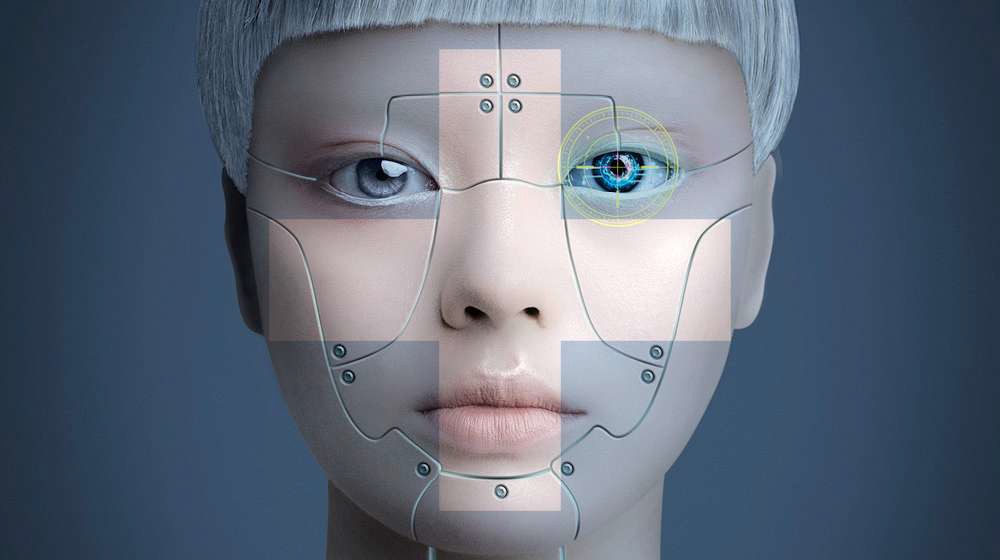
However, in Diéguez’s opinion, the main problem with these criticisms based on the transgression of a supposed “natural order” is that they cannot be addressed by those who do not believe in the existence of this pre-established order regarding humanity, or who find no plausible meaning in the expressions “going against human dignity” or “disregarding the gifted nature of life.” And, obviously, it would be difficult to find a supporter of transhumanism who thinks these expressions designate something objectifiable.
From a transhumanist perspective, what is at issue is precisely whether there is an inviolable natural order, or a stable and normative human nature.
That is why, in my opinion, philosophy based on advanced integral humanism, the social doctrine of the Catholic Church and Christian theology should at this moment be discussing what changes human nature will undergo with the arrival of the Millennium and how, from the Christian worldview, it is understood that the human person himself will be restored, thus recovering his original state: “We shall all be transformed” (I Cor 15:51).
End times and the summary of all things in Christ
Most people who hold a Christian worldview of human history mistakenly identify the “Last Times” with the “End of the World.” According to Alberto Villasana, a Mexican theologian, philosopher, and humanist, this is due not only to the fact that the word “last” evokes the ultimate and most remote, but also to the prevailing post-Augustinian interpretation in the West, which failed to explain the concreteness of Jesus Christ’s reign for “a thousand years” in this world.
For Villasana, the beginning of this confusion is due precisely to Saint Augustine, since in his work “The City of God,” the great Christian theologian, trying to combat the heresy of Cerinthus, spiritualized the Kingdom of Christ so much that it led his interpreters to confuse the End of Time with the End of the World, and the Kingdom of Christ with Heaven.
On the contrary, the early Church Fathers conceived of the End Times as the period of purification that precedes the glorious return of Christ, who will return to defeat evil and reign over the world for an extended period of time.
Thus, in His First Coming, Christ manifested Himself as King of the Universe and Redeemer of all humanity in a humble form, as a small child born in a simple manger. At that singular moment in history, Jesus Christ proposed His Kingdom of Love from the Cross (also called the Tree of Life), that is, from a “throne” free from the worldly power we usually attribute to royalty. On the Cross, Christ, King of the Universe, selflessly surrendered His Divine-Human Person to God the Father to restore the entire Creation from its degradation in communion with the Holy Spirit and thus redeem humankind from the sin and death brought about by the original Fall.
Jesus Christ—the new Adam—thus lovingly embraced all humanity with his arms outstretched in the form of a cross, offering this sacrifice to the Father, thus fulfilling his mission as Savior of all mankind. A cross that coincides with the mathematical sign of the plus sign, and therefore, it is beautiful to think that through his selfless love, he made us more human.
Instead, at his Second Coming, Christ will manifest himself in all his glory as King of the Universe to make all things new and restore Creation.
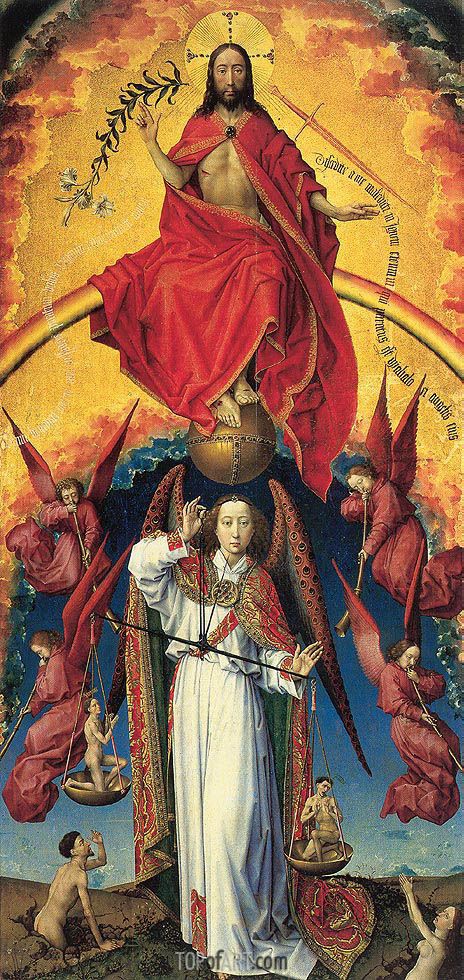
In this sense, for Villasana, the End Times are “the period of harvest where the wheat and the tares are separated after having grown together throughout history. The End Times are the global purification before the Return of Christ. They are the end of human history as we know it, before the world and human nature are completely renewed, thus fulfilling God’s original plan.”
According to Professor Villasana, the words of Saint Matthew about this period of global purification “such as has never been nor ever will be,” referring to the Great Tribulation (Mt 24:21), clearly infer that human history will continue after the End Times and that a purification of this type will never happen again.
Surprisingly, Pope Saint John Paul II revived the original interpretation of the End Times when, in one of the first catecheses of this millennium (14.02.2001), while analyzing the Apocalypse in the light of the great theologian Saint Irenaeus, a Father of the Church of the second century, he explained that the “recapitulation” of all things in Christ will be realized in this history and on this Earth, although totally transformed.
Because of their enormous interest in these uncertain and confusing times, we reproduce below the words of Saint John Paul II at the general audience of February 14, 2001:
“1. God’s salvific plan, “the mystery of his will” (Eph 1:9) for every creature, is expressed in the Letter to the Ephesians with a characteristic term: “to recapitulate” in Christ all things, in heaven and on earth (cf. Eph 1:10). The image could also refer to the shaft around which the parchment or papyrus roll of the volume was wrapped, containing a writing: Christ gives a unitary meaning to all the syllables, words, and works of creation and history.
The first to grasp and develop this theme of “recapitulation” admirably was Saint Irenaeus, Bishop of Lyons, a great Church Father of the second century. Against any fragmentation of the history of salvation, against any separation between the old and new Covenant, against any dispersion of divine revelation and action, Saint Irenaeus exalts the one Lord, Jesus Christ, who in the Incarnation unites in himself the whole history of salvation, humanity, and the whole of creation: “He, as eternal King, recapitulates in himself all things” (Adversus Haereses III, 21, 9).
2. Let us listen to a passage in which this Father of the Church comments on the words of the Apostle, which refer precisely to the recapitulation of all things in Christ. St. Irenaeus affirms that the expression “all things” also includes man, touched by the mystery of the Incarnation, through which the Son of God “from the invisible became visible, from the incomprehensible comprehensible, from the impassible passible, and from the Word man. He recapitulated in himself all things so that the Word of God, just as he has preeminence over supercelestial, spiritual, and invisible beings, in the same way he has preeminence over visible and corporeal beings; and so that, taking this preeminence to himself and making himself head of the Church, he may draw all things to himself” (ibid., III, 16, 6). This confluence of all being in Christ, the center of time and space, is progressively realized in history, overcoming the obstacles and resistance of sin and evil.
3. To illustrate this tension, Saint Irenaeus uses the opposition, already presented by Saint Paul, between Christ and Adam (cf. Rom 5:12-21): Christ is the new Adam, that is, the Firstborn of faithful humanity, who accepts with love and obedience the plan of redemption that God has outlined as the soul and goal of history. Thus, Christ must eliminate the work of devastation, the horrible idolatries, the violence, and every sin that the rebellious Adam spread throughout the centuries-old history of humanity and the horizon of creation. With his full obedience to the Father, Christ inaugurates the era of peace with God and among men, reconciling in himself the dispersed humanity (cf. Eph 2:16). He “recapitulates” in himself Adam, in whom all humanity recognizes itself, transfigures him into a Son of God, and brings him back to full communion with the Father. Precisely through his brotherhood with us in flesh and blood, in life and death, Christ becomes the “head” of saved humanity. Saint Irenaeus also writes: “Christ recapitulated in himself all the blood shed by all the just and all the prophets who have existed since the beginning” (Adversus Haereses V, 14, 1; cf. V, 14, 2).
4. Good and evil, therefore, are considered in the light of Christ’s redemptive work. As Saint Paul suggests, Christ’s redemption affects the entire creation, in the variety of its components (cf. Rom 8:18-30). Indeed, nature itself, subject to the meaninglessness, degradation, and devastation caused by sin, thus shares in the joy of the liberation accomplished by Christ in the Holy Spirit.
Thus, the full realization of the Creator’s original plan is outlined: a creation in which God and man, man and woman, humanity and nature are in harmony, in dialogue, and in communion. This plan, altered by sin, is admirably restored by Christ, who is carrying it out mysteriously but effectively in the present reality, awaiting its full fulfillment. Jesus himself declared that he was the fulcrum and point of convergence of this plan of salvation, when he said: “When I am lifted up from the earth, I will draw all people to myself” (Jn 12:32). And the Evangelist St. John presents this work precisely as a kind of recapitulation, a “gathering into one the children of God who were scattered abroad” (Jn 11:52).
5. This work will reach its fullness at the end of history, when, as St. Paul reminds us, “God will be all in all” (1 Cor 15:28).
The final page of the Apocalypse, proclaimed at the beginning of our meeting, vividly describes this goal. The Church and the Spirit await and invoke that moment when Christ “will hand over the kingdom to God the Father, having destroyed all rule, dominion, and authority. (…) The last enemy to be destroyed will be death, for he has put all things under the feet” of his Son (1 Cor 15:24-27).
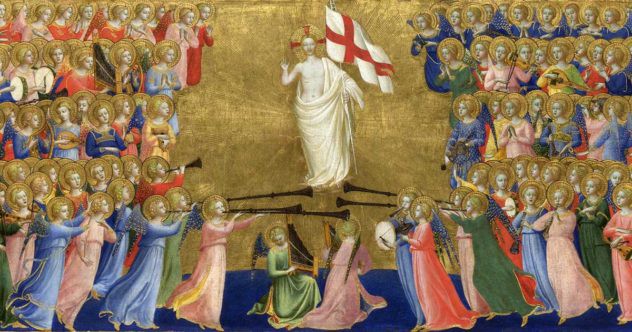
At the end of this battle, sung in admirable pages by the Apocalypse, Christ will carry out the “recapitulation” and those united to him will form the community of the redeemed, which “will no longer be wounded by sin, by stains, by self-love, which destroy or wound the earthly community of men. The beatific vision, in which God will reveal himself inexhaustibly to the elect, will be the immense source of happiness, peace, and mutual communion” (Catechism of the Catholic Church, no. 1045).
The Church, the loving bride of the Lamb, with her gaze fixed on that day of light, raises the fervent invocation: “Marana tha” (1 Cor 16:22), “Come, Lord Jesus!” (Rev 22:20).”
As Alberto Villasana states, according to the Apocalypse, the final and definitive Judgment will take place, yes, at the end of human history, but the Parousia or glorious Return of Jesus Christ is placed at the beginning of a long period of peace and universal well-being that is inaugurated by the condescending appearance of the Lord of history at the end of the Great Tribulation, a global purification that seals the End Times.
In a broad sense, in Villasana’s words, we can be certain that the End Times began with the return of the Jews to the Promised Land, an event prophesied hundreds of years before Christ (Ezekiel 37:21). What remains to be seen is when the final seven years of this period begin, those of the “Great Tribulation” described by the prophets Daniel, Isaiah, Zechariah, the Synoptics, and Paul of Tarsus.
Indeed, the proclamation of independence of the State of Israel (1948) and the Six Day War (June 1967) gave us the certainty that we were already living in the End Times in the broad sense, with only the strict sense remaining to be determined, that is, the beginning of the Great Tribulation, commonly known as the “week of Daniel.”
Technocratic Global Government and Global Ethics
According to Alberto Villasana, in his role as international analyst, as well as other similar authors, the steps of the global occupation towards a technocratic world government that we are experiencing in these End Times, were clearly defined by Albert Pike (Boston, 1809-1891), Grand Sovereign of the Ancient and Accepted Rite of Freemasonry, in a letter he addressed on August 15, 1871 to Giuseppe Mazzini, Grand Sovereign of the Illuminati after Adam Weishaupt, founder of the dome of the Illuminati on May 1, 1776. In that document, which was deposited in the Library of the British Museum in London, the three world wars that would have to be provoked in order to establish the New World Order were established.
They would wage World War I to overthrow the Orthodox Christian tsars, bringing the vast Russian territory under the control of the globalist elite and thus using it as a platform from which to spread their internationalist goals.
A landmark document was the Balfour Declaration (signed in 1917), which stated that the British government viewed favorably the establishment of a Jewish homeland in Palestine, understanding that this would not prejudice the civil and religious rights of non-Jewish communities in Palestine. This declaration was supported by several countries, including the United States, and became an important document after World War I when the League of Nations assigned the United Kingdom the mandate over Palestine.
The Second World War would be waged by exacerbating the differences between political Zionism and German nationalism, with the aim of consolidating and extending Russian influence and establishing the State of Israel in Palestine.
The Third World War would be provoked, Pike says, “by exacerbating the differences between Jews and Arabs to provoke a formidable social cataclysm that in all its terror will demonstrate to the nations the effect of absolute atheism, the origin of barbarism and the most violent confusion. Then, the multitudes, disillusioned with Christianity and not knowing whom to worship, will receive the true light of Lucifer, in a manifestation that will be the result of the general reactionary movement, following the destruction of Christianity and atheism, both conquered and exterminated at the same time.”
And from a prophetic point of view, Israel is God’s “clock,” the chronometer that tells us how close or far we are from the end of the current times of the nations and the Church, and the beginning of the messianic times of Christ’s Kingdom.
Thanks to the prophet Ezekiel, we know how God will break His silence before the Great Tribulation begins. He describes a battle, commonly known as the “War of Gog and Magog,” in which God will portentously destroy an alliance of invaders who will attack Israel, as well as the nations from which those armies came.
The War of Gog and Magog is a unique conflict in its chronology, its purpose, its characteristics and its effects on Israel and the entire world.
Ezekiel predicted that after they are reunited in the promised land, at the end of time, the Israelites will be attacked by enemies from the north (Arab countries) along with Russia: “Behold, I am against you, Gog, chief prince of Meshech and Tubal (present-day Russia) (…) I will bring you out with all your army (…) With them are Persia (Iran), Cush (Ethiopia), and Put (Libya), all of them armed with shield and helmet. Gomer with all her troops, and the house of Togarmah (Turkey) from the far north with all their troops, and many peoples with you (…) After many years you will invade a country saved from the sword, gathered from many peoples to the mountains of Israel (…) In the last days you will attack my people Israel like a cloud to cover the land” (Ez 38, 3-8, 16).
Throughout chapters 38 and 39, the names Gog and Magog are used together as a title for the combination of a great adversary of God: Gog as a “prince,” and Magog as a country or region. Twice he uses “Magog” to indicate the territory from which the leader named “Gog” originates, which in ancient Hebrew means “high and mighty.” By referring to Gog as coming from the “far north,” Ezekiel seems to be denoting the highest level of authority within an alliance of nations from what are now the former Soviet republics, the territory of the ancient kingdom of Anatolia, and beyond the Caucasus.
That world war, in which several countries will unite to attack Israel, will end, says Ezekiel, with a portentous divine intervention that will thwart the invasion. Months later, the false peace agreement signed by the figure whom the prophet Daniel called the “fourth beast” (referred to by Saint John as the “Antichrist”) will take place, who will dominate the world for seven years: “for one week he will make a covenant with many” (Dan 9:27). Jesus Christ called this period the “Great Tribulation,” and it is the stage in which humanity will be purified and prepared for his glorious Return, an event that closes the times of the Church and the nations and begins the new messianic times of the Kingdom of God on Earth.
The war against Israel described by Ezekiel, which precedes the seven years of the Great Tribulation, will be aborted by a direct action of God: “You will fall on the mountains of Israel, you and all your troops, and the peoples who went with you (…) And I will make my holy name known in the midst of my people Israel, and I will never again let my holy name be profaned; and the nations will know that I am the Lord, the Holy One in Israel” (Ez 39, 4, 7).
In this prophetic context, the architecture of the technocratic world government is currently advancing thanks to the construction of the global digital brain that is the Internet. That is, the connected network of everything with everything. The Internet of things and people placed at the service of disordered power, totalizing control, and evil. Such a world government could, if finally established, control humanity in a short time through a biotechnological economic system and the widespread implementation of microchips.
On the other hand, a new global ethic that has been gaining ground since the end of the Cold War in the 20th century is gaining ground. According to Professor Marguerite A. Peeters of the Institute for Intercultural Dialogue Dynamics , immediately after the fall of the Berlin Wall (1989), a global cultural revolution took place: new words, new paradigms, norms, values, lifestyles, educational methods, and governance processes, belonging to a new ethic, spread throughout the world and gained ground. This is a postmodern ethical system and, in its radical aspects, post-Judeo-Christian. It is also a global standard; it already governs the cultures of the entire world. Most intellectuals and decision-makers tend to follow the new standards without carefully analyzing their origin and implications, while a minority remains opposed to the adoption of this global ethic.
The contents of the new global culture are not self-evident. Under the guise of a “soft consensus,” according to Professor Peeters, global ethics conceals an anti-Christian agenda rooted in Western apostasy and driven by powerful minorities who have held the helm of global governance since 1989.
A new ethic provides the new paradigms with their unifying configuration. Ethics is global and has replaced the universal values upon which the international order was founded in 1945 and the Human Rights proclaimed in 1948, as they are now considered partly obsolete by the new vision of techno-globalization in the new BioDigital era of the 21st century.
The starting point and goal of global ethics do not coincide with those of the traditional concept of universality. It is impossible to understand it without relating it to the new “theology” that preceded the global cultural revolution and that pushed the transcendence of God to the other side, outside of human history, placing the immanent in the hands of humankind.
From prophetic knowledge this idea would be expressed in the following way:
I saw the angel who said to me, “What do you see, Son of man?” And I said to him, “I see something like the tablets of the Law of Moses.” And he answered me, “They are not, though they appear to be.” Did not the prophet Daniel say this? The prophet said, “He will try to change the times and the law; and they will be given into his hand for a time, a time, and half times” (Daniel 7:25).
Thus, a fundamental line emerges that distinguishes post-Christian humanism and the emerging transhumanist/posthumanist currents of the new world ethic from the universal principles of an ethics based on natural law and a genuine and integral Christian humanism driven by salvation in Christ.
From a Christian worldview characterized by hope, the new world order and globalization are called to be the civilization of love.
In the document “Commitment to Building a Civilization of Love,” presented on December 15, 1999, a few days before the beginning of the new Millennium, Saint John Paul II offered the following reflection: “It is necessary to carefully analyze the causes of the loss of the sense of God and courageously propose again the proclamation of the face of the Father, revealed by Jesus Christ in the light of the Spirit. This revelation does not diminish, but rather exalts the dignity of the human person as the image of God of Love.”
Given the changing era we are experiencing, a task of genuine discernment and inspired understanding is increasingly necessary to understand the disruptive changes already taking place.
Both capacities—discernment and understanding of historical events and our own lives—are the product of the cognitive integration and spiritual intelligence that human beings enjoy, and which artificial intelligence or a future posthuman being will find difficult to acquire. This spiritual intelligence is often complemented by what we might call prophetic knowledge.
Morphological freedom to force human evolution
Transhumanism is the crux of unleashed postmodernism. After the ideological engine of modernity, liberalism, and now global neocapitalism, has shattered the prevailing forms of religion, state, nation, family, and gender, our species faces a major crossroads: changing the human condition itself.
Over the decades, techno-scientific progress has become an ideological factor, almost a pseudo-religion, a new secular messianism, while technology has been nothing more than technology. Technology is ambivalent—though not neutral—and can be aimed indistinctly at bringing about good or evil. Techno-sciences can be at the service of people or at the service of biopower that seeks to control all of life.
We have now reached the recent phase of the technocratic worldview that seeks to overcome the limitations of the human species in what truly equalizes it: its vulnerability and mortality. This is what transhumanism seeks with the “H+ Program,” a proposal that aims to be the final utopia/dystopia of Western neoliberalism.
From the transhumanist perspective, the human being is not a “sacred” entity, but merely a product of “chance.” Therefore, according to this movement, the genetic enhancement of people is one of the most morally significant issues that can be undertaken in the 21st century.
In the words of transhumanist Natasha Vita-More: “Whether we like it or not, we will become cyborgs.” This American designer explains that “people capable of adapting to techno-scientific evolution will also develop new tools and innovative ideas.” Vita-More uses the concept of “morphological freedom” to refer to when people accelerate their own evolution through biotechnological design.
Eternal youth, superhuman powers, cybernetic immortality, etc., transhumanists aspire to new human beings who adapt to the New World Order. Technological progress should allow for the supposed optimization of our species and return us to paradise, they assert. The rebellion of creatures against the Creator and our own limitations is a constant theme in transhumanist discourse. In this battle, humans attempt to tame nature and manipulate it to satisfy their desires.
Transhumanism has its forefront in cyberwarfare and the space revolution. In a recent study titled “Cyborg Soldier 2050: Human/Machine Fusion and the Implications for the Future of the DOD,” Pentagon experts propose the development of direct neural enhancements to the human brain for bidirectional data transfer in cyborg soldiers. In other words, it’s about granting human beings telepathy, a revolutionary advance in the capabilities of future soldiers.
On another note, the problem of the emergence of a strong or general artificial intelligence is currently the subject of intense debate. Such a superintelligence would entail the creation of a rationality devoid of morality and human feelings—albeit with unlimited knowledge and perfect memory—without empathy, without humanity, without a heart. Under these conditions, transhumanism runs the risk of handing over all power to such a superintelligence. The result could be a cybernetic dictatorship of extraordinary and currently unimaginable proportions.
As Oxford University philosopher Nick Bostrom has said, superintelligence poses an “existential risk” to the human species. In January 2015, Nick Bostrom, Stephen Hawking, Max Tegmark, Elon Musk, Martin Rees, and Jaan Tallinn, among others, signed an open letter at the request of the Future of Life Institute warning of the potential dangers of strong or general artificial intelligence. In the document, they acknowledged that “it is important and timely to investigate how to develop artificial intelligence systems that are both robust and beneficial to humanity.”
The letter is signed not only by people not related to AI, such as Hawking, Musk, and Bostrom, but also by leading computer scientists (including Demis Hassabis, one of the leading researchers in AI), because after all, if they develop an AI that doesn’t share the best human values, it means they weren’t smart enough to control their own creations.
Will superintelligence be the technology the Antichrist described in the Bible will use to dominate humanity? Will the Antichrist of the Apocalypse be the most perfect being of the new posthuman race?
Portrait of the Antichrist and totalizing bio-digitalization
The Russian philosopher and theologian Vladimir Solovyov (1853-1900), a cosmist and Byzantine Catholic, wrote a book titled “A Brief Account of the Antichrist” at the end of his life, as a testament. In this book, he powerfully portrays the Antichrist and narrates his rise to the highest conceivable power on Earth.
In a writing from 1873, Soloviev defined his life’s goal as follows: “To express Christianity in a new form,” removing that which “until now has prevented it from entering the general consciousness .” The driving force behind this goal is the conviction that faith and reason are not antithetical, but complementary realities: reason allows one to deepen faith, and faith allows reason to understand that the deepest demands of philosophy are satisfied by Christianity. For Soloviev, philosophy and theology are not confused; they meet and mutually reinforce each other.
In the dialogues of the cited book, Soloviev moves on to the problem of the reality and nature of the Antichrist, which Mr. Z (the author’s spokesman) defines as “the incarnation of evil, an individual incarnation, unique in its execution and in its fullness . ”
According to Fernando Castelli’s commentary on Soloviev’s book (Humanitas no. 33), in this story, a superman is consecrated as the Antichrist in the 21st century. This figure apparently brings security and prosperity to humanity. Science and technology had reached high levels of progress by that time and were solving many global problems.
Only the ultimate questions remained unresolved: life, death, the final destiny of humanity and the world. Along with theoretical materialism, people’s spirituality and faith are also in crisis, as is the concept of creation from nothing. A widespread apostasy from the Creator and the God of Love has taken hold of the Earth.
While the vast majority of men and women were completely unbelieving about the End Times, on the other hand, a few believers became men and women who understood and reasoned in the key of prophetic knowledge, fulfilling the words of the apostle: “ Be children in your heart, not in your mind.”
In the time of Saint Paul, the apostle was already proclaiming that salvation was near. In his letter to the Christians of Rome, he exhorted them thus:
“Brothers and sisters, be aware of the present time. The hour has already come to awaken from your sleep, for salvation is nearer to us now than when we first believed. The night is far gone, the day is at hand. Let us then lay aside the works of darkness and put on the armor of light. Let us walk with dignity, as in the daytime. No gluttony or drunkenness, no sexual immorality or rioting, no quarreling or envy. But put on the Lord Jesus Christ” ( Rom 13:11-14a).
In a context of disbelief and disinterest in prophetic knowledge, according to Soloviev, the Antichrist appears. He is a young man of thirty-three years old. “The excessive self-esteem of this great spiritualist, ascetic, and philanthropist seemed, or at least could be, sufficiently justified, in addition to this exceptional genius, beauty, and nobility, by his supreme selflessness. He was so endowed with divine gifts that it could hardly be criticized for not seeing in these gifts a special sign of benevolence from on high and for considering himself second only to God, the only Son of God, unique in his kind. In short, he considered himself what Christ had truly been. Christ? The greatest of his precursors, sent to prepare for his coming, for he was the one awaited in history, sent by God to complete and correct the work of Christ.”
The Antichrist in Soloviev’s story is of obscure origins: he has no name, can appear anywhere, is ambiguous and mysterious, but also a prodigy of intelligence and energy. He claims to believe in God, but his God is confused with a mysterious reality, that is, with the spirit of evil, which instills in him an “excessive love of self.” Driven by pride, he would like to usurp Christ’s place and found a kingdom of his own, aiming for certain precise objectives: above all, to establish “his” peace, based on the “common good,” which means “well-being,” the satisfaction of one’s own desires, the possibility of entertainment, security, and tranquility in a “New Church” without Christ, syncretic, worldly, unfree, and estranged from the Triune God.
The Antichrist’s most dangerous deception was to make people believe that he was the true “Messiah,” the “Savior,” who had come to perfect—or rather, correct—the work of Christ.
Following transhumanist postulates, the Antichrist would pursue the breaking down of the boundaries of the human condition, attempting to improve the biological and natural human being through technosciences to transform him into another being. He would genetically engineer and bioenhance humans, intervening in their germline and their minds.
As we have expressed on other occasions, transhumanism aspires to transcend the human condition, which has a cosmic coherence as long as it follows the natural law imprinted in creation. In this scenario, we may ask: In whose image and likeness do transhumanists want to create a superintelligence and posthuman beings?
As Professor Fernando Castelli shows us, the cosmist Soloviev constructed the aforementioned Short Story from four basic ideas:
- The essence of Christianity is not its doctrine or its morals, but the person of Jesus Christ. Soloviev sees the mark of the Antichrist in the belief that there was no resurrection, no miracle, no divine revelation. The Russian philosopher strongly rejects the notion that Christianity is simply an ethical-social doctrine that gives meaning to life, teaches love for one’s neighbor, and rejects violence. Christianity centers on the God of Love. And human beings are created, according to this spiritual worldview, in freedom and dignity, in the image and likeness of the Creator.
- The Catholic Church is the Church of Christ, founded on Peter so that “he might ultimately be the shepherd of the flock in Christ, that is, of the Catholic, Orthodox, and Reformed Church, overcoming the barriers existing among Christians.” That Church is truly the People of God, the Mystical Body of Christ.
- Salvation will come from the Jews. It is their task to unmask the idolatrous impiety of the Emperor (the Antichrist) and the Antipope (the False Prophet), to rise up and make the God of Israel triumph. And they are also the first to see Christ—the Jewish Christ—descend from Heaven to welcome his faithful. Thus, Soloviev fused Hebrew and Christian eschatology in his proposal.

- The narrator of the story asks himself: What is the true meaning of the entire drama of human history?
Soloviev doesn’t understand why the Antichrist hates God so much. The answer seems banal: the fact is that there is something good, but not in substance. The good that comes from Satan is purely apparent. It is generated not by love, but by hatred, not by truth, but by lies. Consequently, it alters the mind, deteriorates the soul, generates death, and destroys the harmony of Being. The narrator, in one of his remarks in The Short Story, says: “All that glitters is not gold.” The splendor of an artificial good has no value.
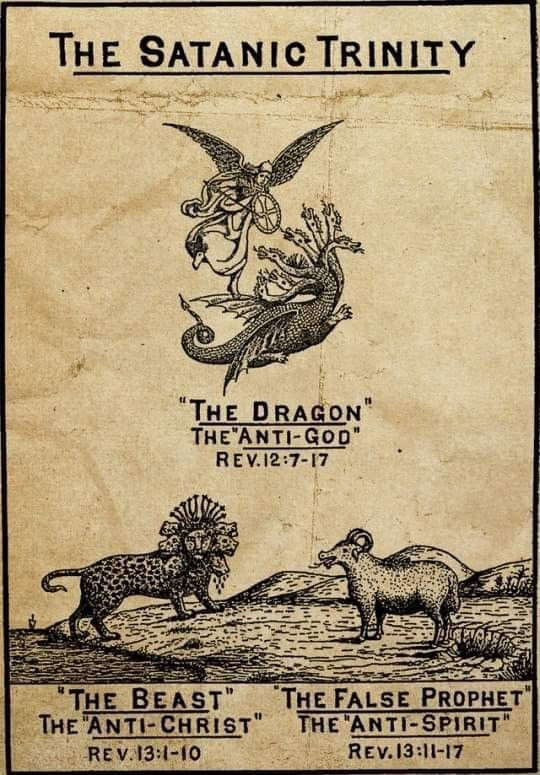
For international analyst and theologian Alberto Villasana, the word “Antichrist” has two meanings: “one who fights Christ” or “one who supplants Christ.” The latter is the meaning used by Saint John in the Book of Revelation. Initially, he is not portrayed as a violent, malevolent, and cruel figure, but rather as a positive, charismatic leader who will solve humanity’s main problems (war, hunger, financial and ecological collapse), seducing most of humanity with his ingenuity and apparent goodness.
The Antichrist, who, according to Villasana, will be taken by the Jews as the promised Messiah, will enter into a pact with various rulers on behalf of Israel, being a strategist and deceiver who will subjugate humanity, first through seduction and subterfuge, and later through force. Saint John says that he will ultimately claim divine worship for himself, promoting a universal, syncretic, and unique apostate religion.
According to Christian prophetic knowledge, the Antichrist will be accompanied by the False Prophet.
As the American Catholic Archbishop Fulton Sheen (1895-1979) once stated, “The false prophet will have a religion without a cross. It will be a religion to destroy religions. There will be a false church. The Church of Christ (the Catholic Church) will be one. And the false prophet will create another. The false church will be worldly, ecumenical, and worldwide. It will be a federation of churches. And the religions will form some kind of global association. A world parliament of churches emptied of all divine content. And it will be the mystical body of the antichrist. The mystical body on earth today will have its Judas Iscariot, and he will be the false prophet. Satan will recruit him from among our bishops.”
On another note, Professor Villasana sees the “mark of the beast” as the center of the Antichrist’s project for a world government to achieve a global economic dictatorship: a society without monetary circulation, with a sophisticated biotechnological payment system through which everyone can be controlled through everyday buying and selling activities.
The Apocalypse tells us that the Antichrist, “will cause all, both small and great, rich and poor, free and slave, to receive a mark on their right hand or on their foreheads, and that no one may buy or sell except one who has the mark, which is the name of the beast or the number of his name” (Rev 13:16-18).
While this quote doesn’t necessarily have to be directly related to microchip implantation, it could very well be that this is the technological tool that facilitates global biocontrol.
Trying to escape the microchip system would mean being excluded from the health and education systems, commerce, government benefits, mass food ration systems, the new financial system, and so on.
However, this apocalyptic scenario, from a Christian eschatology filled with hope in the Redeemer, the entry of the fullness of the Jews into messianic salvation, following the fullness of the Gentiles, will allow the People of God to reach the fullness of Christ in which God will be all in us.
Thus, the triumph of the Church, understood as the People of God, would not come about through a gradual and evolutionary process of success, but rather, like Christ, it would have to undergo his passion and death to reach his resurrection.
Seen from another perspective, Pierre Teilhard de Chardin, a French Jesuit religious, paleontologist and philosopher, left us this phrase for reflection:
“I believe the Universe is an Evolution. I believe Evolution moves toward the Spirit. I believe the Spirit is realized in something personal. I believe the supreme Personal is the Universal Christ.”
Personal and collective spiritual intelligence
Faced with this portrait of the Antichrist painted by Soloviev and prophetically foretold by the texts of Revelation, and in the face of the development of transhumanism and the technocratic paradigm understood as a totalitarian biopower, we can adequately discern the times in which we live in order to continue developing our evolutionary project of perfection as human beings. To achieve this, we have spiritual intelligence, also known as existential or transcendent intelligence. In this way, the intellect and the mind connect to the heart.
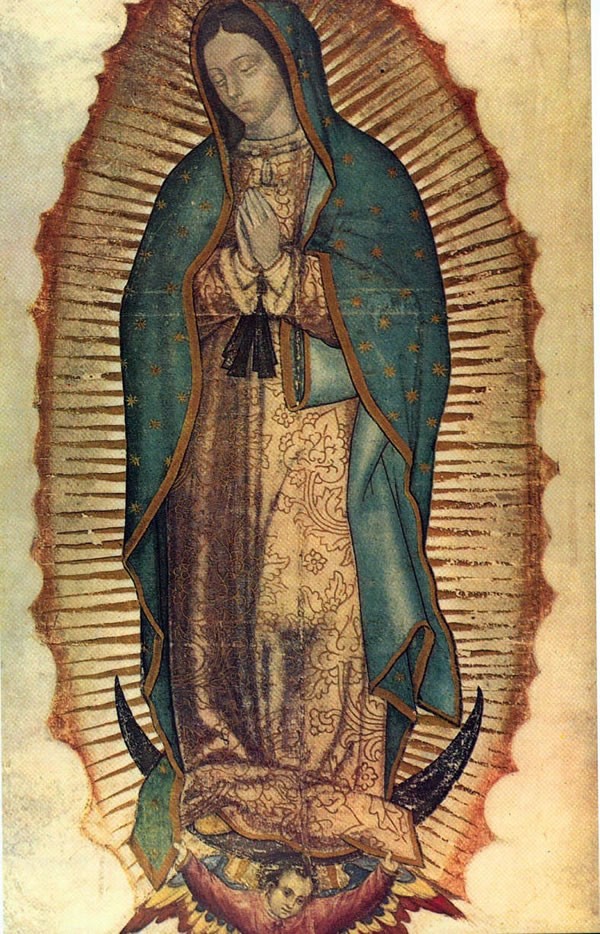
From the Christian worldview, the Virgin Mary was the most unique human being in creation. She utilized this spiritual intelligence in the face of the extraordinary events she experienced, and the Gospels tell us that she contemplated them and treasured them in her heart. Thus, Mary, the Mother of God and of Humanity, has a fundamental role in the End Times, since, due to her humility and simplicity, she will be the cause of salvation and the precursor to the destruction of evil embodied in the figure of the Antichrist.
On the other hand, for Howard Gardner, the American psychologist who identified the eight forms of intelligence in human beings, spiritual intelligence is “the capacity to situate oneself in relation to the cosmos.” Spiritual intelligence could also be defined as the capacity to situate oneself in relation to the existential features of the human condition, such as the meaning of life, the meaning of death, and the ultimate destiny of the physical, psychological, and spiritual worlds. Spiritual intelligence would thus manifest itself in profound experiences such as love for our fellow human beings or in the beauty of artistic expression, thus collaborating in the work of the Creator.
For the Christian worldview, spiritual intelligence would be equivalent to reason illuminated by faith and sanctifying grace.
On the other hand, the prophetic knowledge we have discussed throughout this article contributes to increasing this spiritual intelligence as a constitutive element of our human nature.
And spiritual intelligence turns out to be the most important of all human intelligences, irreproducible in a robot or artificial intelligence.
This intelligence is represented by the power to know the meaning of spiritual life and in the knowledge and embrace of God-Love. From a scientific point of view, it is not clear how a person connects to this spiritual dimension, but it is surely through a state of consciousness, peace, and plenitude achieved through an inner life cultivated in silence and through a commitment to serve others, all with the help of faith and sanctifying grace.
ALBERT CORTINA
Article published on November 24, 2019 in “Frontiere, revista di geocultura”.

Albert Cortina
Albert Cortina es abogado y urbanista. Director del Estudio DTUM, impulsa un humanismo avanzado para una sociedad donde las biotecnologías exponenciales estén al servicio de las personas y de la vida. Promueve la integración entre ciencia, ética y espiritualidad. Actualmente focaliza su atención en la preservación de la naturaleza y condición humana desde una antropología adecuada que priorice el desarrollo integral de la persona. Cree en unos principios basados en una ética universal que tenga su fundamento en la ley natural y en la espiritualidad del corazón. Desde su vocación profesional gestiona ideas, valores y proyectos a favor del bien común.
Related
The “steps” that EASTER asks of us all
Mario J. Paredes
04 April, 2026
4 min
The Cross
Juan Francisco Miguel
04 April, 2026
3 min
Messages for everyone from the Cross
Mario J. Paredes
03 April, 2026
5 min
Cardinal Arizmendi: Meeting of Indigenous Translators
Cardenal Felipe Arizmendi
03 April, 2026
4 min