10 April, 2026

Follow us on

EduFamilia

Voices

19 December, 2025

11 min

The Will, the Foundation of Love

Wanting: The Will, and More!

The Will, the Foundation of Love

The will, but not in isolation: our whole being!

Above all, the will

When Aristotle describes  love  as  wanting,  he intends to make it clear that  the core  of love lies  in the will.

That to love is, essentially and fundamentally,  a voluntary and free act.

certain determination,  stable and imperishable, as I suggested in  the preceding article.

But “pulling” on the rest of our being

However, those of us who are lucky enough to have been in love for many years know that love is not exhausted there, in mere and naked will.

That, properly speaking, one loves with  one’s whole person.

That, to truly love, you have to put  everything on the line:

  • From the most transcendent acts, such as prayer, reflection and sacrifice for the loved one, or the joint design of a shared life project.
  • Going through feelings, affections and emotions: tenderness, gratitude, gentleness, trust, kindness and affability, empathy and sympathy…
  • Even the smallest and seemingly irrelevant actions, in which the good we seek for the loved one is realized.

Among others:

  • The effort to appear elegant and attractive: he and she, she and he (that is:  he too ).
  • The effort of a kind smile, a gentle caress, or a look of approval, comfort, complicity, or affection…
  • The small details that make the return home more meaningful and endearing; that illuminate daily life with dazzling flashes of devotion; that embody and give life to the dedication of parents to each child, or of siblings to each other, or of children to their parents and the other members of the family…
  • The omission of anything that harms or bothers our spouse and our children.

Absolutely everything!

We love with  all  that we are, know, feel, have, do, yearn for, and even what we lack!

That is, also with our limitations and with our shortcomings or defects, to the extent that we make them known or, at least, recognize them and ask for help or, if appropriate, forgiveness.

Absolutely with everything.

In this sense —and turning to philosophy for a moment—, to love is to  support, with our whole  being,  the  being  of the beloved person.

To love is to dedicate our entire being
to supporting and promoting the loved one.

But… willpower!

A very diverse crowd

Therefore, there are many and varied acts of love:

  • Understanding words or silence, dictated by the needs of the other, rather than by our own desires.
  • A genuine, sincere, and welcoming smile, even when we don’t feel like it.
  • Paying careful attention to those around us, putting aside our own illusions, in order to effectively discover and bring to life what each of them needs.
  • Constant and strenuous work or generous availability towards children, friends or colleagues, even when we are very short of time.
  • The fine-tuning of one’s own image, or that of the house, or the workplace, with details that are often almost imperceptible, but which make life more pleasant for others.
  • The constant effort to omit anything that worsens the relationship with others or disturbs a harmonious coexistence.

United by a common desire

Numerous and very diverse, as I have just suggested.

But those immense repertoires of actions or activities only become  authentic love  when they go hand in hand with  free and voluntary desire.

Or, to put it more directly: they are only love insofar as they are encompassed or immersed in  the operation most proper to the will,  wanting.

An action that seeks in a noble, constant and, if possible, effective way,  the good  of the loved person.

Any legitimate activity becomes love
insofar as it desires and seeks the good of the beloved person.

The essential balance

It is very important to maintain a balance between the two positions I have just mentioned.

Two ways of understanding love that, isolated and unrelated to each other, would give rise to dangerous theoretical errors and deviations in behavior, sometimes irreparable:

Nor “voluntarism”

  • On one hand, there is the view that reduces all love to a mere act of will, without repercussions or intervention of the remaining powers and activities.
  • These are the “cold and stubborn” people who try to get everything done through sheer effort, without putting their heart into it or asking for help, even if they need it.

Nor “sentimentalism”

  • And, at the opposite extreme, there is the one that understands love apart from the exercise of will: as if it were, to use the most frequent case, a  mere feeling or a set of them.
  • That is, letting oneself be carried away by the desires of the moment, the subjective state, the affections, without investigating with intelligence what the true good is and putting the will into play to achieve it.

In both cases we are dealing with partial, incomplete and, therefore, dangerous positions.

Neither isolated and unsupported will
nor feeling alone.

Total love, albeit orderly!

On the contrary, it is worth repeating and making clear that:

  • Love involves  the whole person:  not just certain elements or faculties, not even the noblest ones, such as understanding or will.
  • But it is rooted, as in its  core,  in the  will,  in the intelligent act of wanting: for, if it is not centered on it and nourished by it, it decays into sentimentality, into the empire of desires or whims, into arbitrariness.

When we love, we put our whole person into play,
but guided by intelligent will.

Regarding the act of intelligent will

Let’s look at it more slowly.

1. The whole person

On the one hand, it is  the whole person  who is fully, intimately and energetically involved in any act of true love, the end of which will always be the good of  another person.

Love is an  interpersonal reality ,  in the broadest, deepest and most intense sense of this expression.

It is established  between people  and involves  the most personal aspects  of each of them.

Love is an interpersonal reality,
in the broadest and strongest sense of this expression.

2. Under the rule of the will

The will…

Furthermore, and precisely because it involves the whole person, the driving force behind authentic love is always an act of will.

  • An act of will directed towards the noblest thing that exists —another person—, to provide them with a good that truly is good.
  • In other words, something that will improve her, help her to be a better person and, as a result, happier.
  • And, as I have just suggested, to provide him with that good, the will will move, in the one who loves, all the necessary springs.

…that moves the other powers or faculties

In other words, it will put at stake:

  • Intelligence is always   essential to discover what is best for those we love at any given time.
  • And, depending on the case, all the actions required  to achieve it  (if it is something that already exists) or  to make it  (if it is to arise as a result of our actions) and, thus,  offer it  to the one we love.
  • And all of the above, accompanied by the appropriate feelings: affection, tenderness, affability, sweetness, according to what is appropriate in each case.

Love, therefore, involves the whole person, but its core is an act of  intelligent will,  known as  wanting .

Love involves the whole person,
but its core is an act of will: wanting.

The desire of the will: the core of all love

To love, to want.

We are dealing with key words and realities.

Because?

Because a correct understanding of it allows one to know the nature of love more properly, to live it more effectively, and thus contribute to building a more humane, fairer, kinder, and happier society.

What love “is not”

Let us first examine what  love is not  , although it is sometimes confused with it.

Love  is not  identified with “I like it,” “I’m attracted to it,” “I want it,” “I’m interested in it,” “It captivates me,” “I’m passionate about it,” “It makes my heart beat,” “It provokes me”… and everything signified by similar expressions.

Well, in the end,  if they are considered  in isolation,  all those affections and realities, as well as the acts that derive from them, are more characteristic of animals than of man or, at least, are common to both.

Whereas, in its most precise meaning, the will of the desire  does not  correspond to any animal, but is exclusive to human beings.

Desires and sensations
are common to animals and humans;
wanting is uniquely and exclusively human.

A) The animals

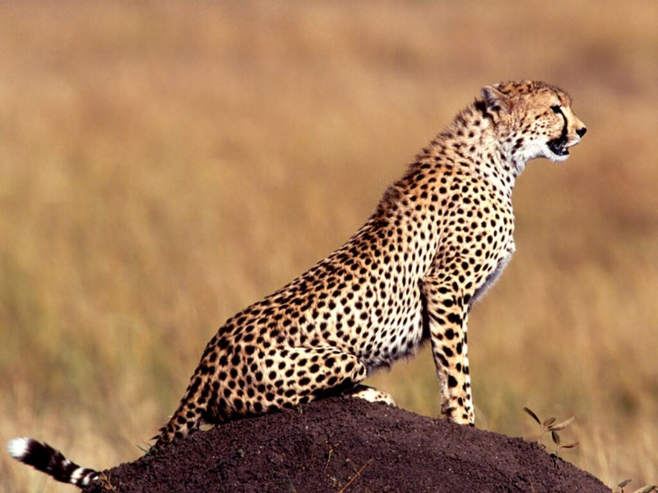
Animals move by attraction and repulsion, by instincts, by desires.  By what they experience at any given moment: hunger, thirst, heat, cold, tiredness, fear, sexual urges…

Driven by their feelings, and unable to avoid it, they seek what is beneficial to them and reject what endangers their survival: that of each of them or that of their species insofar as it is their own.

And, from this point of view, rather than moving, they are moved by their own physiological state, as they perceive it, seeking their own good.

“Magis aguntur quam agunt ,”  explained  Thomas Aquinas.  Rather than doing, they are made to do. Rather than acting, they react.

In summary: animals  react  in a necessary way to what they experience at each moment and situation, which derives from their particular physiological state at that moment.

Animals react
according to their physiological state
at any given time.

B) The man

The man, no.

  • Man transcends mere biological needs.
    • He is not necessarily drawn to them, although he perceives them in a way analogous to an animal.
  • Man can perform actions that are not at all explainable from the point of view of his own survival, individual or specific.
    • And then he demonstrates, better than ever, his superiority over the animals.
  • Man is capable of setting aside the sensations and feelings derived from his instincts: his tastes, his appetites, his phobias…
    • and to pay attention to what, thanks to his intelligence, he perceives as good in itself and, consequently, as good also for others.

In summary: to the extent that he acts humanely, man does not merely  react  to what his instincts or impulses dictate, but, with his will,  freely desires the good  (or rejects the evil) that  his intelligence presents to him.

Rather than acting, animals react or are moved;
man, on the contrary, acts in a “strong and proper” sense:
he wills freely.

What love “is”

Wanting what is good, even if it costs me.

In other words, further highlighting the differences, the man:

  • He may want to and perform an action that is good in itself, even if he is not attracted to it, does not want to do it, is not interested in it, and may even dislike it, find it repugnant, and cause him some physical or psychological harm.
    • As sometimes happens, to give close and familiar examples, in the care of young children, which can be exhausting, or of the elderly and sick.

Avoid evil, even if it captivates me

  • Or, on the contrary, he is capable of not wanting to carry out a certain action, if with his intelligence he realizes that the act is inherently bad, that it does not contribute to the good of others, even if he greatly desires to do it or is dying to do it.
    • Turning now to a situation that can be repeated with some frequency in the life of any married couple, the husband will refrain from having intimate relations with his wife, and vice versa, when there is a justified cause: discomfort, exhaustion, illness…
      • And he will do it freely and willingly, even if it is difficult for him.
  • Similarly, any mature family member will give up a trip they are excited about and have been planning for a long time if their spouse or one of their children becomes seriously ill.
    • And there will also be freedom and enjoyment, even if it is difficult.

Intelligence and will, “above” feelings

Expressed in other words, the human being, male or female:

  • He can set aside what he feels and how he is from a physiological and psychological point of view, and be driven by what  is in itself good or bad,  known through  his intelligence.
  • You can act by seeking what is  good for others,  putting it before your own good, if necessary.
  • And it often acts that way.
  • In other words: he can  love  and, very often, he does love.

Man demonstrates his superiority over animals
when he disregards his feelings
and performs actions that are inexplicable from the point of view
of his mere individual or specific preservation.

Far above animals

Therefore, one of the facts that best reveals his superiority over animals is precisely that man, if circumstances require it:

  • You can disregard your own tastes and desires, your sensations,  emotions or feelings,  and conjugate in the first person:
    • I  freely want  that which my intelligence makes me see as good.
    • Or, in this case, the “I do not  want,”  also freely, what is bad as such, what harms me or those around me.
  • You can prioritize  free will  over mere  feeling.
    • Their feelings and sensations do not have the final say.
    • That last word corresponds to love, which, as we have just seen, is not properly a feeling, but  a free act of the will,  in connection with intelligence: a wanting, in the noblest sense of this verb.

(And, as we will see in the next article, in addition to wanting, when necessary, one can exercise the wanting-wanting).

Man can conjugate in the first person
the want and the don’t want…
and also the want-want.

(To be continued)

Tomás Melendo,
President of Edufamilia
http://www.edufamilia.com
[email protected]

EduFamilia

Edufamilia es una asociación sin ánimo de lucro, nacida en el año 2005. Su fundador, Tomás Melendo, advirtió que una mejora en la calidad de las familias facilitaría la resolución de bastantes de los problemas que aquejan a la sociedad de hoy. Y, apoyado siempre por su mujer, decidió lanzarse a esta aventura que cuenta con casi veinte años de vida y con múltiples ediciones de los distintos cursos formativos: Másteres y Maestrías, Expertos, cursos más breves, conferencias, ciclos culturales, seminarios y otros programas educativos. Aunque las primeras ediciones tuvieron carácter presencial, actualmente se ha hecho un gran esfuerzo por promover la infraestructura virtual para adaptarse a los nuevos tiempos y que la formación en torno a la familia alcance al mundo entero.