(EN)
(EN)
 (ES)
(ES)
 (IT)
(IT)

The Shepherd Who Smelled Like Sheep: Tribute to Cardinal Christophe Pierre for a Life of Pastoral Closeness and Ecclesial Bridge-Building
Mario J. Paredes, speaking from the International Academy of Catholic Leaders, honors the French cardinal concluding his mission in the United States after a decade of discreet, universal service deeply aligned with Pope Francis’s magisterium.


In an emotional recognition ceremony hosted by the International Academy of Catholic Leaders, the speech delivered by Mario J. Paredes captured the essence of an ecclesial journey that transcends diplomatic titles. Addressed directly to Cardinal Christophe Pierre—Eminence, as he is respectfully called—the text celebrates not only the close of his tenure as Apostolic Nuncio to the United States (since 2016), but a unique way of exercising authority: as a ministry of closeness, listening, and humble service.
The speaker emphasizes that some careers are measured by positions, while others are recognized by the marks they leave on people and the Churches they serve. Cardinal Pierre’s belongs firmly to the latter. Shaped in the “school of reality” through demanding postings—New Zealand, Mozambique, Zimbabwe, Cuba, Brazil, Haiti, Uganda, Mexico, and finally the United States—his pastoral sensitivity was forged in direct contact with real communities, wounded yet hopeful Churches, and contexts of poverty, popular religiosity, and social challenges. This imprint, born from lived experience rather than books, explains his approach to reading the American Church: not as an outside observer, but from a truly universal perspective, attentive to its internal tensions and its immense evangelizing potential.
A common thread runs through his entire ministry: accompanying fragile processes, supporting communities battered by inequality, violence, and political uncertainty, and keeping the Pope’s message close to the people as his representative. Special mention is made of his constant attention to the Hispanic world in the United States, the fruit of a biography lived in dialogue with Latino communities. His firm support for Hispanic pastors in the episcopal college reflects a Church that must mirror the real face of its people.
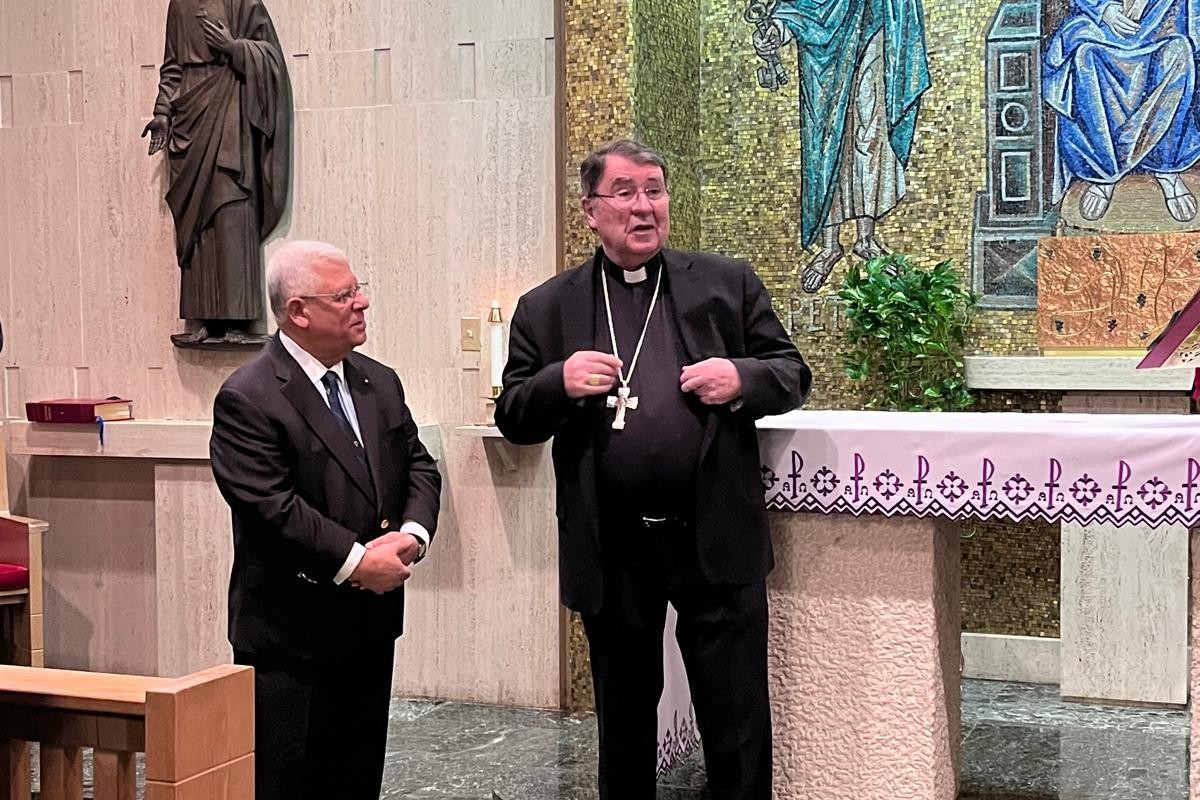
The Academy of Catholic Leaders highlights his personal role: not a mere occasional collaborator, but a committed ally as a member of its Board of Directors. His involvement has raised the institution’s visibility, enriched its formative mission, and strengthened the training of Catholic leaders to face contemporary challenges.
All of this is best understood in light of his profound harmony with Pope Francis’s magisterium: the preferential option for the poor, a theology rooted in the believing people, and a Church called to be close, merciful, and committed to the most vulnerable. This fidelity culminated in his creation as a cardinal in 2023—not as a reward, but as a call to greater Gospel observance.
The speech concludes with gratitude and admiration: for serene leadership that serves as an example, a broad vision, and the reminder that the Church’s universality is built not from a distance, but from genuine, real closeness—being a “shepherd who smells like sheep.” It then yields the floor to remarks from the Academy’s former president, the distinguished Professor Rocco Buttiglione, who shares further insights into Cardinal Pierre’s legacy and his ties to the institution.
Delivered in the context of his 80th birthday (January 30, 2026) and the imminent end of his tenure—following nearly a decade in Washington and a five-decade diplomatic career—this tribute resonates as a living testimony to a pastoral diplomacy that builds bridges between Rome and the peripheries, between cultures, and between the Gospel and the concrete history of peoples.
Speech In Honor Of His Eminence
Cardinal Christophe Pierre, Apostolic Nuncio
Your Eminence,
Dear friends, distinguished guests, rectors,
Members of the Academy of Leaders:
Some trajectories are measured by positions and destinations, and there are others – deeper – that are recognized by the mark they leave on the people and Churches they serve. Cardinal Christophe Pierre undoubtedly belongs to the latter category.
His life in the service of the People of God and the Holy See has been that of a pastor-diplomat, shaped in the school of reality. A demanding school, made up of real communities, of wounded yet hopeful Churches, of complex social contexts where the Gospel cannot be proclaimed from a distance, but only through closeness and attentive listening.
Cardinal Pierre’s early experience in the diplomatic world decisively shaped his pastoral sensitivity. His time in the nunciatures of New Zealand, Mozambique, Zimbabwe, Cuba, and Brazil, among others, educated him in daily contact with believers. This wisdom transcends any book or school; it is the wisdom that comes from one’s relationship with poverty, popular religiosity, and with a Church that walks in partnership with its people. His experience from these first assignments became the lasting imprint of his way of being and understanding his ecclesial mission.
 In 1995, his first destination as Nuncio was Haiti, followed by Uganda and Mexico. What diverse destinies, what proof of fidelity and strength to carry out his pastoral and diplomatic work! These destinations, with different contexts, languages, and cultures, helped him define his own voice and way of acting. But through all of them lay a common thread: to serve a Church called to accompany fragile processes; sustaining communities hit by inequality, violence, and political uncertainty; and to keep the message and appreciation of the Holy Father, as his representative, close to the people.
This accumulation of experiences – lived, always, with discretion and depth – largely shows how Cardinal Pierre has carried out his mission in the United States since 2016. Not as an external observer, but as someone who reads this Church from a truly universal perspective, aware of its internal tensions, but also of its enormous evangelizing potential.
As Apostolic Nuncio, he has collaborated in one of the most delicate services in the life of the Church: assisting the Holy Father in the discernment of those called to the episcopate. He has done so with a broad pastoral vision, attentive to local realities and deeply respectful of the diversity of the People of God.
On this point, his constant attention to the Hispanic world deserves special mention. His understanding of the ecclesial, cultural, and spiritual weight of Catholics of Latin American origin in the United States has not been circumstantial. It has resulted from a biography lived in dialogue with these communities and his decisive support for the presence of Hispanic pastors in the episcopal college, as an expression of a Church that must reflect its people’s real face.
This same spirit has manifested in his closeness to associations of the faithful and consecrated communities, and his support for initiatives fostering the formation of Catholic leadership. The Academy of Leaders has had the privilege of having his accompaniment and participation as a member of the Board of Directors. His commitment to our institution has given visibility and prominence to the Academy in the local Churches, elevating its significance on the map of religious institutions and enriching our formative mission.
His constant willingness to serve the cause of forming Catholic leaders, as well as his openness to strengthening the presence and value of our Academy in diverse ecclesial contexts, has been a gift for which we are deeply grateful. Cardinal Pierre has not been merely a collaborator; he has been a steadfast ally in promoting a model of leadership formation that responds to the challenges of our time.
All this is best understood in the light of his deep harmony with the magisterium of Pope Francis. A harmony that has its roots in Aparecida, in the preferential option for the poor, a theology that starts from the believers and in a clear conviction: the Church is called to be close, merciful, and committed to the most vulnerable. This closeness and fidelity to Pope Francis’ Petrine magisterium earned him the honor and responsibility of the cardinalate in 2023 — not as a prize, but as a call to the observance of the Gospel and to bring the Church closer to the world.
Your Eminence, today we not only recognize a mission that concludes and opens to a new stage. We celebrate a way of serving. A way of exercising authority as a ministry. A life dedicated to building bridges between Rome and the local Churches, between different cultures, between the Gospel and the concrete history of peoples.
Receive our tribute, our gratitude, and our admiration. Thank you for your serene leadership that serves as an example to us; for your broad gaze; and for reminding us that the universality of the Church is not built from a distance, but from real and true closeness, to being a shepherd who wears the smell of his sheep.
In recognition of his life’s journey, his service to the universal Church, and in a particular way to our Academy of Leaders, I have the honor of inviting a few words from our former president, the distinguished Professor Rocco Buttiglione, who will share with us some reflections on the remarkable work that Cardinal Pierre represents and has carried out throughout his career, as well as his relationship with the Academy.

Academia de Líderes Católicos
Es una fundación de derecho privado sin fines de lucro que busca formar católicos que a partir de la experiencia cristiana desarrollen su vocación política con la ayuda de la Doctrina Social de la Iglesia. La Academia Latinoamericana de Líderes Católicos tiene como misión, formar líderes desde una perspectiva católica, arraigados en la fe de la Iglesia, para transformar el mundo social, político y económico a la luz de la Doctrina Social de la Iglesia. Formar una nueva generación de católicos latinoamericanos con responsabilidades políticas y sociales para que transformen el rostro del continente al servicio de sus pueblos, a la luz del Magisterio de la Iglesia y de cara a los Jubileos del V Centenario Guadalupano y de los dos mil años de la redención.
Related

Catholics Must Be More Courageous
Se Buscan Rebeldes
24 February, 2026
5 min

The legacy of Carlo Acutis captivates Madrid with a vibrant and faith-filled musical
Exaudi Staff
23 February, 2026
2 min
The Sorrow of Simeon’s Prophecy and the Joy of the Effects of Redemption
Miguel Morales Gabriel
22 February, 2026
1 min

Reflection by Bishop Enrique Díaz: You shall worship the Lord your God, and Him only you shall serve
Enrique Díaz
22 February, 2026
6 min