(EN)
(EN)
 (ES)
(ES)
 (IT)
(IT)

The first human brain implant raises ethical dilemmas
China leaps ahead of Elon Musk
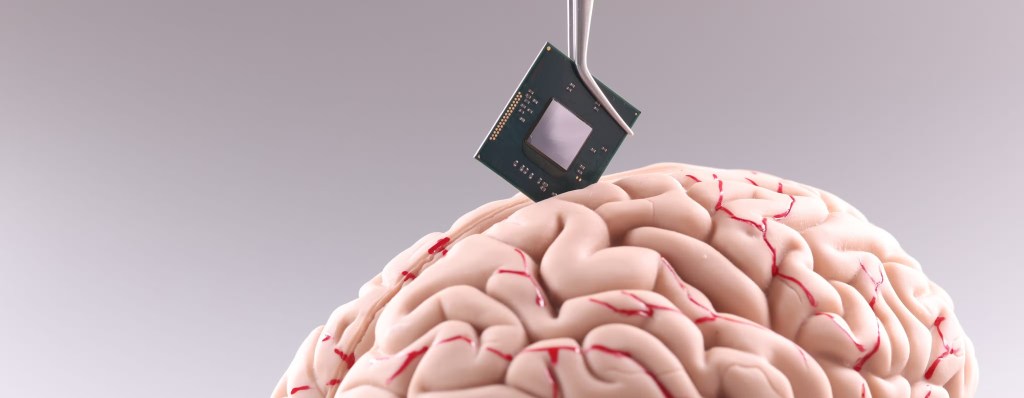

China has begun implanting brain chips in human patients, surpassing companies like Elon Musk’s Neuralink in the number of trials. The project, led by the China Brain Research Institute and NeuCyber NeuroTech, marks a milestone in the global race to develop brain-computer interfaces.
In March 2025, the China Institute of Brain Research (CIBR) and NeuCyber NeuroTech announced the implantation of the Beinao No. 1 brain chip in three human patients. This semi-invasive, wireless device represents a significant advancement in brain-computer interfaces (BCIs).
BCI, which stands for Brain-Computer Interface, is a technology that enables direct communication between the brain and an external device, such as a computer, a robotic arm, or an on-screen cursor.
Ten additional implants are expected to be completed before the end of the year, and a formal clinical trial with approximately 50 patients will begin in 2026. “Next year, once we obtain approval, we will conduct formal clinical trials involving approximately 50 patients,” Luo told reporters on the sidelines of the technology-focused Zhongguancun Forum in Beijing.
The Beinao No. 1 chip uses flexible electrodes that minimize brain damage and allow for stable, long-term signal acquisition. In previous tests, a monkey successfully controlled a robotic arm using its thoughts, suggesting future applications for people with paralysis.
China is also exploring the use of this technology in areas such as medical rehabilitation, autonomous driving, and virtual reality, integrating generative artificial intelligence to improve human-machine interaction.
While Neuralink has implanted its chip in three people and Synchron in ten, China could become the country with the largest number of brain implant patients in clinical trials. This rapid progress reflects China’s determination to lead the world in the development of BCI technologies.
Bioethical assessment
From the standpoint of autonomy, concerns arise about patients’ actual capacity to give free and informed consent, especially if they are in a vulnerable situation or if the technology is used for non-therapeutic purposes, such as cognitive enhancement. Beneficence is reflected in the potential of these interfaces to help people with paralysis or neurological disorders, but it must be balanced with non-maleficence, as there are physical risks (such as infections or device failures) and psychological risks (such as identity alterations or technological dependence). Finally, the principle of justice warns of a potential social gap between those who have access to these technologies and those who do not, as well as their use in military or surveillance contexts that could compromise fundamental rights.
Clara Femenía Martínez – Julia García Carreño – María Ros Vera – María Dolores Jiménez Mulero – Marina Serrano Valero – Students of the Master’s Degree in Bioethics – Catholic University of Valencia
Literature:
Bioethics and Law Observatory. Bioethics Newspaper Archive [Internet]. Barcelona: University of Barcelona; [cited 2025 May 1]. Available at: https://www.bioeticayderecho.ub.edu/es/bioetica-medios
Baptista E. China launches human brain chip project ahead of Elon Musk’s [Internet]. Public; 2025 Mar 31 [cited 2025
[May 1]. Available at: https://www.publico.es/ciencias/tecnologia/china-pone- marcha-proyecto-chip-cerebral-humanos-adelanta-elon-musk.html

Observatorio de Bioética UCV
El Observatorio de Bioética se encuentra dentro del Instituto Ciencias de la vida de la Universidad Católica de Valencia “San Vicente Mártir” . En el trasfondo de sus publicaciones, se defiende la vida humana desde la fecundación a la muerte natural y la dignidad de la persona, teniendo como objetivo aunar esfuerzos para difundir la cultura de la vida como la define la Evangelium Vitae.