(EN)
(EN)
 (ES)
(ES)
 (IT)
(IT)

The Church Gathers What Is Scattered
Following the teachings of the Second Vatican Council, Pope Leo XIV reminds us that the Church is a sign of unity and reconciliation for a divided humanity
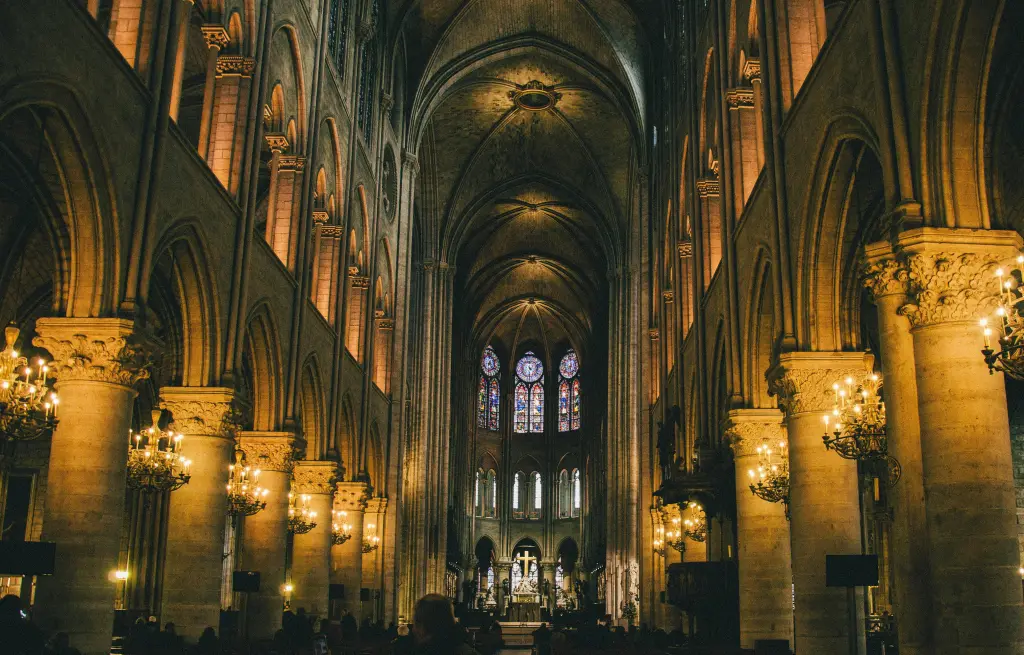

In his weekly catechesis, Pope Leo XIV has been commenting on the Vatican II constitution on the Church, Lumen Gentium, Light of the World. Few institutions prepared themselves for the 21st century by taking stock of their assets and the challenges of the epochal change we are experiencing
Overcoming fragmentation
The Pope speaks from a faith that is also open to those who do not practice or do not yet participate in the familiarity of encountering Jesus Christ and ultimately God
“This is,” he says, “God’s plan, which has one objective: to unify all creatures through the reconciling action of Jesus Christ, an action accomplished in his death on the cross. This is experienced above all in the assembly gathered for the liturgical celebration: there, differences become relative; what matters is being together because we are drawn by the Love of Christ, which has broken down the wall of separation between people and social groups (…)
Leo XIV emphasizes that the life of the Church unites people of every era, overcoming the forces of division that fragment hearts. Indeed, the word “church” means a convocation or gathering of distinct groups who come together to celebrate a feast, something evident in the Eucharistic liturgy. (…)
“To meet together celebrating, having believed in the proclamation of the Gospel, and lived as an attraction exerted by the cross of Christ, which is the supreme manifestation of God’s love; and to feel called together by God: that is why the term ekklesia is used , that is, an assembly of people who recognize that they have been called together.”
In the coming weeks, he will continue to explain other important aspects of the mystery of the Church, not so much because it is difficult to understand, but because of the magnitude of its being and its message, as well as its ability to unite people.
Church open to the world
Pope John Paul II also expounded on the teachings of the Church in our time. His rich teaching invites us, then and now, to delve deeper into the being and mission of the Church, not only the hierarchy but especially the faithful who recognize their participation in the evangelizing mission for the new century.
In a 1995 audience [1] , he said: “First of all, it is necessary to remember that the Church ‘has a salvific and eschatological goal which she can only fully achieve in the age to come’ (GS, 40). Therefore, she cannot be asked to have her energies absorbed exclusively or primarily by the demands and problems of the earthly world. Nor is it possible to correctly assess her action in today’s world, as in past centuries, by judging it solely from the perspective of temporal ends or the material well-being of society.”
“The orientation towards the future world is essential to her. She knows that she is surrounded by visible realities, but she is aware that she must concern herself with the visible with a view to the eternal invisible kingdom, which she already mysteriously realizes and whose full manifestation she ardently aspires to. This fundamental truth has been very well expressed in the traditional saying: Per visibilia ad invisibilia: through visible realities towards invisible ones.”
“On earth, the Church is present as the family of God’s children, constituted and ordered in this world as a society. For this reason, she shares in human vicissitudes in solidarity with all humanity. As the Council reminds us, she ‘moves forward together with all humanity and shares the same earthly lot’ (GS, 40) . This means that the Church experiences in her members the trials and difficulties of nations, families, and individuals, participating in humanity’s arduous pilgrimage along the paths of history. In addressing the Church’s relationship with the world, the Second Vatican Council takes as its starting point this participation of the Church in ‘the joys and hopes, the griefs and anxieties of humankind’ (ibid., 1). Today, in a special way, thanks to the new universal understanding of the real conditions of the world, this participation has become very intense and profound. (…)
“The Church, although it has a mission that ‘is not of a political, economic, or social order, but of a religious order’ (cf. GS, 42), also carries out charitable work for the benefit of society. This work takes many forms. It establishes works intended to serve everyone, and especially those in need; it promotes ‘ healthy socialization and civil and economic association’; it exhorts people to overcome differences between nations and races, fostering unity at the international and global levels; and it supports and sustains, to the extent of its capabilities, institutions that aim at the common good.”
Overcoming Isolation
Once again, Pope Leo XIV invited the faithful to express gratitude for finding in the faith of the Church a sure path to encountering God: “It makes us feel grateful for belonging to the Church, the body of the risen Christ and the only pilgrim people of God in history, who live as a sanctifying presence in the midst of a still fragmented humanity, as an effective sign of unity and reconciliation among peoples.”
Since the encounter with God is personal, incarnate, and historical, each person can accept or reject it, enter into universality or isolate themselves in their own subjectivity. It is no wonder, then, that they encounter misunderstandings and rejection from some people and institutions, for it is important not to forget the sphere of freedom that the Gospel proposes, which will clash with all-consuming proposals and reductive ideologies.
Without fear of believing
Spanish actor Carlos Mollá has worked in Hollywood on several films, and he also writes and paints as an inventive artist. In an interview, he spoke about his relationship with God, which he finds in the peace of Catholic churches. In that interview, Mollá spoke of his faith: “Churches are the only place where I feel safe.” For him, he said, creative work is a meditative process: “Absolutely. And religious. Yes, I’m a devout believer.” He added: “For me, the only thing that exists is God. People are surprised and say, ‘I don’t understand, are you kidding me?’, but I don’t care. It’s crystal clear to me: the only thing that truly exists is God. And humans, well, they’re human. I experience God through other people.”
“People misunderstand it, they are very afraid of belief. It becomes politicized, it becomes dehumanized. When you talk about God, everyone trembles,” he stated.
This confirms the general experience that the true God is found in silence and sincerity, within the Church. For God is not an abstract being conceived by men, but rather has become incarnate in Jesus Christ and founded the Church as a common union in life, not just in ideas.
***
[1] Cf. John Paul II, General Audience, June 21, 1995

Jesús Ortiz López
Jesús Ortiz López es sacerdote que ejerce su labor pastoral en Madrid. Doctor en Pedagogía, por la Universidad de Navarra, y también Doctor en Derecho Canónico. Durante varios años ha ejercido la docencia en esa misma Universidad, como Profesor del actual Instituto Superior de Ciencias Religiosas. Ha dirigido cursos de pedagogía religiosa para profesores de religión. Es autor de varias obras de sobre aspectos fundamentales de teología y catequética, tales como: Creo pero no practico; Conocer a Dios; Preguntas comprometidas; Tres pilares de la vida cristiana.
Related