 (EN)
(EN)
 (ES)
(ES)
 (IT)
(IT)

Someone for Someone
Where the human becomes divine
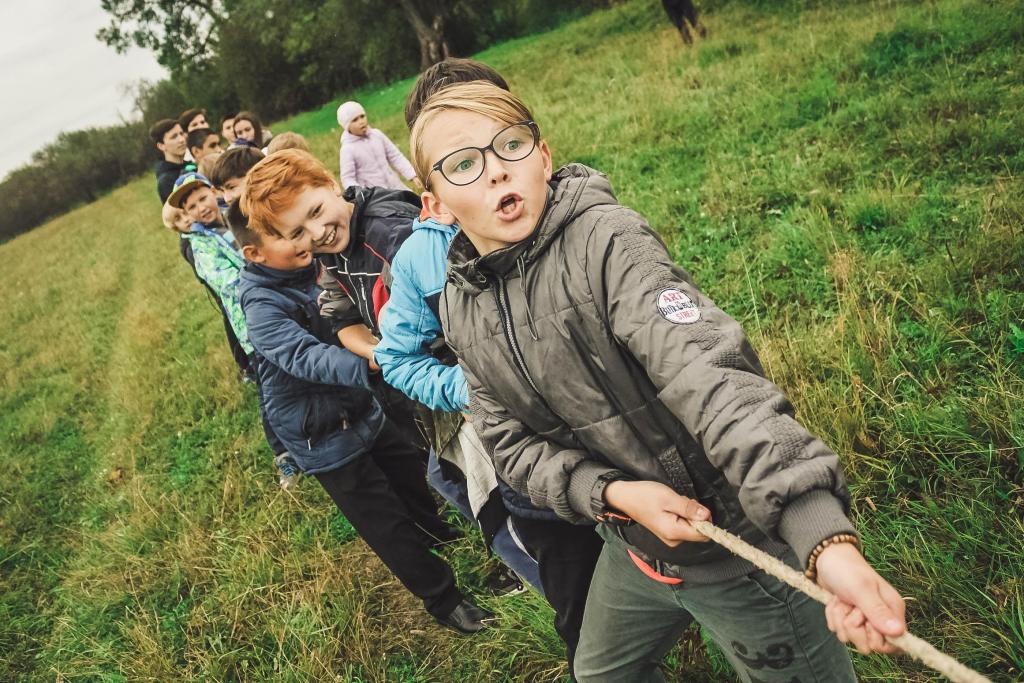

Every day I witness pain. A social tsunami…
There is one society that lives and another that survives as best it can in the storm of the frenetic, but never in solitude
Hope keeps our gaze fixed on destiny.
There are people whose skin has been hardened by the ice, and even if an elephant were to stand before them, they wouldn’t even notice; there are those who are used to merely surviving, no longer bothering anyone. There are those who live as if simply “breathing” were enough. And so, little by little, loneliness invades the hearts of some men, but “the specifically human” rebels and exhumes their identity, seeking singularity by coloring their hair, and the tattoos on their bodies… they scream what is left unspoken.
Modern loneliness has the sheen of independence and the noise of self-sufficiency. But beneath that surface beats an ancient weariness: the weariness of a heart that cannot find the embrace that sustains it.
We have forgotten that we are both givers and recipients of freely given gifts. No one truly knows themselves unless they are enriched by the eyes of another. It is good to remember that only love justifies life. As Rosalía says in her latest album, “Love is not consolation, it is light.”
“Friend of oneself against oneself”
All expressions of genuine love generate movement. The love of friendship, of parenthood, of marriage… always directed toward someone or something; toward the other or toward myself, and sometimes, believing I am moving toward serving others, I am moving toward myself due to various circumstances. And lost in that inner labyrinth, we can fall into a narcissism that contaminates our thoughts, words, and emotions… A cave that darkens our destiny and dims our hope. Love is light, and light allows us to see the illuminated objects worthy of our love.
How many hidden depths the human heart has!
The self is revealed in relationship, in the reciprocity that makes it fruitful. Only when the “I” opens to the “you” is the “we” born. The person, in their deepest truth, claims the vocation of encounter. And the verb is only conjugated in a pronominal relationship: I with you, you for others, we on the journey.

The inner government of the self
No one gives what they don’t possess. And yet, we try to love without giving ourselves because we don’t know ourselves; we speak without having listened to our inner selves, we react without having looked at ourselves with courage.
Governing oneself is not about repressing or feigning balance: it is about learning to order inner complexity, to integrate emotion, reason and will in order to give of ourselves without breaking; the part finds meaning in the complete image.
The self that is unknown either imposes itself or hides. The self that is possessed, on the other hand, gives itself freely. It doesn’t need to dominate, but to add to the whole.
Self-governance is about having the composure of someone who can maintain their identity amidst changing circumstances. There is no true connection without that personal mastery that allows one to step outside oneself without losing oneself.
We learn self-governance when we choose not to respond in kind to hurtful words. When we choose not to dwell on complaints, even when we have reason to. When we get up reluctantly because someone is waiting for us, and we want to be of service. When we remain silent to listen more attentively, even when we have much to say. When we forgive quietly, without fanfare, simply because we understand that peace is worth more than victory.
They are small, invisible acts that conquer an inner territory. Willpower ceases to be a whim, feeling ceases to rule, and the self—not the ego—regains its center.
In a world where everything is measured by efficiency, self-governance seems pointless, but it is the foundation of love. Without that foundation, devotion becomes dependency, and the relationship is reduced to material and/or emotional consumption.
This is how gluttony, lust, and greed work: not only on the body, but also on the heart that wants to possess everything. The solution is not just to fight them, but to control them, so as not to be manipulated by these dependencies that voracious consumerism continually exploits.
On an emotional level, we feel the hold that our moods try to exert over us, trapping us in a spiral and causing paralysis: sadness, lethargy, melancholy. Instead of letting ourselves be swept away, we can create distance to objectify, put things into perspective, and detach ourselves from their influence. Sometimes a walk in the fresh air, a sincere phone call, a small act of service is enough. Life becomes unblocked when the heart, as the center of energy, acts, even on a small scale.
The spiritual dimension has more subtle battles: vainglory, envy, and pride. The root cause of all this is the ego, which distances us from others because it enters into direct competition with them. These battles, to be managed, can only be approached from a place of humility. Only the humble are capable of loving without the negative influence of others. Humility is the true self.
The art of listening
Listening is one of the highest forms of love. But it demands something that is increasingly difficult for us: emptying ourselves. Not listening to respond, but to welcome. Not waiting our turn to speak, but allowing the other to exist within us.
Active listening isn’t a strategy, it’s humility. And humility “hurts” because it forces us to acknowledge that the other person has something to say to us, something to contribute, something we lack. We are not the center of everything. Listening to others is also learning to listen to the whisper of our own heart…
We’ve become experts in communication but illiterate in presence. We live surrounded by words, yet thirst for conversation. How much violence hides in indifference, and how much tenderness is released when someone looks without judgment and listens without distraction.
Listening is also a manifestation of inner freedom : turning off your phone during a conversation, holding eye contact when silence falls, not filling awkward silences with noise. These are small gestures that restore dignity to the encounter and remind the other person: “I am here with you.”
“Man cannot live without love. He remains an incomprehensible being to himself, his life is devoid of meaning, if love is not revealed to him, if he does not encounter love, if he does not experience it and make it his own, if he does not participate in it wholeheartedly.”
(Saint John Paul II, Redemptor Hominis, no. 10)
Only those who allow themselves to be touched by the pain of others discover that shared suffering is a fortified fortress.
Life is measured by the quality of its encounters. Looking into someone’s eyes, holding the line, remaining silent with respect, accompanying without imposing… these are verbs that humanize us. Using them well requires courage, because each verb implies a pronoun that speaks of commitment, and an adverb that qualifies it: always, later, never, soon, still…
It’s always possible to make amends: to look again, to listen again, to love again. Hope is cultivated in every daily gesture that frees us from the confinement of the self.
Wherever someone corrects course,
The human is reborn in the divine.

Rosa Montenegro
Pedagoga, orientadora familiar (UNAV) y autora del libro “El yo y sus metáforas” libro de antropología para gente sencilla. Con una extensa experiencia internacional en asesoramiento, formación y coaching, acompaña procesos de reconstrucción personal y promueve el fortalecimiento de la identidad desde un enfoque humanista y transformador.
Related
Lift Up Your Gaze!
Rosa Montenegro
13 April, 2026
4 min
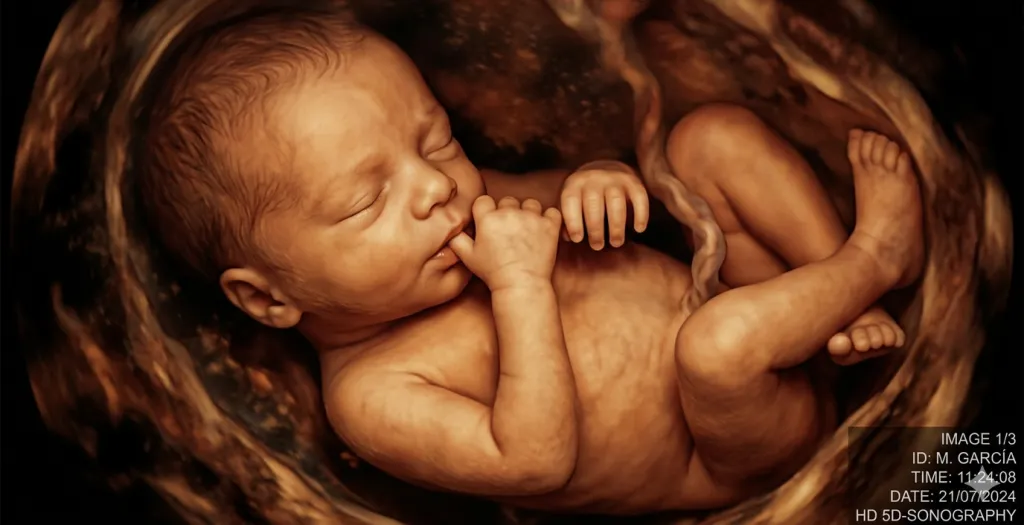
Abortion: Legalizing a Crime
Isabel Orellana
10 April, 2026
5 min
Gratitude as a Spiritual Discipline: How to Transform Daily Complaints into Prayers of Thanksgiving
Patricia Jiménez Ramírez
08 April, 2026
5 min
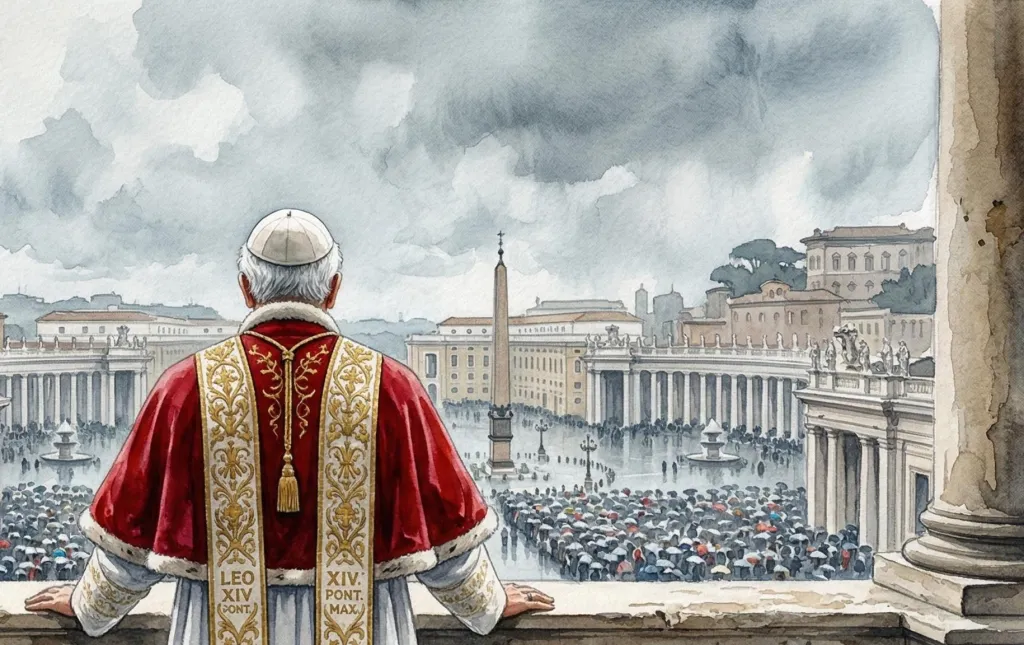
Pope Leo XIV’s First Holy Week: A Call to Light, Hope, and Peace in a World of Darkness
Valentina Alazraki
07 April, 2026
4 min