 (EN)
(EN)
 (ES)
(ES)
 (IT)
(IT)

September 1: Day of Creation as a sign of ecumenism
The celebrations of the World Day of Prayer for the Care of Creation, which begin tomorrow, September 1, are inspired this year by the 1700th anniversary of the Ecumenical Council of Nicaea and the Pope's message for the Day, whose theme—Seeds of Peace and Hope—was chosen by Pope Francis
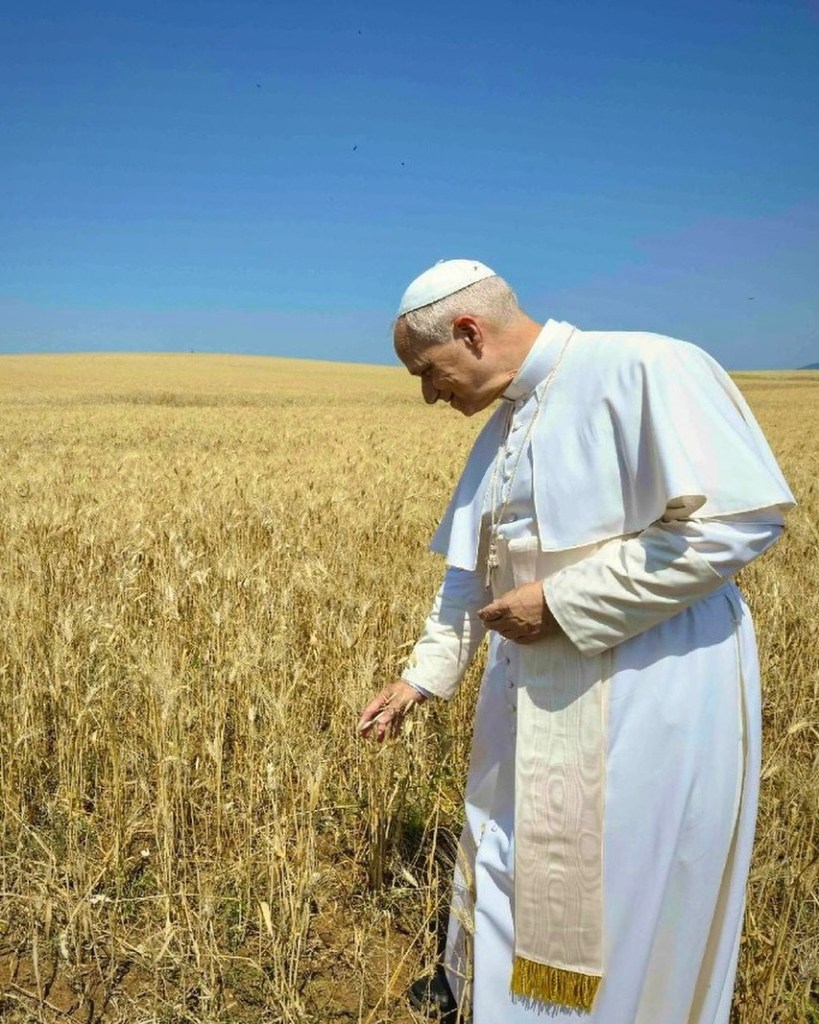

On September 1, the World Day of Prayer for the Care of Creation, Christians around the world will join in prayer because experiencing the Season of Creation is an opportunity to join the many efforts of those working around the world for ecological conversion. The Season of Creation is an ecumenical initiative celebrated annually from September 1 to October 4, the Feast of St. Francis of Assisi. It is promoted and supported by various organizations, including the Laudato Si’ Movement, the World Council of Churches, the Lutheran World Federation, and the Anglican Communion.
In 1989, Ecumenical Patriarch Dimitrios I proclaimed September 1 as the Day of Prayer for Creation for Orthodox Christians. The World Council of Churches (WCC) later extended the celebration to October 4. In 2015, Pope Francis published the encyclical Laudato si’ and then instituted the “World Day of Prayer for the Care of Creation.” A Message is published for the occasion, attached at the end of the article, and this year, 2025, has the theme: “Seeds of Peace and Hope,” chosen by Pope Francis. Furthermore, Pope Leo XIV proclaimed the Decree of the formulary of the Mass for the Custody of Creation, Missa pro custodia creationis , and he himself celebrated this Mass on July 9 at the Borgo Laudato sì in Castel Gandolfo.
To liven up this year’s celebrations, the World Council of Churches, the umbrella organization of the Orthodox and Protestant Churches, has released a new video on the history and symbolism of this Day.
Many episcopal conferences, especially in the global South, are encouraging their parishes to celebrate the Day with the Mass for the Custody of Creation, as will be the case in the Philippines, as confirmed by Monsignor Gerardo Alminaza, Bishop of San Carlos, and in other Latin American countries, as announced by the Secretary General of the Latin American Episcopal Council (CELAM), Monsignor Estrada Herrera Lizardo, Auxiliary Bishop of Cuzco.
The year 2025 marks two important anniversaries: the 1700th anniversary of the Council of Nicaea and the publication, ten years ago, of the encyclical Laudato si’. The World Council of Churches has proposed the Day of Creation as an occasion to recall the importance of the Creed in God, “creator of heaven and earth,” “through whom all things were created.”
The “Season of Creation” initiative is coordinated globally by the World Council of Churches, chaired by Bishop Heinrich Bedford-Strohm, in collaboration with several global Christian churches and partners. An online prayer service is organized each year to celebrate the Day of Creation, organized by an ecumenical committee and attended by Cardinal Fridolin Ambongo, president of the Symposium of Bishops’ Conferences of Africa and Madagascar (SECAM), Lutheran Bishop Atahualpa Hernández of Colombia, and Reverend Hyunju Bae of the Korean Presbyterian Church.
MESSAGE FROM HIS HOLINESS POPE LEO XIV
FOR THE 10TH WORLD DAY OF PRAYER FOR THE CARE OF CREATION, 2025
[September 1, 2025]
________________________________
Seeds of peace and hope
Dear brothers and sisters,
The theme of this World Day of Prayer for the Care of Creation, chosen by our beloved Pope Francis, is “Seeds of Peace and Hope.” On the tenth anniversary of the institution of the Day, which coincided with the publication of the encyclical Laudato si’, we find ourselves in the midst of the Jubilee, as “pilgrims of hope”. And it is precisely in this context that the theme takes on its full significance.
Many times in his preaching, Jesus uses the image of the seed to speak of the Kingdom of God, and on the eve of his Passion he applies it to himself, comparing himself to the grain of wheat, which must die to bear fruit (cf. Jn 12:24). The seed gives itself completely to the earth, and there, with the impetuous force of its gift, life sprouts, even in the most unexpected places, with a surprising capacity to generate the future. Let us think, for example, of the flowers that grow along the roadsides: no one planted them, and yet they grow thanks to seeds that have arrived there almost by chance, managing to adorn the gray of the asphalt and even break its hard surface.
Therefore, in Christ we are seeds. Not only that, but “seeds of peace and hope.” As the prophet Isaiah says, the Spirit of God is able to transform the arid and parched desert into a garden, a place of rest and serenity: “until a spirit is poured upon us from on high. Then the desert will become a garden, and the garden will be like a forest. Justice will dwell in the desert, and justice will abide in the garden. The work of justice will be peace, and the fruit of justice will be quietness and security forever. My people will dwell in a place of peace, in secure dwellings, in quiet resting places” (Is 32:15-18).
These prophetic words, which will accompany the ecumenical initiative of the “Season of Creation” from September 1 to October 4, forcefully affirm that, together with prayer, there is a need for will and concrete actions that make this “caress of God” perceptible in the world (cf. Laudato si’, 84). Justice and law, in fact, seem to heal the inhospitable nature of the desert. This is a message of extraordinary relevance. In various parts of the world, it is already evident that our earth is deteriorating. Everywhere, injustice, the violation of international law and the rights of peoples, inequalities and the greed that result from them produce deforestation, pollution, and the loss of biodiversity. Extreme natural phenomena caused by climate change induced by human activities (cf. Apostolic Exhortation Laudate Deum, 5) are increasing in intensity and frequency, without taking into account the medium and long-term effects of human and ecological devastation caused by armed conflicts.
It seems there is still a lack of awareness that destroying nature does not harm everyone equally: trampling on justice and peace means harming the poorest, the marginalized, and then excluded the most. In this context, the suffering of Indigenous communities is emblematic.
And that’s not all: nature itself sometimes becomes an instrument of exchange, a commodity traded for economic or political gain. In these dynamics, creation becomes a battlefield for the control of vital resources, as evidenced by agricultural areas and forests rendered dangerous by mines, the “scorched earth” policy [1], the conflicts erupting around water sources, and the unequal distribution of raw materials, which penalizes the weakest populations and undermines their very social stability.
These various wounds are a consequence of sin. This is certainly not what God had in mind when he entrusted the earth to man, created in his image (cf. Gen 1:24-29). The Bible does not promote “the despotic dominion of man over creation” (Laudato si’, 200). On the contrary, it is “important to read the biblical texts in their context, with an appropriate hermeneutic, and to remember that they invite us to ’till and care for’ the garden of the world (cf. Gen 2:15). While ’till’ means to cultivate, plow, or work, ‘tend’ means to protect, guard, preserve, guard, and watch over. This implies a relationship of responsible reciprocity between man and nature” (ibid, 67).
Environmental justice—implicitly foretold by the prophets—can no longer be considered an abstract concept or a distant goal. It represents an urgent need that goes beyond simple environmental protection. In reality, it is a question of social, economic, and anthropological justice. For believers, it is also a theological requirement that, for Christians, bears the face of Jesus Christ, in whom all things were created and redeemed. In a world where the most vulnerable are the first to suffer the devastating effects of climate change, deforestation, and pollution, caring for creation becomes a matter of faith and humanity.
It is time to move from words to deeds. “Living the vocation to be protectors of God’s work is an essential part of a virtuous existence; it is not optional or a secondary aspect of the Christian experience” (ibid, 217). By working with dedication and tenderness, many seeds of justice can be made to germinate, thus contributing to peace and hope. Sometimes it takes years for the tree to bear its first fruits, years that involve an entire ecosystem in continuity, fidelity, collaboration, and love, especially if this love becomes a mirror of God’s self-sacrificing love.
Among the Church’s initiatives that are like seeds scattered in this field, I would like to recall the “Borgo Laudato si’” project, which Pope Francis left us as a legacy in Castel Gandolfo, a seed that can bear fruits of justice and peace. It is a project of education in integral ecology that aims to be an example of how we can live, work, and form a community by applying the principles of the encyclical Laudato si’.
I pray that the Almighty may send us abundantly his “spirit from on high” (Is 32:15), so that these and similar seeds may bear abundant fruit of peace and hope.
The encyclical Laudato si’ has accompanied the Catholic Church and many people of good will for ten years. May it continue to inspire us, and may integral ecology be increasingly chosen and shared as a path forward. In this way, the seeds of hope will multiply, which we must “nurture and cultivate” with the grace of our great and unwavering Hope, the Risen Christ. In his name, I send my blessing to all of you.
Vatican, June 30, 2025, Memorial of the Holy Protomartyrs of the Holy Roman Church.
LEO PP. XIV
________________________________________________
[1] Cf. Pontifical Council for Justice and Peace, Land and Food , LEV 2016, 51-53.

Exaudi Staff
What is Exaudi News? Exaudi News is an international Catholic media outlet that informs, shapes, and transforms daily in Spanish, English, and Italian. Through news, analytical articles, and live broadcasts of the Pope's events, Exaudi seeks to strengthen Christian unity and contribute to the evangelization of the world, always guided by the Church's social doctrine. We work to bring Christian truth and values to every corner of the planet. Help us transform the world with Exaudi! At Exaudi, we believe that evangelization and quality information can change lives. To continue our mission and expand our reach, we need your help. In addition, we are looking for committed people to join our team. With your support, we will reach more people, spread the message of Christ, and strengthen Christian unity. Will you join our mission? For more information on how to collaborate, visit Exaudi.org or contact us directly: [email protected] Exaudi: Informs, educates, and transforms.
Related
Pope Leo XIV: “Come out!” from the tomb of selfishness and materialism
Exaudi Staff
22 March, 2026
6 min
“The unity of all in God is an evangelical sign that constitutes a prophetic force for the world.”
Exaudi Staff
22 March, 2026
6 min
Pope Leo XIV convenes the world’s bishops for a summit on the family to mark the tenth anniversary of Amoris Laetitia
Exaudi Staff
19 March, 2026
7 min
Leo XIV: “The Church as the People of God cannot err in faith”
Exaudi Staff
18 March, 2026
9 min