 (EN)
(EN)
 (ES)
(ES)
 (IT)
(IT)

Saint Bernard as an ideal guide for the Lenten exodus from ego and pride
In the Pauline Chapel, Norwegian Bishop Erik Varden invites Pope Leo XIV and the Curia to discover in the saint of Clairvaux a companion in pursuing personal truth illuminated by divine love, recognizing the tensions between idealism and humility in his life
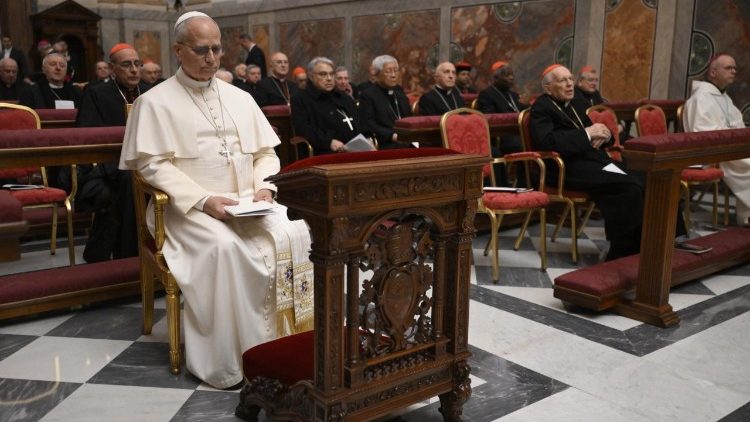

In the second meditation of the Lenten Spiritual Exercises, held in the Pauline Chapel, Bishop Erik Varden of Trondheim, a Trappist monk, focused his reflection on “Saint Bernard the Idealist.” Before Pope Leo XIV and members of the Roman Curia, the preacher presented the 12th-century Cistercian saint as a privileged model for undertaking the Lenten journey: a true “exodus from egocentrism and pride,” aimed at seeking one’s own truth with one’s gaze fixed on the all-encompassing love of God.
Varden explained that St. Bernard’s teaching on conversion stemmed from a profound personal struggle. The saint learned not to assume that his own path was always the right one, thanks to experience, wounds, and provocations that forced him to question his presumption and marvel at God’s merciful justice. Bernard, who arrived at Cîteaux in 1113 at the age of 23 with thirty companions, did not found the Cistercian Order—initiated in 1098 by Robert of Molesme—but he distinguished himself through his charisma and work ethic in a movement that combined innovation and reform. The “novum monasterium” was not born as a reaction against something or someone, but as a positive project that, according to the Norwegian bishop, avoids the risk of merely reactive approaches, doomed to fade with time.

The preacher acknowledged the complexities of Bernard’s character: confident in his judgment, sometimes flexible in observances he theoretically defended, yet capable of adopting rigid positions based on his vision of the Church’s needs and a “fierce partisan spirit.” However, Varden emphasized that this was not hypocrisy, but genuine humility: Bernard was devoted to God, tender and kind, a faithful friend capable of reconciling with former adversaries, and a compelling witness to divine love. This fascinating figure, balancing inner tensions, bears similarities to Thomas Merton, the American Trappist monk known for his ecumenism and social commitment. Although Bernard did not possess Merton’s “mental electricity”—as his abbot described it—both shared a mercurial nature that required balancing great inner tensions, always with sincerity.
The meditation underscores that Bernard’s doctrine on conversion is rooted in a profound biblical culture and mature theological notions. Saint Bernard thus emerges as an excellent companion for Lent, inviting us to leave behind pride and open ourselves to the love that illuminates personal truth.
On the afternoon of February 23, at 5:00 p.m., Varden offered a meditation entitled “The Help of God,” followed by Eucharistic Adoration and Vespers. The cycle of Exercises, under the general theme “Illuminated by a Hidden Glory,” continues until February 27 with two daily sessions: at 9:00 a.m. (preceded by Midday Prayer) and at 5:00 p.m. (followed by Adoration and Vespers). The remaining topics include becoming free, the splendor of truth, “a thousand shall fall,” “I will glorify Him,” the angels of God, “Saint Bernard the Realist” (on the afternoon of the 26th), on reflection, and finally, communicating hope.

Exaudi Staff
What is Exaudi News? Exaudi News is an international Catholic media outlet that informs, shapes, and transforms daily in Spanish, English, and Italian. Through news, analytical articles, and live broadcasts of the Pope's events, Exaudi seeks to strengthen Christian unity and contribute to the evangelization of the world, always guided by the Church's social doctrine. We work to bring Christian truth and values to every corner of the planet. Help us transform the world with Exaudi! At Exaudi, we believe that evangelization and quality information can change lives. To continue our mission and expand our reach, we need your help. In addition, we are looking for committed people to join our team. With your support, we will reach more people, spread the message of Christ, and strengthen Christian unity. Will you join our mission? For more information on how to collaborate, visit Exaudi.org or contact us directly: [email protected] Exaudi: Informs, educates, and transforms.
Related
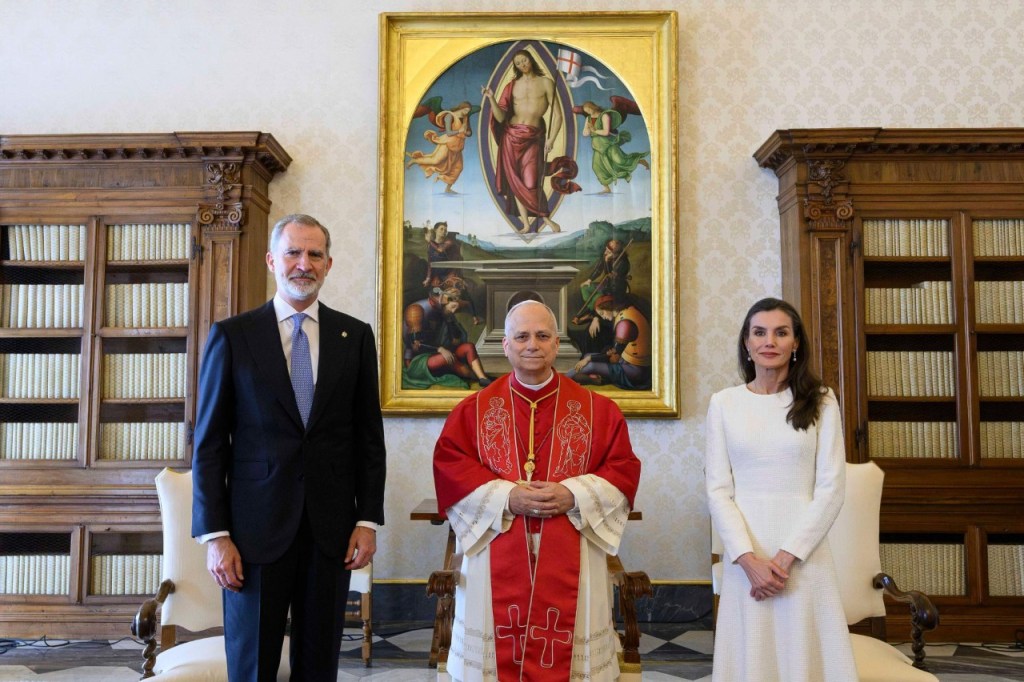
Pope Leo XIV receives the King and Queen of Spain in audience
Exaudi Staff
20 March, 2026
2 min
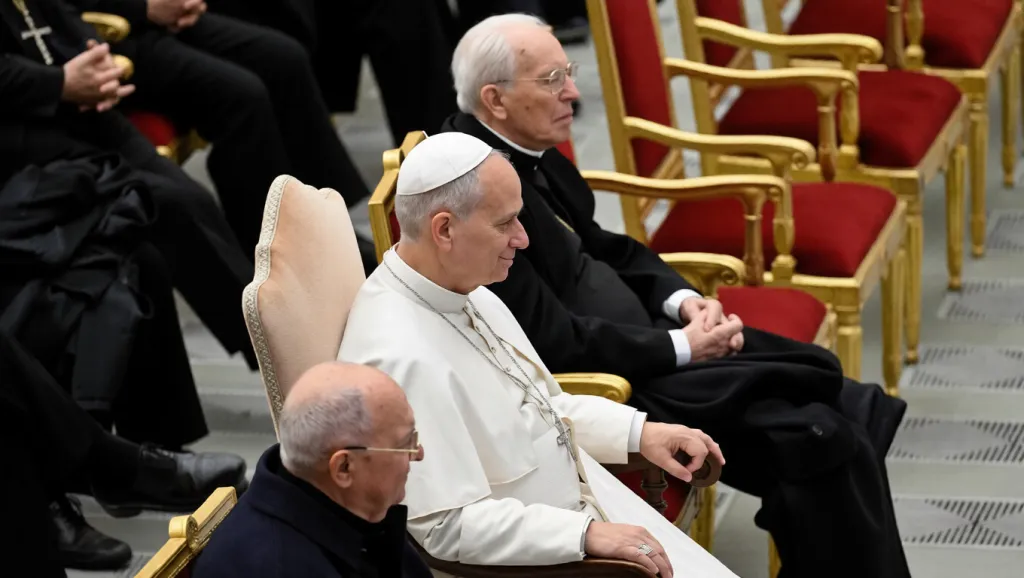
The Christian mission is born from a transformed life
Exaudi Staff
20 March, 2026
2 min

The Dicastery for the Causes of Saints
Exaudi Staff
19 March, 2026
6 min

Pope Leo XIV moves into the papal apartment in the Apostolic Palace
Exaudi Staff
17 March, 2026
2 min