(EN)
(EN)
 (ES)
(ES)
 (IT)
(IT)

Messages for everyone from the Cross
Live a Lent that makes us more attentive to God and to those most in need
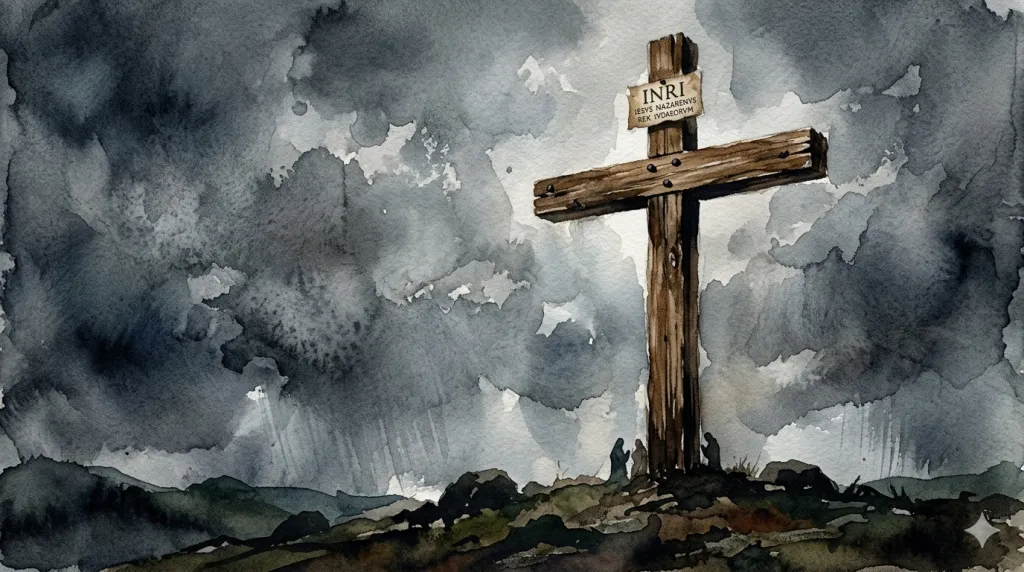

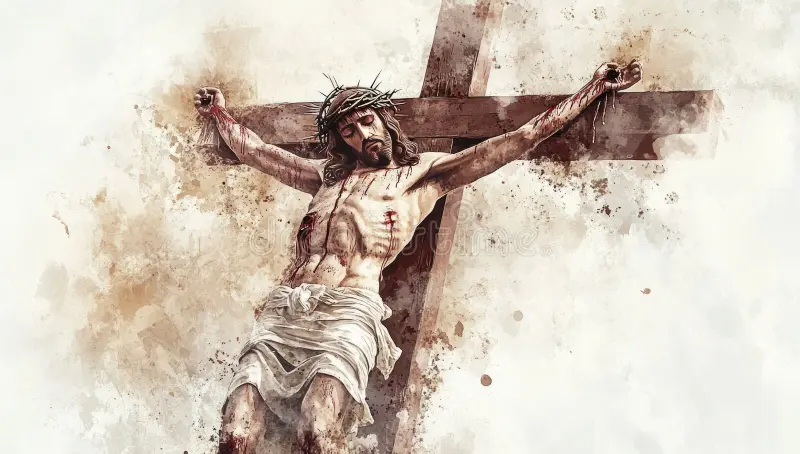
The passion and death on the cross of Jesus of Nazareth are historical events that we Christians commemorate annually at the end of the liturgical season of Lent, during Holy Week. These events, for two thousand years, have illuminated our own present passions, crosses, and deaths, and have re-energized, challenged, and committed us to a better future for all. But the martyrdom of Jesus of Nazareth contains truth, messages, and meaning not only for his disciples throughout history but for every human being, for all humanity.
Because the events that took place in the life of Jesus of Nazareth echo, resonate, narrate, and cry out for the lives of the innocent of today and their unjust condemnations. They speak to us of all the sacrifice, the heavy burdens, and the crosses imposed on so many; of the lives of so many fallen in the world; of the existence of so many women, Cyrenians and Veronicas, who serve and wipe the faces of the “discarded” on so many fronts and in so many inhuman situations; of the resilience, the history, and the death of so many committed—prophetically—to truth and justice.
I want to highlight some aspects that, since the passion and death on the cross of Jesus, remain relevant as illuminating insights into the human condition and the life of man and society today. The condemnation, suffering, journey to Calvary, and death on the cross of Jesus remind us of solidarity with human suffering: faced with the experience of evil and injustice in the world, we are not alone; no one is alone. Solidarity redeems and imprints on every experience of pain the hope that suffering is not a failure but an intrinsic part of the human experience and condition: “Today you will be with me in paradise” (Luke 23:43). Thus, the closeness of God, through the presence of “Simon of Cyrene” and “Simon of Veronica” who are never absent in moments of greatest vulnerability, transforms our greatest anxieties into apparent defeats.
The trial of Jesus serves as a stark reminder and a constant warning against the abuses of institutional power and the many ways in which institutions (political or religious) can be corrupted to conceal the truth and protect the status quo. The condemnation of Jesus constitutes a permanent denunciation and a critical reminder for humanity of the injustice of the justice system and of judicial processes that turn millions of innocent people into scapegoats for those who fear change because of the loss of their privileges.
But in the face of the suffering inflicted, Jesus of Nazareth’s response is not vengeance or retaliation, but forgiveness: “Forgive them, for they do not know what they are doing” (Luke 23:34); because of the authority, integrity, and consistency of his convictions. Nonviolence in the face of violence becomes a superior courage and strength against the cycle of hatred, so Jesus’ call to “turn the other cheek” and “overcome evil with good” becomes an ethical challenge for every citizen.
In the face of ignorance and fear as sources of human evil, forgiveness stands as a tool for reconciliation, liberation, and peace. The forgiveness offered by the suffering Jesus is not a sign of weakness but an instrument for healing hearts, relationships, and fractured societies, making possible the victory of fraternity over fratricide, and building a present and a future not determined by the evils and selfishness of the past.
In an era marked by comfort, individualism, consumerism, materialism, hedonism, and instant gratification, by the loss of a transcendent meaning in life, the cross continues to invite us to total self-giving for higher causes and values such as love and truth. The cross of Jesus will always remind us of the need to detach ourselves from our comfort zones in order to commit ourselves to ideals that give meaning to our human existence in the pursuit of the common good.
Jesus’ doubts, his thirst, his powerlessness, his feeling of loneliness and abandonment (“My God, my God, why have you forsaken me?”) and his death validate our own struggles, agonies, doubts and existential crises, while illuminating and teaching that consistency until the end (“Father, into your hands I commit my spirit.”) is the supreme and final act of freedom of every human being.
Thus, in our day, the cross has ceased to be merely an ancient instrument of execution to become an existential symbol, whose geometry reminds us of the synthesis of the life of Jesus and of every human being, in the permanent vertical search for truth, meaning and transcendence and the otherness and solidarity commitment, horizontal and fraternal with all those close to us.
And in a light and postmodern culture that worships social success, appearances, eternal youth and the happiness of social networks, the cross invites us to accept fragility and our scars as part of our human condition and our identity.
In a world of authoritarian leaders who seek to exploit others, the cross puts a limit on selfish power and calls us all to the exercise of power through and for service.
And finally, while the world today invites us to “look the other way” in the face of the pain of others, the cross exposes a suffering body and, in doing so, tells us that living fully involves committing to others, to the very end, that losing for a just cause is a superior form of victory over evil in the world.
Everything said here also resonates in Pope Leo XIV’s Message for Lent 2026, in which he exhorts us to “live a Lent that makes our ear more attentive to God and to those most in need. Let us ask for the strength of a fast that extends even to our tongues, so that words that wound may diminish and space for the voices of others may grow. And let us commit ourselves to making our communities places where the cry of those who suffer finds welcome and where listening generates paths to liberation, making us more willing and diligent to contribute to building the civilization of love.”

Mario J. Paredes
Presidente ejecutivo de SOMOS Community Care, una red de 2,600 médicos independientes -en su mayoría de atención primaria- que atienden a cerca de un millón de los pacientes más vulnerables del Medicaid de la Ciudad de Nueva York