 (EN)
(EN)
 (ES)
(ES)
 (IT)
(IT)

Let us be struck by the vulnerability of Christ during this Advent season
An authentic Advent beyond the Christmas noise. By Yohan García


Many of us are accustomed to the noise, decorations, and preparations of the November and December holidays. We keep an eye out for specials at our favorite stores or have Christmas dinner on our minds. We’re ready to watch our favorite Christmas movies and listen to the carols that never stop playing on the radio. Sometimes we manage to take a brief break during Advent, but we experience it only superficially. In most cases, we forget the true reason why we celebrate Christmas.
I hope that in this Advent season we may experience vulnerability in its entirety so that we may embody Christ in our hearts and, at the same time, embody the sufferings and hopes of the poorest and most vulnerable. As Pope Leo XIV points out in his Apostolic Exhortation, Dilexi Te:
God is merciful love, and his plan of love, which unfolds and is realized in history, is above all his descent and his coming among us to free us from slavery, from fears, from sin, and from the power of death. With a merciful gaze and a heart full of love, he turned to his creatures, taking on their human condition and, therefore, their poverty. Precisely to share the limitations and frailties of our human nature, he himself became poor, was born in the flesh like us, we have known him in the smallness of a child placed in a manger and in the extreme humiliation of the cross; there he shared our radical poverty, which is death. (n. 16)
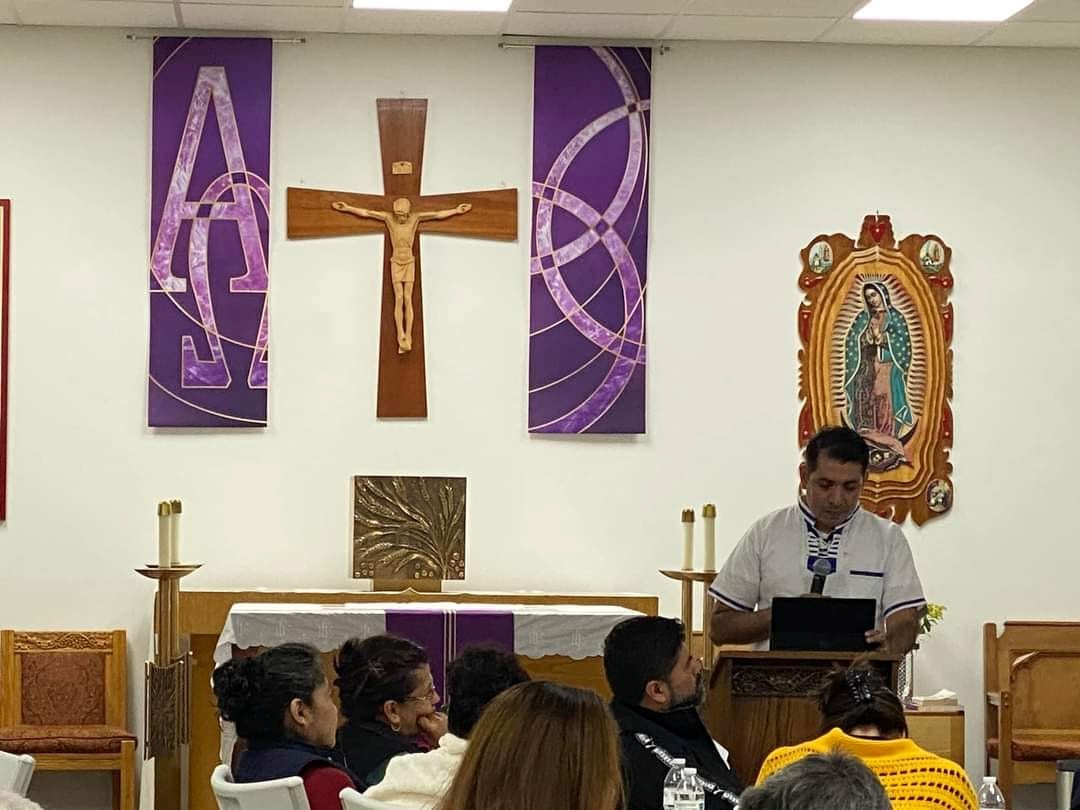
May this Advent season bring about a transformation in us through God’s merciful love, but not a transformation of empowerment or protagonism. Rather, may it be a transformation that makes us feel vulnerable, for it is in this vulnerability that we can see and receive the God who became one among us, in smallness, in simplicity, in humility, on the cross, on the periphery.
A couple of years ago, I had the joy of leading an Advent retreat in the Appalachian Mountains. It was a truly transformative experience because, as the plane took off into the unknown, the Lord began stripping me of my credentials and sense of security. Shortly before takeoff, I received news that the organizers had hired private security to guarantee my safety and that of the retreat participants. The situation had nothing to do with the retreat itself. It was about my personal history: an immigrant was coming to a rural area of Tennessee, a town rife with gun violence and negative attitudes toward immigrants.
Despite the risks, I agreed to go ahead with the plan to lead the Advent retreat. For Scripture says: “I am God, the God of your father; do not be afraid to go down to Egypt, for there I will make you into a great nation” (Gen 46:3).
I arrived in the Appalachian Mountains a complete stranger, and that made me feel incredibly vulnerable. However, I was transformed by the people who welcomed me from the very first moment. They made me feel at home, far from my own. I was transformed through encounters with people who crossed my path. They gave me a taste of a radical hospitality I had never experienced before. Both Hispanics and non-Hispanics embraced me as one of their own.
I went for a walk through the streets of Erwin, Tennessee. I met many people; many of them with a different, yet unique and beautiful accent. White people who greeted me with smiles and transformative looks. People I met during the Christmas tree lighting who, the next day, came to participate in the Advent retreat I had prepared. As I led the retreat and looked at the participants’ faces, I realized that they were giving me the retreat. Where there had been mistrust, they showed me God’s merciful love through gestures of closeness and welcome. With them, I learned that we all have hidden prejudices, which can only be transformed if we experience the vulnerability of Christ.
Indeed, Pope Leo XIV reminds us in Dilexi Te :
From this perspective, the need for “all of us to be evangelized” by the poor becomes clear, and for all of us to recognize “the mysterious wisdom that God wants to communicate to us through them.” Growing up in extreme poverty, learning to survive amid the most difficult conditions, trusting in God with the certainty that no one else takes them seriously, helping one another in the darkest moments, the poor have learned many things that they keep in the mystery of their hearts. Those of us who have not experienced similar situations, a life lived on the edge, surely have much to receive from that source of wisdom that is the experience of the poor. (n. 102)
Advent is a time of preparation and transformation, filled with hope and joy. However, how can we receive the Lord if we still don’t recognize his presence in the faces of the poor and most vulnerable? How can we open our hearts to receive Christ if others are still complete strangers in our lives? How can we open our hearts if we still distrust others? How can we hear the voice of the Savior of the world if we are more focused on the vanities of life?
Henri Jozef Machiel Nouwen used to say, “The Lord is coming, He is always coming. When you have ears to hear and eyes to see, you will recognize Him at any moment in your life. Life is Advent; life is recognizing the coming of the Lord.”
May this Advent season allow us to experience vulnerability and recognize God’s presence in our lives. Let us be touched by Christ’s vulnerability so that we may be transformed by his merciful love.
Yohan García serves as a part-time professor at the Institute of Pastoral Studies at Loyola University Chicago. García also serves as the Social Doctrine Education Manager at the Justice and Peace Secretariat of the United States Conference of Catholic Bishops; as an advisor and trainer for the Catholic Rural Life Conference; as a member of the Virtual Roundtable on Migration and Borders in the Americas of Catholic Theological Ethics in the World Church ; as a member of the Board of Directors of the Virginia Hispanic Faith Leaders Alliance; and as an advisor to the Justice, Peace, and Creation Integrity Commission of the Catholic Missionaries of Glenmary.
Yohan is originally from Puebla, Mexico, and immigrated to the United States in 2003 in search of a better life. He earned an associate degree in Business Management from Borough of Manhattan Community College, a bachelor’s degree in Political Science from Hunter College, and a master’s degree in Ethics and Society from Fordham University.

Exaudi Staff
What is Exaudi News? Exaudi News is an international Catholic media outlet that informs, shapes, and transforms daily in Spanish, English, and Italian. Through news, analytical articles, and live broadcasts of the Pope's events, Exaudi seeks to strengthen Christian unity and contribute to the evangelization of the world, always guided by the Church's social doctrine. We work to bring Christian truth and values to every corner of the planet. Help us transform the world with Exaudi! At Exaudi, we believe that evangelization and quality information can change lives. To continue our mission and expand our reach, we need your help. In addition, we are looking for committed people to join our team. With your support, we will reach more people, spread the message of Christ, and strengthen Christian unity. Will you join our mission? For more information on how to collaborate, visit Exaudi.org or contact us directly: [email protected] Exaudi: Informs, educates, and transforms.
Related

Abortion: The Catholic Church and the message of the last five Popes
Patricia Jiménez Ramírez
10 April, 2026
3 min
When Heaven Bends to Embrace Human Suffering
Sonia Clara del Campo
10 April, 2026
6 min
“Lift Up Your Eyes”: The Pope’s Trip to Spain is Being Prepared with Transparency and Social Support
Exaudi Staff
08 April, 2026
2 min
Saint Thomas More: A Non-Negotiable Conscience
Javier Ferrer García
08 April, 2026
4 min