 (EN)
(EN)
 (ES)
(ES)
 (IT)
(IT)

Leo XIV: “The Church as the People of God cannot err in faith”
General Audience. Catechesis on Lumen Gentium: Baptism seals Christian identity and calls all the faithful to the prophetic and priestly mission
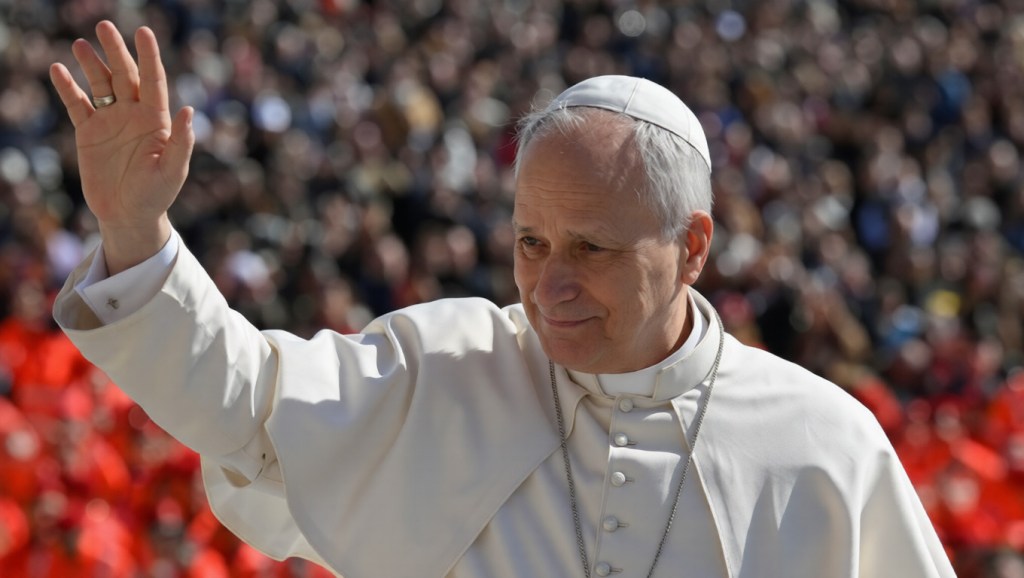

On March 18, 2026, Pope Leo XIV delivered his catechesis at the general audience held in St. Peter’s Square, before thousands of the faithful. Continuing the cycle dedicated to the documents of the Second Vatican Council, the Holy Father reflected on the second chapter of the Dogmatic Constitution Lumen Gentium , which presents the Church as the People of God . In his reflection, he emphasized the common dignity of all the baptized, the royal priesthood of the faithful, and, especially, the indefectibility of the Church in faith, thanks to the sensus fidei (supernatural sense of faith) that animates the entire ecclesial community.
The Pope emphasized that Baptism is the foundational sacrament that forever seals the believer’s identity and incorporates them into the holy People of God. Quoting directly from Lumen Gentium (nos. 9-12), he explained that Christ, through the new and eternal Covenant, established a kingdom of priests and constituted his disciples as a royal priesthood . Through Baptism and the anointing of the Holy Spirit, the faithful are consecrated as a “spiritual house and holy priesthood,” empowered to worship God in spirit and truth, and to profess the faith received from the Church.
Echoing the words of Pope Francis, Leo XIV recalled that “the first sacrament, the one that seals our identity forever and of which we should always be proud, is baptism.” Confirmation, for its part, binds the baptized person more closely to the Church, enriches them with the power of the Holy Spirit, and obliges them to spread and defend the faith through the witness of word and deed. In this way, a common mission is established that unites ordained ministers and the lay faithful in the saving work of Christ.
A central point of the catechesis was the exercise of the royal priesthood of the faithful, which is manifested in multiple ways oriented toward sanctification: participation in the Eucharist, prayer, asceticism, and active charity. As the Council teaches, “the sacred and organically structured character of the priestly community is actualized by the sacraments and by the virtues” ( Lumen Gentium , 11).
The Pope paid special attention to the sensus fidei , the supernatural sense of faith that belongs to all the People of God. According to Lumen Gentium (n. 12), this gift enables the Church to recognize the revelation handed down, to distinguish truth from falsehood in matters of faith, and to apply it more deeply in daily life. This sense is not individual, but rather manifests itself in the universal consensus of the faithful—from bishops to laity—on matters of faith and morals.
In this context, Leo XIV clearly stated: “The Church, therefore, as the communion of the faithful, which obviously includes the pastors, cannot err in the faith: the instrument of this property of hers, founded on the anointing of the Holy Spirit, is the supernatural sense of faith of the whole People of God, which is manifested in the consensus of the faithful .” This conciliar teaching directly links the sensus fidei with the infallibility of the Church, guaranteeing that the entirety of the faithful, anointed by the Spirit, does not err when it expresses universal consent on truths of faith and morals.
Finally, the Holy Father highlighted the charismatic vitality of the Church: the Holy Spirit, received from the Risen Christ, distributes special graces and charisms among the faithful of all walks of life, enabling them to contribute to the renewal and expansion of the ecclesial community. Luminous examples of this fruitfulness are consecrated life, which “continually springs up and blossoms through the work of grace,” and ecclesial associations.
The Pope concluded with a vibrant exhortation: “Let us awaken within ourselves the awareness and gratitude for having received the gift of being part of the people of God; and also the responsibility that this entails.” Every baptized person, therefore, is called to be an active agent of evangelization , giving consistent witness to Christ according to the prophetic gift that the Lord bestows upon his entire Church.
Full text of the catechesis:
LEO XIV
GENERAL AUDIENCE
St Peter’s Square
Wednesday, 18 March 2026
_________________
Catechesis. The Documents of Vatican Council II. II. Dogmatic Constitution Lumen gentium. 4. The Church, a Priestly and Prophetic People
Dear brothers and sisters, good morning and welcome!
Today I would like to revisit the second chapter of the Conciliar Constitution Lumen gentium (LG), devoted to the Church as the people of God.
The messianic people (LG, 9), receive from Christ the participation in the priestly, prophetic and kingly work office through which his salvific mission is carried out. The Council Fathers teach that the Lord Jesus, through the new and eternal Covenant, has established a kingdom of priests, constituting his disciples as a ‘royal priesthood’ (1 Pet 2:9; cf. 1 Pet 2:5; Rev 1:6). This common priesthood of the faithful is given with Baptism, which enables us to worship God in spirit and truth, and to “confess before men the faith which they have received from God through the Church” (LG, 11). Furthermore, through the sacrament of Confirmation, all the baptized “are more perfectly bound to the Church … and the Holy Spirit endows them with special strength so that they are more strictly obliged to spread and defend the faith, both by word and by deed, as true witnesses of Christ” (ibid.). This consecration is at the root of the common mission that unites the ordained ministries and the lay faithful.
In this regard, Pope Francis observed that, “Looking at the People of God is remembering that we all enter the Church as lay people. The first sacrament, which seals our identity forever, and of which we should always be proud, is Baptism. Through Baptism and by the anointing of the Holy Spirit, (the faithful) ‘are consecrated as a spiritual house and a holy priesthood’ (LG, 10), [so that] everyone forms the faithful Holy People of God” (Letter to the President of the Pontifical Commission for Latin America, 19 March 2016).
The exercise of the royal priesthood takes place in many ways, all aimed at our sanctification, first and foremost through participation in the offering of the Eucharist. Through prayer, asceticism and active charity, we thus bear witness to a life renewed by God’s grace (cf. LG, 10). As the Council summarizes, “it is through the sacraments and the exercise of the virtues that the sacred nature and organic structure of the priestly community is brought into operation” (LG, 11).
The Council Fathers then teach that the holy People of God also participate in the prophetic mission of Christ (cf. LG, 12). In this context, the important theme of the sense of the faith and the consensus of the faithful is introduced. The Doctrinal Commission of the Council specified that this sensus fidei “is like a faculty of the whole Church, by which she, in her faith, recognises the revelation handed down, distinguishing between true and false in matters of faith, and at the same time penetrates it more deeply and applies it more fully in life” (cf. Acta Synodalia, III/1, 199). The sense of faith therefore belongs to individual believers not in their own right, but as members of the People of God as a whole.
Lumen gentium focuses on this latter aspect, and places it in relation to the infallibility of the Church, to which that of the Roman Pontiff is inherent and by which it is served. “The entire body of the faithful, anointed as they are by the Holy One (c. 1 Jn 2:20,27), cannot err in matters of belief. They manifest this special property by means of the whole peoples’ supernatural discernment in matters of faith when from the Bishops down to the last of the lay faithful they show universal agreement in matters of faith and morals” (LG, 12). The Church, therefore, as the communion of the faithful – which naturally includes the pastors – cannot err in matters of faith: the organ through which this truth is preserved, founded on the anointing of the Holy Spirit, is the supernatural sense of faith of the entire People of God, which is manifested in the consensus of the faithful. From this unity, which the Magisterium of the Church safeguards, it follows that every baptized person is an active agent of evangelization, called to bear consistent witness to Christ in accordance with the prophetic gift which the Lord bestows upon His whole Church.
Indeed, the Holy Spirit, who comes to us from the Risen Christ, “distributes special graces among the faithful of every rank. By these gifts He makes them fit and ready to undertake the various tasks and offices which contribute toward the renewal and building up of the Church” (LG, 12). A particular demonstration of this charismatic vitality is offered by consecrated life, which continually germinates and flourishes through the work of grace. Ecclesial associations, too, are a shining example of the variety and fruitfulness of spiritual fruits for the edification of the People of God.
____________________________________________________
Special greetings:
I greet all the English-speaking pilgrims and visitors taking part in today’s Audience, particularly the groups from Nigeria, Tanzania, Indonesia, the Philippines, Thailand and the United States of America. With prayerful good wishes that this Lent will be a time of grace and spiritual renewal for you and your families, I invoke upon all of you joy and peace in our Lord Jesus Christ.
_____________________________
Summary of the Holy Father’s words:
Dear brothers and sisters, in our continuing catechesis on the Second Vatican Council, today we consider the participation of the faithful in Jesus Christ’s priestly, prophetic and royal offices, as presented by the Dogmatic Constitution Lumen Gentium. Through the sacrament of baptism, each of us are called to share in Christ’s royal priesthood (1 Pt 2:9) and to worship him in spirit and truth, especially through our participation in the Eucharist. We also partake in Jesus’ prophetic mission, for we are called to bear witness to the truth of the faith. Indeed, the Council Fathers taught that “the whole body of the faithful … cannot be mistaken in belief. It shows this characteristic through the entire people’s supernatural sense of faith when, from the bishops to the last of the faithful, it manifests a universal consensus in matters of faith and morals” (LG, 12). Along with these gifts shared by all members of the Church, the Holy Spirit continues to allot special graces to the faithful in order to enrich and build up the body of Christ. It is important that we recognize these manifold gifts and express our gratitude to God for allowing us to be partakers in his work of salvation.

Exaudi Staff
What is Exaudi News? Exaudi News is an international Catholic media outlet that informs, shapes, and transforms daily in Spanish, English, and Italian. Through news, analytical articles, and live broadcasts of the Pope's events, Exaudi seeks to strengthen Christian unity and contribute to the evangelization of the world, always guided by the Church's social doctrine. We work to bring Christian truth and values to every corner of the planet. Help us transform the world with Exaudi! At Exaudi, we believe that evangelization and quality information can change lives. To continue our mission and expand our reach, we need your help. In addition, we are looking for committed people to join our team. With your support, we will reach more people, spread the message of Christ, and strengthen Christian unity. Will you join our mission? For more information on how to collaborate, visit Exaudi.org or contact us directly: [email protected] Exaudi: Informs, educates, and transforms.
Related
Pope Leo XIV to Receive the National Constitution Center’s Medal of Freedom
Exaudi Staff
17 March, 2026
2 min
Pope Leo XIV moves into the papal apartment in the Apostolic Palace
Exaudi Staff
17 March, 2026
2 min
Pope Leo XIV: “Protecting children is at the heart of the Church’s mission”
Exaudi Staff
16 March, 2026
7 min
“God always gives light, hope, and peace”
Exaudi Staff
15 March, 2026
6 min