(EN)
(EN)
 (ES)
(ES)
 (IT)
(IT)

Immortality: A Christian Transhumanism?
When Technology Promises What Faith Has Already Announced: Immortality
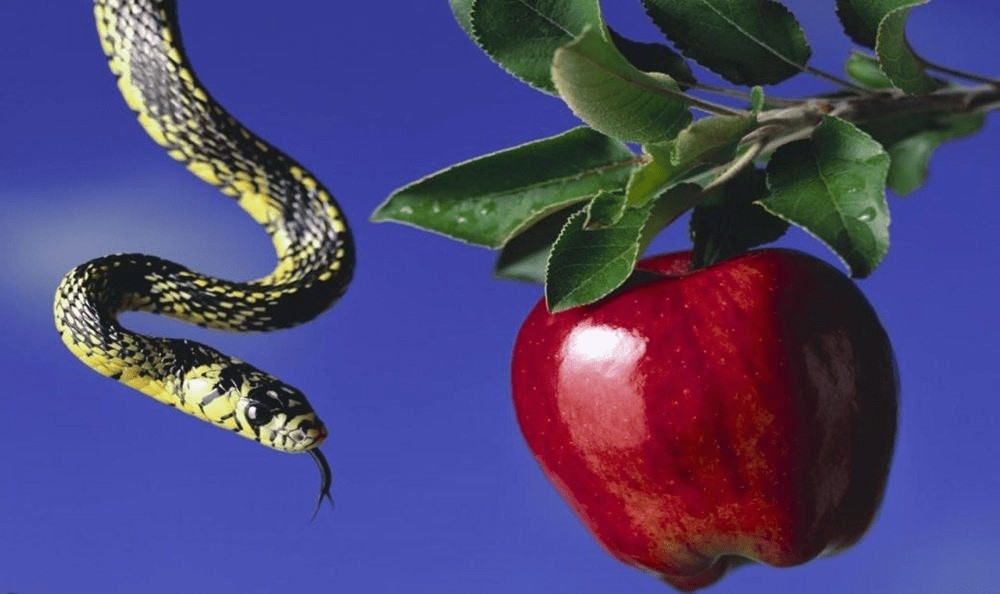

Recently, the media widely reported on a recorded conversation between Russian President Vladimir Putin and Chinese President Xi Jinping that revealed his desire for immortality.
The aforementioned leaders discussed organ transplants as a means of prolonging life.
According to the recording, Putin even suggested that eternal life could be possible thanks to innovations in biotechnology.
For this reason, we considered it interesting to republish this article, published in 2019, on the vision of immortality (or amortality) proposed by transhumanism, as well as to present some elements that coincide with Russian cosmism, in order to ultimately contrast this vision with the Christian worldview of immortality and eternal life.
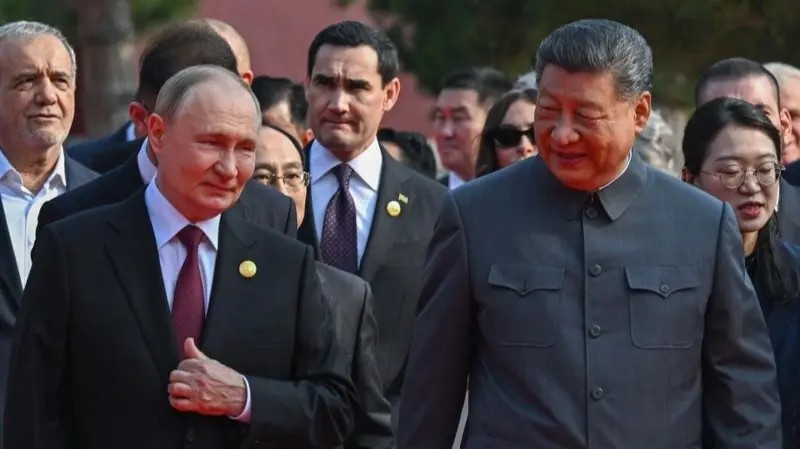
The quest for immortality has accompanied humankind since time immemorial. From ancient myths to modern science, we have dreamed of challenging the limits of death and prolonging our existence beyond the natural.
Without going any further, futurism regarding human longevity focuses on the idea of drastically extending life through scientific and technological advances. This vision, promoted by futurists and transhumanists, seeks not only to increase life expectancy but also, eventually, to make death optional. This secular worldview contrasts with the Christian proposal of immortality based on revealed truth, which affirms that human beings were created to be immortal.
In these times of techno-idolatry, it is essential not to fall prey to the false proposition of immortality offered by transhumanism and, at no time, to confuse it with the authentic immortality of the soul, nor with the transformation and resurrection of the glorified body, both united and destined for eternal life.
St. Augustine, in relation to the Genesis account, in Quaest. Vet. Et Nov. Test, a text cited in the Summa Theologica of St. Thomas, q. 97, a-4, c). said the following:
“Eating from the tree of life (in the Garden of Eden) removed corruption from the body. Even after sin, he could have been incorruptible if he had been allowed to eat from it again.”
Later, Saint Augustine goes on to say : “The body of man was not incorruptible by its own virtue, but by a supernatural force imprinted in the soul that preserved the body from corruption as long as it was united to God.”
That is to say, the soul, united to God by grace, removed from the pernicious “tree of knowledge,” also radiated upon the body that principle of life that, after original sin, it would lose.
Who wants to live forever?
Probably from the very beginning, ever since we first became aware of ourselves and our own lives, human beings have discovered their fragility, their mortality, and their transience as individuals in the face of an immense, unknown world. Perhaps that’s why they’ve always yearned for immortality. Well, there’s currently at least one company that offers the possibility of living forever as a digital avatar.
The company Eternime offers services so that people in the future can interact with the memories, stories, ideas, and voice of a deceased person, almost as if they were speaking to them in the present. The company, which advertises its services under the slogan “Become virtually immortal,” compiles these thoughts, stories, and memories and creates an intelligent avatar that resembles the deceased. This avatar, they claim, will live forever and allow other people in the future to access the memories of their loved ones.
Eternime seems to want to preserve the memories, ideas, creations, and stories of billions of people for eternity. According to them, it would be like a vast library with people instead of books, or an interactive history of current and future generations. “An invaluable treasure for humanity,” the corporation claims.
But really, who wants to live forever?
At the beginning of the 21st century, transhumanism is presented as a utopia whose ultimate goal is to overcome death through scientific and technological means. Christianity promises the same through the Resurrection of Christ.
However, transhumanism promises to break biological limitations and radically redesign humanity, biotechnologically transforming nature and the human condition to achieve a new posthuman condition in the not-too-distant future.
Transhumanism, therefore, does not aspire to transfigure the individual and humanity as a whole according to the spirit of the Creator. Rather, among its proponents’ claims are extending lifespan or achieving superlongevity, enhancing and enhancing the senses and physical abilities, increasing memory and cognitive abilities, and, in general, using technology to improve human biological conditions. For this materialistic and technological neo-Gnosticism, the human body is defective and should be replaced with another non-biological medium, preserving the mind and what they call “consciousness.”
If humanism can be seen as a kind of secular religion, transhumanism would define its eschatology. This eschatology presupposes a certain understanding of human nature and destiny. Is this vision totally incompatible with that offered by Christianity? Can there be a Christian transhumanism? Under what terms? What is the enhancement that will take humankind beyond itself to this posthuman or suprahuman state that some representatives of this movement speak of?
All these questions and more were asked by both speakers and students during the Summer Course of the Complutense University (UCM) and the San Dámaso Ecclesiastical University (UESD) entitled Humanism under debate in the 21st century , held in Madrid from July 8 to 10, 2019.
In her presentation , “A Christian Transhumanism? Vladimir Soloviev and Russian Cosmism,” Professor Miriam Fernández argues in detail how, in her view, Russian cosmism is a clear and recognized precedent for transhumanist theories. It is a utopian movement that emerged in the late 19th century to offer an interpretation of the phenomenon of life on our planet and of humankind’s role and mission as its most complex manifestation. Among the characteristic themes of cosmism are the role of human beings in their own evolution and in cosmic evolution, the creation of new forms of life, including a new level of humanity, an unlimited extension of human longevity to immortality, the physical resurrection of the dead, and the exploration and colonization of the cosmos.
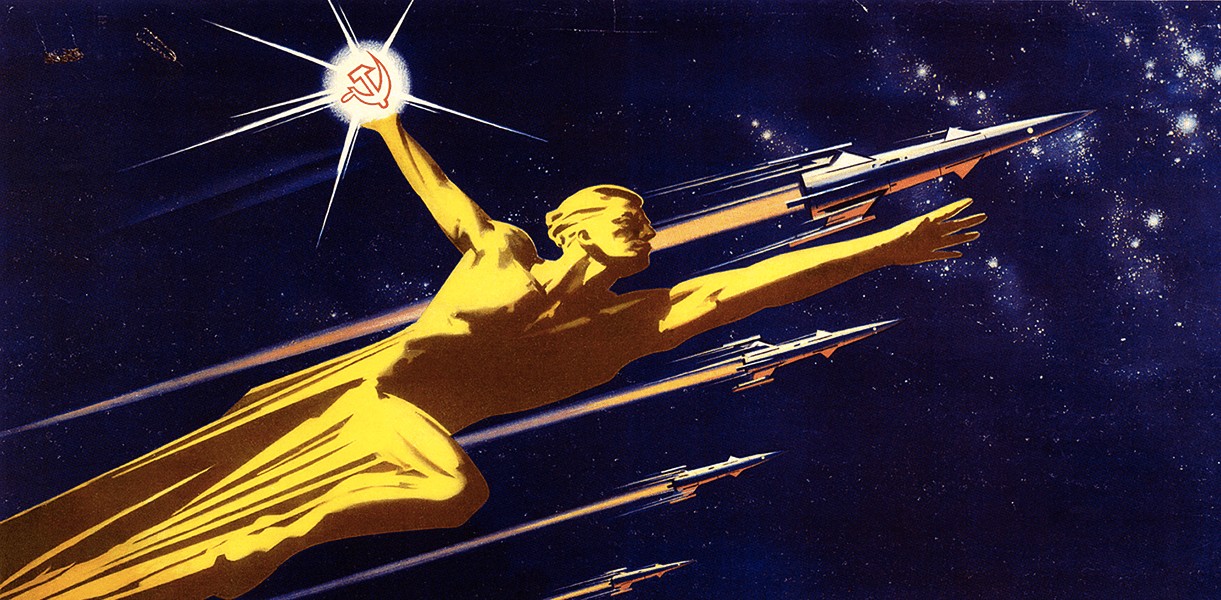
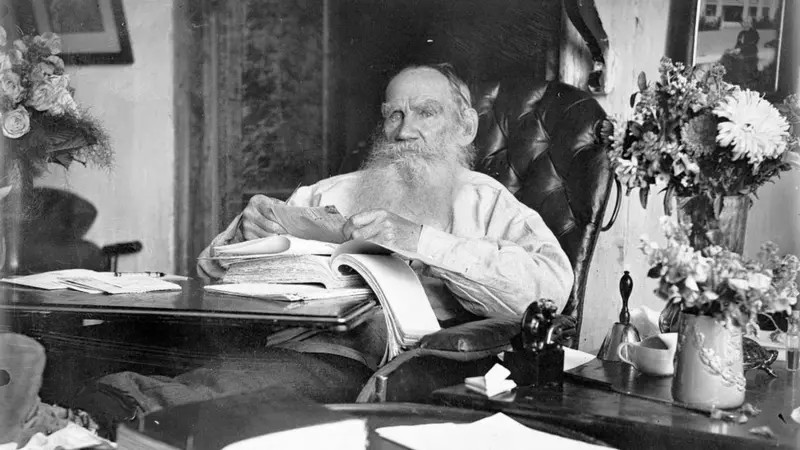
Cosmism, as Professor Fernández explained, is a diffuse and diverse movement in terms of its representatives. Writers such as Dostoevsky and Tolstoy, as well as philosophers such as Soloviev, Florensky, Bulgakov, and Berdyaev, are considered to be in agreement with cosmism. In the early years of the Soviet Union, a scientific variant developed, which included, among others, the physicist Konstantin Tsiolkovsky, who was a driving force behind the Soviet space race, and Vladimir Vernadsky, to whom we owe the concept of the noosphere, which in the West was adopted and developed by the anthropologist and Jesuit Teilhard de Chardin.
Simply looking at the aforementioned characteristic themes of cosmism, its closeness to transhumanist themes becomes clear. However, with the exception of the scientific branch that developed in the Soviet Union, the vast majority of cosmist representatives were convinced Christians, something that is probably not one of the characteristic features of today’s transhumanists and posthumanists.
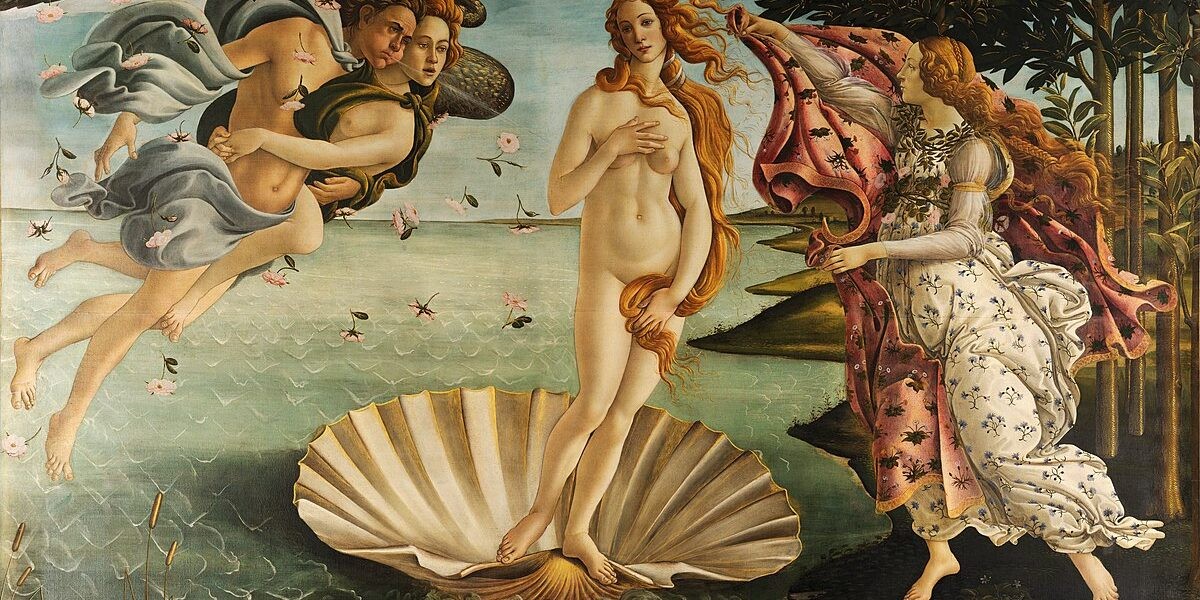
Beauty is the measure of the perfection of creation, its spirituality, its goodness, truth and fullness.
The cosmist philosopher Nikolai Fyodorov proclaimed himself a fervent Christian and saw the essence of Christianity in Christ, who, with his resurrection, brought the news of the possibility of victory over death. Throughout his life and work, Fyodorov maintained the conviction that this victory must and will come about through the participation of the creative forces and labor of humanity.
As Miriam Fernández points out, Fyodorov argued that the evolutionary process is directed toward an increase in consciousness and intelligence and their role in the development of life. Humanity is the culmination of natural evolution; it can and should direct the evolutionary process in the direction dictated by its reason, but also by its morality.
The world is not a given; we must also contemplate it from a deontological perspective, envisioning how it should be, and also from the perspective of its theoanthropological development through human beings. We must not view history objectively, that is, without involving ourselves in it, nor subjectively, but projectively, that is, transforming our knowledge of the world into the project of a better world.
Immersed in this evolutionary perspective, Fyodorov understands the human being as an intermediate being, in the process of development, far from perfection, but called to consciously and creatively transform the external world and its own nature. Since the principal feature of human imperfection is death, the struggle against it must be the common cause unifying all of humanity. Fyodorov believed that death and existence after death should be the subject of profound scientific research, and the achievement of immortality and resurrection the principal objectives of a science that must abandon laboratories to become the common property of all.
As Professor Fernández explained in the course, achieving immortality and the resurrection of all those who were with us are two inseparable goals for Fyodorov. Immortality is ethically and physically impossible without the resurrection of those who left us. We cannot allow our ancestors, those who gave us life, to remain buried, nor can we allow our relatives and friends to die. That the individual achieves immortality for themselves and for future generations is only a partial victory over death; it is only the first stage. The definitive victory will be achieved when everyone has been resurrected and transformed to enjoy an immortal life.
The resurrection of those who lived in the past cannot be merely the recreation of their past physical form, because it is imperfect and centered on a mortal existence. Fyodorov’s idea is to transform it into a self-creating form, controlled by reason and capable of infinite renewal. Those who have not died must undergo the same transformation; they must become creators and organizers of their own organisms.
However, the Russian philosopher is aware that the sense of unity with nature has been lost. We have forgotten that a human being does not act in isolation, but as an organic part of nature, of creation, and that this is a divine work. We have forgotten, in short, that we are children of God, made in his image and likeness.
For the Christian worldview, the Trinitarian God, who is the same God of Love, created human beings as beings destined to free themselves from natural need through their own efforts. Through humanity, God acts in history to fulfill the promise of Christianity: the transfiguration of nature and the resurrection of the dead. It also contemplates the transformation of the firstfruits, who will enjoy the gift of immortality, into a restored creation (“new heaven and new earth”). History is the place where creation will culminate, the meeting point between human and divine creative energy. Human beings are, thus, part of the evolutionary process but, at the same time, are factors capable of influencing evolution, the surrounding world, and their own being. Hence, in their current state, for the cosmist philosopher Fyodorov, human beings are intermediate beings, imperfect but at the same time creative, conscious, and with a transformative vocation.
This way of understanding the creative nature of human beings, characteristic of cosmism, is also one of the defining features of its utopian theoretical proposal. Since for cosmism, human beings are homo creators, it is not surprising that man’s relationship with the cosmos is, above all, an aesthetic one. What is expected of man is not a passive and static contemplation of the beauty of this world, but an active contribution that makes the world a cosmos. A creative act is expected that overcomes the dark and chaotic elements of nature, the monstrosity resulting from its fallen state, which manifests itself in death, decay, and the prevailing voracity.
As Professor Fernández points out, beauty in the philosophy of cosmism is more than an aesthetic category; it is an ontological category. It is the measure of the perfection of creation, its spirituality, its goodness, truth, and plenitude.
Human beings, as the ultimate expression of this property, are also extremely sensitive to its absence and aspire to increase harmony in all spheres of life. The beauty of this world acts as a regulator of human behavior; it guides us in the realization of our evolutionary purpose, which is none other than to conquer chaos, overcome entropy, and transform this boundless universe into a cosmos.
From the perspective of Christian cosmism, science itself must radically change to be morally transformed. It must go beyond laboratory experiments and observations and go out into the world; it must work not in the service of mutual destruction, not in the name of a consumer society, not for the benefit of a select and privileged few, not in pursuit of selfish ends, but in the service of the salvation and regulation of the life of each and every human being and of life on our planet.
The human being aspires to transcendence
For some transhumanist authors, within a few decades, death will become optional. They dream of achieving “the death of death.” The prophets of this movement claim that, thanks to technological advances, by the middle of this century we will be able to halt the aging process and indefinitely extend life expectancy, even to the point of achieving immortality. Some transhumanist biogerentologists, such as Aubrey de Grey, are already beginning to speak, for the first time in history, of aging being a curable disease.
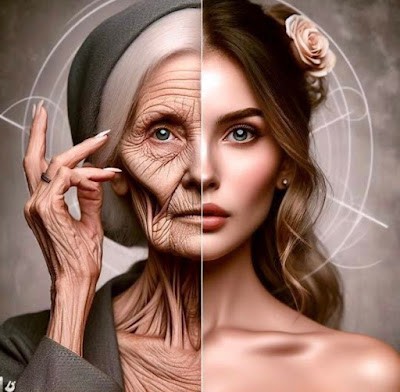
Along these techno-enthusiastical lines, Google’s biotechnology company Calico (an acronym for California Life Company ) was founded in 2013 with the goal of extending human life through technology. The company studies the mechanisms and causes of degenerative processes to develop tools for treating various age-related diseases. To this end, it has a multidisciplinary scientific team that encompasses fields such as medicine, genetics, and nuclear biology.
Scientist Cynthia Kenyon, Calico’s vice president, fervently believes that her corporation will find answers to one of humanity’s greatest mysteries: aging.
However, one must sincerely ask whether technology will ever bring us the immortality promised by transhumanism. Will we have to learn to live forever in a self-aware stream of data?
In the 1990s, Max More, CEO of the Alcor Life Foundation, launched the optimistic idea about the possibility of improving the human condition through technology. Both More and later proponents of the transhumanist movement sincerely believe that the human species can expand its potential through biotechnological integration, accelerate the evolutionary process, and become immortal. Therefore, they advocate “promoting morphological freedom, the right to modify and improve one’s body, cognition, and emotions.”
The premises from which transhumanists start are basically from an atheistic or secular worldview of human beings.
“Religion poisons everything,” Christopher Hitchens, a member of the radical atheist movement New Atheist , declared some time ago, “and can only be considered, at best, humanity’s first and worst attempt to resolve existential questions.”
Recently, however, some atheists are beginning to realize that the Enlightenment could only succeed in the West because it influenced a Christian society. In a truly secular society, in which people live far removed from the God of Love and only hope to be recycled or discarded as obsolete, or genetically modified for improvement, as proposed by the transhumanist utopia/dystopia, rather than filled with hope by the promise of resurrection for eternal life, there may be no solid moral basis in such a society that allows for a true distinction between good and evil.
It would be worth asking whether the atheistic or secular project that has been deployed in our societies offers any kind of hope to the individual human being and to humanity in the face of the inescapable fact of suffering and death.
As Professor Miriam Fernández has highlighted in her research, the religious thinker and Christian mystic Vladimir Soloviev, a member of the Russian cosmist movement, met Fyodorov in 1881, precisely when the fundamental lines of his philosophy were already established and Soloviev compared them with his ideas at the beginning of his intellectual activity.
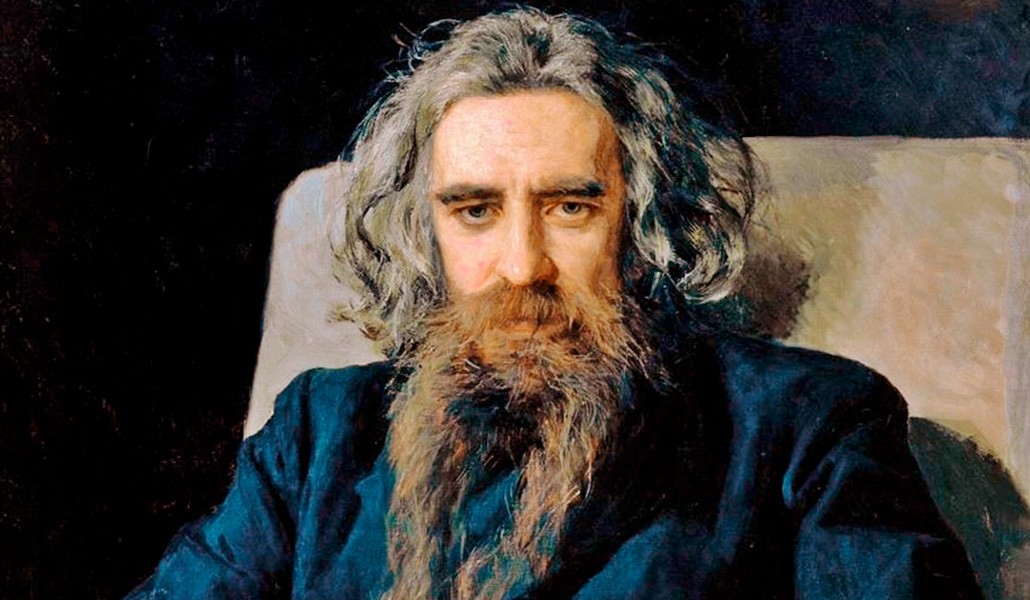
In one of his letters to the aforementioned philosopher, Soloviev emphasizes that “the path to the Kingdom of God has a religious, not a scientific, character” and must be based, above all, on a humanity united by faith, not just on the human work of scientists and intellectuals. Fyodorov’s project, according to Soloviev, risks “losing sight of God behind human achievements.”
Thus, Soloviev understands human nature in a dynamic sense and affirms that the true human essence exists only as a possibility. Potentially, human beings are forms capable of harboring an absolute content, that is, God. Soloviev’s conception of the human being, according to Professor Fernández, is inseparable from that of God, whom he also understands dynamically and who manifests, according to this thinker, as the “hero and protagonist of the universal drama of the history of the cosmos, a drama that will lead human beings to salvation and liberation from death.”
Thus, the essence of humanity is rather a future-oriented project. Humanity is involved, according to Soloviev, in the movement of shaping, through history, the contours of the ideal humanity of the end times.
As he points out in his book Beauty in Nature, evolution is a gradual and growing process of the incarnation of divine light in amorphous and chaotic matter, of the spiritualization of matter. This process of interaction between light and matter is gradual: it first occurs in the inorganic sphere, creating the mineral kingdom, then in the plant kingdom. It is followed by the animal kingdom, until finally, it appears in the human kingdom. With this, the process of natural organic evolution culminates and comes to an end, but it is not the end of the cosmogonic process. There remains one last kingdom to come, the Kingdom of God, whose arrival would indeed mark the end of history.
Professor Fernández points out that for Soloviev, a fundamental change occurs in cosmogony with the emergence of the human being, as it is already a perfect organism, the most that organic life can create through its own means. Its appearance is an unprecedented event in the evolutionary development of the cosmos and marks a radical discontinuity. After its appearance, cosmogony transforms into history. The novelty introduced by humanity and that causes this discontinuity is human consciousness and reason, a reason that Soloviev understands as ratio , the power to relate within itself.
Being a type of relationship, it demands a content that it does not produce on its own. What human beings, by their nature and essence, are called to relate is the divine and the material. The role of human beings in the cosmic drama is, therefore, that of intermediary or mediator between the divine and the natural.
As Mirian Fernandez pointed out in her magnificent presentation at the aforementioned summer school, for Soloviev, this common task for humanity does not consist of tearing down something old, nor building anything new. It is not about creating the Kingdom of God on earth, for it already exists and, as Soloviev repeatedly repeats, it is not of this world, but rather setting in motion the historical process that will allow the Kingdom to come to us. It is not a human creation in the strict sense, for it is also an object of revelation. The possibility of the Kingdom’s coming lies in the conviction, characteristic of all Russian religious philosophy, of the nonexistence of an ontological division between this world and the divine, a conviction essential to Soloviev’s vision. The spiritual dwells in the material, and in this lies the fullness of both, in their union and in their separation at the same time as independent principles. For Soloviev, the spiritual is present in the earthly, apart from, and sometimes despite and independently of, human actions.
Death, transfiguration and resurrection
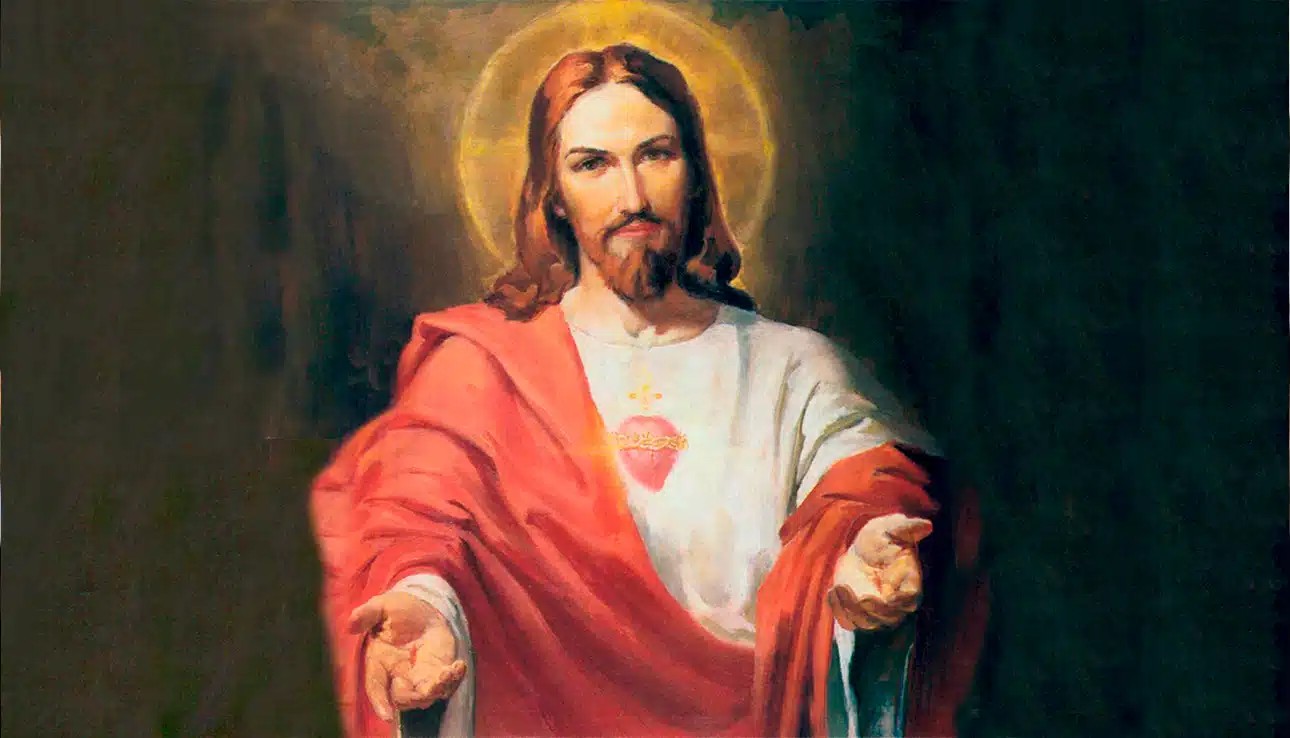
Human beings are called to be co-participants with God, and are, in this sense, kings of creation. But their reign derives from that of Christ, and they must not forget this. If the appearance of human beings represented a radical discontinuity in the cosmogonic process, the incarnation of Christ is, due to its implications for humanity and the world, the decisive and central historical phenomenon in the unfolding and development of the cosmos. Soloviev, like Fyodorov, understands that the meaning of Christianity lies in the person of Christ himself, not just in its dogmas. His incarnation is a new step in the evolution of creation, a discontinuity even more radical than the appearance of human beings, and the culmination of the entire cosmogonic process. In Him, God materializes spirit, and Christ spiritualizes matter. If nature aspired to humankind, human beings aspire to Christ, the incarnate Logos.
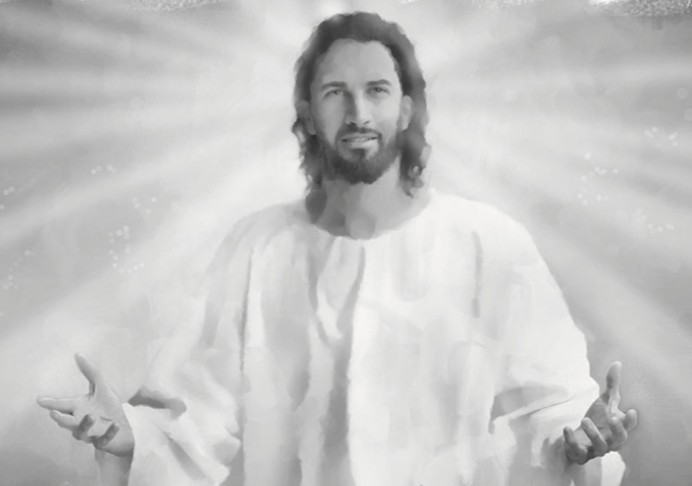
In Christ, human nature transcends the limits of its finitude; the interiority of the Kingdom that man discovers within himself as an ideal soars toward God. Christ is divinized not in spite of his humanity, but precisely because of it. He was able to shape his humanity to accommodate God. Thus, Christ is true God and true man. The Incarnation is not a static descent. Like humanity, Christ also had a mission to fulfill: to adapt his humanity to God, making it a form fit to receive Him. The culmination of this process is the victory over death, the transfiguration and resurrection.
For Soloviev, Christ conforms his humanity to God through a free act of his rational and human will. The divine is realized within Christ’s humanity only to the extent that his conscience voluntarily renounces itself and becomes obedient to the absolute will of God.
For the Russian cosmologist Soloviev, humankind’s reign over the created order derives from that of Christ, and Christ itself emanates from Christ’s voluntary self-emptying, even to the point of death on the cross. If humankind desires authentic reign over the material world, they must enter into the kenosis of Christ, renouncing their unbridled desire to dominate nature, to use and abuse it, to elevate themselves above it for purely material or sensible ends, pursuing selfish and subjective desires.
In a certain sense, the activity that is demanded and expected of human beings is, in fact, an active and consciously acquired passivity, a kind of withdrawal, a conscious refusal to objectify our desires in this world and to dominate it.
For Soloviev, humanity must abandon this objectifying and domineering view of the material world, let it be, and with this withdrawal, achieve a deeper connection, not through will or reason, but through feeling. It’s worth remembering that for the Christian worldview, God is Love, and Love is God.
However, human beings are not creators in the absolute sense, as their creativity involves the reception of higher creative powers. Authentic human creativity, more than a goal-oriented activity, is a radical openness to the divine being and may be more receptive than creative as it is commonly understood. It is this receptivity that is capable of creating true beauty.
As Professor Fernández points out, like cosmologist Fyodorov, for Vladimir Soloviev, beauty is a sign of the degree of embodiment of the divine idea in the material world, of the spiritualization of matter, and the human being is the most beautiful creature and also the being endowed with the greatest consciousness, which makes him not only a bearer of beauty but also an agent called to accelerate and propel the spiritualization and divinization of the world, enveloping it in beauty and incorruptibility. Human creation must continue the artistic task that begins in nature, but at a higher and more perfect level, since natural beauty only covers with its luminous mantle the chaotic forces that dominate the material world, but does not “defeat” them. Human beings must introduce the ethical principle into material reality to make this world a true cosmos, in which goodness and truth are effectively realized in beauty.
In this sense, recovering and giving new life to humanity as a whole is of crucial importance. In his encyclical Laudato Si’ , Pope Francis appeals to the idea of kinship, of belonging to a family. The human family that safeguards creation, our common home, through the free union of persons who unite without losing their individuality, as happens, for example, in a choir.
This confirms the existence of a collective consciousness, bearer of knowledge that can only be achieved in this way. Individuals may or may not be in contact with this knowledge, and a society may or may not be a carrier of this collective consciousness and knowledge, or it may be an expression of individualism. The latter, according to Soloviev, is what has happened in the West, where an individualistic tradition has been imposed, breaking with the collective consciousness, shifting the center of gravity of life to the subjective world. This rupture has ethical implications, as it loses the sense of unity with other human beings and the sense of responsibility toward each and every one of them. In Christian terms, we would say that the sense of “communion” within the human family has been lost.
Humanity, understood as a collective organism, is the new subject of history after the incarnation of Christ. It appears under various names in Soloviev’s work; it is the mystical body of Christ and also the universal Church. In its definitive ideal state, it is Divine Humanity.
The central event in the history and life of the universe is Christ, but his death and resurrection are not the end point but rather the beginning of a new process in which humanity must actively and creatively engage. For Soloviev, time moves in concentric circles.
Christ saved the world at its very center, but not at its periphery. Qualitatively, he is the center of universal salvation; quantitatively, that salvation must progressively extend to the entire being. He transformed his body into a direct expression of his inner life, and in doing so, he transfigured its material part. Humanity’s task is to spread the wave of salvation that Christ brought from the center to the periphery of being.
Having analyzed Soloviev’s vision with the help of Professor Miriam Fernández, an expert on his thought, we return to the question that gives this article its title: can we speak of a Christian transhumanism?
Soloviev perceives the human being as a being who seeks infinite perfection, but this is a task for humanity as a collective organism. Human beings must go beyond themselves and unleash their full creative potential, but in order to act in coordination with other human beings and transform reality as a whole.
The foundation is supra-individual, and the attainment of the goal, the transfiguration of reality, depends solely on the will of God. Ultimately, humanity’s task in Soloviev’s religious utopia is already contained in the Lord’s Prayer and consists of each and every human being living on the face of the earth, united and united by the same faith, pronouncing with all their being, “Thy Kingdom come.” A kingdom of peace, freedom, justice, goodness, truth, beauty, and love. And thus: “Thy will be done on earth as it is in heaven.”
Article published on November 20, 2019 in “Frontiere, revista di geocultura”.

Albert Cortina
Albert Cortina es abogado y urbanista. Director del Estudio DTUM, impulsa un humanismo avanzado para una sociedad donde las biotecnologías exponenciales estén al servicio de las personas y de la vida. Promueve la integración entre ciencia, ética y espiritualidad. Actualmente focaliza su atención en la preservación de la naturaleza y condición humana desde una antropología adecuada que priorice el desarrollo integral de la persona. Cree en unos principios basados en una ética universal que tenga su fundamento en la ley natural y en la espiritualidad del corazón. Desde su vocación profesional gestiona ideas, valores y proyectos a favor del bien común.
Related