 (EN)
(EN)
 (ES)
(ES)
 (IT)
(IT)

“I felt a peace that confirmed it was God calling me”
Arthur Cesar de Carvalho Santana is a 25-year-old seminarian from the Archdiocese of São Sebastião in Rio de Janeiro
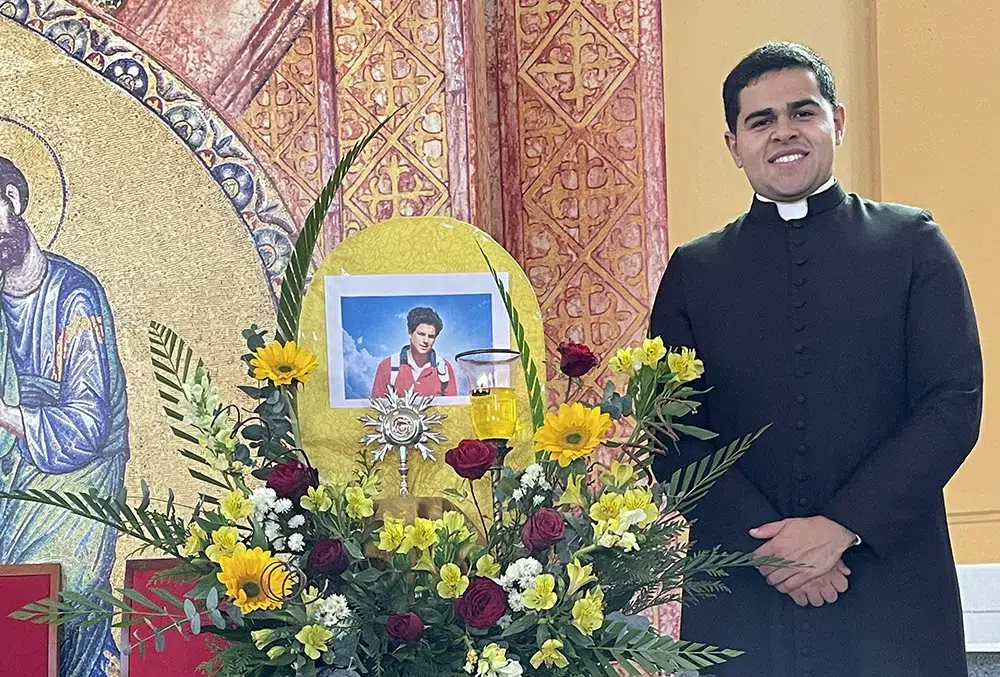

Arthur, a 25-year-old seminarian from Brazil, is undergoing an intense period of holistic formation on his path to the priesthood. Thanks to the support of the benefactors and friends of the CARF Foundation, he is currently in his third year of the Bachelor of Theology program at the University of Navarra , an essential part of his priestly formation . He has also been living at the Bidasoa International Seminary for a year and a half. His vocational journey began in his childhood parish and has matured into a complete commitment to the priesthood.
A life marked by faith and service since childhood
He grew up in a deeply Catholic home: his parents and grandmother were involved in parish life and it was they who patiently encouraged him to take his first steps in the Church. Although at first he found it difficult to attend celebrations and activities, family life gradually formed him in the faith.
Music became his first bridge to the community. At ten years old, he began learning to play the guitar, and between the ages of 12 and 19, he was part of the parish choir. That passion helped him serve the Church : on weekends, he studied and volunteered at the parish, like most of the young people around him.
Family influence
Arthur fondly remembers his younger sister and gives thanks for her faith. Seeing how she joyfully serves others and feels called to help fills him with gratitude and hope.
The call to the priesthood: two moments that changed everything
According to him, two events profoundly marked his priestly vocation . The first was his Confirmation at age 17. That sacrament transformed him: he understood for the first time what it means to belong to Christ and felt the need to proclaim the joy of faith. With some friends, he created a youth group and they placed themselves at the service of the parish priest.
The second moment was a youth retreat in June 2018. He entered convinced that his future would be a civilian career and a family, but on Sunday he left determined to enter the seminary: “a deep inner experience, a real encounter in which God speaks to the heart and an unmistakable peace that confirmed to me that it was He who calls.”
After six months of parish accompaniment and a year in the vocational group of his archdiocese, he was invited to enter the São José seminary in February 2020. Since then he has been reviewing his life: more sacraments (frequent Confession and daily Mass), spiritual direction and a continued commitment to the formation of priests.
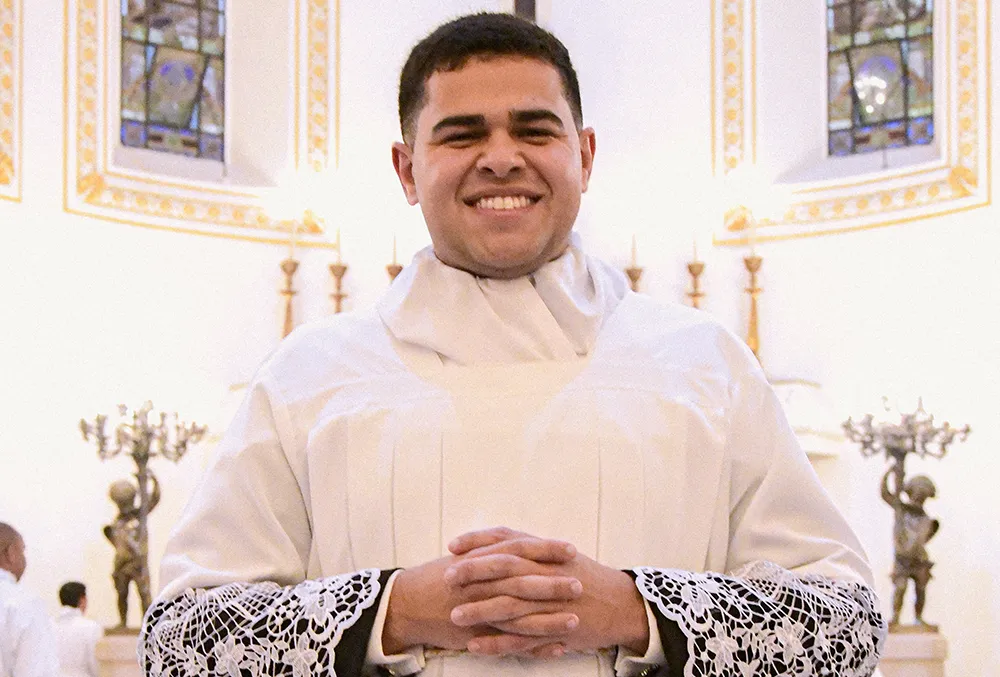
The retirement experience
He describes retirement as the turning point: it was not a passing intuition, but a quiet certainty that called him to a complete ministerial commitment.
Evangelizing in diverse contexts: from Rio to Spain
The Archdiocese of São Sebastião of Rio de Janeiro is immense and diverse: some 4,700 km², more than 750 priests, and nearly 298 parishes. Evangelizing there means that those who work there must confront very different realities—from rural areas to favelas or affluent neighborhoods—and it is a challenge: a large part of the population is not practicing Catholic.
Arthur highlights Cardinal Orani João’s work as a promoter of unity and initiatives that bring the Church closer to professionals and educators. Even so, secularism particularly affects young people: “The witness of so many committed Catholics is like a lamppost that, little by little, illuminates the streets of our city.”
For him, evangelization in secularized contexts begins with the witness of life: “More than words, a life transformed by Christ convinces. The world does not need watered-down versions of the Church; it needs authenticity: solid doctrine, clear morality, dignified worship, and a language that everyone can understand.”
The priest of today
In his opinion, the 21st-century priest must persevere in a righteous and virtuous life. “People aren’t looking for event organizers, but for closeness, sacraments, and formation. The priest’s first calling is to holiness; to be an example and companion in the search for Christ,” he affirms.
Having trained in Spain, Arthur has observed an admirable popular devotion there. For example, in the Holy Week processions, although sometimes devoid of spiritual roots: “I am impressed by their beauty, but it is painful when participation remains merely cultural and does not extend to attending Easter Sunday Mass.”
Coming from a vibrant and complex archdiocese, Arthur looks with hope to the mission of the Church: he calls for persevering and holy priests, willing to give their lives to bring every heart closer to Christ. His witness—supported by his formation at the University of Navarra and by the assistance of the CARF Foundation —is an example of fidelity and service.
Fundación CARF
Trabajamos para llevar la sonrisa de Dios a todos los rincones del mundo a través de los sacerdotes y ayudando a su formación. Gracias a nuestros benefactores, ayudamos a la formación de los sacerdotes, difundimos su buen nombre y rezamos por su fidelidad y las vocaciones. Trabajamos para servir a la Iglesia y que ninguna vocación se pierda y luego ellos puedan transmitir en su labor pastoral toda la luz, ciencia y doctrina recibida. Académico Las licenciaturas, programas de especialización o doctorados, otorgan a cada candidato una formación específica en Teología, Filosofía, Derecho Canónico o Comunicación Social Institucional. Espiritual Los seminaristas y sacerdotes complementan su formación académica y humana con la espiritual, ya que deben estar preparados para seguir su vocación y prestar su cuerpo y su espíritu al Señor. Humano A través del ambiente de familia y de preparación, se consigue el desarrollo de actitudes, capacidades y valores que impactan en el crecimiento personal y social de los sacerdotes.
Related

Poland: The exhibition “Do Not Breathe Too Loudly” at the Museum of Memory and Identity in Toruń
Wlodzimierz Redzioch
27 January, 2026
4 min

Reflection by Bishop Enrique Díaz: Those who walked in darkness have seen a great light
Enrique Díaz
25 January, 2026
6 min
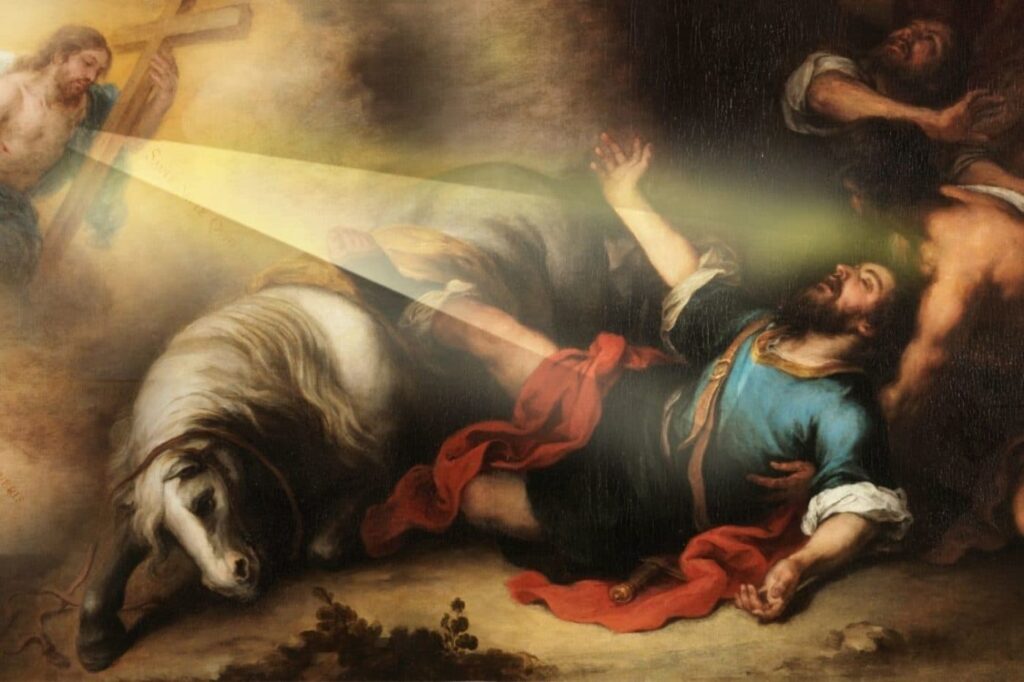
The miracle of the conversion of Saint Paul
Javier Peño
25 January, 2026
4 min
Come and Follow Me: Commentary by Fr. Jorge Miró
Jorge Miró
24 January, 2026
3 min