 (EN)
(EN)
 (ES)
(ES)
 (IT)
(IT)

Giving Glory to God, the Church’s Main Mission
Today's tenth morning meditation, February 27, in the Pauline Chapel for Leo XIV and the Roman Curia. Preacher Varden again focuses on St. Bernard and his treatise "On Consideration," a letter to the future Pope Eugene III in which the saint invites him to surround himself with good, upright collaborators, lovers of peace and unity, to ensure good governance that benefits the Church throughout the world
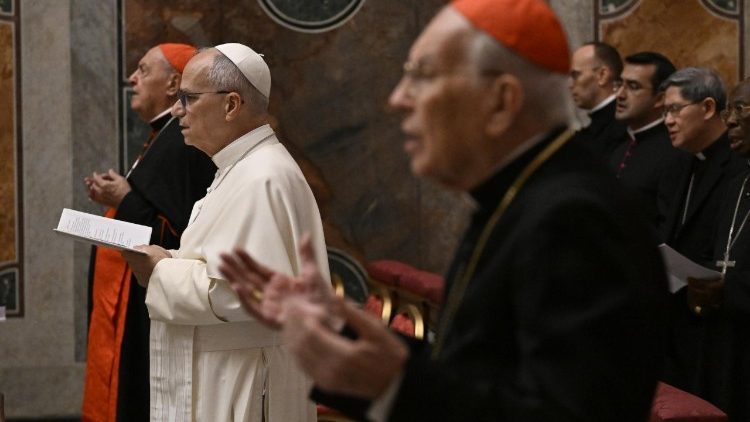

Saint Bernard wrote a treatise dedicated precisely to contemplation . It was a bestseller, enjoying wider distribution than any of his other works. This may seem strange, since the text is essentially a letter addressed to a specific man in a unique situation. Bernard wrote it to a brother, an Italian monk named Bernardo dei Paganelli who, already a priest at the church of Pisa, entered Clairvaux in 1138.
In 1145, Paganelli became Pope Eugene III .
Contemplation deals with truths already known. Consideration seeks truth in contingent human affairs, where it may be difficult to discern. It can be defined as “thought fully extended, or the soul’s striving, in search of truth.”
When considering the problems of the Church, Bernardo does not offer institutional remedies, but advises Eugenio to surround himself with good people: the better the Church’s headquarters are managed, the greater the benefit will be for the Church throughout the world.
The qualities that Bernard asks him to seek and cultivate are valid at all times: collaborators are needed “of proven integrity, willing to obey, patient and meek; […] of sure Catholic faith, faithful in ministry; lovers of concord, peace and unity; […] prudent in counsel, […] sagacious in administration, […], modest in speech.”
These people “love and delight in prayer and trust in it more than in their wisdom or their work; their entrance is without noise, their departure without pomp.”
To the extent that the Church acts in this way, it will reflect the organization of the angelic hierarchies. Anyone who views it this way will immediately see its primary mission: to give glory to God.
To properly consider earthly needs, we must seek, through them, what lies above. This is not, Bernardo tells Eugenio, in a certain sense “going into exile: to consider in this way is to return to the homeland.”
Bernardo asks: What is God? Omnipotent will, benevolent virtue, immutable reason. God is the “supreme good” who, out of love, desires to share his divinity with us. He created us to desire him, expands us to receive him, justifies us to deserve him. He guides us in justice, molds us in benevolence, enlightens us with knowledge, and preserves us for immortality.
Whatever the task of the prelates may be—and there are many—these realities must be considered first. In this way, even their consideration of practical matters will be enlightened, ordered, blessed, and fruitful.
According to Bernard, a prelate must be endowed with principles, must be holy and austere, but he must also be a friend of the Bridegroom and rejoice in sharing that friendship with others.
Augustine often describes the episcopal office as a sarcina, the legionary’s burden. It’s a somewhat brutal image, conceived by someone who knew the desolation and fear of campaigns in the North African desert. Augustine, however, continues to elaborate on the theme he himself has raised. Although the pastoral burden has a terrifying aspect, it is only terrifying if we fail to see who places it on our shoulders. For it is nothing other than a participation in the sweet yoke of Christ himself, which allows us to discover that the cross entrusted to us is luminous and light, and that being able to share it is a cause for joy.
“Carry your burden to the end, ” says Augustine in a sermon; If you love her, she will be light; If you hate it, it will be heavy”: “Perduc sarcinam tuam quia levis est si diligis gravis si odisti.”
“Yours, O good Jesus,” wrote Bernard in his Life of Saint Malachy, the Irishman, “is the deposit that has been entrusted to us; yours is the treasure hidden in our power, which we will return at the moment when you are ready to recover it.”
Bishop Erik Varden of Trondheim, Norway, has been invited to preach the 2026 Spiritual Exercises for Pope Leo XIV, the cardinals residing in Rome, and the heads of Dicasteries of the Roman Curia, which will be held from Sunday, February 22, to Friday, February 27.

Exaudi Staff
What is Exaudi News? Exaudi News is an international Catholic media outlet that informs, shapes, and transforms daily in Spanish, English, and Italian. Through news, analytical articles, and live broadcasts of the Pope's events, Exaudi seeks to strengthen Christian unity and contribute to the evangelization of the world, always guided by the Church's social doctrine. We work to bring Christian truth and values to every corner of the planet. Help us transform the world with Exaudi! At Exaudi, we believe that evangelization and quality information can change lives. To continue our mission and expand our reach, we need your help. In addition, we are looking for committed people to join our team. With your support, we will reach more people, spread the message of Christ, and strengthen Christian unity. Will you join our mission? For more information on how to collaborate, visit Exaudi.org or contact us directly: [email protected] Exaudi: Informs, educates, and transforms.
Related
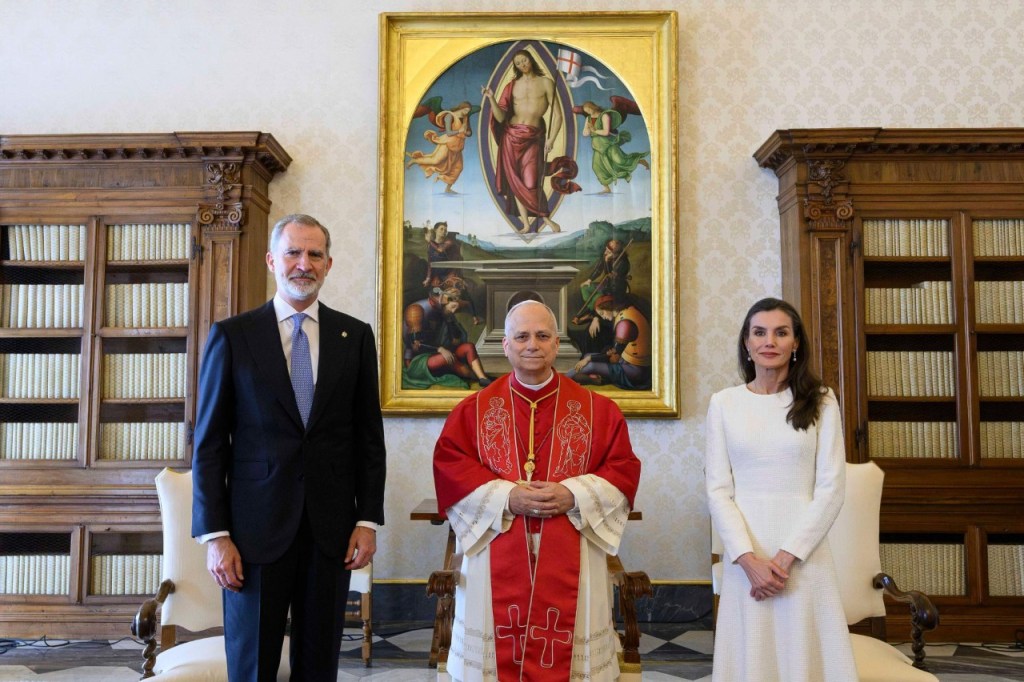
Pope Leo XIV receives the King and Queen of Spain in audience
Exaudi Staff
20 March, 2026
2 min
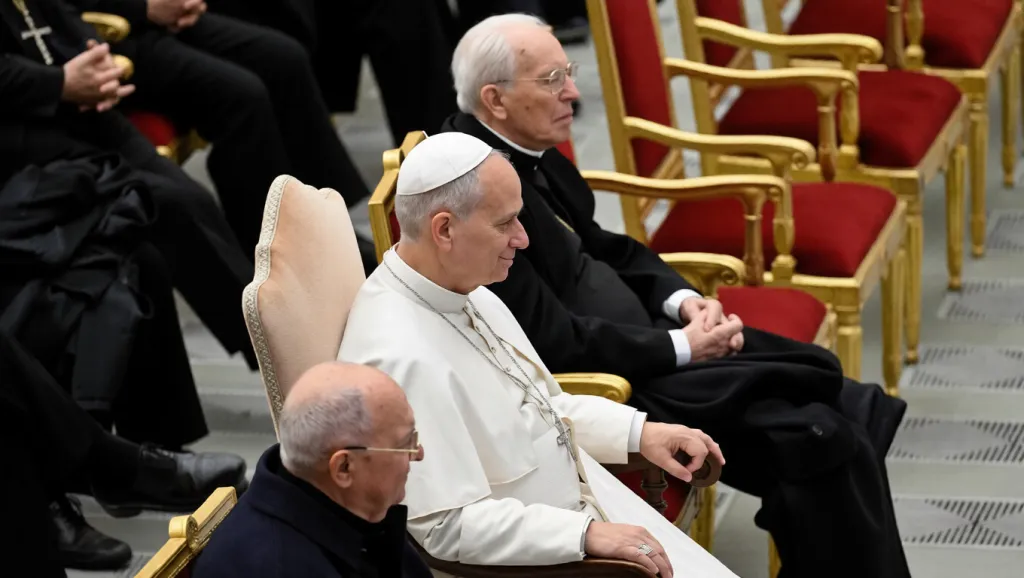
The Christian mission is born from a transformed life
Exaudi Staff
20 March, 2026
2 min

The Dicastery for the Causes of Saints
Exaudi Staff
19 March, 2026
6 min
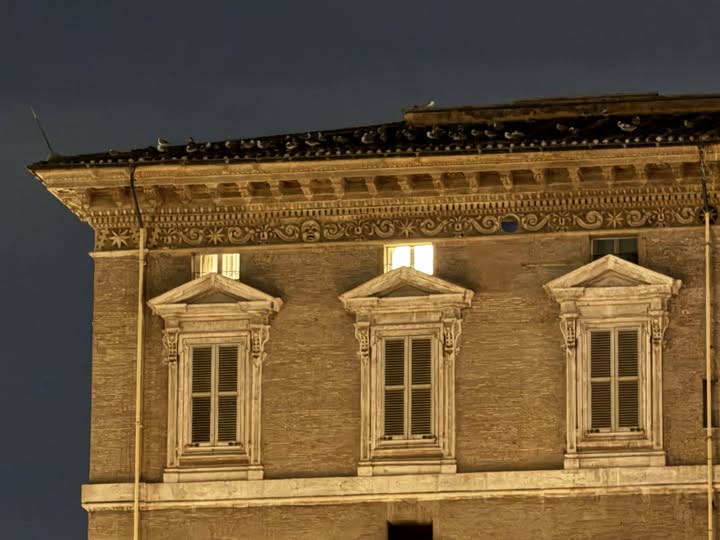
Pope Leo XIV moves into the papal apartment in the Apostolic Palace
Exaudi Staff
17 March, 2026
2 min