(EN)
(EN)
 (ES)
(ES)
 (IT)
(IT)

From Desolation to a Welcoming Home
Robert D. Kaplan's "The Waste Land": A Stark Diagnosis of 21st-Century Chaos
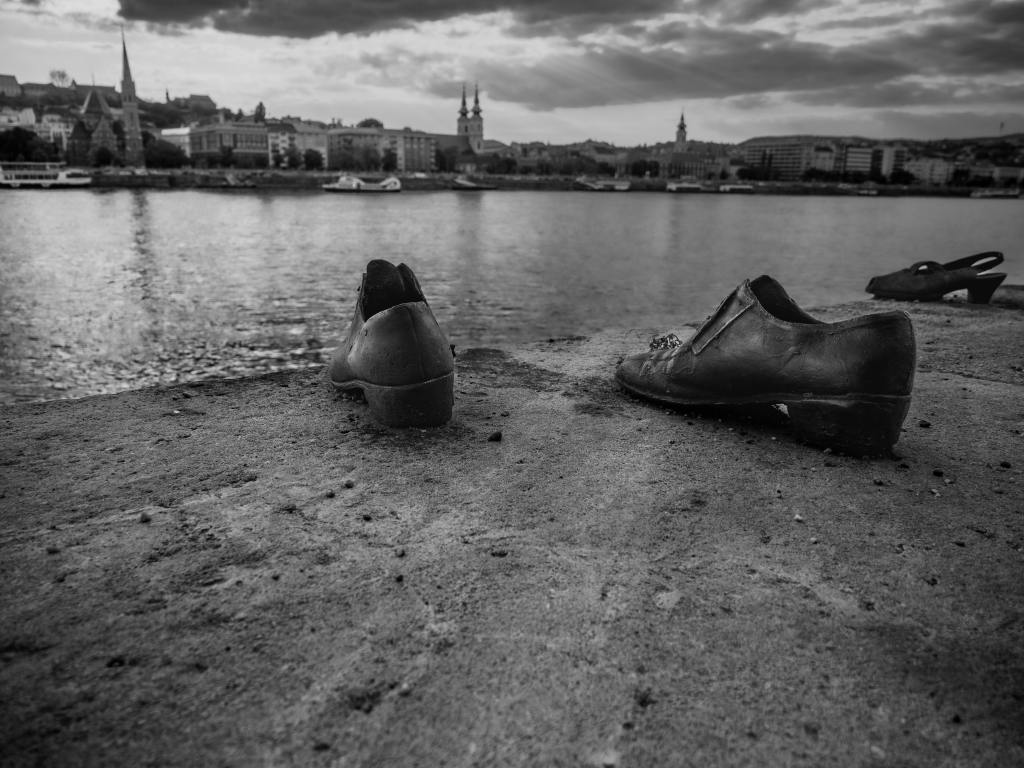

Robert D. Kaplan is a journalist, reporter, and geopolitical specialist with a streetwise and well-read background. I follow him to stay informed about the twists and turns of the international political landscape in his distinctive style, a blend of political realism, extensive experience on the battlefield, and a profound knowledge of history and the great writers who have shaped our culture. His book, * The Waste Land: A World in Permanent Crisis* (RBA, 2025, Kindle edition), addresses the international scene of this turbulent, very turbulent, quarter-century of the 21st century. The title alludes to T.S. Eliot’s poem * The Waste Land* (1922), in which Eliot described the spiritual desolation of Western culture. The advantage of Kaplan’s book over Eliot’s poem is that it is immediately understandable.
He begins by discussing the Weimar Republic (1919-1933), established in Germany after the First World War. It was a dreamlike political constitution intended to bring order to the devastated Germany of that time. The problem was that there was no connection between this theoretical order and the precarious reality of those years. One sneeze, one extra drop in the glass of water, and the worst could happen, as indeed occurred after the 1929 stock market crash. The ensuing chaos was the breeding ground for Hitler’s rise to power. “Yes,” Kaplan states, “Weimar had created a vacuum that was eventually filled by Nazi totalitarianism. But our world must have a different destiny today. (…) So, instead of running the risk of another Hitler rising, we are obliged to focus our attention on one emergency or another, without pause, while crises seep in and rebound across the globe. Weimar is now a permanent condition for us, since we are connected enough through technology to affect each other intimately, without having the possibility of true global governance (p. 18).”
One of Kaplan’s thesis is that history is not governed by inescapable laws in the Hegelian or Marxist sense, turning human beings into mere puppets. “In history there is more than just enormous impersonal forces like communism, technology, geopolitics, and so on. There are also personalities and human agency, with all the contingencies that this implies. Vladimir Putin has been the most dangerous Russian leader since Stalin; Xi Jinping is as ruthless and ideological as Mao Zedong; Donald Trump, whose political career may be in the past, is even more presumptuous and superficial than Von Papen. The fact is that in today’s world there is raw material that can provoke a genuine cataclysm, or at least keep this permanent crisis of the world order alive (p. 39).” Let’s say that, in politics, just as we are not condemned to follow the globalist winds that blow or the international agendas of the moment, it is also true that the demons of the usual rulers, in the great or small powers of the globe, can plunge us into chaos.
Kaplan draws attention to the tyranny of certain elites who ideologize the liberal arts by imposing a single interpretation, to the point that “if you disagree with them, you are not only wrong, but also morally defective, and, as such, you should not only be denounced, but also destroyed (p. 193).” Gender ideology, critical justice theory, the woke movement, among others, seek to monopolize this toxic virtuosity and moralism.
I also acknowledge another risk of our time: the growing, suffocating, and irritating bureaucracy entrenched in both the public and private sectors. This homogenizing bureaucracy is blind to differences and adept only at standardization. Born with the good intention of creating order amidst dispersion, it has now run rampant, erected as a Leviathan poised to devour anyone who does not conform to its demands. This is largely the case with so many international organizations that seek to impose their directives categorically on countries with different cultures and sensibilities.
Kaplan, a champion of personal freedom, confronting this bureaucratism head-on, states that “the mechanization, automation, and bureaucratic procedures that experts (and science itself) will impose on us are bound to absolutely enrage many of us, leading to a loss of the very instinctual restraint that civilization is supposed to impose in the first place. In other words, the more repressed we all are in our behavior and beliefs, the more political extremists, including violent and fanatical groups, will seek to change the existing order (p. 197).” Populisms, of one kind or another, don’t spring up out of thin air; there is usually something that feeds them, and exasperating bureaucracy is one of their ingredients.
Kaplan concludes by noting that “the direction of history is impossible to know. There is no such thing as automatic linear progress. So we have no choice but to keep fighting, since the outcome is not given to any of us in advance. Weimar could boast of having many liberals and a genuine intellectual flowering. There was much hope in Weimar, but insufficient order. Avoiding Weimar’s fate is now the great task of the world (p. 206).” And it seems to me that this is the central message of the book, along the same lines suggested by Roger Scruton—whom he quotes at the beginning of his book—: let us aim for hope without separating it from faith and tempering it with the lessons of history.

Francisco Bobadilla
Francisco Bobadilla es profesor principal de la Universidad de Piura, donde dicta clases para el pre-grado y posgrado. Interesado en las Humanidades y en la dimensión ética de la conducta humana. Lector habitual, de cuyas lecturas se nutre en gran parte este blog. Es autor, entre otros, de los libros “Pasión por la Excelencia”, “Empresas con alma”, «Progreso económico y desarrollo humano», «El Código da Vinci: de la ficción a la realidad»; «La disponibilidad de los derechos de la personalidad». Abogado y Master en Derecho Civil por la PUCP, doctor en Derecho por la Universidad de Zaragoza; Licenciado en Ciencias de la Información por la Universidad de Piura. Sus temas: pensamiento político y social, ética y cultura, derechos de la persona.