 (EN)
(EN)
 (ES)
(ES)
 (IT)
(IT)

Forgiveness that Conquers Evil: Letting Resentment Not Decide the Future
Forgiving is not denying the harm suffered, but preventing it from causing more suffering


Pope Leo XIV, barely a year into his pontificate, shared profound and hopeful messages that resonated in the hearts of millions of the faithful. One of his most beautiful and powerful reflections on forgiveness has captured the attention of many: “To forgive does not mean to deny the evil, but to prevent it from generating more evil. It is not to say that nothing happened, but to do everything possible so that resentment does not decide the future.”
This phrase, uttered in one of his catechesis sessions, encapsulates two great teachings that Father Ángel Espinosa de los Monteros enthusiastically emphasizes. First, forgiveness is precisely about preventing further harm from occurring . The harm has already happened—the damage, the offense, the betrayal—but not forgiving, holding a grudge, or seeking revenge only multiplies the suffering. As Saint Paul reminded us 2,000 years ago: “Do not be overcome by evil, but overcome evil with good” (Romans 12:21). “Vince in bono malum” (Overcome evil with good), a maxim that has nourished the Church since the first Christians, who directly witnessed the example of Jesus: how he responded to the blow with meekness, how on the cross he offered forgiveness, and how, when pierced by the lance, he shed blood and water that gave the centurion faith: “Truly this was the Son of God.”
The second lesson is equally transformative: forgiveness means doing everything possible to prevent resentment from determining the future . We can add words like revenge, retaliation, or bitterness to that list. When those in power—rulers, national or continental leaders—react with resentment, the consequences are devastating: wars, mass displacements, families fleeing with babies in their arms through the ice, hunger, cold, malnutrition, injustices that scar entire generations.
However, most of us are not kings or presidents. We don’t decide the fate of nations. But we are responsible for kindness, truth, and justice in our own sphere: our home, our marriage, our family, our friendships. Responding with resentment over small things can divide a home, break up a marriage, or end a 15- or 20-year friendship in just three minutes. How many times have we heard, “We were such good friends, but one day this happened, and we never spoke again!” All because of a lack of forgiveness, because of letting resentment take control of the future.
Pope Leo XIV, with this clear and evangelical teaching, reminds us that forgiveness is an act of strength and love, not weakness. It is overcoming evil with good, as Christ did. It is breaking the chains of resentment to make way for beautiful, lasting, stable relationships, full of support, trust, and happiness.
Today, each of us knows whom we need to ask forgiveness from and whom we need to forgive. Let’s do it without delay. Pass this message on to those you know. Let’s do all the good we can.
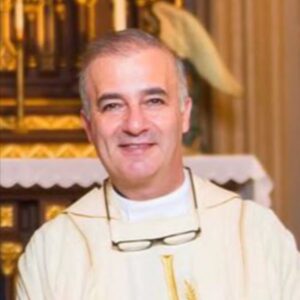
P Angel Espinosa de los Monteros
El Padre Ángel Espinosa de los Monteros ha impartido más de 4,000 conferencias sobre matrimonio, valores familiares y espiritualidad en diferentes ciudades de México, Estados Unidos, Francia, Italia, España y Sudamérica. Ha atendido a cientos de matrimonios ofreciendo consejos y programas de crecimiento conyugal y familiar. Es autor del libro «El anillo es para siempre», traducido a diferentes lenguas y a partir de las cuales ha dictado más de 20 títulos de conferencias. Actualmente se dedica de tiempo completo a impartir conferencias y renovaciones matrimoniales en 20 países del mundo.
Related
hello world
Editorial Exaudi
13 April, 2026
1 min
World Day of the Unborn Child
Observatorio de Bioética UCV
13 April, 2026
4 min

The Silence That Conquers the Noise: Contemplation Every City Dweller Can Experience Today
Miguel Morales Gabriel
10 April, 2026
5 min

The International Olympic Committee prohibits transgender women from competing in the women’s category
Observatorio de Bioética UCV
10 April, 2026
5 min