(EN)
(EN)
 (ES)
(ES)
 (IT)
(IT)

Do you really want to be a saint?
The true revolution does not come from changing the world, but from allowing ourselves to be transformed: an urgent call to holiness in times of crisis


In a previous chapter, we discussed Saint Teresa’s expression: “These are difficult times and require strong friends of God.” Or, as Saint Josemaría said: “Global crises are crises of saints.” This is not a decorative slogan: it is the most accurate diagnosis of our time.
Therefore, in this chapter—and in a subsequent one—we’re going to focus on a point in The Way that often goes unnoticed: number 815. It’s not the most striking, but it’s perhaps the most radical. It echoes the definitive question: “Do you truly want to be a saint?”
It seems simple, but it isn’t. Most people haven’t even considered it. And many practicing Christians, even though they attend Mass and fulfill their religious duties, don’t take it seriously either. Holiness seems like something reserved for the exceptional few, or even something unattractive.
But one doesn’t become a saint by chance. Saint Josemaría said it clearly: “It’s not easy, but it’s not difficult either.” Of course, you have to truly want it. A lukewarm or resigned “yes” isn’t enough, like the groom’s response at a wedding: “Well… if there’s nothing else.” If there’s nothing else, no. Holiness demands a determined, radical, total desire.
At another point in The Way (n. 316), the founder of Opus Dei specifies this requirement:
Do you love like a miser loves his gold? Like a mother loves her child? Like an ambitious man loves honors or a sensual man loves pleasure? No. Then you don’t love. This is what loving is.
To love like this, of course, we need to understand what it means to be holy. And this is where we often fail: because we have a confused or distorted image of faith.
Theologian Franz Jalics distinguishes three stages in the journey of faith:
1. Childish, magical faith, that of the child who prays to do well on an exam even though they haven’t studied. Or that of the adult who only remembers God when they have a serious problem. It’s a useful, self-serving faith, parallel to life, not integrated into it.
2. Adult faith, understood as a rigorous adherence to religious practices. It is measured by the number of rosaries, masses, or spiritual readings. These are good things, no doubt, but they can become ends in themselves, losing their deeper meaning.
3. Mature faith, which is the only fully Christian faith. It is a personal relationship with the living Christ. A real friendship, where one speaks to Him, listens to Him, shares joys and failures, miseries and longings. It is not guided solely by ideas or rules, but by an inner dialogue with Jesus. A faith that does not seek to use God, nor to fulfill Him, but to live with Him.
This kind of faith is what gives meaning to life. Like a good meal with friends, the menu is the least important thing: the important thing is sharing the time together. So too, life itself—its joys, sorrows, routines, and surprises—can be an excuse to be with Christ.
That’s what it means to be holy. That’s what holiness is. And that’s exactly what the world needs most today.
In the Gospel, Jesus rebukes Chorazin, Bethsaida, and Capernaum—the cities that saw the most miracles—for their unbelief. They will be judged more severely than Tyre, Sidon, or even Sodom. Why? Because they received more and didn’t respond.
We recall here the scene of Abraham interceding for Sodom. “What if there were 50 righteous people? What if there were 45? 30? 20? 10?” Yahweh grants each request, but Sodom was destroyed. There weren’t even 10 saints.
And today? Are there 10 saints who can sustain this world? God is seeking them. We are called to be one of them. It’s not about transforming the world, or judging it, or fixing it. It’s about being saints, personally saints. That’s what depends on us.
And this especially challenges those who are part of Opus Dei. Because the Work is not an association or an organizational structure. It does not seek to produce activities, but to ignite souls. To awaken in each person a personal relationship with Christ. Let each person listen to the Lord and do what He asks of them. Without labels or human projects.
To some, the Lord will propose great apostolic initiatives. To others, it will be necessary to bear an illness, loneliness, a cross. But to all, He will give something to live with Him, and therefore a meaningful life.
Do you truly want to be a saint? That’s the question. Answering it—with your whole heart—is what can change your life… and sustain the world.

Luis Herrera Campo
Nací en Burgos, donde vivo. Soy sacerdote del Opus Dei.
Related

God at the Heart of Business Success
Javier Ferrer García
11 March, 2026
7 min

The Rebirth of Faith
Exaudi Staff
11 March, 2026
6 min
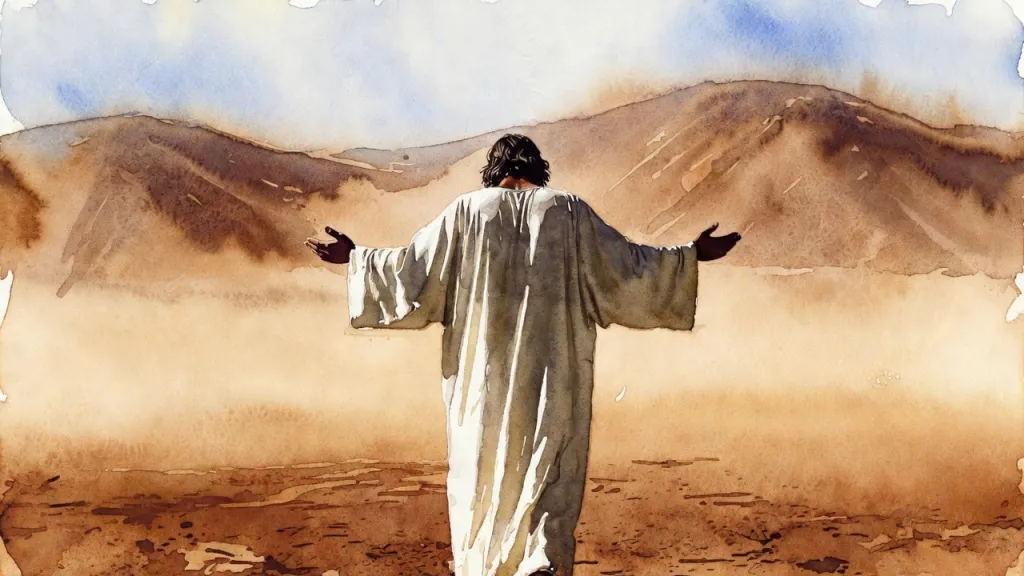
Cardinal Arizmendi: Humanism, Transhumanism, and Posthumanism
Cardenal Felipe Arizmendi
11 March, 2026
5 min
The Church of the Sheaves of Wheat: Africa, from Recipient to Donor of the Gospel
Andrea Acali
11 March, 2026
7 min