(EN)
(EN)
 (ES)
(ES)
 (IT)
(IT)

Christian Peace, a Condition for a Transformed Society
Spiritual Exercises
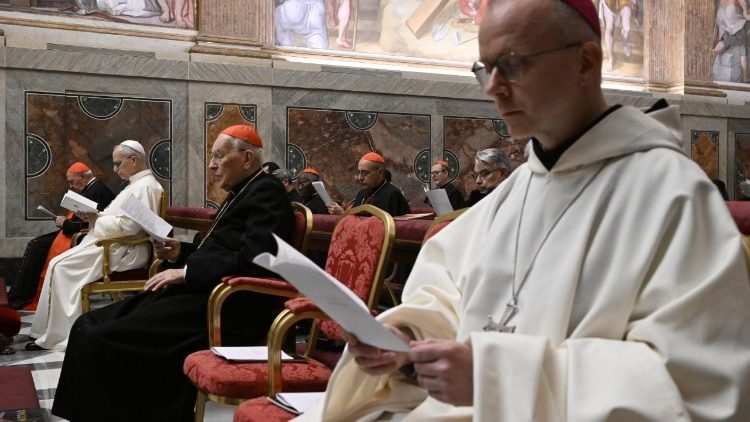

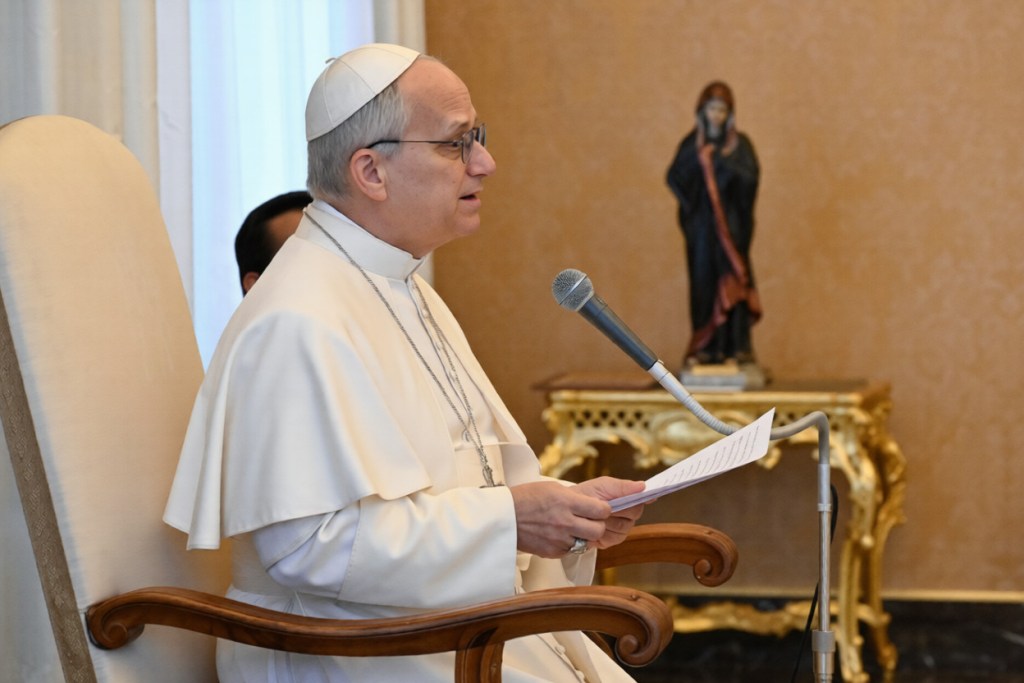
The first meditation in the Pauline Chapel for Leo XIV and the Roman Curia, on the afternoon of Sunday, February 22, was given by the preacher, the Norwegian Cistercian bishop of Trondheim, on the theme “Entering Lent.” It is a time of spiritual struggle in search of a peace “that the world cannot give” and that “bears witness to the constant presence of Jesus within us.”
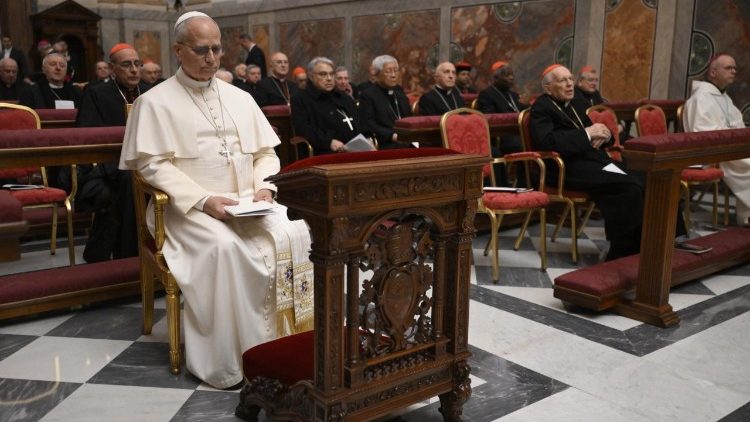
“Christian peace is not the promise of an easy life; it is the condition for a transformed society.” This was the emphasis of Bishop Erik Varden, a monk of the Cistercian Order of Trappists of the Strict Observance and Bishop of Trondheim, Norway, in the first meditation for the Spiritual Exercises of the Pope and the Roman Curia, held on the afternoon of Sunday, February 22, in the Pauline Chapel of the Apostolic Palace, on the theme “Entering Lent.” Before Leo XIV, the cardinals residing in Rome, and the heads of the dicasteries of the Roman Curia, the Norwegian bishop elaborated on the chosen theme: “Illuminated by a Hidden Glory.”
Anger is an obstacle to the presence of the Spirit in us
The preacher explains that the Church infuses peace into our Lenten program, and that it is time to articulate the radical nature of Christian peace, its roots in a just and courageous commitment, reminding ourselves and others of the truth of the immortal words of St. John Climacus: “There is no greater obstacle to the presence of the Spirit in us than anger.” This is a peace “that the world cannot give” and that “bears witness to the constant presence of Jesus in us.” And he reminds us that “fidelity to the example and commandments of Christ is the hallmark of Christian authenticity.”
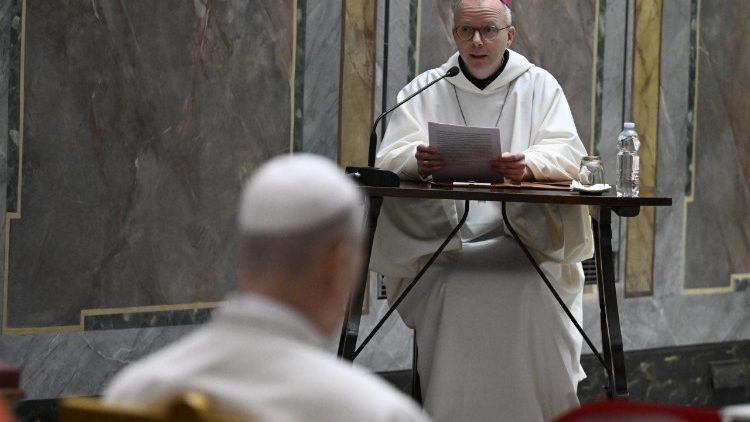
Lent brings us face to face with what is essential
Lent, explains Monsignor Varden, confronts us with what is essential. “It takes us to a material and symbolic space freed from the superfluous. The things that distract us, even the good ones, are temporarily set aside.” It is a time of genuine spiritual struggle, in which the Church “does not lessen the invitation to fight against vices and harmful passions: its language is ‘Yes, yes,’ ‘No, no,’ not ‘now this,’ ‘now that.’” And it offers us, at the beginning of the Lenten battle, “a melody that brings peace, as a soundtrack for this time.” It is the “tractus,” the solemn chant that for more than a thousand years has been used in the Roman liturgy on the First Sunday of Lent before the Gospel of Christ’s temptation in the desert.
Saint Bernard and the solemn chanting of Psalm 90
A chant that, as the preacher analyzes in his meditation, “reproduces almost in its entirety the text of Psalm 90, Qui habitat .” Saint Bernard, during Lent of 1139, preached a series of seventeen sermons on Qui habitat to his monks. In his meditations, concludes Monsignor Vadren, the holy Cistercian monk explains “what it means to live in grace when we combat evil, promote good, defend the truth, and follow the path of the exodus from slavery to the promised land, without deviating to the right or the left, remaining at peace, aware that beneath what sometimes seems to be walking on a razor’s edge, ‘there are everlasting arms.’” In short, he invites us to commit ourselves with renewed enthusiasm “to a discipleship full of love and clarity.”
The next meditations will continue until February 27th.
From Monday, February 23rd to the 27th, there will be two meditations: one at 9:00 a.m., preceded by Midday Prayer, and another at 5:00 p.m., followed by Eucharistic Adoration and Vespers. After the first reflection on Sunday, two more on St. Bernard will be scheduled: “St. Bernard the Idealist” on the morning of the 23rd and “St. Bernard the Realist” on the afternoon of February 26th. Other topics include God’s help; liberation; the splendor of truth; a thousand will fall; “I will glorify Him”; the angels of God; and contemplation. The final meditation will focus on “Communicating Hope.”

Exaudi Staff
What is Exaudi News? Exaudi News is an international Catholic media outlet that informs, shapes, and transforms daily in Spanish, English, and Italian. Through news, analytical articles, and live broadcasts of the Pope's events, Exaudi seeks to strengthen Christian unity and contribute to the evangelization of the world, always guided by the Church's social doctrine. We work to bring Christian truth and values to every corner of the planet. Help us transform the world with Exaudi! At Exaudi, we believe that evangelization and quality information can change lives. To continue our mission and expand our reach, we need your help. In addition, we are looking for committed people to join our team. With your support, we will reach more people, spread the message of Christ, and strengthen Christian unity. Will you join our mission? For more information on how to collaborate, visit Exaudi.org or contact us directly: [email protected] Exaudi: Informs, educates, and transforms.
Related
Saint Bernard as an ideal guide for the Lenten exodus from ego and pride
Exaudi Staff
23 February, 2026
2 min
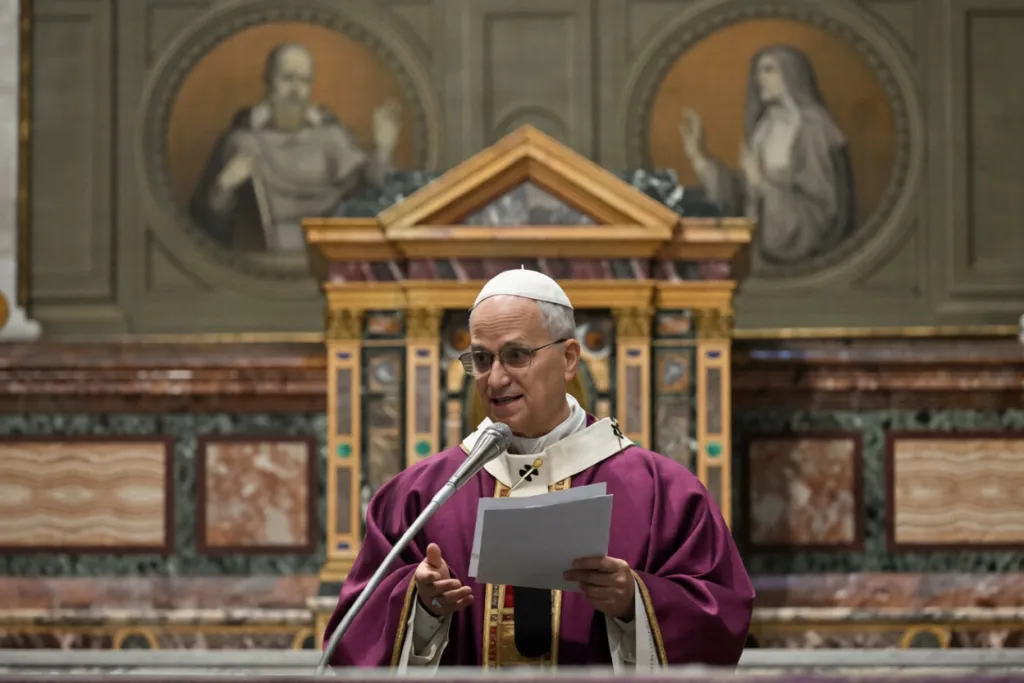
“Baptism calls us to live in friendship with Jesus and, in this way, to enter into his communion with the Father”
Exaudi Staff
22 February, 2026
5 min

“Let us practice Penance generously, along with prayer and works of mercy”
Exaudi Staff
22 February, 2026
4 min
“Authority is not domination, but spiritual and fraternal service”
Exaudi Redazione
19 February, 2026
8 min