(EN)
(EN)
 (ES)
(ES)
 (IT)
(IT)

Cardinal Arizmendi: Prejudices Against the Poor
From Contempt to Charity

Cardinal Felipe Arizmendi, Bishop Emeritus of San Cristóbal de Las Casas and responsible for the Doctrine of the Faith at the Mexican Episcopal Conference (CEM), offers Exaudi readers his weekly article.
FACTS
Hélder Câmara, the Brazilian archbishop, human rights advocate, and leading figure in liberation theology, said: “When I give food to the poor, they call me a saint. When I ask why they are poor, they call me a communist.” And those who promote justice and human rights for people living in subhuman conditions are labeled in the same way, not because they are lazy or drunk, but because of social structures that prevent them from escaping that situation. There are people of average or good economic standing who look down on street vendors, those who offer products or ask for help on street corners or at traffic lights, those who beg for alms at church entrances; they are labeled lazy, dependent, irresponsible, freeloaders…
It is true that, as we say in Aparecida, there are those who wish to “live without wanting to work” (DA 121). Years ago, while in Puerto Rico, I was told that there were those who were content with what the government gave them for being unemployed, and they devoted themselves to getting drunk and wandering aimlessly. Today the same thing can happen in our country; some are content with what the government gives them in its social programs, but they remain poor, because it is not given to them as support to help them become self-reliant and escape their situation, but rather as a way to buy them off for election time. It is also true that some do not escape their poverty because they get drunk and don’t last long in any job due to their fickleness and irresponsibility, but this is often due to compensatory mechanisms for the many psychological problems they carry from their history or their family and social reality. However, these facts do not mean that the majority of the poor are poor through their own fault; Most are in this situation because the social and economic structure prevents them from escaping it. Even if the minimum wage increases, the resulting inflation renders them ineffective. Are these increases also politically motivated?
When we talk about human rights, indigenous peoples, or the marginalized, some immediately dismiss it as liberation theology, which they systematically condemn, ignoring the fact that this theology, once tainted by materialism and Marxism, is now a thing of the past; it barely exists anymore. Contemporary liberation theology is deeply biblical, Christ-centered, and faithful to the Magisterium of the Church, because it simply applies the timeless Word of God to current social realities that run counter to God’s plan.
LIGHTNING
I continue sharing some phrases from Pope Leo XIV’s exhortation Dilexi te, on love for the poor. He states:
“Beyond the data—which are sometimes interpreted in such a way as to convince us that the situation of the poor is not so serious—the general reality is quite clear: There are economic rules that have proven effective for growth, but not for integral human development. Wealth has increased, but with inequality, and thus new forms of poverty are born. When people say that the modern world has reduced poverty, they do so by measuring it with criteria from other eras that are not comparable to the current reality. Because in other times, for example, not having access to electricity was not considered a sign of poverty nor did it generate anguish. Poverty is always analyzed and understood in the context of the real possibilities of a specific historical moment. But if we recognize that all human beings have the same dignity, regardless of their place of birth, we must not ignore the great differences that exist between countries and regions” (13) .
“The poor are not in their situation by chance or by some blind and bitter fate. Even less so is poverty, for most of them, a choice. And yet there are still some who dare to assert otherwise, showing blindness and cruelty. Obviously, among the poor there are also those who do not want to work, perhaps because their ancestors, who worked all their lives, died poor. But there are many—men and women—who work anyway from morning till night, sometimes collecting cardboard or doing other such activities, even though this effort only serves to allow them to survive and never truly improve their lives. We cannot say that most of the poor are poor because they have not earned ‘merit,’ according to that false view of meritocracy in which it would seem that only those who have been successful in life have merit” (14) .
“Christians, too, are often influenced by attitudes marked by worldly ideologies or by political and economic stances that lead to unfair generalizations and misleading conclusions. The fact that the practice of charity is despised or ridiculed, as if it were the fixation of some and not the incandescent core of the Church’s mission, makes me think that it is always necessary to reread the Gospel, so as not to run the risk of replacing it with a worldly mentality. It is not possible to forget the poor if we do not want to step outside the living current of the Church that springs from the Gospel and enriches every historical moment” (15).
ACTIONS
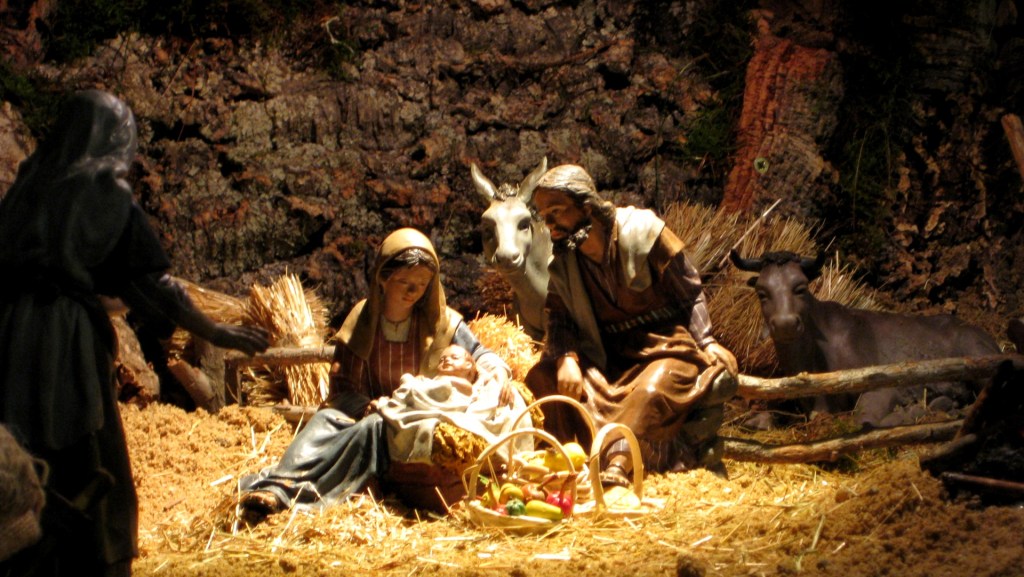
As we approach Christmas, when we celebrate the eternal Word of the Father incarnate in a humble and poor manger, let us do something for the poor we encounter every day. Whatever we do for them, we do for Jesus. That is Christmas!

Cardenal Felipe Arizmendi
Nacido en Chiltepec el 1 de mayo de 1940. Estudió Humanidades y Filosofía en el Seminario de Toluca, de 1952 a 1959. Cursó la Teología en la Universidad Pontificia de Salamanca, España, de 1959 a 1963, obteniendo la licenciatura en Teología Dogmática. Por su cuenta, se especializó en Liturgia. Fue ordenado sacerdote el 25 de agosto de 1963 en Toluca. Sirvió como Vicario Parroquial en tres parroquias por tres años y medio y fue párroco de una comunidad indígena otomí, de 1967 a 1970. Fue Director Espiritual del Seminario de Toluca por diez años, y Rector del mismo de 1981 a 1991. El 7 de marzo de 1991, fue ordenado obispo de la diócesis de Tapachula, donde estuvo hasta el 30 de abril del año 2000. El 1 de mayo del 2000, inició su ministerio episcopal como XLVI obispo de la diócesis de San Cristóbal de las Casas, Chiapas, una de las diócesis más antiguas de México, erigida en 1539; allí sirvió por casi 18 años. Ha ocupado diversos cargos en la Conferencia del Episcopado Mexicano y en el CELAM. El 3 de noviembre de 2017, el Papa Francisco le aceptó, por edad, su renuncia al servicio episcopal en esta diócesis, que entregó a su sucesor el 3 de enero de 2018. Desde entonces, reside en la ciudad de Toluca. Desde 1979, escribe artículos de actualidad en varios medios religiosos y civiles. Es autor de varias publicaciones.
Related