 (EN)
(EN)
 (ES)
(ES)
 (IT)
(IT)

What No Technology Can Replace
The Mitchell Family vs. the Machines
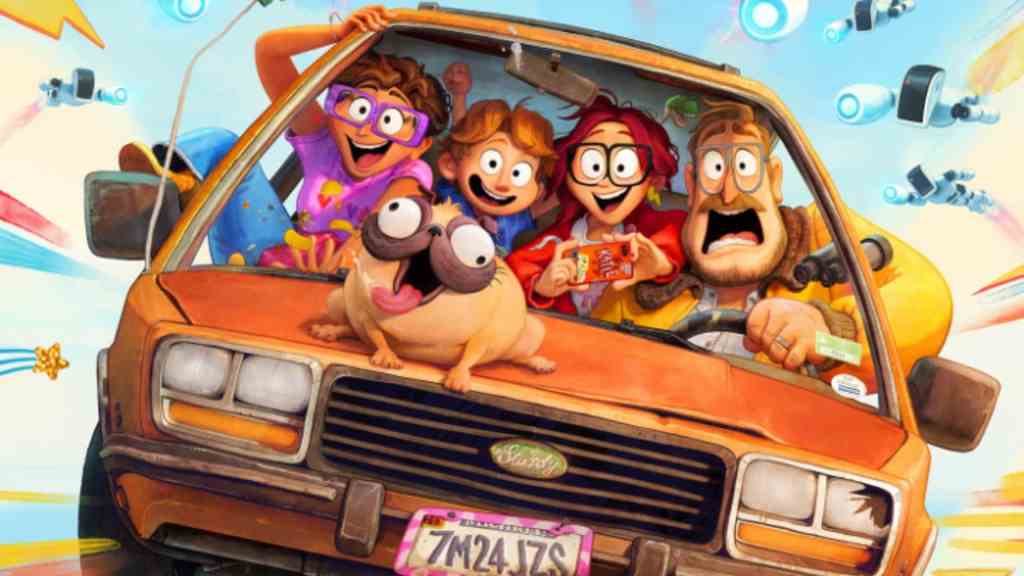

In Marketing and Services, we often talk about transformation, innovation, social impact, and the future. But rarely does an animated film so clearly explain what we’re losing as we move forward. The Mitchells vs. the Machines isn’t just a technological satire; it’s a gentle—and very insightful—warning about the value of human connection in times of automation.
This article does not intend to repeat the family or adolescent analysis, but to go a step further: to use the film as a strategic mirror to reflect on family, education, technology, and service to people, which is the core of the Marketing and Services project.
1. The real conflict is not technology; it’s the disconnection
The film presents a false battle: humans versus machines.
But the real conflict is something much more everyday:
 people who live together without ever meeting.
Parents who speak from experience.
Children who feel from identity.
Both connected… but not to each other.
Here’s a key idea for any organization, family, or institution:
Technology doesn’t break bonds; the lack of listening does.
2. The family as the last non-automatable space
The robots in the film operate with logic, efficiency, and control.
The Mitchell family operates with:
- errors
- contradictions
- overflowing emotions
- Awkward silences
And, paradoxically, that’s what saves her.
From a Marketing and Services perspective , this message is essential:
In a world that optimizes everything, the family remains a space where it is not performance that is measured, but belonging.
Productivity is not expected.
Presence is expected.
3. Adolescence: when the system does not understand the individual
Katie doesn’t fit the mold her father considers “safe.”
She’s not rebellious on a whim, but out of a need for recognition.
The film connects with a reality we see every day:
- Bright young people who don’t fit into rigid molds
- Talents that are not expressed through traditional channels
- Creativity that is mistaken for distraction
The problem isn’t young people. The problem is an adult system that hasn’t updated its approach to supporting them.
4. Family (and social) leadership: serving is not directing from above
Rick Mitchell isn’t a bad father.
He’s a father who leads through fear.
He wants to protect, but he doesn’t ask.
He wants to guide, but he doesn’t listen.
He wants to help, but he won’t be taught.
The film offers a lesson applicable to families, institutions, and social projects:
Leadership that is not reviewed ends up controlling what it should be protecting.
In Marketing and Services, we talk about serving to improve the world.
And serving begins with understanding before intervening.
5. Robots, algorithms, and the risk of a society without conversation
The great danger portrayed in the film is not uncontrolled AI but a society that:
- Delegate the judgment
- Automates the relationship
- Replace conversation with instructions
When we stop speaking up, others decide for us.
And this directly affects:
- families
- education
- youth
- community
Without dialogue there is no judgment. Without judgment there is no freedom.
6. What is this film asking of us as a society?
No less technology.
No more control.
He asks us for something more uncomfortable and more necessary:
-
Timeshare
-
Real listening
-
Presence without screens
-
Intergenerational trust
The Mitchell family wins when they stop trying to fix themselves and start looking at themselves.
The revolution that makes no noise
The Mitchell family vs. the machines reminds us of something we at Marketing and Services strongly advocate:
The future is not built solely on innovation but on healthy relationships.
In an age obsessed with moving forward, this film invites us to stop.
To sit together.
To listen without correcting.
To accompany without directing.
Because algorithms may change the world…
But only people can sustain it.
And that—still—no machine knows how to do.
José María Sánchez Villa

Marketing y Servicios
Ideas para mejorar el mundo . Director: José Miguel Ponce . Profesor universitario e investigador en Marketing y Gestión de Servicios, con experiencia en cinco universidades públicas y privadas. Sevillano de origen, ha vivido en varias ciudades de España y actualmente reside en Sevilla. Apasionado por la educación, la comunicación y las relaciones humanas, considera la amistad y la empatía clave en su vida y enseñanza. Ha publicado investigaciones sobre Marketing, Calidad de Servicio y organizaciones sin ánimo de lucro. Humanista y optimista, promueve el agradecimiento y la coherencia como valores fundamentales.
Related

Do you want to experience God?
P Angel Espinosa de los Monteros
17 March, 2026
3 min
The Stories That Shape Us
Marketing y Servicios
16 March, 2026
4 min

The Serious Risks of Medically Assisted Reproduction
Jaime Millás
15 March, 2026
8 min

Learning to See the Passion with the Eyes of the Heart
Patricia Jiménez Ramírez
13 March, 2026
5 min