 (EN)
(EN)
 (ES)
(ES)
 (IT)
(IT)

What more could I have done for you?
From Christ's ultimate love to our response
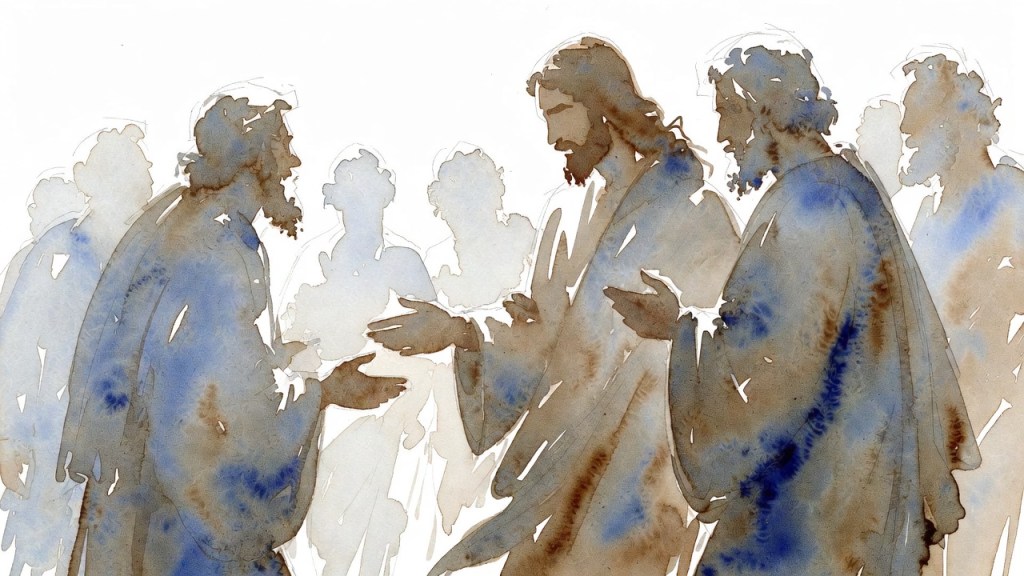

In the second part of the liturgical celebration of the Passion of the Lord, on Good Friday, we proceed to kiss and adore the Cross, even with a genuflection for the only time in the year.
Meanwhile, the choir often sings verses from Micah 6: “My people, what have I done to you, or how have I offended you? Answer me.” And it recalls many of the wonders God performed for his people, freeing them from Egypt and leading them for forty years through the desert toward the Promised Land.
The liturgy offers us this text so that we may apply it to ourselves in a personal way: “My son, what have I done to you that you should offend me like this, that you should forget me? I loved you ‘to the end’ (Jn 13:1) so that you should pass by indifferently or be ashamed of me in the face of my lavish love.” Jesus said something similar with his eyes to Peter after he denied him three times (Lk 26:61). And to Judas, when he receives the traitor’s kiss in the garden: “Friend, why have you come?” (Mt 26:50) or with a sorrowful wonder: “Friend, why have you come!” “It would have been better for him who betrays me… if he had not been born.” (Mt 26:23).
Jesus views the disciple’s betrayal with sadness and love, but respects his freedom and lets him do it.
Why does the liturgy bring us these texts? Not only to tell us the story of the Passion so that we may hear it or remember it. Not only so that we may become involved, so that we may be “another character,” as Saint Josemaría said: “When you open the Holy Gospel, remember that what is narrated there—the works and sayings of Christ—you must not only know, but you must live it. Everything, every point related, has been collected, detail by detail, so that you may embody it in the concrete circumstances of your existence” (The Forge 754).
When we read or listen to the Passion these days and always, we must confront ourselves with these characters. That Peter who denies Christ is me, with my fears and my fear of what others think. That Judas who betrays Christ is me, and I have been so many times with my sins. That Pilate who is cowardly is me on so many occasions. We are told about these stories so that we may apply them to ourselves and react. For those words of Saint Augustine express a great truth: “God who created you without you will not save you without you.”
Undoubtedly, we also want to identify with the other characters or with their gestures of love: with Mary of Bethany who anoints Jesus’ feet, with Peter who weeps bitterly, with Simon of Cyrene who helps carry the cross, with the Roman centurion’s confession of faith, with John, Mary Magdalene, and above all, with Mary at the foot of the Cross.
Beautiful cultural and religious displays in our towns: magnificent images and works of art, processional floats, fiery saetas… But let us not remain focused solely on the cultural or touristic aspects, nor only on the emotional, as the Spanish bishops have just reminded us.
Tears, if God gives them, are a gift. But prayer, repentance, the sacrament of Reconciliation, and a firm purpose of life are also essential for true conversion.
And Happy Easter!
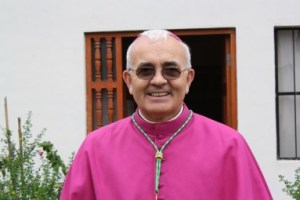
Monseñor Gilberto Gómez González
Monseñor Gilberto Gómez González, nacido el 12 de febrero de 1952 en Albeos, Creciente (Pontevedra, España), realizó sus estudios de secundaria, filosofía y teología en el Seminario de Tui–Vigo, siendo ordenado sacerdote el 14 de septiembre de 1975. Entre 1975 y 1985 ejerció como vicerrector del Seminario Menor de Tui–Vigo; en 1986 se incorporó a la diócesis de Abancay (Perú) mediante la Obra para la Cooperación Sacerdotal Hispanoamericana, donde desempeñó roles como rector del Seminario Menor «San Francisco Solano» (1986–1992), párroco de Tamburco, vicerrector y posteriormente rector del Seminario Mayor «Nuestra Señora de Cocharcas», además de capellán del Monasterio de Carmelitas y miembro del Consejo Presbiteral. El 22 de diciembre de 2001 fue nombrado por Juan Pablo II obispo titular de Mozotcori y auxiliar de Abancay, recibiendo la ordenación episcopal el 16 de marzo de 2002; el 20 de junio de 2009 Benedicto XVI lo designó obispo de Abancay, diócesis que asumió el 8 de agosto de ese año y que continúa liderando en la actualidad, siendo también miembro de la Comisión Episcopal de Vocaciones y Ministerios de la Conferencia Episcopal Peruana y autor del libro de poesía mística Vía Lucis (2005), galardonado con el XXIV Premio Mundial Fernando Rielo.
Related
Poland: President Nawrocki Under Attack
Wlodzimierz Redzioch
02 April, 2026
5 min
Cardinal Pizzaballa and the Custos of the Holy Land prevented from entering the Holy Sepulchre to celebrate Palm Sunday Mass
Exaudi Staff
30 March, 2026
2 min

Reflection by Bishop Enrique Díaz: Blessed is he who comes in the name of the Lord
Enrique Díaz
29 March, 2026
5 min
Blessed is he who comes in the name of the Lord: Commentary by Fr. Jorge Miró
Jorge Miró
28 March, 2026
3 min