(EN)
(EN)
 (ES)
(ES)
 (IT)
(IT)

Weapons of Mass Dumbing
The Silent Impact of Mobile Phones on Childhood and Adolescence
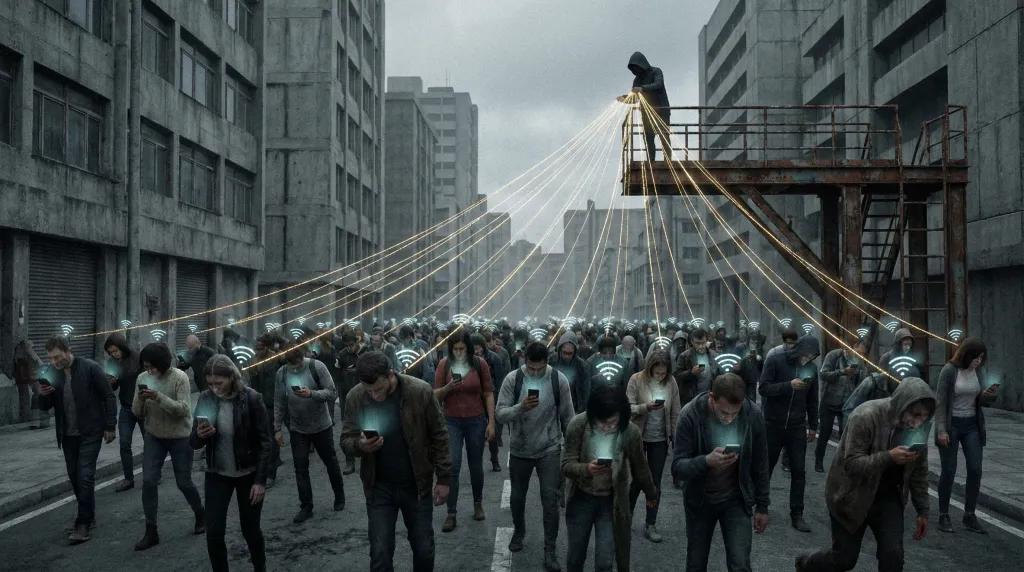

The latest book by American sociologist Jonathan Haidt, *The Anxious Generation *, has caused quite a stir by directly pointing to mobile phones as the cause of declining mental health among teenagers. Along the same lines, the Spanish Association of Pediatrics urges delaying screen time until age six. The recent report by the Committee of Experts for the Development of a Safe Digital Environment for Children and Young People echoes this recommendation, adding that, until age 16, a mobile device without internet access is preferable.
As Dr. Sábada, Professor at the University of Navarra , points out, observing reality allows us to identify reasons for concern about the impact of mobile phones on mental health. The high amount of time spent on these screens, access to harmful content or risky situations, the FOMO (fear of missing out) generated by constant activity on social media, and the persistent exposure to images of idealized lives and bodies are some of them.
This concern is also reflected in the media. For example, we recently read an article in El Diario de Madrid by Jorge Hernández, titled “Adolescence and Digital Dementia .” As you can see, the impact of screens on teenagers is a current and worrying topic. Therefore, it was a welcome development that Miguel Angel Martínez, a professor at the University of Navarra , published his latest book, in which he presents an enlightening ten-point guide for parents to learn how to manage screen time at home.
This is the title of his new book “ 12 solutions to overcome the challenges of screens” (Planeta Publishing), in which he outlines this short but revealing ten-point guide dedicated to all parents who want to give their children back a childhood like the one they had, without devices; or at least to minimize their impact at home.
It’s worrying that TikTok, which started slowly, has now taken up far more time than other social media platforms. This is clearly bad news. Countries like India have banned TikTok because it’s the most addictive app, the one that causes the most screen time, and because its algorithms are truly insidious, designed to keep young people glued to their screens.
These types of platforms are addictive , and the damage is reflected, on the one hand, in mental health problems. On the other hand, it affects the entire affective, sentimental, sexual, and romantic sphere, as well as intelligence.
We could detail all the mental health problems. Causes of death, such as suicide, have become increasingly prevalent , although not all completed suicides are reported; it’s stigmatized, and some are disguised as accidents or poisonings, overdoses, but they are overdoses because they wanted to commit suicide. There’s the whole issue of depression, anxiety disorders, sleep disorders, attention deficits, self-harm, and so on.
The most common argument parents use to justify giving their children a mobile phone prematurely and recklessly is “because everyone else is doing it.” This is a very weak argument from an intellectual standpoint. We need to consider what’s best for our child’s mental and physical health, what’s best for their happiness, and what’s best for their future —not what everyone else is doing, but what’s best according to the best scientific evidence.
There are still people who believe that digital devices would improve teaching, that they had more applications for education, because that was the initial belief and they had good intentions. What isn’t being discussed is that these widespread digital devices, which inspire such passive fascination, are reducing the average intelligence of humanity . They are not just weapons of mass destruction; they are weapons of mass dumbing down.

Marketing y Servicios
Ideas para mejorar el mundo . Director: José Miguel Ponce . Profesor universitario e investigador en Marketing y Gestión de Servicios, con experiencia en cinco universidades públicas y privadas. Sevillano de origen, ha vivido en varias ciudades de España y actualmente reside en Sevilla. Apasionado por la educación, la comunicación y las relaciones humanas, considera la amistad y la empatía clave en su vida y enseñanza. Ha publicado investigaciones sobre Marketing, Calidad de Servicio y organizaciones sin ánimo de lucro. Humanista y optimista, promueve el agradecimiento y la coherencia como valores fundamentales.
Related