 (EN)
(EN)
 (ES)
(ES)
 (IT)
(IT)

They manufacture eggs using human cloning techniques
They manipulate healthy women's eggs to alter their genome, so that infertile people can have genetically related children
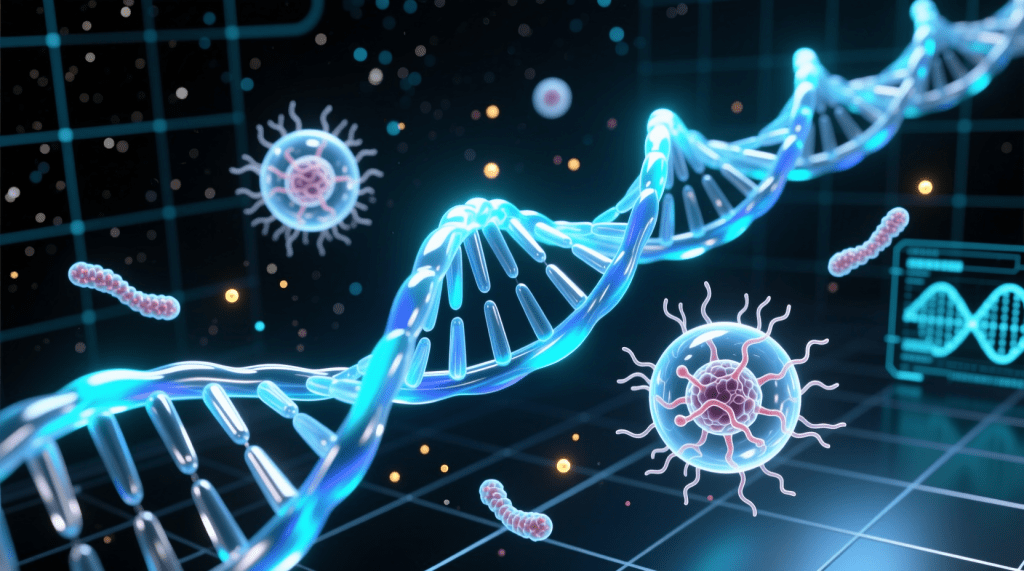

The journal Nature Communications recently published an article on an alternative method of obtaining female gametes. Using nuclear transfer cloning, researchers at Oregon Health & Science University, led by Shoukhrat Mitalipov, used oocytes (cells that give rise to eggs) from healthy women between 21 and 35 years of age and, after removing the nucleus from these human gametes, introduced the nucleus from skin cells of other individuals.
Subsequently, they turned to a new method they called mitomycinosis, as it straddles mitosis and meiosis, which are natural forms of division. The former is used to produce identical cells, and the latter to obtain cells with half the genetic information, as occurs in the formation of gametes: oocytes and sperm. With this procedure, they managed to halve the number of chromosomes, i.e., a kind of artificial gametogenesis. This is necessary so that, when this female gamete is fertilized by a sperm, the number of chromosomes corresponds to that of any other cell in the human body.
The success rate has been quite low, with only 8.8% of embryos developing to the blastocyst stage. For this study, 270 oocytes were fertilized to obtain 155 research embryos, which were only allowed to live until day six, when they reached the blastocyst stage. The embryos had chromosomal abnormalities and limited developmental capacity.
As the authors of the paper acknowledge: “While our study demonstrates the potential of mitomeiosis for in vitro gametogenesis, at this stage it is only a proof of concept, and further research is required to ensure its efficacy and safety before future clinical applications.”
It’s worth remembering that Mitalipov published an article in the journal Cell in 2013 in which he applied a technique similar to the one used to clone the famous Dolly the sheep in Scotland. That is, the introduction of the genome of an adult somatic cell into an enucleated human egg to obtain embryonic stem cells. Now, using this same nuclear transfer cloning technique, he is producing eggs that contain the information of a skin cell.
Human cloning has already been ruled out by the global scientific consensus due to its potential for violating the personal identity of human beings and the separation not only of the union from procreation, but also of biology itself, since it does not involve the union of gametes but rather a technical process for producing a new human organism.
Now, using the same technique, embryos are manufactured (155), although not all of them will reach the blastocyst stage, at which point they will be eliminated for “ethical reasons.” It is worth noting that a baby was recently born from a human embryo that had been frozen for over 30 years. This leads us to confirm that the life of a human organism, as biology maintains, begins with the fertilization of the egg by the sperm. Therefore, it is not possible to approve, on the basis of the most basic ethics, experimentation on human embryos, as is being carried out in the research described in this article, even if it is for the purpose of helping people with infertility problems. The end never justifies the means.

Jaime Millás
Licenciado en Ciencias Biológicas, por la Universidad de Valencia (España), ciudad donde nació en 1953, es licenciado en Ciencias de la Educación por la Universidad de Piura (Perú) y Máster en Dirección de Instituciones Educativas por el Centro Universitario Villanueva, adscrito a la Universidad Complutense de Madrid. También es Máster en Bioética por la Universidad de Murcia (España) y Doctor en Bioética por la Universidad Católica de Valencia (España) con una tesis sobre “Reflexión bioética sobre la opinión de los médicos peruanos acerca de la aplicación de la terapia con células madre en clínicas de Latinoamérica” (Sobresaliente Cum Laude). En Valencia fue subdirector del Colegio Mayor “Albalat” y, tras fijar su residencia en el Perú, en 1977, director de varios Centros Culturales de Lima y del Colegio Alpamayo desde 1988 hasta 2004. Ha sido vicepresidente del Centro de Orientación Familiar (COFAM) y trabajó en la oficina de proyectos de la Asociación para el Desarrollo de la Enseñanza Universitaria (ADEU), entidad promotora de la Universidad de Piura. Asimismo ha sido secretario de la Asociación Civil “Piura 450”, promotora de colegios en Chiclayo y Piura. También ha sido director del Colegio “Turicará” de Piura entre los años 2005 y 2012. Actualmente se desempeña como presidente del Comité Institucional de Ética en Investigación de la Universidad de Piura. Director del Departamento de Ciencias Básicas y Bioética, y director de Estudios de la Facultad de Medicina de la Universidad de Piura. Coautor del libro “Bioética en Investigación. Fundamentos, principios, aplicaciones”. Y autor de otros libros de Bioética y educación, así como artículos de Bioética en revistas indexadas.
Related
Fix Slot Express Login Problems And Password Resets In The UK
AlRam
09 April, 2026
8 min
Winolla Login Fixes For NZ: Password And Verification Issues
AlRam
09 April, 2026
8 min
AlfCasino Login Issues In Czech Republic Password And Access Fixes
AlRam
09 April, 2026
7 min
No Deposit Bonus At 771 Casino In The Netherlands
AlRam
09 April, 2026
7 min