 (EN)
(EN)
 (ES)
(ES)
 (IT)
(IT)

The Wounds of Jesus
A Credential of Love and Refuge of the Soul
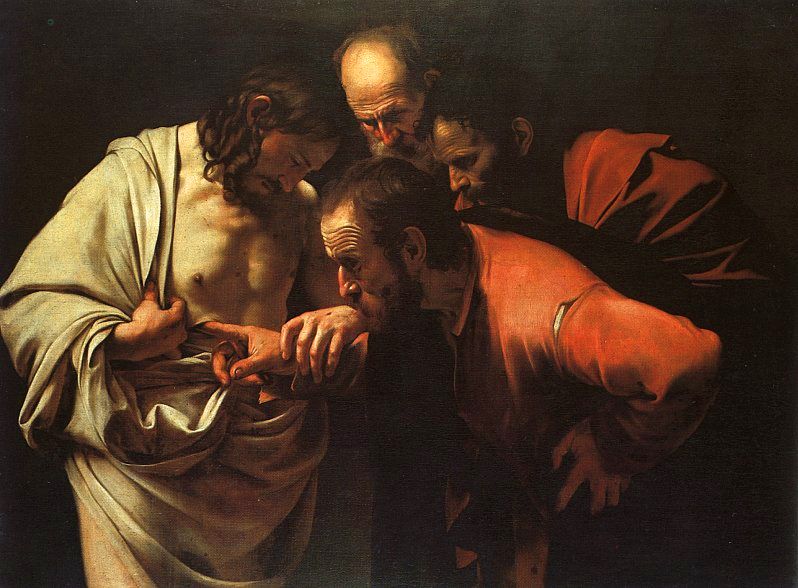

The Gospel of John recounts the first and second appearances of the Risen Jesus to the Apostles, who were skeptical of the announcement made by Mary Magdalene and the other holy women. “Jesus stood among them and said, ‘Peace be with you.’ After he said this, he showed them his hands and side” (John 20:19-20). In other words, he showed them the wounds inflicted by the nails and the spear during his crucifixion. Jesus kept these open wounds as proof that his body, now resurrected and glorious, is the same one that was crucified, and as a reminder of his love for us.
Thomas was not present at the first apparition and stubbornly refused to believe: “Unless I put my finger where the nails were, and put my hand into his side, I will not believe” (John 20:25). But at the second apparition, Thomas was there, and Jesus came to his rescue: “Put your finger here; see my hands. Reach out your hand and put it into my side. Stop doubting and believe” (John 20:27). And Thomas surrendered at his feet and left us a precious short prayer that is a complete profession of faith, love, and repentance: “My Lord and my God.”
Christian piety constantly uses this short prayer before the wounds of Christ as a refuge: “Hide me within your wounds.” “Enter into the wounds of Christ crucified. There you will learn to guard your senses, to have an interior life….” (The Way, 288)
BETWEEN YOUR WOUNDS
Your five wounds: that’s the secret.
You showed them to the incredulous Twin,
who prostrated himself at your feet, and was reborn
-“My Lord and my God!”_ completely.
Into your wounds, Lord, I also plunge,
And although I am cowardly and easily frightened,
I finally let myself be won over by his spell
and I find refuge in my struggles.
So many times, Lord, my faith fades
I’m about to get lost
when the Bad Guy has me cornered.
Hide me, then, in the wound
of your right hand and your left hand,
and in the greater wound in your side.
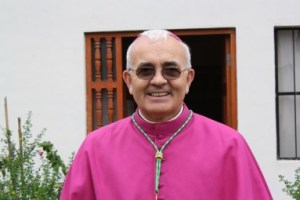
Monseñor Gilberto Gómez González
Monseñor Gilberto Gómez González, nacido el 12 de febrero de 1952 en Albeos, Creciente (Pontevedra, España), realizó sus estudios de secundaria, filosofía y teología en el Seminario de Tui–Vigo, siendo ordenado sacerdote el 14 de septiembre de 1975. Entre 1975 y 1985 ejerció como vicerrector del Seminario Menor de Tui–Vigo; en 1986 se incorporó a la diócesis de Abancay (Perú) mediante la Obra para la Cooperación Sacerdotal Hispanoamericana, donde desempeñó roles como rector del Seminario Menor «San Francisco Solano» (1986–1992), párroco de Tamburco, vicerrector y posteriormente rector del Seminario Mayor «Nuestra Señora de Cocharcas», además de capellán del Monasterio de Carmelitas y miembro del Consejo Presbiteral. El 22 de diciembre de 2001 fue nombrado por Juan Pablo II obispo titular de Mozotcori y auxiliar de Abancay, recibiendo la ordenación episcopal el 16 de marzo de 2002; el 20 de junio de 2009 Benedicto XVI lo designó obispo de Abancay, diócesis que asumió el 8 de agosto de ese año y que continúa liderando en la actualidad, siendo también miembro de la Comisión Episcopal de Vocaciones y Ministerios de la Conferencia Episcopal Peruana y autor del libro de poesía mística Vía Lucis (2005), galardonado con el XXIV Premio Mundial Fernando Rielo.
Related

Learning to Rest
Marketing y Servicios
13 April, 2026
2 min

Lift Up Your Gaze!
Rosa Montenegro
13 April, 2026
4 min
Abortion: Legalizing a Crime
Isabel Orellana
10 April, 2026
5 min
Gratitude as a Spiritual Discipline: How to Transform Daily Complaints into Prayers of Thanksgiving
Patricia Jiménez Ramírez
08 April, 2026
5 min