 (EN)
(EN)
 (ES)
(ES)
 (IT)
(IT)

The Synod advances women’s participation: “There is nothing inherent in being a woman that prevents one from assuming leadership roles in the Church”
Final report of Study Group 5 urges opening new spaces of responsibility for women, revising ecclesial language, and overcoming clericalism
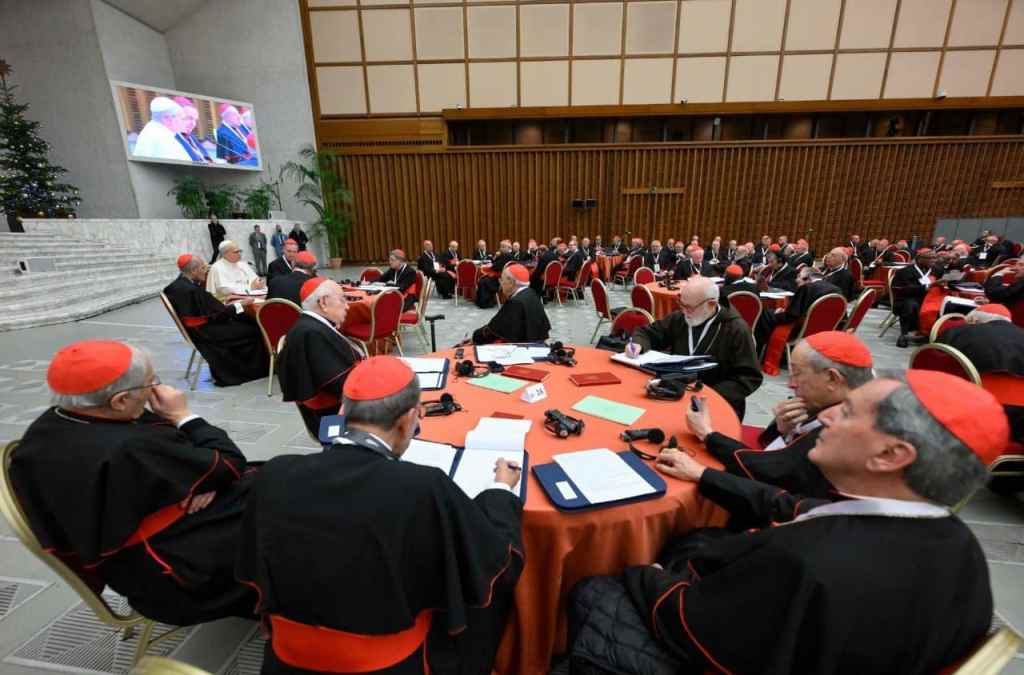

The Vatican published on March 10, 2026, the third final report of the study groups established after the first session of the 16th Ordinary General Assembly of the Synod of Bishops. This report, from Study Group No. 5, coordinated by the Dicastery for the Doctrine of the Faith, focuses on the participation of women in the life and leadership of the Church.
The report, delivered to the General Secretariat of the Synod and made public at the behest of Pope Leo XIV in the interest of transparency, consists of three main parts: a historical and methodological overview of the group; a reasoned synthesis of the themes that emerged from the synodal process—based on consultations with expert women, doctrinal analyses, contributions received, and testimonies; and an extensive appendix that catalogs abundant material, including biblical and historical female figures, contemporary testimonies of women in government roles, critical reflections on Marian and Petrine principles, ecclesial power, and the contributions of Popes Francis and Leo XIV.
The text underscores that the “women’s question” represents a sign of the times, prompted by the Holy Spirit, which calls the Church to a synodal approach to local churches in their cultural diversity. It emphasizes a relational approach that values the charismatic dimension of women’s presence and highlights the concrete decisions of recent popes to entrust positions of governance in the Roman Curia to women, presenting them as models for the entire Church.
Among the most compelling conclusions is the assertion that “there is nothing inherent in being a woman that prevents her from assuming leadership roles in the Church .” The document rejects the view of women’s participation as a mere hierarchical concession and presents it as a right derived from baptism and their own charisms. It harshly criticizes the clericalism and masculinism that permeate ecclesial structures, as well as the language that reduces femininity to stereotypes of sweetness, resignation, or docility.
The report acknowledges a widespread “unease” among women regarding their limited participation, evidenced by the distancing of some faithful, the decline in female religious vocations, and demands for access to ordained ministries, community homilies, or the management of diocesan offices. It proposes opening “new spaces of responsibility” for women, fostering a cultural transformation that transcends narrow views (focused solely on motherhood or caregiving) and values qualities such as leadership, counseling, teaching, listening, and discernment.
We are invited to reconsider the Marian archetype, moving from an exclusive vision of motherhood to recognizing Mary as a reflective, questioning witness, fully integrated into the life of the people, as she appears in the Acts of the Apostles. Likewise, we recommend reviewing the language used in teaching, catechesis, and official documents to eliminate stereotypes and give greater visibility to female saints, theologians, and mystics.
Regarding the female diaconate, the report indicates that the issue “is not yet mature,” recalling previous commissions—the second of which ruled against it—without issuing a definitive judgment.
This report is part of the broader synodal process: study groups are producing working documents that are the fruit of listening, discernment, and prayer. It will now be up to the relevant dicasteries and the General Secretariat to formulate operational proposals, which the Pope will evaluate, maintaining synodal coherence and the missionary zeal of the Church. With this publication, the Synod continues to advance its commitment to greater co-responsibility for all the baptized, with special attention to the richness of women’s charisms in the Church’s mission.

Exaudi Staff
What is Exaudi News? Exaudi News is an international Catholic media outlet that informs, shapes, and transforms daily in Spanish, English, and Italian. Through news, analytical articles, and live broadcasts of the Pope's events, Exaudi seeks to strengthen Christian unity and contribute to the evangelization of the world, always guided by the Church's social doctrine. We work to bring Christian truth and values to every corner of the planet. Help us transform the world with Exaudi! At Exaudi, we believe that evangelization and quality information can change lives. To continue our mission and expand our reach, we need your help. In addition, we are looking for committed people to join our team. With your support, we will reach more people, spread the message of Christ, and strengthen Christian unity. Will you join our mission? For more information on how to collaborate, visit Exaudi.org or contact us directly: [email protected] Exaudi: Informs, educates, and transforms.
Related
Pasolini: A free life consists of always loving and enduring pain without being defeated
Exaudi Staff
27 March, 2026
4 min
The Dicastery for Promoting Christian Unity
Exaudi Staff
26 March, 2026
4 min
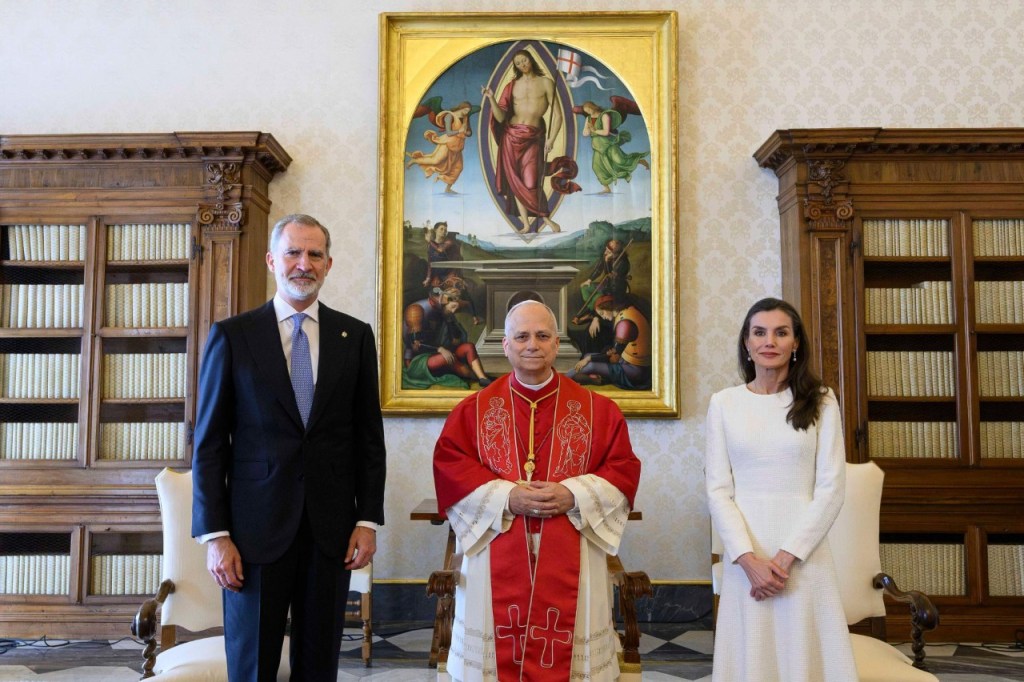
Pope Leo XIV receives the King and Queen of Spain in audience
Exaudi Staff
20 March, 2026
2 min
The Christian mission is born from a transformed life
Exaudi Staff
20 March, 2026
2 min