 (EN)
(EN)
 (ES)
(ES)
 (IT)
(IT)

The Rebirth of Faith
Vocations, Conversions, and Approaching Faith
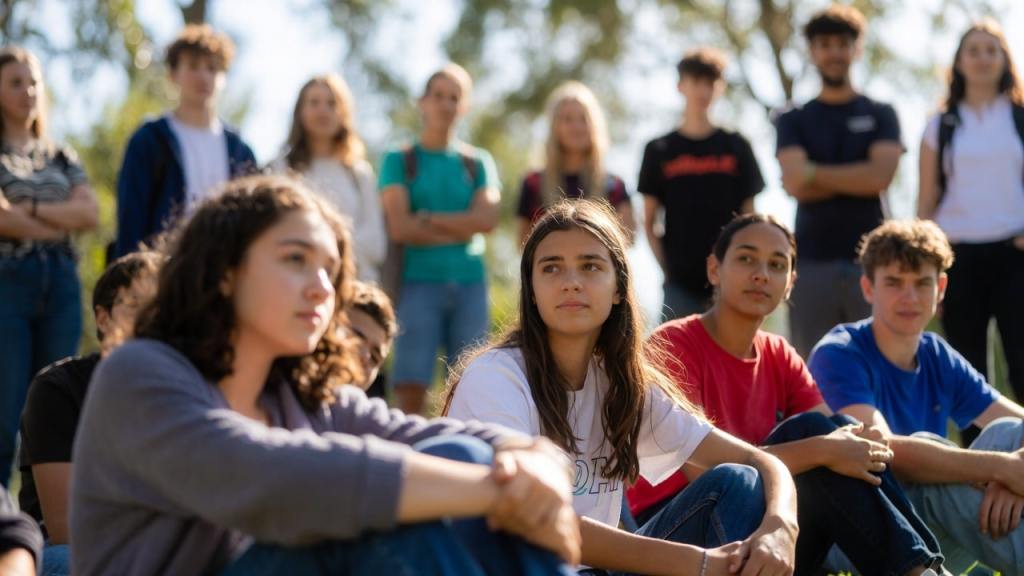

The Catholic Church is experiencing a breath of fresh air through the vitality of its youth. Far from the pessimistic narratives that dominate some discourse, data from official Catholic sources reveal encouraging trends: a growing interest in vocations, a greater engagement of young people with the life of the Church, and a steady stream of conversions that enrich the faith community. This analysis explores these phenomena with a constructive approach, highlighting not only the figures but also the underlying reasons and how they can inspire the Church to nurture this moment. The Catholic faith is presented as a beacon of meaning, community, and personal transformation for new generations.
Young people’s closeness to the Church: Seeking a spiritual home amidst the noise
Today’s youth face unique challenges: isolation, mental pressures, and a constant search for purpose in a fragmented digital world. Yet, statistics show that many find authentic refuge in the Catholic Church. According to a USCCB report on the realities facing youth and young adults in the United States, many express a desire for the Church to be a “spiritual home”—a safe place to belong, find purpose, and experience unconditional, non-judgmental love. This perception is not abstract; it translates into active participation. For example, 7% of young people surveyed have participated in World Youth Day (WYD), a global event that fosters bonds of faith and friendship, while 4% have attended the National Catholic Youth Conference.
In terms of Mass attendance, the data is encouraging: 42% of Catholic teenagers attend at least once a month, a figure that, while decreasing slightly to 35% among those aged 25 to 34, tends to increase in later years, suggesting that the faith instilled in youth matures over time. In specific contexts, such as Canada, young Catholics are twice as likely as older Catholics to attend religious services monthly, bucking the general trend of secularization. In the UK, among Generation Z churchgoers (aged 18-24), 41% identify as Catholic, surpassing the 20% who identify as Anglican, indicating a renewed appeal of the Catholic tradition among younger generations.
Analytically, this closeness is explained by the Church’s capacity to offer holistic responses: not only doctrinal, but also relational. Young people cite parish retreats, missions, and community gatherings as catalysts for strengthening their faith and forming lasting friendships. In a world of digital loneliness, the Church emerges as a space for genuine encounter with Christ and with others, fostering emotional and spiritual resilience. This dynamic invites parishes to invest in youth programs that connect the Gospel with daily life, transforming challenges into opportunities for growth.
Vocations: Seeds of hope that germinate in youth
Priestly and religious vocations represent the lifeblood of the Church, and recent data paints an optimistic picture, especially among young people. A comprehensive study by the USCCB reveals that 12% of never-married Catholic men have seriously considered the priesthood or religious life, while 10% of women have considered becoming nuns. Although there has been a decline from 20% in 2003 to the current 13% among men, factors such as Catholic education increase the likelihood: those who attended Catholic high schools are six times more likely to discern a vocation.
In the context of ordinations in 2024, men first considered a vocation at an average age of 16 and were ordained at 34, demonstrating a rich maturation process. Ninety-two percent of these ordinands came from homes with at least one Catholic parent, underscoring the pivotal role of the family in fostering vocations. Furthermore, 14% received direct encouragement from a priest, highlighting the importance of ecclesial mentors.
From an analytical perspective, these figures reflect not an irreversible decline, but a transformation: young people are discerning vocations in more diverse contexts, influenced by events such as World Youth Day and youth groups. The Church can foster this by promoting environments of family prayer, Catholic education, and personalized accompaniment, turning the “crisis” into an era of more authentic and committed vocations. It is a call to action: every young person who approaches the faith is a potential seed of ecclesial service.
Conversions: Living testimonies that illuminate the path
Conversions to the Catholic faith among young people are not isolated anecdotes, but powerful testimonies of how the Holy Spirit works in the modern world. These true stories, shared from reliable Catholic sources, illustrate journeys of searching that culminate in a transformative encounter with Christ.
Let’s take the case of Inès, a 20-year-old Parisian university student raised in a practicing Muslim family. From childhood, Inès experienced mystical moments, such as being “touched by the power of God” at age seven, but her adolescence was marked by doubt and spiritual aridity. For her, Islam was intellectual but didn’t answer existential questions about her relationship with God. In the midst of severe trials during her first year of literature studies, she entered a church and, before the cross, heard Jesus inwardly inviting her to let go of her burdens: “You don’t have to carry this.” This encounter liberated her, beginning a path of conversion despite family tensions. Today, as a catechumen, she finds in Catholicism an incarnate and communal faith, inspired by saints like Thérèse of Lisieux and Alphonsus Liguori. Inès evangelizes in the streets, radiating joy and seeing her faith as a gift to share.
Another inspiring testimony is that of Rajesh Mohur, the son of a Hindu Brahmin priest in Mauritius. Immersed in Hindu culture, he studied Sanskrit and explored temples in India, but he longed for a “living God” that he did not find in introspective meditation. In the 1980s, he emigrated to Italy and worked for the Acutis family, where he met the young Carlo Acutis (now Blessed). Carlo’s Eucharistic devotion, his explanation of Jesus’ sacrifice, and his charity toward the poor deeply moved Mohur. Carlo taught him to pray the rosary and emphasized the importance of baptism. In 1999, at the age of 38, Mohur was baptized, confirmed, and received the Eucharist. This conversion extended to his mother, who was also baptized. Mohur attributes his transformation to Carlo’s joyful witness, which revealed to him the love of God incarnate.
These examples are not exceptional; they reflect a pattern where young people, drawn by the depth of the Eucharist, community, and modern saints, find answers to their spiritual thirst. Analytically, these youth conversions strengthen the Church by injecting freshness and diversity, reminding us that faith is a living gift that spreads through authentic witness.
Towards a bright future: The Church as a sower of hope
In short, the data and testimonies analyzed here paint a vibrant picture: young people are approaching the Church seeking connection, discerning vocations with maturity, and being converted by a personal encounter with Christ. This reality calls for a proactive response: investing in youth formation, fostering family dialogue, and celebrating testimonies as bridges to evangelization. The Catholic faith, with its sacramental and communal richness, not only withstands the winds of secularism but flourishes in young hearts, promising a vibrant ecclesial rebirth. How encouraging it is to see how God continues to call, attract, and transform new generations!

Exaudi Staff
What is Exaudi News? Exaudi News is an international Catholic media outlet that informs, shapes, and transforms daily in Spanish, English, and Italian. Through news, analytical articles, and live broadcasts of the Pope's events, Exaudi seeks to strengthen Christian unity and contribute to the evangelization of the world, always guided by the Church's social doctrine. We work to bring Christian truth and values to every corner of the planet. Help us transform the world with Exaudi! At Exaudi, we believe that evangelization and quality information can change lives. To continue our mission and expand our reach, we need your help. In addition, we are looking for committed people to join our team. With your support, we will reach more people, spread the message of Christ, and strengthen Christian unity. Will you join our mission? For more information on how to collaborate, visit Exaudi.org or contact us directly: [email protected] Exaudi: Informs, educates, and transforms.
Related

The Silence That Conquers the Noise: Contemplation Every City Dweller Can Experience Today
Miguel Morales Gabriel
10 April, 2026
5 min

The International Olympic Committee prohibits transgender women from competing in the women’s category
Observatorio de Bioética UCV
10 April, 2026
5 min

Abortion: The Catholic Church and the message of the last five Popes
Patricia Jiménez Ramírez
10 April, 2026
3 min
When Heaven Bends to Embrace Human Suffering
Sonia Clara del Campo
10 April, 2026
6 min