 (EN)
(EN)
 (ES)
(ES)
 (IT)
(IT)

The Pain That Occupies Me
When the Wound Becomes a Name
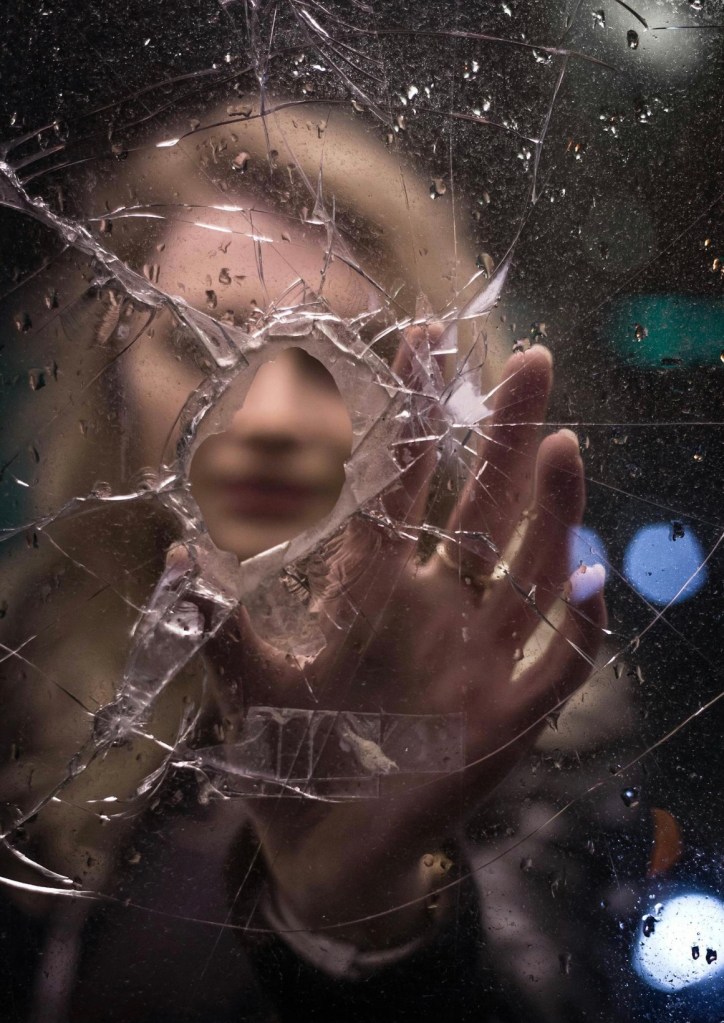

As C.S. Lewis aptly warned in “The Problem of Pain,” suffering is an “inevitable, universal , and immediate” reality. Perhaps that pang you feel when you turn off your phone is precisely that cry trying to bring you back to what is essential.
There are pains that are visible. They have tears, diagnoses, conversations, and hugs. They are named, shared… even prayed for.
And there’s another kind of pain that makes no noise, but it breaks you inside. It doesn’t ask for help; it disguises itself as tiredness, as “that’s just how I am.” You keep answering messages, getting on the subway… but something inside you has broken, and you don’t quite know where.
That is the most dangerous kind of pain: the kind that stops being experienced as a wound and is accepted as destiny. It’s not just something that happened to you; it’s the perspective from which you view everything.
Pain or suffering
Pain is a signal: an alarm that says, “Look at me!” It can be physical or emotional: a blow, a loss, a betrayal…
But moral suffering arises when that pain penetrates to the very core of your life and steals your joy. Then it’s no longer just “something” that hurts: it’s the whole person who hurts.
When pain becomes all-encompassing and filters your entire perspective, psychiatry can offer relief, but not meaning. As Viktor Frankl discovered amidst the horrors of the concentration camps, “suffering ceases to be suffering in a certain sense the moment it finds meaning.” Without that purpose, the wound ceases to be a warning sign and becomes a tyrannical identity that dictates who you are.
Society tolerates almost everything…
Less the slow pain
That pain that doesn’t heal quickly. You accept the wound if it comes with an inspirational phrase and a three-step plan for recovery. But real pain doesn’t respect schedules. It comes when it wants and sits where it wants.
There are wounds that don’t ask for attention; they demand silence. They don’t want you to look at them; they want to rule from the shadows. They govern your mood, your patience, your relationships, and your way of working. The wound becomes the color of your gaze.
Man cannot bear to feel broken without trying to do something about it. And in that impulse, two traps appear: hiding the pain or controlling it.
Hiding it works socially. You fill your schedule, you deliver, you’re “fine.” The tools are familiar: hyper-productivity, perfectionism, constant distraction, emotional manipulation, and a mandatory smile. On the outside, everything fits; on the inside, the wound deepens. The man becomes effective, but alone; efficient, but exhausted; resilient, but incapable of crying.
Controlling it seems more serious: you analyze it, explain it, fill it with theories. But controlling it isn’t healing it. Excessive explanation also numbs the pain. It serves to avoid going to the place where it hurts.
The throne of wounding or the throne of grace
The danger of “broken pain” is that, if not surrendered, it ends up ruling us. We go from suffering “for something” to suffering for everything, for “the air that touches us.” It is then that the wound claims the throne of our lives and begins to demand worship, turning us into victims.
But “Christ does not explain the reasons for suffering in the abstract but says, ‘Follow me.’” Pain is not erased; it is inhabited. It is not administered; it is offered. This is the throne of grace.
No one heals by worshipping the wound. Pain cries out for comfort. Victimhood demands worship. And, without realizing it, it turns others into emotional hostages.
When the armor cracks
There always comes a day when the armor stops working. The smile fades from within. The persona it protected no longer holds up. That moment is frightening because it’s uncharted territory: you’re not in control, you don’t dictate the script, and there are no stock phrases that will do the trick.
But right there, it all begins.
God kisses your wound
Christianity is not a technique to lessen the pain. It is not a comforting theory; it is an event. God enters into the flesh, into history, into human suffering.
She doesn’t stand on the sidelines commenting; she goes down to the place where I least want anyone to see me. She doesn’t come to erase the wound with a snap of her fingers; she comes to inhabit it and transform it with her love.
Christ comes as Simon of Cyrene. That’s why the cross is not an idea: it is love that carries my broken pain.
Happiness and pain: compatible
Believing that only those who don’t suffer are happy is a modern misconception that wounds many souls. True happiness isn’t emotional euphoria; it’s fulfillment, even with tears.
The best realities of life contain pain: loving hurts, serving hurts, being faithful hurts, educating hurts, maturing hurts… and yet, in all those places there is a deep happiness: not because of the pain, but because of the love that runs through it.
Pain also bears your name
Pain is not an excuse. It’s a call. And when it goes unanswered, it turns into harshness, irony, and distrust. And that wound is contagious.
We are not defined by what happened. We are defined by what we do with the pieces. There are men who suffer and become humble and men who suffer and become tyrants because the festering wound becomes a guiding principle.
Let’s not fool ourselves: some wounds don’t heal with time, distractions, or empty words. They heal when we stop treating them like a sad idol… And we let them go.
And this is the naked truth: if the wound governs my life, I no longer live; I merely survive. I have not lost my peace; I have relinquished my throne.
Christ comes to dethrone the mask, the pride, the excuses. He comes to ask us for the one thing we don’t want to give: our wounds.
And then the only thing capable of saving us happens: Christ does not take away the pain like someone who erases a stain; he takes it like someone who claims something that is his own.
The wound ceases to be my identity. It becomes what it always should have been: a real wound, yes… But in the hands of another.

Rosa Montenegro
Pedagoga, orientadora familiar (UNAV) y autora del libro “El yo y sus metáforas” libro de antropología para gente sencilla. Con una extensa experiencia internacional en asesoramiento, formación y coaching, acompaña procesos de reconstrucción personal y promueve el fortalecimiento de la identidad desde un enfoque humanista y transformador.
Related

Where to Find Happiness?
Francisco Bobadilla
19 January, 2026
3 min
When Children Help Other Children: The Silent Power of Missionary Childhood
Mar Dorrio
16 January, 2026
3 min

The First Effects of Love
EduFamilia
16 January, 2026
14 min
Cardinal Arizmendi: The Pope, the United States, and Venezuela
Cardenal Felipe Arizmendi
15 January, 2026
5 min