(EN)
(EN)
 (ES)
(ES)
 (IT)
(IT)

The Indwelling of the Trinity: God in the Believer’s Soul
Pentecost inaugurates a divine, intimate, and transforming presence in the Christian: not only beside him, but within him
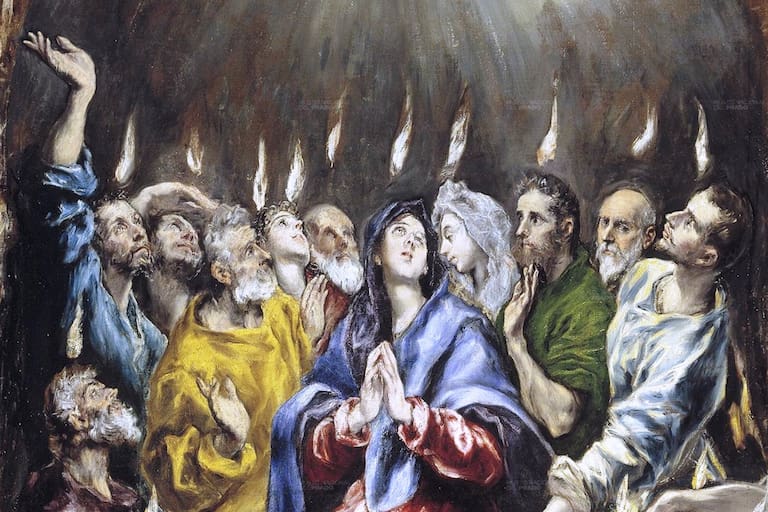

On the day of Pentecost, the apostles were gathered in the Upper Room when the Holy Spirit descended upon them. Thus was fulfilled the promise of Jesus Christ: “Whoever loves me will keep my word, and my Father will love them, and we will come to them and make our home with them“. That day marks the beginning of a profound spiritual reality: the indwelling of the Trinity in the human soul.
Until then, God was present in the world as Creator and Sustainer of all that exists. Everything exists because God thinks and loves it; without Him, creation would return to nothingness. However, with the Incarnation, God initiates a new form of presence: close, affectionate, redemptive. In Christ, God enters into competition with all the realities that seek to occupy the human heart.
Pentecost goes a step further: God is no longer only with the apostles, but within them. It is the Trinitarian indwelling: the Father, the Son, and the Holy Spirit dwell in the believing soul. But this presence is not automatic: it demands relationship, correspondence. God loves first, calls, enters… but he expects to be acknowledged, welcomed, and loved.
An authentic personal relationship begins when two people recognize each other in their absolute dignity. This is precisely grace: God dwells in the soul, and that soul is not only known and loved by Him, but also recognizes and responds to Him.
Following the theologian Franz Jalics, three ways of responding to this presence can be distinguished:
1. A childlike faith, in which God and grace are perceived as something magical or parallel to real life. It’s a superficial relationship, lacking vital integration. Like a child who prays before an exam without having studied.
2. An adult faith, more common among practitioners, where the relationship with God is measured in terms of efficiency, results, and fulfillment. It’s a faith that works, but it doesn’t always touch the heart.
3. A mature faith, the fullest kind, where the indwelling of God is recognized as a personal relationship of love. The soul knows it is loved, gives itself, accepts, and reciprocates. As in the Trinity: the Father gives, the Son receives, and gives back everything; the Spirit is that communion of love.
Those who live this mature faith experience a real transformation. They no longer act from outside, but from within. Grace identifies them with Christ. They see with his eyes, feel with their heart.
And this transformation manifests itself in three key dimensions:
* Humility : Seeing oneself as God sees us, without masks or exaggerations. As Saint Teresa said, “Humility is walking in truth.”
* Chastity of heart : Looking at others as God looks at them, with respect, tenderness, and recognition of their absolute dignity. Only from this is true purity of heart born.
* Detachment : Seeing things as means, not ends. Living not to possess, but to love. Not to be fooled by the mirage of having, but to value what serves to love more and better.
Thus, while the “heart” is like the hardware where the Spirit acts, the indwelling is the “software” that fills it, drives it, and configures it with Christ.
The perfect example of this relationship is found in Mary. She is the beloved Daughter of the Father, Mother of the Son, Spouse of the Holy Spirit. She is the living sanctuary of the Trinity. As Saint Josemaría said: “More than you, only God”.

Luis Herrera Campo
Nací en Burgos, donde vivo. Soy sacerdote del Opus Dei.
Related

J.R.R. Tolkien and His Legendary
María José Calvo
16 April, 2026
5 min

Catholics and the Art of Servant Leadership: Lessons from Saint Catherine of Siena for Today’s Executives and Entrepreneurs
Javier Ferrer García
16 April, 2026
7 min

Five Keys to Raising Your Children with Humor
Luis Gutiérrez Rojas
16 April, 2026
3 min
An eternal moment that invites the Christian soul to contemplate the truth, beauty, and mystery of creation
Sonia Clara del Campo
16 April, 2026
7 min
Newsletter
Every month, Exaudi touches the lives of many through training, truth, and support
Join our communication channels and share them.