 (EN)
(EN)
 (ES)
(ES)
 (IT)
(IT)

Shroud of Turin: Medieval Bas-Relief Hypothesis Questioned
The journal "Archaeometry," which had published the hypothesis of Brazilian researcher Cicero Moraes, publishes a rebuttal by specialists Casabianca, Marinelli, and Piana


Last summer, a story circulated that Vatican News immediately covered. Brazilian researcher Cicero Moraes proposed a digital reconstruction of the Shroud of Turin, supporting the hypothesis that it was created in the Middle Ages as a bas-relief. A commentary recently published in Archaeometry refutes Moraes’s claims point by point.
Three specialists on the Shroud of Turin, Tristan Casabianca, Emanuela Marinelli, and Alessandro Piana, have criticized this study, which they claim is based on ambiguous objectives, methodological flaws, and fallacious reasoning. In doing so, they confirm the criticism already expressed this summer by the Archbishop of Turin and custodian of the Shroud, Cardinal Roberto Repole, and by the International Center for Studies on the Shroud of Turin (CISS). But it is worth highlighting—and this is the news of the day—the significance of the publication of their critique in the same scholarly journal in which Moraes’s original article appeared.
The debate
The debate surrounding the authenticity of the Shroud of Turin has been lively ever since photographer Secondo Pia took the first photograph in 1898. Today, the controversy continues, particularly in international academic journals. In 2019, the famous carbon-14 dating (1260-1390 CE), published in Nature in 1989, was challenged by a new analysis of the raw data published in Archaeometry, a journal affiliated with the Oxford laboratory that had participated in the original dating.
Last summer, in the same journal, the Brazilian Cicero Moraes published an article supporting the medieval forgery theory. According to him, a bas-relief produces a contact surface that seems to correspond better to the visible contours of the Shroud of Turin than to the volume of a human body. From this, he deduced an argument in favor of a medieval artistic origin. However, since its publication, Moraes’s article has raised numerous doubts among specialists. In his statement, Cardinal Repole criticized the “concern over the superficiality of certain conclusions, which often do not withstand closer examination of the work presented.”
The flaws in Moraes’ analysis
Once the media frenzy subsided, the commentary recently published in Archaeometry by Tristan Casabianca, Emanuela Marinelli, and Alessandro Piana fully confirms the legitimacy of that initial challenge. The authors highlight the numerous flaws in Moraes’s analysis: anatomically deficient modeling, as it only reproduces the frontal image, reverses the right-left position of both the feet and hands, and arbitrarily chooses a height (180 cm) outside the established consensus (173-177 cm); the repeated use of vague terms to certify a similarity without ever providing precise measurements; and the selection of a single image, the one from 1931, when much more recent ones exist. Furthermore, the modeling was simulated not on linen, but on cotton.
Even more worrying is that Moraes’s 3D modeling neglects the key characteristics of the Shroud of Turin: the extreme shallowness of the image (a depth of one-fifth of a thousandth of a millimeter) and the multiple independent confirmations of the presence of blood, which are inconsistent with any medieval artistic practice. The authors therefore question the true value of a model that fails to accurately reproduce the anatomical features of the Man of the Shroud and ignores the most relevant physicochemical properties. Moraes’s study overlooks the fact that various versions of the bas-relief hypothesis had already been studied and rejected in academic journals in the early 1980s. It also forgets that the question of the anatomical deformation of a body into a tissue had already been thoroughly examined in 1902 by the French scientist Paul Vignon.
Fragile historical foundations
According to commentators, the historical foundations of the initial study also appear fragile. Moraes has to resort to unrelated periods and places to explain how an artist or forger could have intellectually conceived and practically executed such a unique image of a naked Christ, both front and back, in a post-crucifixion scene. But, as Casabianca, Marinelli, and Piana point out, this is a compositional fallacy, an explanatory method that, if generalized, would undermine the very foundations of art history. The image deviates so far from the traditional artistic framework that the principal historian on whom Moraes relies, William S.A. Dale, was convinced that it could not have been created in 14th-century France, but rather in the Byzantine era, no less than 200 years and 2,000 kilometers away from Champagne.
In his response to these criticisms, also published in the journal, Moraes maintains his conclusions but clarifies that his article offers a “strictly methodological” perspective, focused on evaluating morphological distortion within the framework of a body’s projection onto a fabric. However, Moraes departs from this methodological framework to cite four artistic productions from the 11th to 14th centuries that could have inspired the creator of the Shroud of Turin. None of these, however, depicts Christ naked in a scene after the crucifixion, and therefore none can explain the image’s appearance in a small French village in the mid-14th century.
Since the beginning of the 20th century, the Shroud of Turin has sparked countless questions and scientific investigations. This latest academic controversy demonstrates that, while modern tools—including digital ones—can enrich our knowledge, extrapolations about the origin of an object as unique as the Shroud of Turin require special rigor, both methodologically and historically.

Exaudi Staff
What is Exaudi News? Exaudi News is an international Catholic media outlet that informs, shapes, and transforms daily in Spanish, English, and Italian. Through news, analytical articles, and live broadcasts of the Pope's events, Exaudi seeks to strengthen Christian unity and contribute to the evangelization of the world, always guided by the Church's social doctrine. We work to bring Christian truth and values to every corner of the planet. Help us transform the world with Exaudi! At Exaudi, we believe that evangelization and quality information can change lives. To continue our mission and expand our reach, we need your help. In addition, we are looking for committed people to join our team. With your support, we will reach more people, spread the message of Christ, and strengthen Christian unity. Will you join our mission? For more information on how to collaborate, visit Exaudi.org or contact us directly: [email protected] Exaudi: Informs, educates, and transforms.
Related
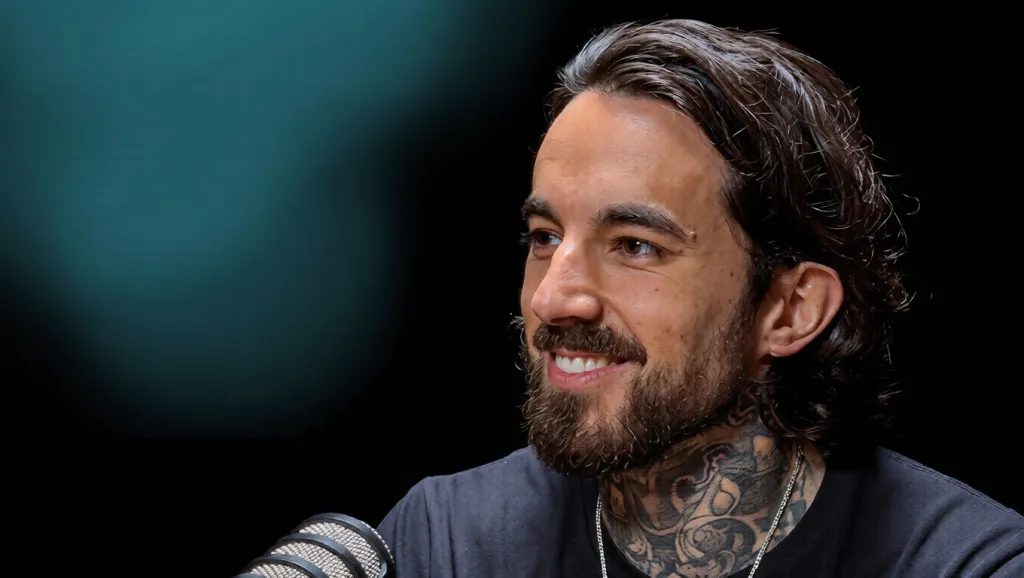
René ZZ’s Soul Map: From a Tattooed Body to a Heart Restored by God
Se Buscan Rebeldes
10 April, 2026
7 min
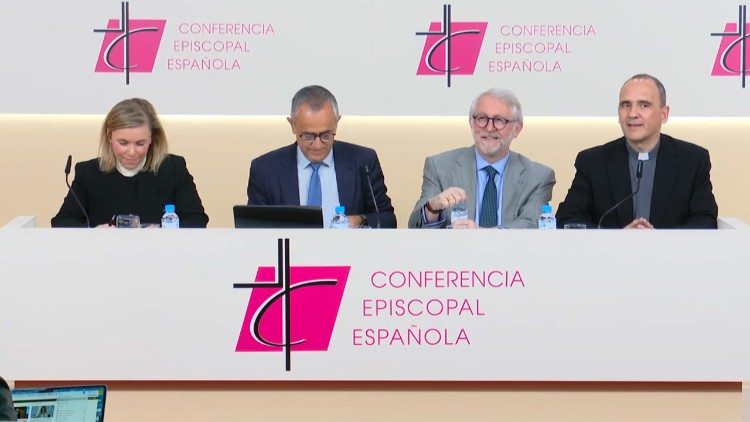
“Lift Up Your Eyes”: The Pope’s Trip to Spain is Being Prepared with Transparency and Social Support
Exaudi Staff
08 April, 2026
2 min
A Journey in the Light of Gaudí: Santiago Prepares for a Magical Afternoon of Literature and Art
Exaudi Staff
07 April, 2026
2 min
Poland: Another Step in the Coup d’État
Wlodzimierz Redzioch
07 April, 2026
5 min