 (EN)
(EN)
 (ES)
(ES)
 (IT)
(IT)

Reflection by Bishop Enrique Díaz: “While he blessed them, he was ascending into heaven”
Reflection by Bishop Enrique Díaz: “While he blessed them, he was ascending into heaven”
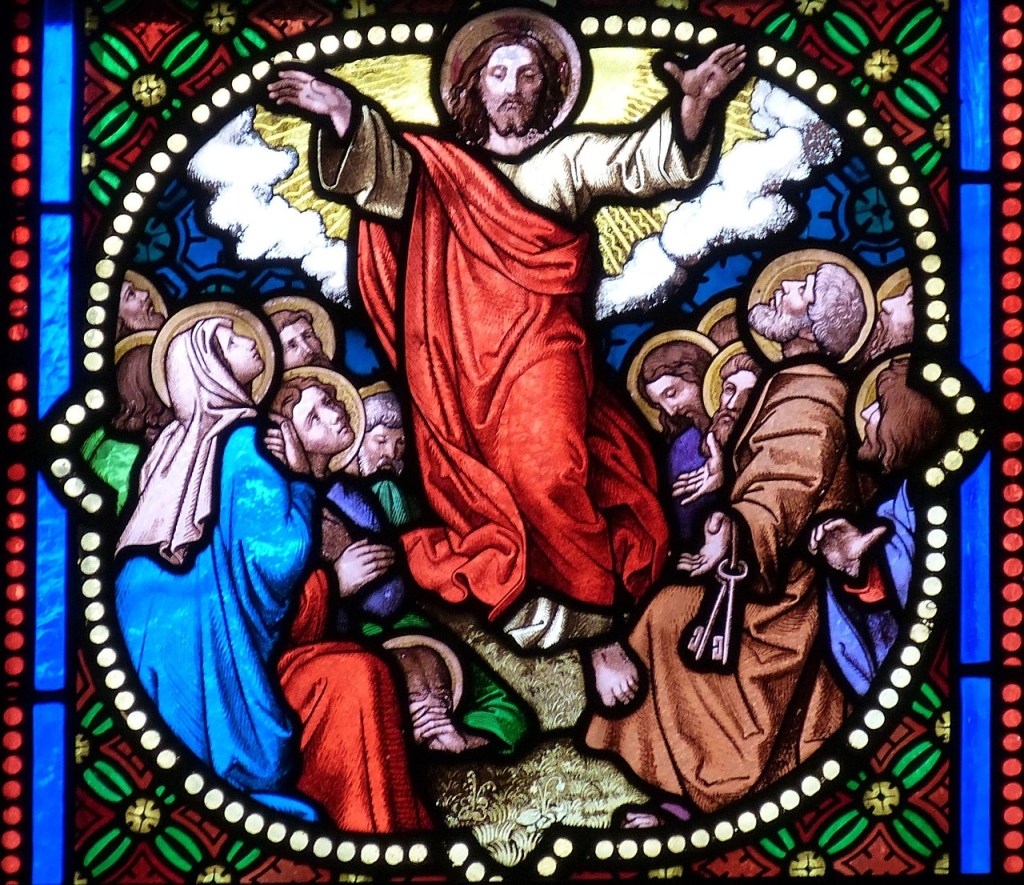

Bishop Enrique Díaz Díaz shares with Exaudi readers his reflection on the Gospel of this Sunday, June 1, 2025, entitled: “While he blessed them, he was ascending into heaven.”
***
Acts 1:1-11: “He was ascending into heaven before the eyes of his apostles”
Psalm 46: “God ascends to his throne with shouts of joy”
Hebrews 9:24-28; 10:19-23: “Christ entered heaven itself”
Luke 24:46-53: “While he blessed them, he was ascending into heaven”
Our civilization has risen above all the hopes and expectations of preceding generations, yet it finds no happiness or meaning in life to sustain it in its endeavors. It has taken to the air, broken the barriers of sound, amplified its voice and altered images, surpassed speeds, dominated spaces, and yet man does not enjoy the true joy of victory. He feels empty and lives with the crushing feeling of a life slipping through his fingers and a great anxiety about the uncertainty of the future. The world has sunk into a suffocating atmosphere because it has removed God, and despite having replaced him with power and riches, it cannot fulfill its aspirations. It has lost the link that unites heaven and earth and finds itself without a compass and lost.
Today we celebrate the feast of Christ’s Ascension into heaven. It is a feast that, properly understood and lived, gives meaning and direction to our lives, unites heaven with earth, strengthens our journey, and illuminates the darkness that threatens to engulf humanity. The Ascension is the triumph of God made flesh, who takes upon himself all suffering and pain to give it meaning. It is the goal of all efforts and the summit from which we can all contemplate clearly and carefully all the various paths, difficulties, and setbacks. Everything acquires meaning. The Ascension is the answer to our anguished question: “Where am I?” Looking at the glorified Jesus, we will find the path that leads from earth to heaven.
Saint Luke offers us an interesting perspective today: he concludes his Gospel with the Ascension, but at the same time opens a new narrative, “The Acts of the Apostles,” with this same event. The first account is the goal of all the verbs of movement he uses to indicate where Jesus is headed. The Ascension is the triumphant conclusion of Jesus’ earthly life and the culmination of his journey; but at the same time, it is the beginning of the “time of the Church,” inaugurated with the Holy Spirit promised by Jesus. Jesus has two presences in the search for the Kingdom: a physical presence and a mystical, real presence in his disciples. Upon receiving the Spirit, the community of believers takes on the mission of continuing the work inaugurated by Jesus, of manifesting the Kingdom of the Father, of being “gospel,” good news, for a bewildered and directionless world. This work begins by giving meaning to the life of humanity, for they must preach “to all nations the need to turn to God for the forgiveness of sins.” It offers a compass to the wayfarer: to direct him toward God; it is also an inexhaustible source of energy: the Holy Spirit, “the power from on high,” and all this stems from the earthly reality of sin and misery.
Those without reference points or points of support are lost and remain suspended in the void. There are those to whom heaven and the Kingdom of God mean nothing; they think only of money, pleasure, power, fun, enjoying and wasting their lives. Their ambitions and goals are limited to the earthly and tangible. Others, on the other hand, ignore human reality, forget the pain and suffering of humankind, and present heaven as the only reality. This is how religions and individualistic tendencies appear, offering salvation as if it were a lottery and a matter of luck (and money!). They remain suspended, amorphous and uncommitted, before the humanity that struggles and strives to achieve justice, fraternity, and equity.
Today, Christ presents us with a third option: he proposes that, driven by authentic hope, we build heaven from here, on earth, through love, work, and service to our brothers and sisters. Jesus does not want disciples “standing gazing up at heaven.” He does not accept indifference to human anguish. There can be no apathetic disciples who are indifferent to human suffering. Those who forget to build, fight, and conquer justice and peace are not true disciples. Nor are those who limit themselves to their pleasures and a culture of hedonism and consumption truly followers of Jesus. Thus, humanity loses its meaning. Jesus’ proposal is expressed in the kerygma he offers the disciples: through pain and death, reach resurrection. To begin from the earth to reach heaven. To follow the path of the One who became incarnate and shared with humanity to lead them to a divine life, which must become a reality from now on. Earth is the only way we know to go to heaven, and this is how Jesus showed us. We must, therefore, be builders of hope and forgers of dreams that are embodied in our concrete reality.
On this Feast of the Ascension, we will have to answer many questions and concerns that can help us seek paths of encounter and commitment: How do I embrace my identity as a disciple of Jesus who bears witness to a possible Kingdom that is built from here on earth? Do I know and accept the path of self-sacrifice that Jesus taught us? Am I a bearer of good news and announce hope to those who suffer and afflict? How does it show that I am a disciple of Jesus?
God, Good Father, show us that beyond our selfish limits there is a possible Heaven. Strengthen our steps and make them firm so that we may fulfill the task of building a world after your heart and of proclaiming to all the Good News of your love and salvation. Amen.

Enrique Díaz
Nació en Huandacareo, Michoacán, México, en 1952. Realizó sus estudios de Filosofía y Teología en el Seminario de Morelia. Ordenado diácono el 22 de mayo de 1977, y presbítero el 23 de octubre del mismo año. Obtuvo la Licenciatura en Sagrada Escritura en el Pontificio Instituto Bíblico en Roma. Ha desarrollado múltiples encargos pastorales como el de capellán de la rectoría de las Tres Aves Marías; responsable de la Pastoral Bíblica Diocesana y director de la Escuela Bíblica en Morelia; maestro de Biblia en el Seminario Conciliar de Morelia, párroco de la Parroquia de Nuestra Señora de Guadalupe, Col. Guadalupe, Morelia; o vicario episcopal para la Zona de Nuestra Señora de la Luz, Pátzcuaro. Ordenado obispo auxiliar de san Cristóbal de las Casas en 2003. En la Conferencia Episcopal formó parte de las Comisiones de Biblia, Diaconado y Ministerios Laicales. Fue responsable de las Dimensiones de Ministerios Laicales, de Educación y Cultura. Ha participado en encuentros latinoamericanos y mundiales sobre el Diaconado Permanente. Actualmente es el responsable de la Dimensión de Pastoral de la Cultura. Participó como Miembro del Sínodo de Obispos sobre la Palabra de Dios en la Vida y Misión de la Iglesia en Roma, en 2008. Recibió el nombramiento de obispo coadjutor de San Cristóbal de las Casas en 2014. Nombrado II obispo de Irapuato el día 11 de marzo, tomó posesión el 19 de Mayo. Colabora en varias revistas y publicaciones sobre todo con la reflexión diaria y dominical tanto en audio como escrita.
Related
Cardinal Pizzaballa and the Custos of the Holy Land prevented from entering the Holy Sepulchre to celebrate Palm Sunday Mass
Exaudi Staff
30 March, 2026
2 min

Reflection by Bishop Enrique Díaz: Blessed is he who comes in the name of the Lord
Enrique Díaz
29 March, 2026
5 min
Blessed is he who comes in the name of the Lord: Commentary by Fr. Jorge Miró
Jorge Miró
28 March, 2026
3 min
“God in the Opera” Fills the Mosque-Cathedral of Córdoba
Exaudi Staff
27 March, 2026
2 min