 (EN)
(EN)
 (ES)
(ES)
 (IT)
(IT)

Reflection by Bishop Enrique Díaz: The Lord’s mercy is eternal. Alleluia
Second Sunday of Easter
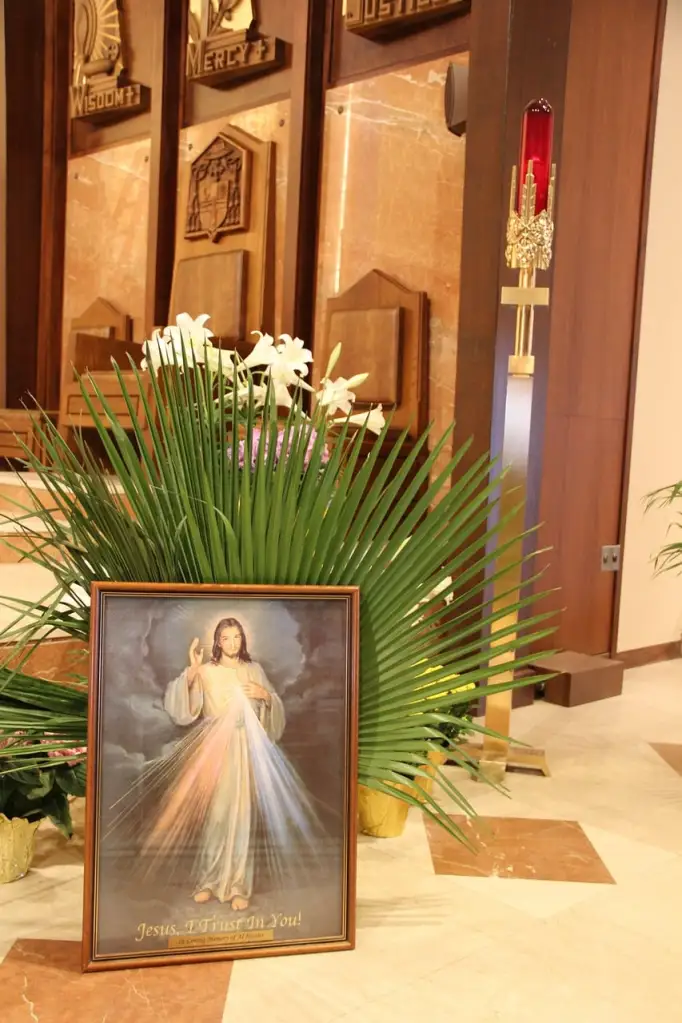

Monsignor Enrique Díaz Díaz shares with Exaudi readers his reflection on the Gospel for this Sunday, April 5, 2026, entitled: “The Lord’s mercy is eternal. Alleluia.”
***
Acts 2:42-47: “The believers were together and had everything in common.”
Psalm 117: “The Lord’s mercy endures forever. Hallelujah!”
I. St. Peter: “The resurrection of Christ gives us the hope of a new life”
John 20:19-31: “Eight days later Jesus appeared to them”
Thomas perfectly reflects our world: his audacity in denying what everyone is experiencing, his doubts, and his demand for proof are characteristic of a modern world where we believe only what we personally experience, touch, and taste. Divine Mercy Sunday shows us that there are objective signs of Jesus’ resurrection, both those offered by Him to His apostles and the living proofs presented by the early Christian community in the Acts of the Apostles. Jesus presents the irrefutable arguments of a broken, loving body, given up out of love for others; the community offers the clear consequences of that love: the Word made flesh, love expressed in sharing what one has, prayer that uplifts and commits, and the Eucharist, the expression of the greatest union with the Risen Lord and with one another. Signs of life so evident that Saint Thomas can only exclaim: “My Lord, my God!”
The Gospel presents us with a dramatic change following the Resurrection of Jesus. It begins with a community entering the darkness of nightfall, its doors sealed shut, fear etched on their faces, and anguished dread of the Jewish authorities. But little by little, hope takes hold and the darkness dissipates, culminating in the disciples being presented, inspired by the Spirit to become witnesses of Jesus, inviting others to “believe that Jesus is the Messiah, and that by believing you may have life in his name.”
Our faith often appears empty, as if we were merely following religious traditions and customs, external formalities that crumble before serious questioning. Christians in name only, on paper, and bored. For the first Christians, the encounter with the Risen Lord was a whirlwind that shook them to their core and an experience that transformed their entire lives, their customs, and their beliefs. From the dark tones that threatened that dormant and frightened community, withdrawn into itself and without horizons, they moved to the radiant explosion of light and hope rooted in the victory of the one who gave his life for us and who ultimately conquered death. The encounter with the living and risen Jesus transformed them into new people, revived, full of joy and peace. By freeing them from fear and cowardice, he opened new horizons for them and impelled them to proclaim the Good News and bear witness, to all who would listen, to the living and risen Christ. Jesus’ breath upon them and his words, “Receive the Holy Spirit,” produce a twofold movement: a force in their hearts and an impulse that sweeps them away to reach out to their brothers and sisters. It is as if he creates an inner current that unites them, making them feel as one heart and one soul, yet preventing them from remaining closed in on themselves. Instead, it compels them to manifest and transmit this new life to others. So powerful is the experience of the resurrection that those who believe in it and experience it commit themselves to a more human, fuller, and happier life.
The signs Jesus offered to Thomas help us understand that the nails in his feet and hands and the wound in his side are signs of his love and suffering in his self-giving for others, and at the same time, traces of his presence among us. That is why Pope Leo tells us that “the risen Jesus does not hide his wounds, but shows them as the definitive proof of a love stronger than any betrayal or abandonment.” We cannot experience the risen Jesus except through the wounds he left on his body: the marginalization, pain, and suffering of the lowly and excluded, the denigrated and ignored, the dispossessed and overexploited. How do we see the world through the wounds of Jesus? Let us try to look at it, and we will discover, surprisingly, that it is impossible to hide or disguise the misery and pain of humanity, for they appear clearly, yet are perceived with love, hope, and complete self-giving. We cannot look through the wounds of Jesus with selfishness and indifference, nor with resentment and vengeance. To look through the wounds of Jesus is to look with the certainty that this world has the meaning given to it by the immeasurable love of Jesus; it is to look with the hope that his resurrection continues to work in our midst; and it is to live with the dynamism of the new life that his shed blood continues to bring forth. This is the heart of the Easter experience: the encounter with Someone alive, capable of freeing us from fatalism and denial, and of opening for us a new path to peace, true peace. To look through the wounds of Jesus is to immerse ourselves in his Passover: death and resurrection.
The first Christian communities understood the full meaning of their Lord’s resurrection, and thus were able to begin a new era, with Sunday as the Lord’s Day, with listening to and reflecting on the Word, with a table set open to all, where those in need can take, and those who have more than enough can contribute, to create a common table. The resurrection of Jesus will not be manifested among us unless it comes through sharing. The Eucharist, the Lamb made bread to give life, becomes evident when “no one is in need,” when no one is excluded, and when the Word is shared. Let us contemplate today the wounds of Jesus that cry out for resurrection; let us also contemplate the signs of the first Christian communities who were of one heart and one soul, who met daily in the temple and in homes, sharing bread and eating together with joy and simplicity of heart. What signs of resurrection are we giving? Where is our experience of the living Jesus leading us? Where do we discover and display the glorious wounds? What is our life like in community, and how willing are we to share?

Enrique Díaz
Nació en Huandacareo, Michoacán, México, en 1952. Realizó sus estudios de Filosofía y Teología en el Seminario de Morelia. Ordenado diácono el 22 de mayo de 1977, y presbítero el 23 de octubre del mismo año. Obtuvo la Licenciatura en Sagrada Escritura en el Pontificio Instituto Bíblico en Roma. Ha desarrollado múltiples encargos pastorales como el de capellán de la rectoría de las Tres Aves Marías; responsable de la Pastoral Bíblica Diocesana y director de la Escuela Bíblica en Morelia; maestro de Biblia en el Seminario Conciliar de Morelia, párroco de la Parroquia de Nuestra Señora de Guadalupe, Col. Guadalupe, Morelia; o vicario episcopal para la Zona de Nuestra Señora de la Luz, Pátzcuaro. Ordenado obispo auxiliar de san Cristóbal de las Casas en 2003. En la Conferencia Episcopal formó parte de las Comisiones de Biblia, Diaconado y Ministerios Laicales. Fue responsable de las Dimensiones de Ministerios Laicales, de Educación y Cultura. Ha participado en encuentros latinoamericanos y mundiales sobre el Diaconado Permanente. Actualmente es el responsable de la Dimensión de Pastoral de la Cultura. Participó como Miembro del Sínodo de Obispos sobre la Palabra de Dios en la Vida y Misión de la Iglesia en Roma, en 2008. Recibió el nombramiento de obispo coadjutor de San Cristóbal de las Casas en 2014. Nombrado II obispo de Irapuato el día 11 de marzo, tomó posesión el 19 de Mayo. Colabora en varias revistas y publicaciones sobre todo con la reflexión diaria y dominical tanto en audio como escrita.
Related
The Sea of Grace that Floods the World
Javier Ferrer García
12 April, 2026
7 min
“In Search of the Messiah”: The documentary that reveals how Judaism finds its fulfillment in Christ
Exaudi Staff
11 April, 2026
4 min
On the Eighth Day Jesus Arrived: Commentary by Fr. Jorge Miró
Jorge Miró
11 April, 2026
3 min
René ZZ’s Soul Map: From a Tattooed Body to a Heart Restored by God
Se Buscan Rebeldes
10 April, 2026
7 min