 (EN)
(EN)
 (ES)
(ES)
 (IT)
(IT)

Pope Leo XIV: “There is and must be room for everyone in the Church”
In his general audience on March 11, 2026, the Pope reflected on the Second Vatican Council’s encyclical “Lumen Gentium” and presented the Church as a prophecy of peace and unity in a world divided by conflict
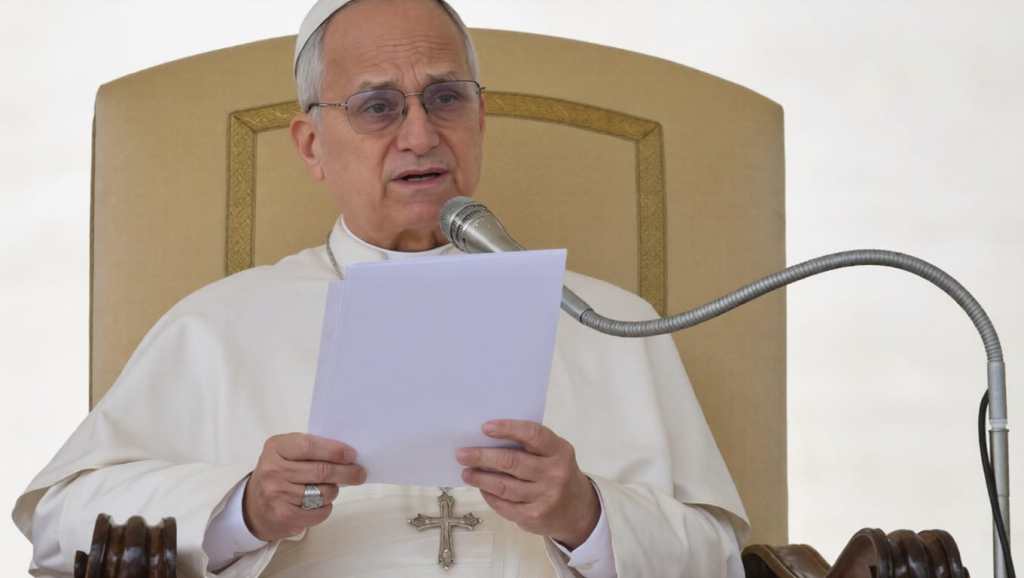

Pope Leo XIV, during the general audience held on Wednesday, March 11, 2026, in St. Peter’s Square, continued his series of catecheses on the documents of the Second Vatican Council, focusing on the second chapter of the Dogmatic Constitution Lumen Gentium , which describes the Church as the People of God. Before thousands of the faithful, the Bishop of Rome emphasized that the Church, unified in Christ, cannot turn inward, but is open to all and is for all, constituting a living sign of hope and a prophecy of unity and peace in the midst of a world marked by divisions, tensions, and wars.
Inspired by Jeremiah’s prophetic promise (Jer 31:33) —“I will put my law within them and write it on their hearts; I will be their God and they shall be my people”—, the Pope explained God’s plan of salvation, which unfolds through the election of a specific people: from the call to Abraham, the liberation from slavery in Egypt, and the covenant with Israel, to its culmination in the new and perfect covenant in Christ. This people is not defined by human merit, but by God’s free grace and faith in Him, called to be “a light unto the nations.”
“This is the Church,” explained Leo XIV: “the people of God who draw their very existence from the body of Christ and who are themselves the body of Christ; not a people like any other, but the people of God, called together by Him and made up of women and men from all the nations of the earth.” United not by language, culture, or ethnicity, but by faith in Jesus as the author of salvation and the principle of unity and peace, Christians do not boast of titles, but of the gift of being children of God by grace. “This is also the only honorific title we should seek as Christians,” he affirmed.
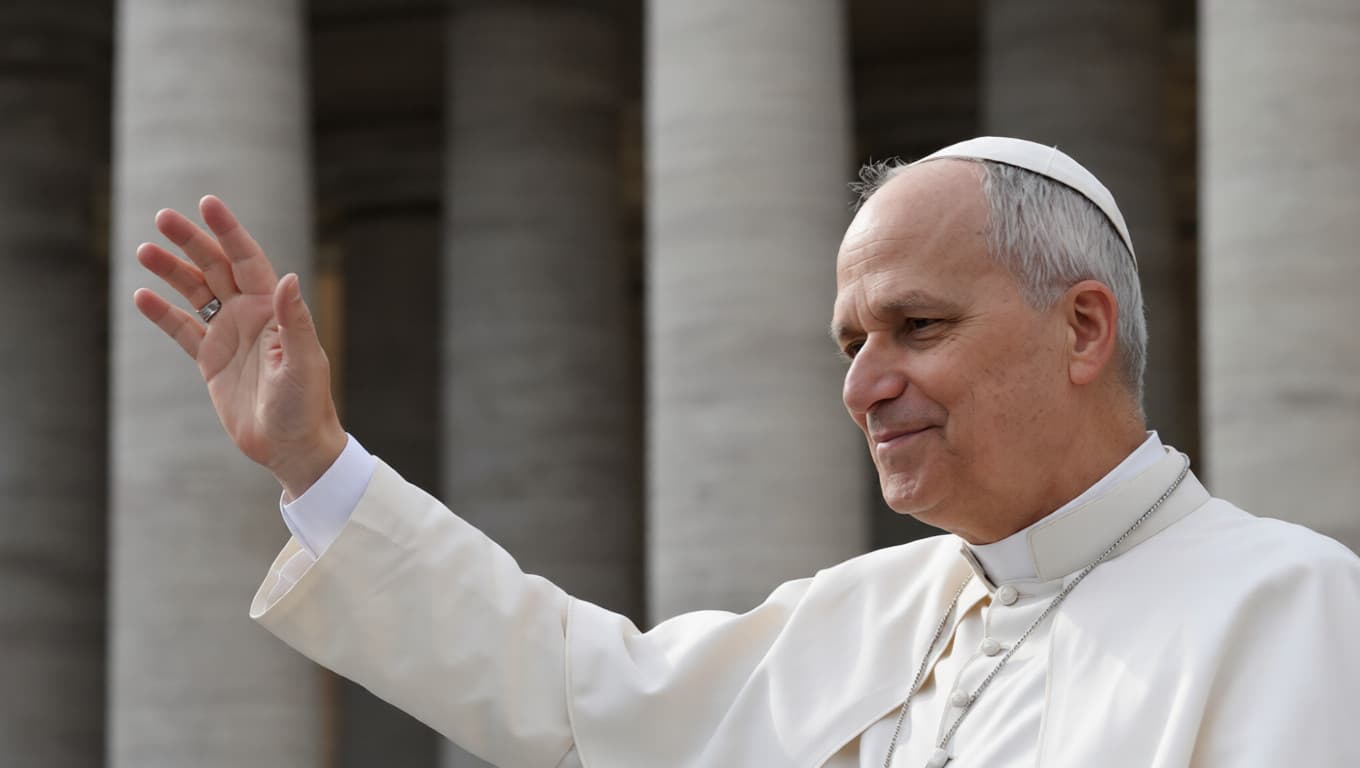
The Pope emphasized the open and missionary dimension of the Church: unified in Christ, Lord of all humanity, it must extend to the whole world and all times. “All people are called to belong to the new People of God,” so even those who have not yet received the Gospel are, in some way, oriented toward it. Every Christian is called to spread the Gospel “everywhere and to everyone, so that each person may come into contact with Christ,” embracing the richness of diverse cultures and offering them the newness of the Gospel to purify and elevate them.
In a particularly moving moment, the Pope highlighted the prophetic value of the Church in times of conflict: “It is a great sign of hope—especially in our day, marked by so many conflicts and wars—to know that the Church is a people in which, by virtue of faith, women and men of different nationalities, languages, and cultures live together.” Quoting the Jesuit Henri de Lubac, he described the Church as “the unique ark of salvation that must welcome all human diversity into its vast vessel.”
He concluded by reaffirming the essential catholicity and inclusiveness of the Church: “The Church is one, but it includes everyone. In the Church there is and must be room for everyone.” This message resonates as an urgent call to live the faith as a bridge of unity in a fragmented humanity, walking together toward the Kingdom of God, inspired by the love received in Jesus.
Full text of the hearing:
LEO XIV
GENERAL AUDIENCE
St Peter’s Square
Wednesday, 11 March 2026
_____________________
Dear brothers and sisters, good morning and welcome!
Continuing in our reflection on the Dogmatic Constitution Lumen gentium (LG), today we will look at the second chapter, dedicated to the People of God.
God, who created the world and humanity, and who wishes to save every man, carries out his work of salvation in history, choosing a real people and dwelling among them. For this reason, He calls Abraham and promises him descendants as numerous as the stars in the sky and the sand on the seashore (cf. Gen 22:17-18). With Abraham’s children, after freeing them from slavery, God makes a covenant with them, accompanies them, cares for them, and gathers them together whenever they stray. Therefore, the identity of this people is given by God’s action and by faith in Him. They are called to become a light for other nations, like a beacon that will draw all peoples, the whole of humanity, to itself (cf. Is 2:1-5).
The Council affirms that “All these things, however, were done by way of preparation and as a figure of that new and perfect covenant, which was to be ratified in Christ, and of that fuller revelation which was to be given through the Word of God Himself made flesh” ( LG, 9). Indeed, it is Christ who, in giving His Body and His Blood, unites this people in Himself and in a definitive way. It is a people now made up of members of every nation; it is united by faith in Him, by adherence to Him, by living the same life as Him, animated by the Spirit of the Risen One. This is the Church: the people of God who draw their existence from the body of Christ [1] and who are themselves the body of Christ; [2] not a people like any other, but the People of God, called together by Him and made up of women and men from all the peoples of the earth. Its unifying principle is not a language, a culture, an ethnicity, but faith in Christ: the Church is therefore – according to a splendid expression of the Council – the assembly of “all those who in faith look upon Jesus” ( LG, 9).
It is a messianic people, precisely because it has Christ, the Messiah, as its head. Those who belong to it do not pride themselves on merits or titles, but only on the gift of being, in Christ and through Him, daughters and sons of God. Above any task or function, therefore, what really matters in the Church is to be grafted onto Christ, to be children of God by grace. This is also the only honorary title we should seek as Christians. We are in the Church in order to receive life from the Father unceasingly and to live as His children and brothers and sisters among ourselves. Consequently, the law that animates relationships in the Church is love, as we receive and experience it in Jesus; and her goal is the Kingdom of God, towards which she walks together with all humanity.
Unified in Christ, Lord and Saviour of every man and woman, the Church can never turn inwards on herself, but is open to everyone and is for everyone. If believers in Christ belong to it, the Council reminds us that “All men are called to belong to the new people of God. Wherefore this people, remaining one and unique, must extend to the whole world and to all ages, so that the intention of God’s will may be fulfilled, who in the beginning created human nature as one and wants to gather together his children who were scattered” (LG, 13). Even those who have not yet received the Gospel are therefore, in some way, oriented towards the people of God, and the Church, cooperating in Christ’s mission, is called upon to spread the Gospel everywhere and to everyone (cf. LG 17), so that every person may enter into contact with Christ. This means that in the Church there is, and there must be, a place for everyone, and that every Christian is called to proclaim the Gospel and bear witness in every environment in which he or she lives and works. Thus, this people shows its catholicity, welcoming the wealth and resources of different cultures and, at the same time, offering them the newness of the Gospel to purify them and to raise them up (cf. LG, 13).
In this regard, the Church is one but includes everyone. A great theologian described it thus: “The unique Ark of Salvation must welcome all human diversity into its vast nave. The only banquet hall, the food it distributes is drawn from all of creation. The seamless garment of Christ, it is also – and it is the same thing – the garment of Joseph, with its many colours”. [3]
It is a great sign of hope – especially in our times, traversed by so many conflicts and wars – to know that the Church is a people in which women and men of different nationalities, languages and cultures live together in faith: it is a sign placed in the very heart of humanity, a reminder and prophecy of that unity and peace to which God the Father calls all his children.
______________________________________________________
[1] Cf. J. Ratzinger, The New People of God, Brescia 1992, 97.
[2] Cf. Y. M.-J. Congar, A Messianic People, Brescia 1976, 75.
[3] Cf. H. de Lubac, Catholicism: A study of dogma in relation to the corporate destiny of mankind (Catholicisme: Les aspects sociaux du dogme).
***
APPEAL
Today in Qlayaa, Lebanon, the funeral of Father Pierre El Raii, Maronite parish priest of one of the Christian villages in southern Lebanon, is being celebrated. These villages are once again experiencing the tragedy of war. I am close to all the Lebanese people at this time of grave trial.
In Arabic, “El Raii” means “the shepherd”. Father Pierre was a true shepherd, who always stayed beside his people, with the love and sacrifice of Jesus the Good Shepherd. As soon as he heard that some parishioners had been wounded in a bombing, he rushed to help them without hesitation. May the Lord grant that the blood he shed be a seed of peace for beloved Lebanon.
Dear brothers and sisters, let us continue to pray for peace in Iran and throughout the Middle East, especially for the many civilian victims, including many innocent children. May our prayer be a comfort to those who suffer and a seed of hope for the future.
____________________________________________________
Special greetings
Dear brothers and sisters, in our continuing catechesis on the Dogmatic Constitution Lumen Gentium, we reflect on God’s salvific work in history by choosing a people as his own. He makes a covenant with Abraham and calls his people to be a light for other nations. In this way, he foreshadows the new and perfect covenant in Jesus Christ. With his Death and Resurrection, Jesus gathers all peoples, men and women of different nationalities, languages and cultures into his Bride, the Church. The Church is the new people of God, who united by faith and animated by Christ’s love proclaim the Gospel to the whole world. We too, as members of the Church, are called to be signs of hope and to spread the message of the Father, who desires to gather to himself all his children.
_____________________________
Summary of the Holy Father’s words
I greet all the English-speaking pilgrims and visitors taking part in today’s Audience, particularly the groups from Denmark, Australia and the United States of America. With prayerful good wishes that this Lent will be a time of grace and spiritual renewal for you and your families, I invoke upon all of you joy and peace in our Lord Jesus Christ.

Exaudi Staff
What is Exaudi News? Exaudi News is an international Catholic media outlet that informs, shapes, and transforms daily in Spanish, English, and Italian. Through news, analytical articles, and live broadcasts of the Pope's events, Exaudi seeks to strengthen Christian unity and contribute to the evangelization of the world, always guided by the Church's social doctrine. We work to bring Christian truth and values to every corner of the planet. Help us transform the world with Exaudi! At Exaudi, we believe that evangelization and quality information can change lives. To continue our mission and expand our reach, we need your help. In addition, we are looking for committed people to join our team. With your support, we will reach more people, spread the message of Christ, and strengthen Christian unity. Will you join our mission? For more information on how to collaborate, visit Exaudi.org or contact us directly: [email protected] Exaudi: Informs, educates, and transforms.
Related
Pope Leo XIV in Africa: Pilgrim Among “Different Peoples and Worlds”
Exaudi Staff
10 April, 2026
3 min
Pope Leo XIV calls for a prayer vigil for peace at the Vatican
Exaudi Staff
08 April, 2026
2 min
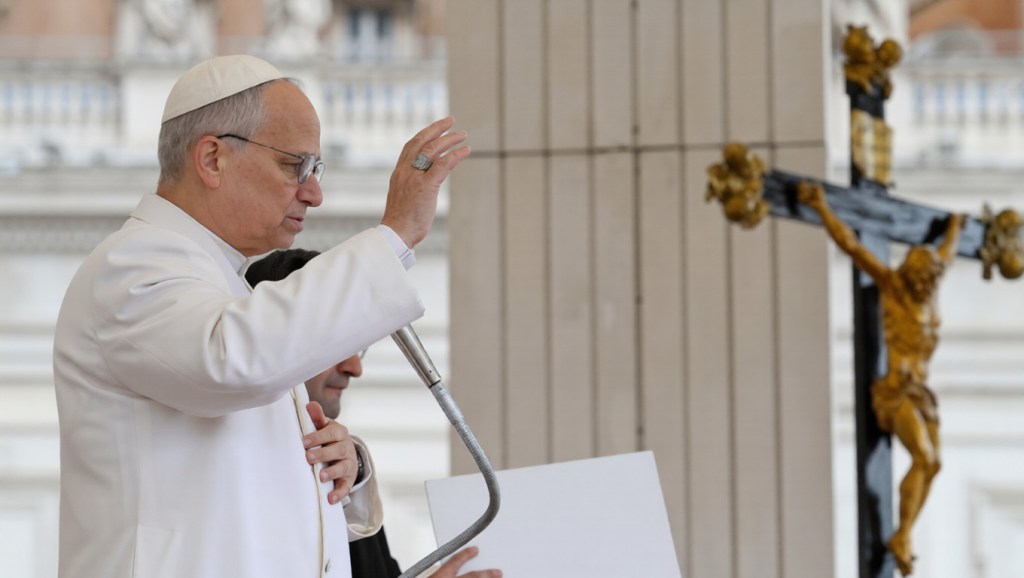
Pope Leo XIV: “Holiness is not a privilege for the few, but a gift that commits every baptized person”
Exaudi Staff
08 April, 2026
9 min
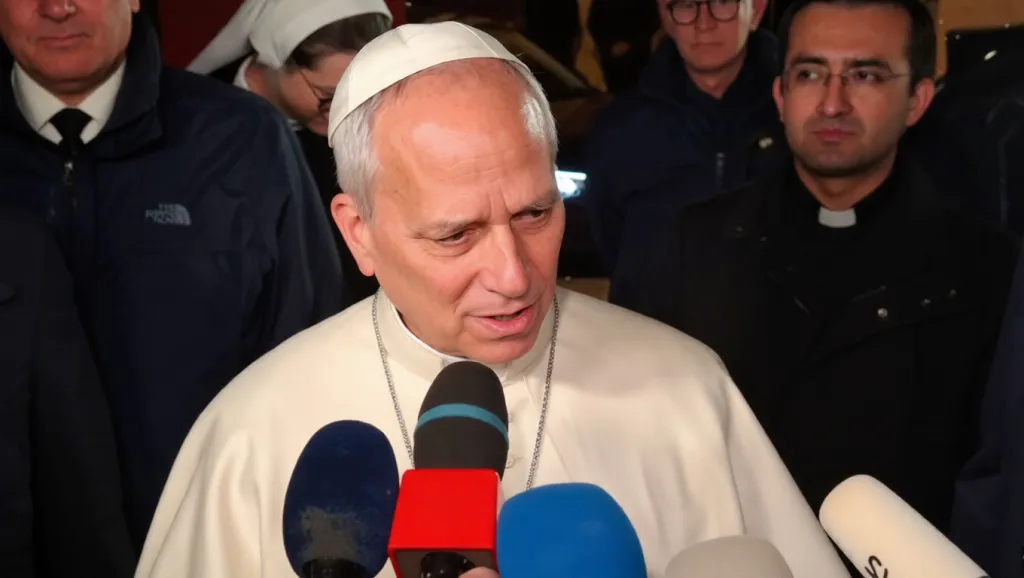
Pope Leo XIV: “The entire Iranian people cannot be condemned”
Exaudi Staff
08 April, 2026
2 min