 (EN)
(EN)
 (ES)
(ES)
 (IT)
(IT)

Pope Leo XIV: “Only by speaking with God can we truly speak of Him”
In his general audience of January 14, 2026, the Pope focused his catechesis on the constitution Dei Verbum and emphasized the transformation of our relationship with God: from servants to friends through Jesus Christ
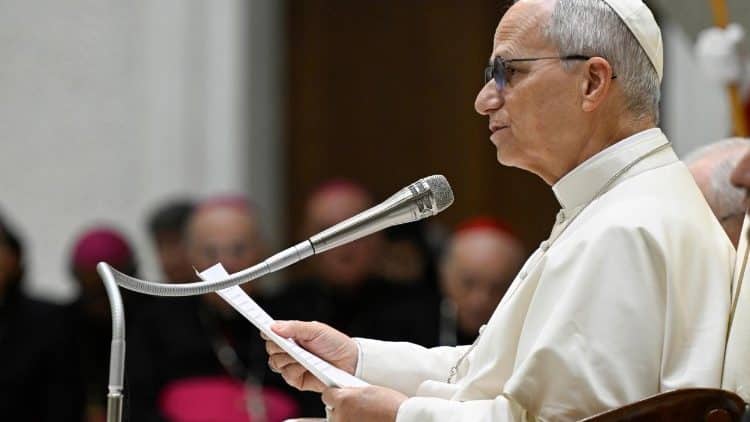

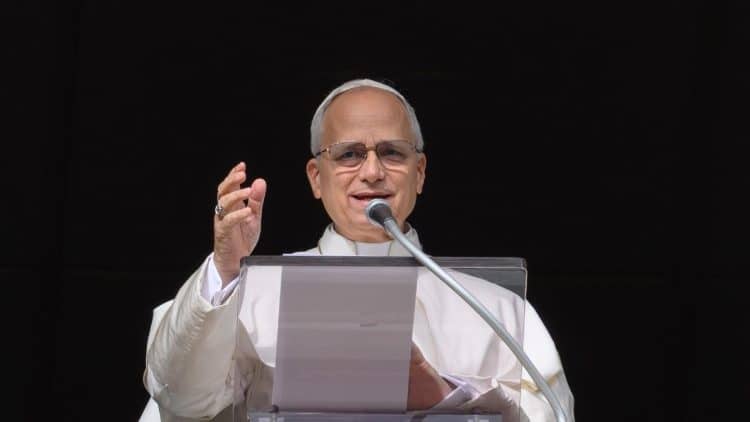
Pope Leo XIV resumed his series of catecheses on the documents of the Second Vatican Council this Wednesday, focusing on the Dogmatic Constitution Dei Verbum, on Divine Revelation. Before a packed Paul VI Hall, the Holy Father presented this text as one of the Council’s “most beautiful and important” and highlighted its central teaching: God does not reveal himself simply to provide us information but to establish a relationship of friendship with humankind.
The Pope recalled Jesus’ words in the Gospel of John (15:15): “I no longer call you servants, […] I have called you friends, for everything that I learned from my Father I have made known to you.” Leo XIV explained that, although the relationship between Creator and creature is necessarily asymmetrical, the Incarnation of the Son of God breaks down that distance and makes us adopted children, capable of intimate communion with Him.
He quoted verbatim paragraph 2 of Dei Verbum: “The invisible God, moved by an overflowing love, speaks to men as friends and relates to them to invite and admit them into communion with him.” The Pope insisted that Revelation is not a divine monologue, but a living dialogue: God speaks first and awaits our response. Therefore, the fundamental attitude of the believer is attentive listening to the Word, which must penetrate the heart and transform life.
“Speaking to God in prayer is not about informing Him—He already knows everything—but about revealing ourselves to Him,” the Pope affirmed. He emphasized the need to cultivate two forms of prayer: liturgical and communal prayer, in which God speaks through the Church, and personal prayer, in the depths of the heart. “In the daily and weekly rhythm of a Christian, time for prayer, meditation, and reflection should not be lacking. Only by speaking to God can we speak about Him,” he stressed.
Leo XIV concluded his reflection with a direct invitation: “If Jesus calls us friends, let us not ignore this call. Welcome it, nurture this relationship, and you will discover that friendship with God is precisely our salvation.” He cautioned that, just as with human friendships, the relationship with God can also grow cold through neglect or carelessness, and therefore requires constant attention.
Today’s catechesis marks the second installment in the series on conciliar documents begun last week and has been interpreted as a call to rediscover the relevance of the Second Vatican Council in the life of the contemporary Church. The audience concluded with greetings to pilgrims speaking various languages and the traditional Apostolic Blessing imparted by the Pope.
Full text of the Audience:
LEO XIV
GENERAL AUDIENCE
Audience Hall
Wednesday, 14 January 2026
___________________________________
Catechesis. The Documents of Vatican Council II. I. Dogmatic Constitution Dei Verbum. 1. God speaks to men as to friends (Reading: Jn 15:15)
Dear brothers and sisters, good morning and welcome!
We have started the cycle of catechesis on Vatican Council II. Today we will begin to look more closely at the Dogmatic Constitution Dei Verbum, on the divine Revelation. It is one of the most beautiful and important of the Council and, to introduce it, it may be helpful to recall the words of Jesus: “No longer do I call you servants, for the servant does not know what his master is doing; but I have called you friends, for all that I have heard from my Father I have made known to you” (Jn 15:15). This is a fundamental point of Christian faith, which Dei Verbum reminds us of: Jesus Christ radically transforms man’s relationship with God, which is henceforth a relationship of friendship. Therefore, the only condition of the new covenant is love.
Saint Augustine, commenting on this passage of the Fourth Gospel, insists on the perspective of grace, which alone can make us friends of God in his Son (Commentary on the Gospel of John, Homily 86). Indeed, an ancient motto stated: “Amicitia aut pares invenit, aut facit”, “friendship is born between equals, or makes them so”. We are not equal to God, but God himself makes us similar to Him in his Son.
For this reason, as we can see in all the Scripture, in the Covenant there is a first moment of distance, in which the pact between God and mankind always remains asymmetrical: God is God and we are creatures. However, with the coming of the Son in human flesh, the Covenant opens up to its final purpose: in Jesus, God makes us sons and daughters, and calls us to become like Him, albeit in our fragile humanity. Our resemblance to God, then, is not reached through transgression and sin, as the serpent suggests to Eve (cf. Gen 3:5), but in our relationship with the Son made man.
The words of the Lord Jesus that we have recalled – “I have called you friends” – are reprised in the Constitution Dei Verbum, which affirms: “Through this revelation, therefore, the invisible God (see Col 1:15; 1 Tim 1:17) out of the abundance of His love speaks to men as friends (see Ex 33:11; Jn 15:14-15) and lives among them (see Bar 3:38), so that He may invite and take them into fellowship with Himself” (no. 2). The God of Genesis already conversed with our first parents, engaging in dialogue with them (cf. Dei Verbum, 3); and when this dialogue was interrupted by sin, the Creator did not cease to seek an encounter with his creatures and to establish a covenant with them. In the Christian Revelation, that is, when God became man in his Son in order to seek us out, the dialogue that had been interrupted is restored in a definitive manner: the Covenant is new and eternal, nothing can separate us from his love. The Revelation of God, then, has the dialogical nature of friendship and, as in the experience of human friendship, it does not tolerate silence, but is nurtured by the exchange of true words.
The Constitution Dei Verbum also reminds us of this: God speaks to us. It is important to recognize the difference between words and chatter: this latter stops at the surface and does not achieve communion between people, whereas in authentic relationships, the word serves not only to exchange information and news, but to reveal who we are. The word possesses a revelatory dimension that creates a relationship with the other. In this way, by speaking to us, God reveals himself to us as an Ally who invites us into friendship with Him.
From this perspective, the first attitude to cultivate is listening, so that the divine Word may penetrate our minds and our hearts; at the same time, we are required to speak with God, not to communicate to him what He already knows, but to reveal ourselves to ourselves.
Hence the need for prayer, in which we are called to live and to cultivate friendship with the Lord. This is achieved first of all in liturgical and community prayer, in which we do not decide what to hear from the Word of God, but it is He Himself who speaks to us through the Church; it is then achieved in personal prayer, which takes place in the interiority of the heart and mind. Time dedicated to prayer, meditation and reflection cannot be lacking in the Christian’s day and week. Only when we speak with God can we also speak about Him.
Our experience tells us that friendships can come to an end through a dramatic gesture of rupture, or because of a series of daily acts of neglect that erode the relationship until it is lost. If Jesus calls us to be friends, let us not leave this call unheeded. Let us welcome it, let us take care of this relationship, and we will discover that friendship with God is our salvation.
_____________________________
Summary of the Holy Father’s words
Dear brothers and sisters,
We begin our new series of catecheses on the Second Vatican Council by considering Dei Verbum, the Dogmatic Constitution on Divine Revelation. As today’s Scripture reading reminds us, Jesus calls us friends because he has revealed to us everything that he has heard from the Father. It is through Revelation, which reaches its fullness in Jesus, the Word made flesh, that we are invited to share in God’s life as his children in Christ. We are reminded that friendship with God is not only a gift, but also an invitation that requires a response, as in any relationship. To cultivate this friendship, we must spend time with God in prayer, both personally and especially through the Liturgy, where the community gathers to listen to the word of God with the guidance of the Church. Together, let us respond wholeheartedly to the Lord’s invitation and discover in his friendship the true mystery of our salvation.
____________________________________________________
Special greetings
I extend a warm welcome this morning to all the English-speaking pilgrims and visitors taking part in today’s Audience, especially those coming from Ireland, Australia, Korea and the United States of America. Upon all of you and your families, I invoke the joy and peace of our Lord Jesus Christ. God bless you all!

Exaudi Staff
What is Exaudi News? Exaudi News is an international Catholic media outlet that informs, shapes, and transforms daily in Spanish, English, and Italian. Through news, analytical articles, and live broadcasts of the Pope's events, Exaudi seeks to strengthen Christian unity and contribute to the evangelization of the world, always guided by the Church's social doctrine. We work to bring Christian truth and values to every corner of the planet. Help us transform the world with Exaudi! At Exaudi, we believe that evangelization and quality information can change lives. To continue our mission and expand our reach, we need your help. In addition, we are looking for committed people to join our team. With your support, we will reach more people, spread the message of Christ, and strengthen Christian unity. Will you join our mission? For more information on how to collaborate, visit Exaudi.org or contact us directly: [email protected] Exaudi: Informs, educates, and transforms.
Related
Cheer up! The joy of the Gospel is stronger than any difficulty
Exaudi Staff
14 January, 2026
3 min
María Corina asks the Pope to intercede for the release of political prisoners and a transition in Venezuela
Exaudi Staff
12 January, 2026
1 min
The Pope: Give children the greatest gift, which is faith, and never deprive them of an encounter with God
Exaudi Staff
11 January, 2026
3 min
“The Sacrament of Baptism Frees Us from Sin”
Exaudi Staff
11 January, 2026
4 min