 (EN)
(EN)
 (ES)
(ES)
 (IT)
(IT)

Pope Leo XIV Highlights Organ Donation as a Noble Act of Generous Solidarity and Fraternity
In an audience with the Italian National Transplant Center, the Holy Father commemorated the 70th anniversary of the first organ donation in the country and reaffirmed the Church's ethical principles: gratuitousness, respect for human dignity, and the patient's well-being as the primary guide
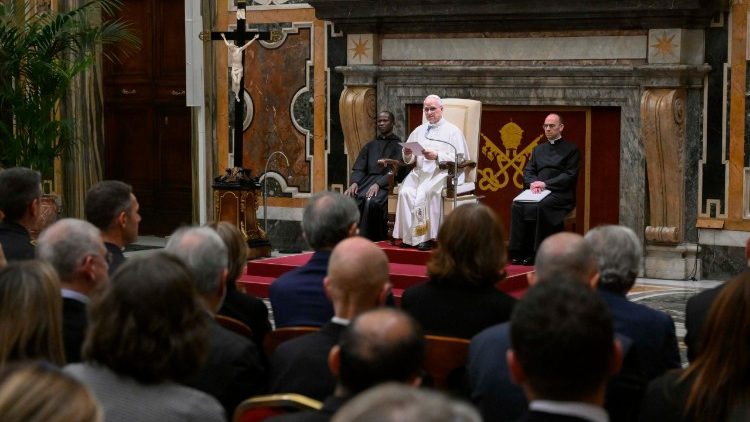

Pope Leo XIV received participants in the General Assembly of the Italian National Transplant Network at the Vatican. During his address, the Pontiff expressed his gratitude for the commitment of doctors, healthcare professionals, and volunteers who serve human life in its most fragile moments, and commemorated the anniversary of the first organ donations in Italy.
Exactly 70 years ago, Blessed Carlo Gnocchi requested that, after his death, his corneas be harvested and transplanted into two young men assisted by his work, who regained their sight. This gesture, made in a context lacking comprehensive legislation, sparked widespread reflection in Italian society and paved the way for legal regulation. A few weeks later, Pope Pius XII offered initial moral guidance, recognizing the licitness of organ donation for therapeutic purposes, always with respect for the dignity of the human body and the rights of the individuals involved.
Since then, the Church has accompanied the development of transplant medicine, valuing its advances and establishing necessary ethical criteria. Pope Leo XIV highlighted the international results achieved by the Italian Transplant Network thanks to decades of scientific research and human dedication. Citing the encyclical Evangelium vitae of Saint John Paul II, he recalled that “organ donation carried out in an ethically acceptable manner deserves special appreciation,” since it unites the generosity of the gift with the accompanying moral responsibility. Likewise, the Catechism of the Catholic Church affirms that “organ donation after death is a noble and meritorious act and should be encouraged as a manifestation of generous solidarity,” always with informed consent and respect for the dignity of the person.
The Holy Father stressed the need for “constant vigilance” to prevent any form of commodification of the human body and to ensure that transplants are governed by fair and transparent criteria. “Transplant medicine reminds us that a relationship of care, trust, and mutual responsibility is an essential condition,” he noted, adding that “the very possibility of saving lives through transplants depends on the generosity of donors.”
Leo XIV echoed the words of Pope Francis, who emphasized that giving is not limited to its social utility, but rather constitutes an expression of universal fraternity . It is a gratuitous gesture that must remain as such, a testament to a culture of assistance, of giving, of hope, and of life. In a time when everything tends to be evaluated according to the logic of price, efficiency, or self-interest, this reminder takes on special significance.
The Pope encouraged scientific research to continue developing more effective solutions to meet the demand for organs, which still far exceeds availability. However, he stressed that this progress must always be accompanied by responsible reflection, “so that scientific advancement remains oriented toward the integral good of the person and respect for their dignity.”
Finally, the Pope expressed his gratitude for the demanding and often unseen work of those dedicated to transplantation, which requires competence, rigor, conscience, balance, and a profound sense of humanity. He urged them to continue with fidelity and dedication, “always keeping the patient’s well-being as their guiding principle.” He also encouraged institutions and the volunteer community to intensify their efforts to inform and raise awareness, “so that a culture of increasingly conscious, free, and shared donation may grow, one capable of recognizing in this act a sign of solidarity, fraternity, and hope.”

Exaudi Staff
What is Exaudi News? Exaudi News is an international Catholic media outlet that informs, shapes, and transforms daily in Spanish, English, and Italian. Through news, analytical articles, and live broadcasts of the Pope's events, Exaudi seeks to strengthen Christian unity and contribute to the evangelization of the world, always guided by the Church's social doctrine. We work to bring Christian truth and values to every corner of the planet. Help us transform the world with Exaudi! At Exaudi, we believe that evangelization and quality information can change lives. To continue our mission and expand our reach, we need your help. In addition, we are looking for committed people to join our team. With your support, we will reach more people, spread the message of Christ, and strengthen Christian unity. Will you join our mission? For more information on how to collaborate, visit Exaudi.org or contact us directly: [email protected] Exaudi: Informs, educates, and transforms.
Related
Pope Leo XIV to the new Archbishop of Canterbury: “Let us continue to dialogue in truth and love”
Exaudi Staff
26 March, 2026
3 min
Pope Leo XIV: The Church hierarchy is born of Christ to proclaim the Gospel
Exaudi Staff
25 March, 2026
8 min
Leo XIV: “Cease fire and work for peace through dialogue”
Exaudi Staff
25 March, 2026
1 min
“Airplanes must always be carriers of peace, never of war”
Exaudi Staff
24 March, 2026
5 min