(EN)
(EN)
 (ES)
(ES)
 (IT)
(IT)

Pope Leo XIV: Death, not a dark end, but a luminous threshold to eternity
In his General Audience of December 10, the Pontiff invited the faithful to contemplate the resurrection of Christ as an antidote to contemporary fear, criticized transhumanist illusions, and called for reconciliation in a divided world
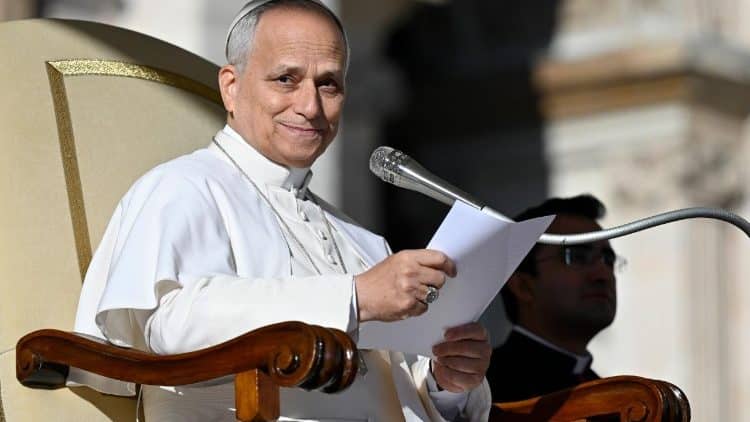

In a profound and meditative catechesis, the Pope delved into the mystery of death, presenting it not as a modern taboo nor as the tragic epilogue of existence, but as a “step toward the fullness of light” illuminated by the resurrection of Christ. This reflection, part of the series “Jesus Christ, Our Hope,” resonated powerfully in a time marked by technological advances that promise immortality but, according to the Pope, do not resolve the deepest longing of the human heart.
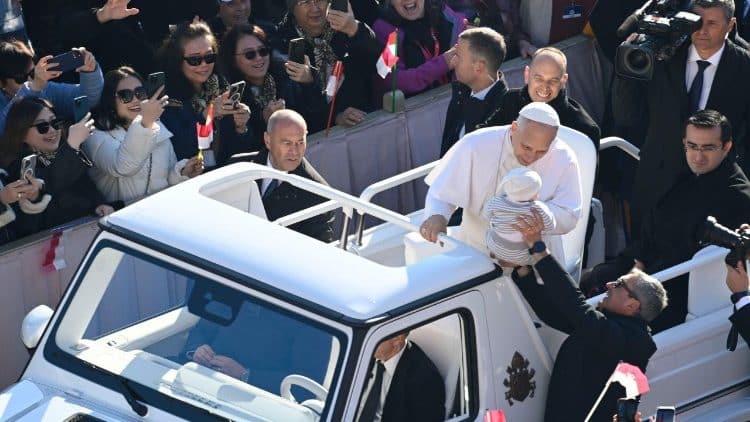
The Holy Father, visibly moved as he blessed a baby in its mother’s arms and a group of children waving small flags, began his address by recalling the inherent paradox of death: “It is natural because every living being on earth dies. It is unnatural because the desire for life and eternity that we feel for ourselves and for those we love makes us see death as a condemnation, as a ‘contradiction.’” In a world where death has become a “taboo”—avoided in conversation to preserve inner peace, unlike ancient cultures that ritualized it—Leo XIV urged those present to face it head-on. “Knowing that death exists, and above all reflecting on it, teaches us to choose what we truly want to do with our lives,” he affirmed, quoting Saint Alphonsus Liguori, who described it as a “great teacher of life” that invites us to discern the ephemeral from the eternal through prayer.
The core of the catechesis revolved around the resurrection of Jesus, evoked from the Gospel of Luke (Lk 23:52-54), which recounts the burial of Christ’s body under the “lights of the Sabbath,” prefiguring the Easter dawn. “The Risen One went before us in the great trial of death, emerging victorious thanks to the power of divine Love. Thus, he has prepared for us the place of eternal rest, the home where we are awaited; he has given us the fullness of life in which there are no longer shadows or contradictions,” the Pope proclaimed, emphasizing that only this event fully illuminates the enigma of death. “The new light of the Resurrection. Only this event can fully illuminate the mystery of death. In this light, and in this light alone, the deepest hope of the human heart becomes true: that death is not the end, but the passage to the fullness of light, to a happy eternity.”
In a passage that resonated with current ethical debates, Leo XIV questioned the promises of transhumanism, that contemporary anthropological vision that aspires to “immanent immortality” through technology. “Can science truly conquer death? But then, could science itself guarantee that a life without death is also a happy life?” the Pope asked, warning against the illusion of an earthly eternity that ignores the human desire for transcendence. Inspired by St. Francis of Assisi, he invited us to call death “sister,” freeing us from the fear of disappearing and preparing us for the “joy of life without end.” This Christian perspective, he emphasized, transforms suffering and trials into hope, reminding us that “our time on earth prepares us for eternity.”
The audience was not limited to theological reflection. In his closing remarks, the Pope extended a moving message to the Polish faithful, commemorating the 60th anniversary of the letter from the Polish bishops to their German brothers in 1965, which, with the words “We forgive and ask for forgiveness,” paved the way for post-war European reconciliation. “May the words of that document—’We forgive and ask for forgiveness’—be for the nations in conflict today a testament that reconciliation and forgiveness are possible when they arise from a mutual desire for peace and from common action, truly for the good of humanity,” said Leo XIV, blessing the organizers of a conference held the previous day at the Pontifical Gregorian University.
Furthermore, the Pope expressed his “deep sadness” over the renewed conflict on the border between Thailand and Cambodia, where civilians have lost their lives and thousands have been displaced. “I express my closeness in prayer to these beloved people and ask the parties to immediately cease fire and resume dialogue,” he implored, offering a prayer for peace in that Asian region.
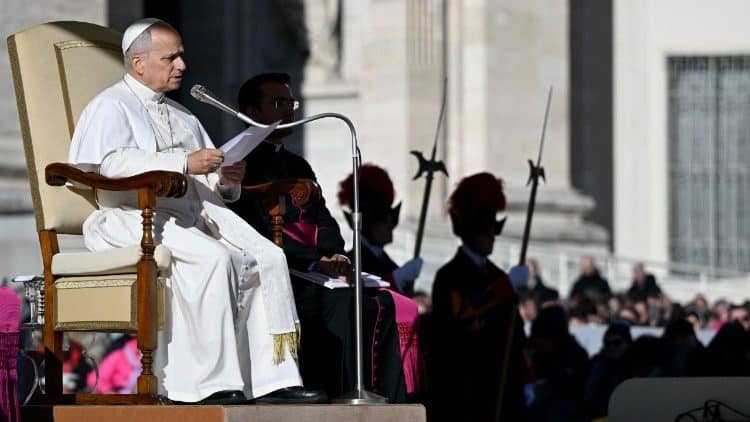
At the conclusion of the audience, Pope Leo XIV extended an open invitation: that the resurrection of Christ may illuminate our daily lives, dispelling the shadows of fear and opening horizons of eternal hope. In a world accelerated by innovation, his voice of reminder—authentic and pastoral—invites us to a contemplative pause, reminding us that true life is not achieved in laboratories, but in the mystery of divine Love.
Text:
LEO XIV
GENERAL AUDIENCE
St Peter’s Square
Wednesday, 10 December 2025
___________________________________
Cycle of Catechesis – Jubilee 2025. Jesus Christ our hope. IV. The Resurrection of Christ and the challenges of the contemporary world. 7. The Pasch of Jesus Christ: the final answer to the question of our death.
Dear brothers and sisters, good morning! Welcome to you all!
The mystery of death has always raised profound questions in human beings. Indeed, it seems to be the most natural and at the same time most unnatural event that exists. It is natural, because every living being on earth dies. It is unnatural, because the desire for life and eternity that we all feel for ourselves and for the people we love makes us see death as a sentence, as a “contradiction”.
Many ancient peoples developed rites and customs linked to the cult of the dead, to accompany and to recall those who journeyed towards the supreme mystery. Today, however, we see a different trend. Death seems to be a sort of taboo, an event to keep at a distance; something to be spoken of in hushed tones, to avoid disturbing our sensibilities and our tranquillity. This is often why we avoid visiting cemeteries, where those who have gone before us rest as they await resurrection.
So what is death? Is it truly the last word on our lives? Only human beings ask themselves this question, because only they know they must die. But being aware of this does not save them from death; on the contrary, in a certain sense it “burdens” them compared to other living creatures. Animals suffer, of course, and they realize that death is near, but they do not know that death is part of their destiny. They do not question the meaning, purpose and outcome of life.
Considering this aspect, one might then think that we are paradoxical, unhappy creatures, not only because we die, but also because we are certain that this event will happen, even though we do not know how or when. We find ourselves aware and at the same time powerless. This is probably where the frequent repressions and existential flights from the question of death originate.
Saint Alphonsus Maria de’ Liguori, in his famous work Apparecchio alla morte (Preparation for Death), reflects on the pedagogical value of death, emphasizing that it can be a great teacher of life. To know that it exists, and above all to reflect on it, teaches us to choose what we really want to make of our existence. Praying, in order to understand what is beneficial in view of the kingdom of heaven, and letting go of the superfluous that instead binds us to ephemeral things, is the secret to living authentically, in the awareness that our passage on earth prepares us for eternity.
Yet many current anthropological views promise immanent immortality, theorize the prolongation of earthly life through technology. This is the transhuman scenario, which is making its way into the horizon of the challenges of our time. Could death really be defeated by science? But then, could science itself guarantee us that a life without death is also a happy life?
The event of the Resurrection of Christ reveals to us that death is not opposed to life, but rather is a constitutive part of it, as the passage to eternal life. The Pasch of Jesus gives us a foretaste, in this time still full of suffering and trials, of the fullness of what will happen after death.
The Evangelist Luke seems to grasp this harbinger of light in the dark when, at the end of that afternoon when darkness had shrouded Calvary, he writes: “It was the day of Preparation, and the sabbath was beginning” (Lk 23:54). This light, which anticipates Easter morning, already shines in the darkness of the sky, which still appears overcast and mute. The lights of the Sabbath, for the first and only time, herald the dawn of the day after the Sabbath: the new light of the Resurrection. Only this event is capable of illuminating the mystery of death to its full extent. In this light, and only in this, what our heart desires and hopes becomes true: that death is not the end, but the passage towards full light, towards a happy eternity.
The Risen One has gone before us in the great trial of death, emerging victorious thanks to the power of divine Love. Thus, he has prepared for us the place of eternal rest, the home where we are awaited; he has given us the fullness of life in which there are no longer any shadows and contradictions.
Thanks to Him, who died and rose again for love, with Saint Francis we can call death our “sister”. Awaiting it with the sure hope of the Resurrection preserves us from the fear of disappearing forever and prepares us for the joy of life without end.
____________________
APPEAL
I am deeply saddened by the news of the renewed conflict along the border between Thailand and Cambodia, which has claimed civilian lives and forced thousands of people to flee their homes. I express my closeness in prayer to these dear peoples, and I call on the parties to immediately cease fire and resume dialogue.
____________________________________________________
Special greetings:
I extend a warm welcome this morning to all the English-speaking pilgrims and visitors taking part in today’s Audience, especially those coming from England, Wales, Malta, Uganda, Australia, Japan, Malaysia, Singapore and the United States of America. I pray that each of you, and your families, may experience a blessed Advent in preparation for the coming of the new born Jesus, Son of God and Savior of the world. God bless you all!
_____________________________
Summary of the Holy Father’s words:
Dear brothers and sisters:
In today’s catechesis, we continue our reflection on the Jubilee theme of “Jesus Christ our Hope,” by considering death in the light of the Resurrection. As human beings, we are aware that our life here on earth will one day come to an end. Our present culture tends to fear death and seeks to avoid thinking about it, even turning to medicine and science in search of immortality. The Gospel passage we listened to invites us to look forward to the dawn of the Resurrection. Jesus has passed from death to life as the firstfruit of a new creation. The light of his victory illuminates our own mortality, reminding us that death is not the end, but a passing from this life into eternity. Therefore, death is not something to be feared, but rather a moment to prepare for. It is an invitation to examine our lives and so live in such a way that we may one day share not only in the death of Christ, but also in the joy of eternal life.

Exaudi Staff
What is Exaudi News? Exaudi News is an international Catholic media outlet that informs, shapes, and transforms daily in Spanish, English, and Italian. Through news, analytical articles, and live broadcasts of the Pope's events, Exaudi seeks to strengthen Christian unity and contribute to the evangelization of the world, always guided by the Church's social doctrine. We work to bring Christian truth and values to every corner of the planet. Help us transform the world with Exaudi! At Exaudi, we believe that evangelization and quality information can change lives. To continue our mission and expand our reach, we need your help. In addition, we are looking for committed people to join our team. With your support, we will reach more people, spread the message of Christ, and strengthen Christian unity. Will you join our mission? For more information on how to collaborate, visit Exaudi.org or contact us directly: [email protected] Exaudi: Informs, educates, and transforms.
Related
Pope Leo XIV Receives Advanced Telemedicine Equipment for Global Children’s Healthcare
Exaudi Staff
05 March, 2026
1 min
Leo XIV: “There is no ideal Church separate from history, but the one Church of Christ, fragile and divine, where God makes himself present in our littleness”
Exaudi Staff
04 March, 2026
7 min
Pope Leo XIV: “Enough of hatred and weapons! Peace is built through dialogue”
Exaudi Staff
04 March, 2026
2 min
Pope Leo XIV Calls for Dialogue Amid Escalating War in the Middle East
Exaudi Staff
03 March, 2026
2 min