 (EN)
(EN)
 (ES)
(ES)
 (IT)
(IT)

Pasolini: A free life consists of always loving and enduring pain without being defeated
The Preacher to the Papal Household, Father Roberto Pasolini, concludes his Lenten meditations reflecting on the figure of Saint Francis of Assisi, his acceptance of fragility, and his true joy in the face of rejection and death
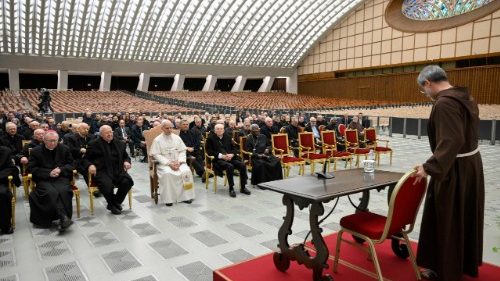

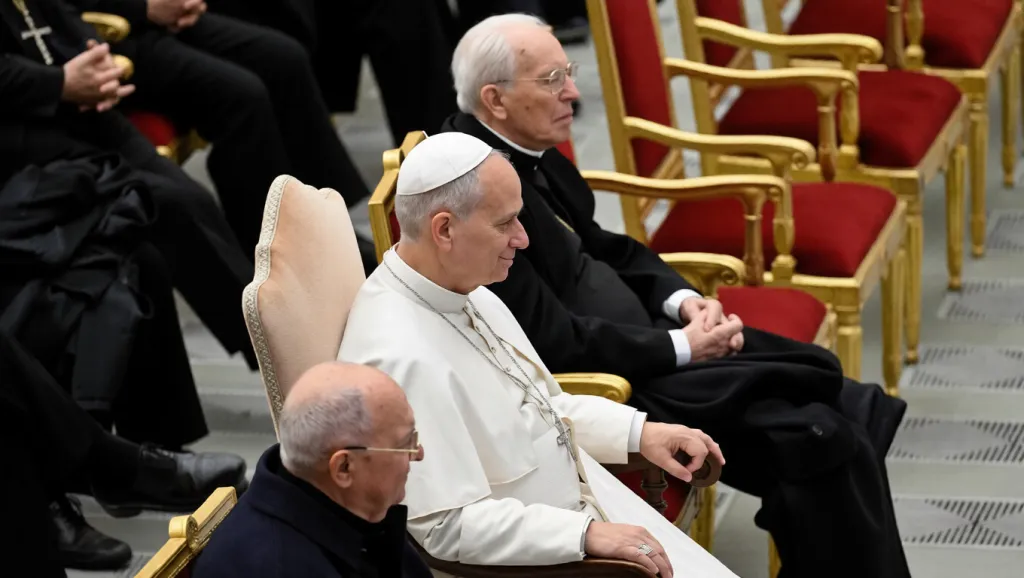
The Gospel empowers us on a path of purification and conversion that leads to the freedom of the children of God. With this idea, Father Roberto Pasolini, Preacher to the Papal Household, concluded the fourth and final Lenten meditation on March 27th in the Paul VI Audience Hall, in the presence of Pope Leo XIV.
The Capuchin friar took the figure of Saint Francis of Assisi as his guide in the final stage of his earthly life. Francis learned to accept his own fragility and insignificance, discovering that nothing—neither rejection, illness, nor death—can separate us from the love of God. This year’s meditations, centered on the theme “Whoever lives in Christ is a new creation,” have been inspired by the Little Poor Man of Assisi as a path to conversion to the Gospel, whose mature fruit is precisely the freedom of the children of God.
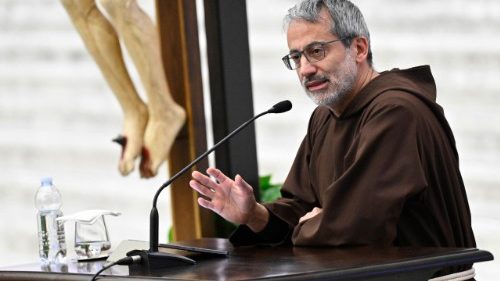
According to Father Pasolini, Francis became a saint because he allowed himself to be guided by God in the concreteness and poverty of his existence, welcoming the Holy Spirit with complete openness. Toward the end of his life, he had become a “living prayer,” as Thomas of Celano noted: his entire way of life had become a continuous prayer.
However, in his later years, Francis went through a profound crisis. The Order of Friars Minor grew and transformed, and he felt sidelined, almost useless, and even considered an “idiot.” In that context, he shared with Friar Leo the famous parable of “true and perfect joy.” He asked him to list beautiful things that could be a source of pride for him and for the Church, but at the end, he instructed him to write: “In all these things, there is no perfect joy.” Authentic joy is manifested when rejection, humiliation, and misunderstanding fail to rob us of our peace.
“Happiness is not about protecting ourselves from reality, but about learning to embrace it even when it hurts, without letting it overwhelm us. That is where the Christian life becomes concrete, and we learn to safeguard a joy that does not depend on how things are going, but on how we choose to live them,” the preacher explained.
Thus, true joy does not consist in the absence of wounds, but in the freedom not to be defined by them. It does not erase pain, but it prevents it from having the last word. Jesus shows this in the Gospel, especially in the Beatitudes, which are not a law or a program for moral perfection, but a promise: the revelation of a happiness that is already at work in the heart of reality.
The Beatitudes do not invite us to flee from reality or postpone happiness. They ask us to live more deeply what we are experiencing, even when it appears fragile and unfinished. They proclaim that the path to a full life passes through our concrete experience. Life should not be postponed or idealized, but embraced in its tragic and sublime concreteness. Gospel joy does not eliminate wounds, but rather pierces through them and transforms them, opening us to the greatest love, the love that forgives.
Father Pasolini also recalled the stigmata Francis received on Mount La Verna. God does not add pain to glorify himself; he transforms and transfigures what is already present in a person’s history, turning it into a sign of love. Francis climbed La Verna with an exhausted body, his eyes afflicted by an illness that was leading him toward blindness, and his soul marked by the temptation to feel marginalized. His sufferings—the failure of his plans, the incomprehension of his brothers, his loneliness—ceased to be an inner burden and became a place of relationship with Christ and reconciliation with others.
In the final months of his life, Francis performed the most difficult act: he learned to beg, not only for bread, but for comfort, closeness, and tenderness. He learned to receive. He accepted being cared for and recognized the poverty of those who need others both to live and to die. He called Death “sister,” not as a comforting metaphor, but as the fruit of a long journey of reconciliation. The fear of death, which, according to the Letter to the Hebrews, keeps us enslaved throughout our lives, vanishes when the love of Christ molds a new life within us. Death then becomes the final opportunity for conversion: the moment to surrender oneself without reservation to the merciful gaze of the Father.
Francis died at the Porziuncola, utterly vulnerable, naked on the bare earth, completing his journey of self-denial. This final nakedness represents complete reconciliation: ceasing to defend oneself, opening one’s arms, and learning to receive.
Thus, the path of Saint Francis is not something exceptional, but the full realization of the Gospel for every baptized person: a free life that consists of always loving and going through pain without being defeated.

Exaudi Staff
What is Exaudi News? Exaudi News is an international Catholic media outlet that informs, shapes, and transforms daily in Spanish, English, and Italian. Through news, analytical articles, and live broadcasts of the Pope's events, Exaudi seeks to strengthen Christian unity and contribute to the evangelization of the world, always guided by the Church's social doctrine. We work to bring Christian truth and values to every corner of the planet. Help us transform the world with Exaudi! At Exaudi, we believe that evangelization and quality information can change lives. To continue our mission and expand our reach, we need your help. In addition, we are looking for committed people to join our team. With your support, we will reach more people, spread the message of Christ, and strengthen Christian unity. Will you join our mission? For more information on how to collaborate, visit Exaudi.org or contact us directly: [email protected] Exaudi: Informs, educates, and transforms.
Related
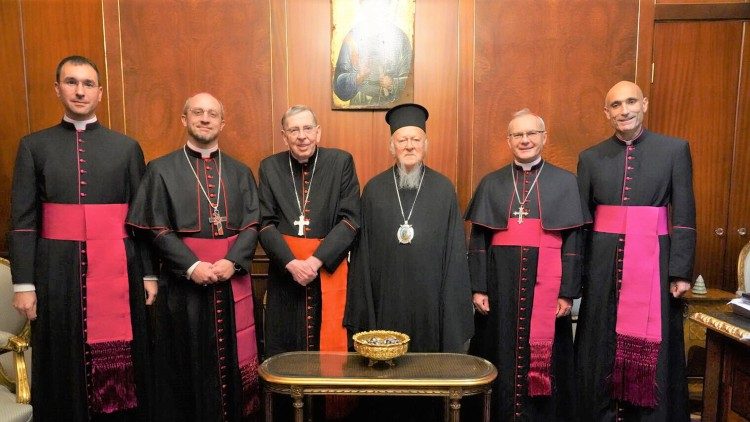
The Dicastery for Promoting Christian Unity
Exaudi Staff
26 March, 2026
4 min
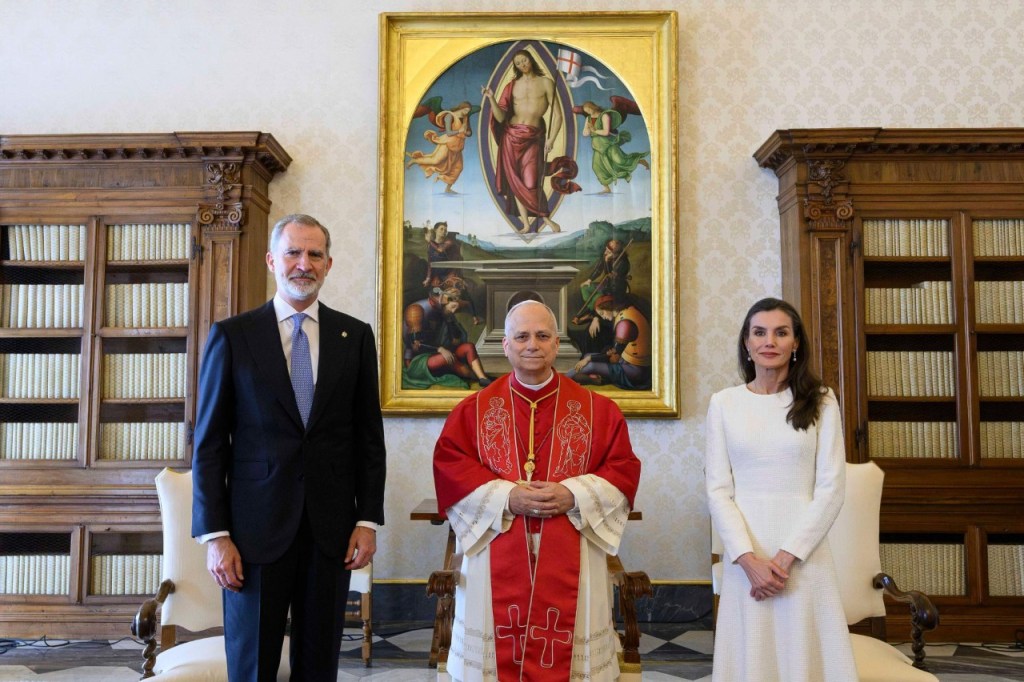
Pope Leo XIV receives the King and Queen of Spain in audience
Exaudi Staff
20 March, 2026
2 min
The Christian mission is born from a transformed life
Exaudi Staff
20 March, 2026
2 min

The Dicastery for the Causes of Saints
Exaudi Staff
19 March, 2026
6 min