 (EN)
(EN)
 (ES)
(ES)
 (IT)
(IT)

Mary leads us to Christ: Pope Leo XIV presides over the Marian Jubilee Mass
During the celebration in St. Peter's Square, the Pontiff insisted that true Marian spirituality points to Jesus Christ as the center of conversion and Christian life
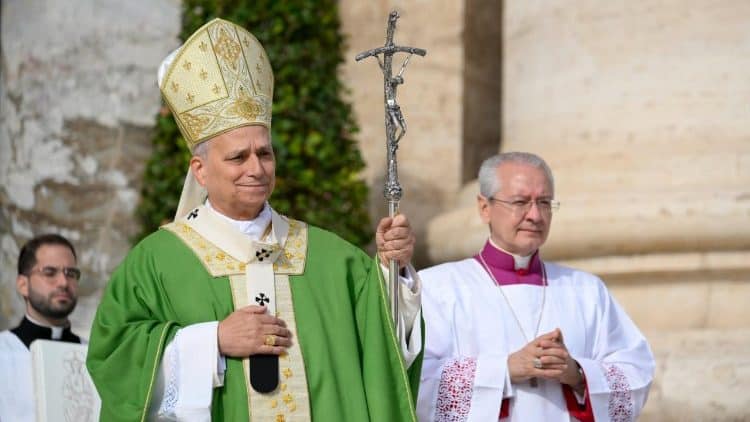

On Sunday morning, before thousands of faithful gathered in St. Peter’s Square, Pope Leo XIV celebrated Mass for the Jubilee of Marian Spirituality. In his homily, the Pontiff invited believers to contemplate Mary not as a separate figure, but as the one who guides us toward Christ, the true axis of the Christian faith.
At the beginning of his reflection, the Pope recalled that any authentic Marian devotion must have Jesus as its foundation. “The Marian spirituality that nourishes our faith must be oriented toward Him. Like the Sunday that inaugurates each week, on the horizon of His resurrection,” he affirmed. Quoting the Apostle Paul, he added that Sunday “makes us Christians” by fixing our memory on Jesus, transforming our thinking, our feelings, and our relationships.
Lesson from the Healing of Naaman
The Pontiff continued by evoking the story of Naaman the Syrian, as a symbol of a true conversion that does not depend on mere human distinctions. He noted that if Naaman had clung only to his honors, he would have remained closed off in his illness. Instead, by opening himself to divine grace, he accessed the healing that only the Lord can offer. “Jesus does not wear armor or reveal strategies—he enters our lives with simplicity and stripping himself,” the Holy Father reflected.
In the face of a culture focused on achievements, titles, and recognition, the Pope warned that God’s love cannot be earned or measured: “The fewer titles we display, the more evident it will be that love is a pure gift, a grace.” This truth, he added, can be uncomfortable in a world always seeking to justify itself.
Faith as an encounter, not a display
The Pontiff warned against superficial religiosity: “We must avoid going up to the temple without following Jesus.” He indicated that there are forms of worship that isolate the heart and do not generate communion. The authentic practice of faith, he explained, demands openness, commitment, and closeness, just as Mary demonstrated with her “Magnificat.”
He also warned against the temptation to exploit faith, turning the most vulnerable into obstacles or enemies for those who want to maintain control or privilege.
Mary, walking towards the humble
For Pope Leo XIV, the Marian path is inseparably linked to that of Jesus, who always chose to reach out to the poor, the wounded, and sinners. Our Lady added, manifesting in her life that humility and tenderness are not signs of weakness, but of strength: “We do not need to trample others to feel great.”
In this sense, Marian spirituality becomes a life-giving presence within the Church—a manifestation of divine motherhood—that reminds us that tenderness has transformative power.
Call for peace and justice
In his final message, the Pope urged us to keep Christian spirituality alive and to cultivate popular devotion in sacred places that have marked history. He urged us to use this Jubilee celebration to inspire us to build peace and justice in the world, making the Gospel present through our actions and attitudes.
***
Homily of the Pope
JUBILEE OF MARIAN SPIRITUALITY
HOLY MASS
HOMILY BY HIS HOLINESS POPE LEO XIV
St Peter’s Square
28th Sunday in Ordinary Time, 12 October 2025
Dear sisters and brothers,
The Apostle Paul exhorts each of us today, as he did to Timothy: “Remember Jesus Christ, raised from the dead, a descendant of David” (2 Tim 2:8). Marian spirituality, which nourishes our faith, has Jesus as its center. It is like Sunday, which opens each new week in the radiance of his Resurrection from the dead. “Remember Jesus Christ”: this alone matters; this is what distinguishes human spiritualities from the way of God. “Chained like a criminal,” (v. 9) Paul urges us not to lose sight of what is essential, and not to strip the name of Jesus of its history and of its cross. What we consider inordinate and crucify, God raises up because “he cannot deny himself” (v. 13). Jesus is God’s faithfulness, God’s faithfulness to himself. The celebration of Sunday, therefore, should make us Christians. It should fill our thoughts and feelings with the burning memory of Jesus and change the way we live together and the way we inhabit the earth. Every Christian spirituality flows from this fire and helps to keep it alive.
The reading from the Second Book of Kings (5:14-17) recounts the healing of Naaman, the Syrian. Jesus himself referred to this passage when he was in the synagogue in Nazareth (cf. Lk 4:27), and his interpretation had a disconcerting effect on the people of his hometown. To say that God had saved a foreigner suffering from leprosy rather than the many lepers in Israel turned them against him: “When they heard this, all in the synagogue were filled with rage. They got up, drove him out of the town, and led him to the brow of the hill on which their town was built, so that they might hurl him off the cliff” (Lk 4:28-29). The Evangelist makes no mention of the presence of Mary. She may have been present to witness what the elderly Simeon had announced to her when she brought the newborn Jesus to the Temple: “This child is destined for the falling and the rising of many in Israel, and to be a sign that will be opposed so that the inner thoughts of many will be revealed — and a sword will pierce your own soul too’” (Lk 2:34-35).
Yes, dear friends, “the word of God is living and active, sharper than any two-edged sword, piercing until it divides soul from spirit, joints from marrow; it is able to judge the thoughts and intentions of the heart” ( Heb 4:12). Pope Francis found the story of Naaman the Syrian to be a relevant and penetrating message for the life of the Church. Speaking to the Roman Curia, he said: “Naaman was forced to live with a tragic situation: he had leprosy. His armor, that had won him renown, in reality covered a frail, wounded and diseased humanity. We often find this contradiction in our lives: sometimes great gifts are the armor that covers great frailties. […]If Naaman had continued only to accumulate medals to decorate his armor, in the end he would have been devoured by his leprosy: appearing to be alive, yet enclosed and isolated in his disease.” [1] Jesus frees us from this danger. He does not wear armor; instead he is born and dies naked. He offers his gift without forcing the healed lepers to acknowledge him: only a Samaritan in the Gospel seems to realize that he had been saved (cf. Lk 17:11-19). Perhaps the fewer titles we have to boast of, the clearer it is that love is free. God is pure gift and sheer grace. Yet how many voices and convictions can separate us even today from this stark and revolutionary truth!
Brothers and sisters, Marian spirituality is at the service of the Gospel: it reveals its simplicity. Our affection for Mary of Nazareth leads us to join her in becoming disciples of Jesus. It teaches us to return to him and to meditate and ponder the events of our lives in which the Risen One still comes to us and calls us. Marian spirituality immerses us in the history upon which heaven opened. It helps us to see the proud being scattered in their conceit, the mighty being cast down from their thrones and the rich being sent away empty-handed. It impels us to fill the hungry with good things, to lift up the lowly, to remember God’s mercy and to trust in the power of his arm (cf. Lk 1:51-54). Jesus invites us to be part of his Kingdom, just as he asked Mary for her “yes,” which, once given, was renewed every day.
The lepers in the Gospel who do not return to give thanks remind us that God’s grace can touch us and find no response. It can heal us, yet we can still fail to accept it. Let us take care therefore not to go up to the temple in such a way that does not lead us to follow Jesus. Some forms of worship do not foster communion with others and can numb our hearts. In these cases, we fail to encounter the people God has placed in our lives. We fail to contribute, as Mary did, to changing the world, and to share in the joy of the Magnificat. Let us take care to avoid any exploitation of the faith that could lead to labelling those who are different — often the poor — as enemies, “lepers” to be avoided and rejected.
Mary’s path follows that of Jesus, which leads us to encounter every human being, especially the poor, the wounded and sinners. Because of this, authentic Marian spirituality brings God’s tenderness, his way of “being a mother,” to light in the Church. As we read in the Apostolic Exhortation Evangelii Gaudium, “whenever we look to Mary, we come to believe once again in the revolutionary nature of love and tenderness. In her, we see that humility and tenderness are not virtues of the weak but of the strong who need not treat others poorly in order to feel important themselves. Contemplating Mary, we realize that she who praised God for ‘bringing down the mighty from their thrones’ and ‘sending the rich away empty’ (Lk 1:52-53) is also the one who brings a homely warmth to our pursuit of justice” (no. 288).
Dear friends, in a world seeking justice and peace, let us revive Christian spirituality and popular devotion to the events and places blessed by God that have changed the face of the earth forever. Let us use them as a driving force for renewal and transformation. Indeed, the Jubilee we are celebrating calls for a time of conversion and restitution, of reflection and liberation. May Mary Most Holy, our hope, intercede for us and continue to lead us to Jesus, the crucified Lord. In him, there is salvation for all.
[1] Address to the Roman Curia, 23 December 2021.

Exaudi Staff
What is Exaudi News? Exaudi News is an international Catholic media outlet that informs, shapes, and transforms daily in Spanish, English, and Italian. Through news, analytical articles, and live broadcasts of the Pope's events, Exaudi seeks to strengthen Christian unity and contribute to the evangelization of the world, always guided by the Church's social doctrine. We work to bring Christian truth and values to every corner of the planet. Help us transform the world with Exaudi! At Exaudi, we believe that evangelization and quality information can change lives. To continue our mission and expand our reach, we need your help. In addition, we are looking for committed people to join our team. With your support, we will reach more people, spread the message of Christ, and strengthen Christian unity. Will you join our mission? For more information on how to collaborate, visit Exaudi.org or contact us directly: [email protected] Exaudi: Informs, educates, and transforms.
Related
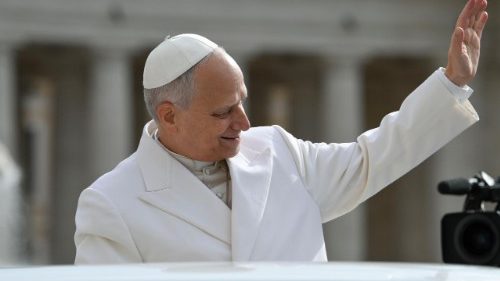
“The laity are the Church in the world”: Leo XIV calls the faithful to be courageous witnesses of the faith in society
Exaudi Staff
01 April, 2026
4 min
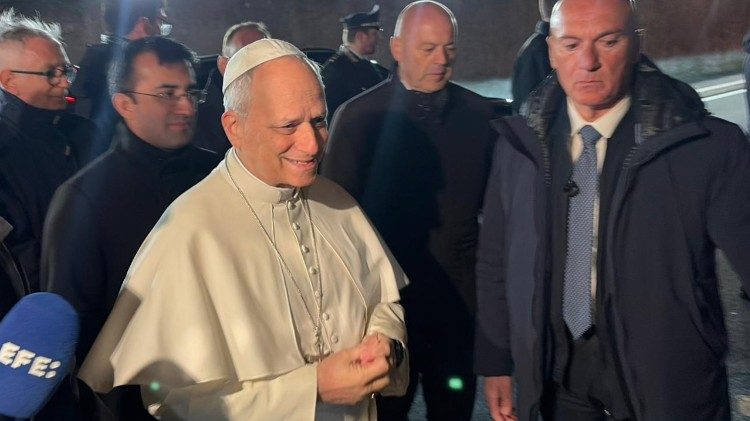
Pope Leo XIV Urges World Leaders to Seek Solutions for Peace
Exaudi Staff
31 March, 2026
2 min
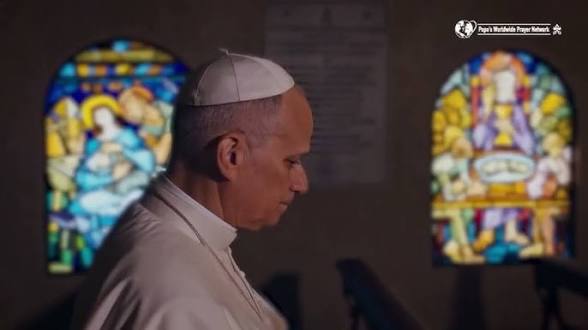
Pope Leo XIV invites us to pray for priests in crisis
Exaudi Staff
31 March, 2026
2 min
Leo XIV reorganizes the Curia and appoints new key officials in the Secretariat of State and the Papal Household
Exaudi Staff
30 March, 2026
4 min