 (EN)
(EN)
 (ES)
(ES)
 (IT)
(IT)

Marriage as a primordial sacrament
The union of man and woman, a sign of God's love
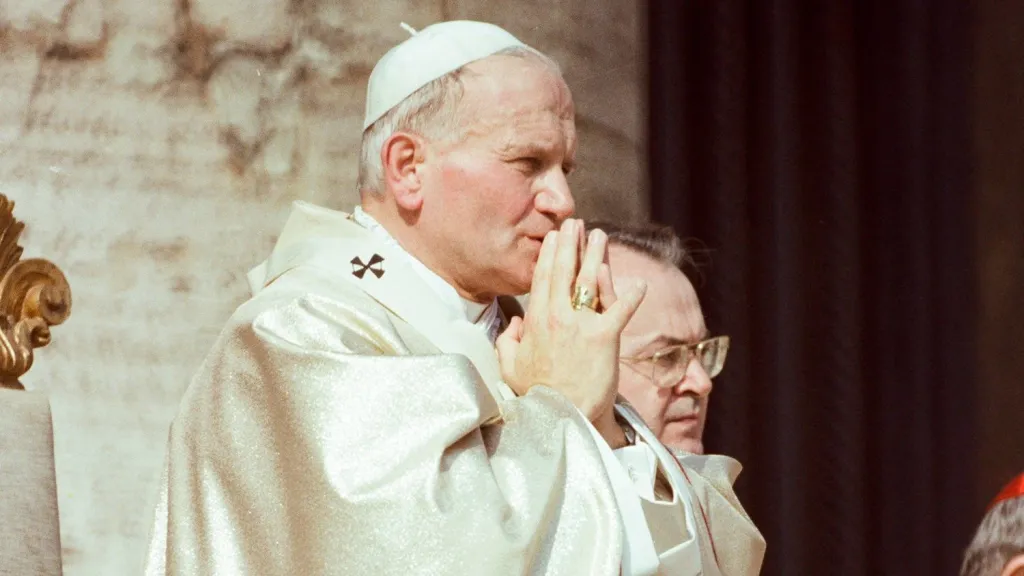

From the very beginning, God intended the union of man and woman to be a visible expression of his love. Genesis 2:24 tells us:
“Therefore a man shall leave his father and his mother, and shall cleave unto his wife, and they shall become one flesh.”
Saint John Paul II interprets this text as the natural and divine foundation of marriage, even before the fall of man. Marital union is not simply a social act, but an ontological act: man and woman, in their complementarity, reveal each other and reflect the image of God (cf. Theology of the Body, General Audience, 20/10/1982).
This complementarity is not merely physical, but spiritual and personal. The “becoming one flesh” expresses that the marital union involves the entire being: body, soul, and will. Sexuality, therefore, is not an isolated instrument of pleasure, but a language of love that communicates and participates in divine life.
Marriage as a sacrament: participation in the divine covenant
Saint Paul establishes in Ephesians 5:32:
“This is a great mystery; I say this concerning Christ and the Church.”
Here it is revealed that marriage transcends the human: it is a sacrament, that is, an efficacious sign of divine grace. Saint John Paul II insists that marriage is not simply a legal or social contract; it is a sacred act in which the spouses participate in God’s covenant with his people.
In his catecheses, John Paul II explains that Christ “restored” marriage to its original fullness, elevating it to a sacrament (cf. Theology of the Body, audiences of 1980-1984). Sacramental grace strengthens spouses, sanctifying them to live a faithful, exclusive, and life-giving love that reflects Christ’s love for the Church.
The Christ-Church relationship as a model for marriage
Saint Paul compares conjugal love with Christ’s love for the Church. This means that:
-
Marital love must be total and devoted, as Christ devotes himself to the Church.
-
It must be faithful and permanent, reflecting divine fidelity.
-
It must be fruitful, open to life and mutual sanctification.
Saint John Paul II interprets spouses as visible signs of God’s union with his people, and that every act of love within marriage reflects this mystery. In other words, marriage is understood not only as a human or social good, but as a channel of divine grace.
Marriage and Theology of the Body: A Language of Love
The Theology of the Body offers a revolutionary vision of marriage: the body is language. Spouses, in their union, communicate love, self-giving, and openness to life. Saint John Paul II notes that:
-
Sexuality expresses totality and cannot be separated from spiritual and emotional commitment.
-
The complementarity between man and woman is a living image of the creative and redemptive love of God.
-
Faithfulness and openness to life allow marriage to be an effective sacrament, reflecting God’s eternal love.
Christian marriage is a primordial sacrament because:
-
It reveals God’s intention from creation.
-
It is an effective sign of divine grace.
-
It reflects the mystery of Christ’s love for his Church.
-
Communicates a body and spiritual language that sanctifies the spouses.
Living marriage according to the Theology of the Body implies that every action, every surrender and every gesture within the marital bond is a participation in the divine covenant, a visible sign of God’s infinite love.

Patricia Jiménez Ramírez
Soy una mujer comprometida con mi familia, con una sólida experiencia empresarial y una profunda dedicación al hogar. Durante años trabajé en diversos entornos empresariales, liderando equipos y gestionando proyectos de impacto. Sin embargo, en los últimos años he tomado la decisión de centrarme en mi hogar y dedicar más tiempo a mi marido e hijos, quienes son mi mayor prioridad. Mi experiencia en el ámbito empresarial me ha brindado valiosas habilidades en gestión del tiempo, organización, liderazgo y resolución de problemas, que ahora aplico en mi vida familiar para fomentar un ambiente armonioso y saludable para todos
Related

Abortion: The Catholic Church and the message of the last five Popes
Patricia Jiménez Ramírez
10 April, 2026
3 min
When Heaven Bends to Embrace Human Suffering
Sonia Clara del Campo
10 April, 2026
6 min
Saint Thomas More: A Non-Negotiable Conscience
Javier Ferrer García
08 April, 2026
4 min
Grandparents as Guardians of the Memory of Faith
Miguel Morales Gabriel
08 April, 2026
7 min