 (EN)
(EN)
 (ES)
(ES)
 (IT)
(IT)

Lent 0 Ramadan 0
February 18, 2026: Lent and Ramadan begin on the same day… what if the real enemy is secularism?
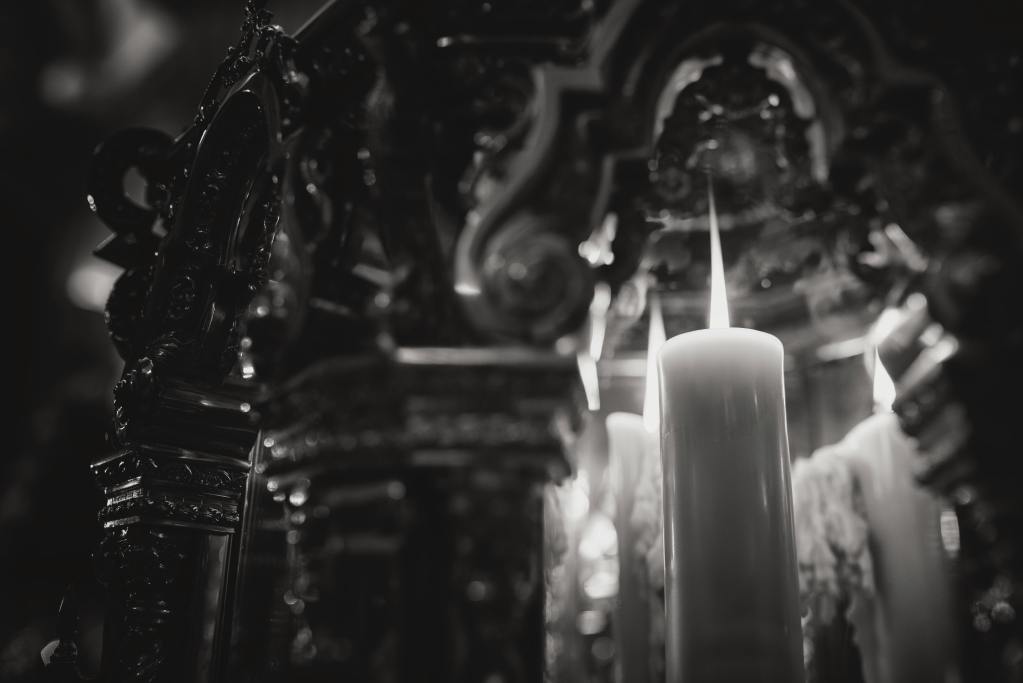

It might look like a football match or any other competition. This year, the start of Lent coincides with the start of Ramadan.
It’s possible that socially, even though we live in a country with a Christian tradition, Lent goes unnoticed. Who in our country observes the Ash Wednesday fast, abstaining from food on that day and on subsequent Fridays? Will workplace or school cafeterias offer a Lenten menu, especially on Fridays?
Rather than competing with Ramadan, we can take this opportunity to look at our Muslim brothers and sisters and deepen our faith, and explain it better to those who do not understand it, who are now the majority, and not precisely because of those who have come from outside.
In this Franciscan jubilee year, marking the eighth centenary of his death, the saint of Assisi should inspire us in our relationship with the brothers and sisters of the book. In the midst of a crusade, he dared to present himself to the Sultan seeking peace.
The conversion the saint demonstrated was his refusal to see the sultan as an enemy. A profound change. It is the first step toward true communication. When the sultan captured him, he was taken aback by his simplicity.
A realistic and peaceful perspective can lead us to discover the richness of Ramadan and to value our faith more and better.
What does Ramadan offer us? First, it emphasizes faith, God (Allah), prayer, community, sacrifice, and celebration. Our Western world experiences faith in a shameful way, as if asking for forgiveness for believing. Second, the great difference lies between a path of perfection to reach Paradise (the Quran) and a crucified God who desires communion with us to liberate us from sin and death.
If we ask Artificial Intelligence, it will tell us the external aspects of Ramadan and Lent. Nothing to do with their true meaning.
The fact that Ramadan is visible should help us to be present and visible in our communities as Christians. It would be good, for example, if we wore the symbol all day on Ash Wednesday.
And when they finish and celebrate, we will continue until Easter.
The differences between Ramadan and Lent are significant, and the two cannot be compared. Ramadan is the month of celebration commemorating the revelation of the Quran. We don’t celebrate a birthday; we renew our path of encounter with Jesus, who dies and rises again with each of us, through faith and the sacraments that arise from Easter.
The Muslim strives to be a better believer in order to attain the reward. The Christian depends on God’s mercy, which must be embraced through penitential prayer and the sacrament of reconciliation.
The other day, a good Muslim neighbor whom I admire for his devotion—he gets up early to pray before going to work—happened at the same time as my dog’s walk. The beast almost approached her in a friendly manner. The neighbor jumped back. If she touched him, it would prevent him from attending the mosque; the dog would contaminate him with impurity. He would have had to repeat the purification rituals, like showering again. For us, Lent means inner conversion, a conversion of the heart. Although we can also focus solely on the outward gestures.
But, returning to the “competition” between Lent and Ramadan, the biggest and most powerful opponent, for both religions, is secularism, or rather the irrelevance of God and the divine in our society.
Towards the end of Lent, when I ask the children in catechism what Holy Week is, most answer that it’s a vacation. If I continue asking what we do during that time, they often say we go to the snow or to the countryside. Some, who travel to places with processions, mention the commemoration of the Lord’s death and resurrection.
And when we prepare for Palm Sunday, some people ask if it is mandatory to attend.
It is clear that it is the families who have distanced themselves from church life, rather than the children.
There is no aversion to faith, but the trivialization of it is even worse.
Both Ramadan and Lent call for conversion, putting God at the goal.
Perhaps our world believes it doesn’t need God. But it desperately seeks a happiness it cannot find, a family, social, and global peace that it also cannot find.
In his address to digital influencers and missionaries last July, Pope Leo XIII affirmed: “This is the mission of the Church: to proclaim peace to the world. The peace that comes from the Lord, who conquered death, who brings us God’s forgiveness, who gives us the life of the Father, who shows us the path of Love. Peace needs to be sought, proclaimed, and shared everywhere; both in the dramatic scenes of war and in the empty hearts of those who have lost the meaning of existence and the taste for interiority, the taste for spiritual life. And today, perhaps more than ever, we need missionary disciples who bring the gift of the Risen Lord to the world; who give voice to the hope that the living Jesus gives us, to the ends of the earth (cf. Acts 1:3-8); who reach wherever there is a heart that waits, a heart that seeks, a heart that needs. Yes, to the ends of the earth, to the existential limits where there is no hope.”
Lent doesn’t guarantee peace, but it does show us the way. It will be a good opportunity to preach it through our lives. Happy Lent.

Alfons Gea
Licenciado en Teología en Facultad de Teología de Barcelona (1988). Diplomado en Magisterio – profesor EGB. Universidad de Barcelona (1990). Licenciado en Psicopedagogia. Universidad Ramón Llull, (1994). Responsable del Servicio de Atención al Duelo de Funeraria Municipal de Terrassa (2001-2022). Terapeuta en Gabinete Gedi - Psicología aplicada (2022). Párroco de St. Viucente de Jonquereas, de Sabadell (2012). Articulista en revistas especializadas y prensa comarcal. Formador en atención al duelo de profesionales sanitarios y sociosanitarios: Trabajadoras sociales, psicólogas/os, médicas, enfermería, maestras (1995). Ha participado en varios programas de opinión y debate de televisiones y radios nacionales. Anteriormente ejerció como asistente espiritual de los hospitales en Terrassa: San Lázaro, Mutua, y Hospital de Terrassa (1997-2018. Fue párroco de la parroquia Virgen de Montserrat de Terrassa (1997-2013) y responsable de Formación de la Delegación de Pastoral de la Salud de la diócesis de Barcelona (1995-2005). Delegado episcopal de Pastoral de la salud de la diócesis de Terrassa (2005-2012). Coordinador de la Pastoral de la Salud de la Conferencia episcopal catalana. Maestro de EGB, Coordinador de secundaria, subdirector de escuela, jefe de gabinete psicopedagógico, fundador y director del Centro Sara – casa de acogida para enfermos de SIDA, educador en situaciones de riesgo social, Fundador del Taller Solidario – centro de inserción laboral.
Related
Spiritual Accompaniment
Rosa Montenegro
16 February, 2026
4 min
Valentine’s Day: Do We Know How to Love?
María José Calvo
14 February, 2026
4 min
On Valentine’s Day
Exaudi Staff
14 February, 2026
3 min
Cardinal Arizmendi: Not Everything Depends on the Government
Cardenal Felipe Arizmendi
13 February, 2026
5 min