 (EN)
(EN)
 (ES)
(ES)
 (IT)
(IT)

John Paul II in the Shots of a Great Photographer: Gianni Giansanti
Photo Exhibition at Castel Sant’Angelo

Castel Sant’Angelo is one of Rome’s most important monuments, a true symbol of the Eternal City. It dominates the right bank of the Tiber River, facing the Sant’Angelo Bridge (ancient Pons Aelius). This massive structure has loomed over the Roman skyline since the year 139 AD, when Emperor Hadrian commissioned the architect Demetrius to build a funeral mausoleum for himself and his family, inspired by the Mausoleum of Augustus. The mausoleum was later transformed into a castle and modified several times throughout the medieval and Renaissance periods. By papal decree, it was connected to the Vatican via the fortified corridor known as the Passetto del Borgo.
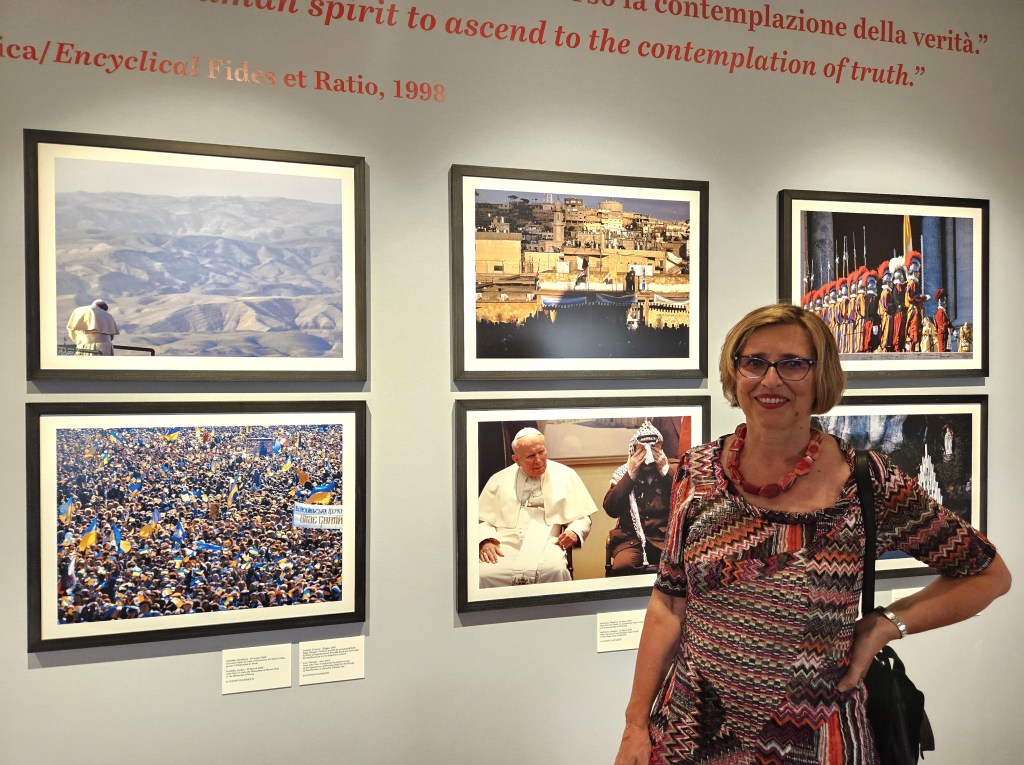
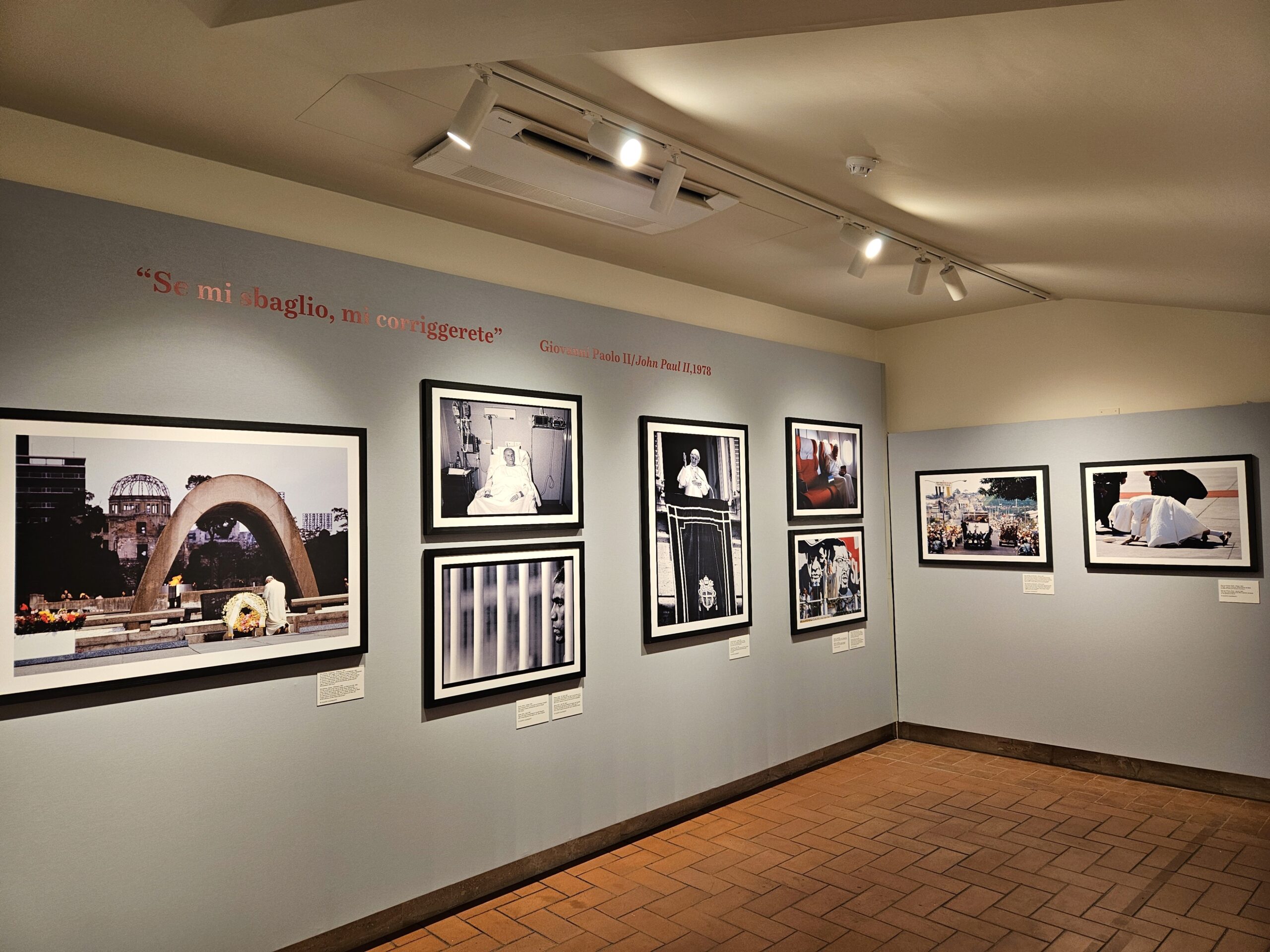
Today, Castel Sant’Angelo is a major museum and one of the most visited in Rome, also hosting significant temporary exhibitions. On Wednesday, July 16, a new exhibition opened in its halls: the photo exhibition “John Paul II: Man, Pope, Saint in the Shots of Gianni Giansanti.” It is Italy’s and the city’s tribute to Pope Wojtyla for the 2025 Holy Year.
The exhibition was organized by the prestigious Italian institution Civita Mostre e Musei, in collaboration with the Ministry of Culture, the Parliamentary Commission for Culture (attended by the Commission President, Hon. Federico Mollicone), the Polish Embassy to Italy, the Vatican Foundation John Paul II, and the Pontifical Polish College. The photographer’s family was also involved in the exhibition’s preparations.
As the organizers wrote: “This initiative aims to celebrate the memory and spiritual legacy of John Paul II, while also highlighting Gianni Giansanti’s photography as a tool for storytelling and testimony. In a symbolic place like Castel Sant’Angelo—which, during the Great Jubilee of 2000, saw the reopening of the Passetto del Borgo—the exhibition becomes a bridge between memory and the present, between art and spirituality. It is a unique opportunity to rediscover the figure of John Paul II and reflect on the value of faith and humanity.”
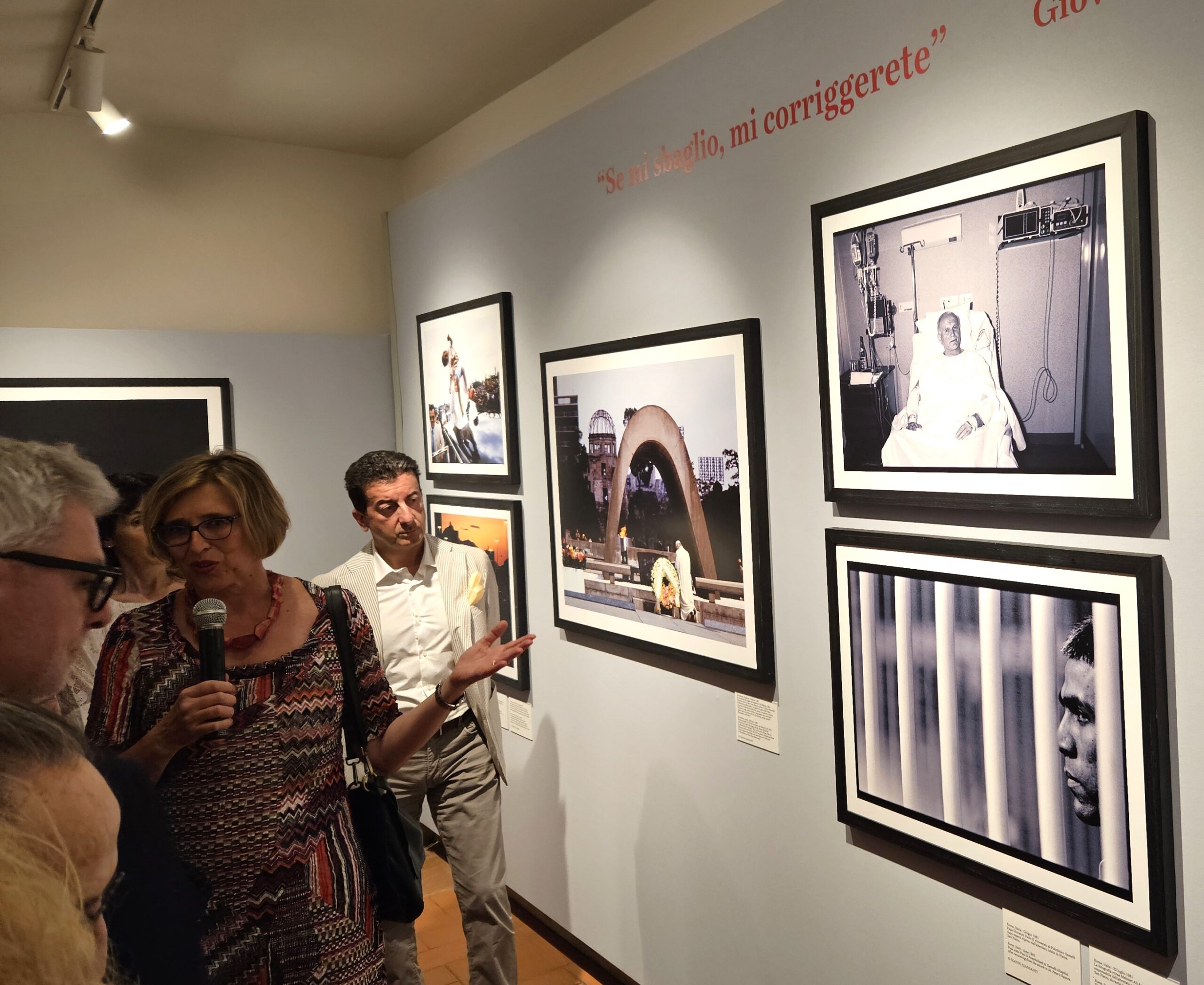
During the inauguration, the exhibition’s curator, Ilaria Schiaffini—professor of photography history at La Sapienza University—guided attendees through the exhibit and illustrated Giansanti’s art with a curated selection of photos. Giansanti was not only an exceptional documentarian but also a photographic artist. His interest in the Pope was closely tied to his fascination with contemporary history, politics, and social phenomena.
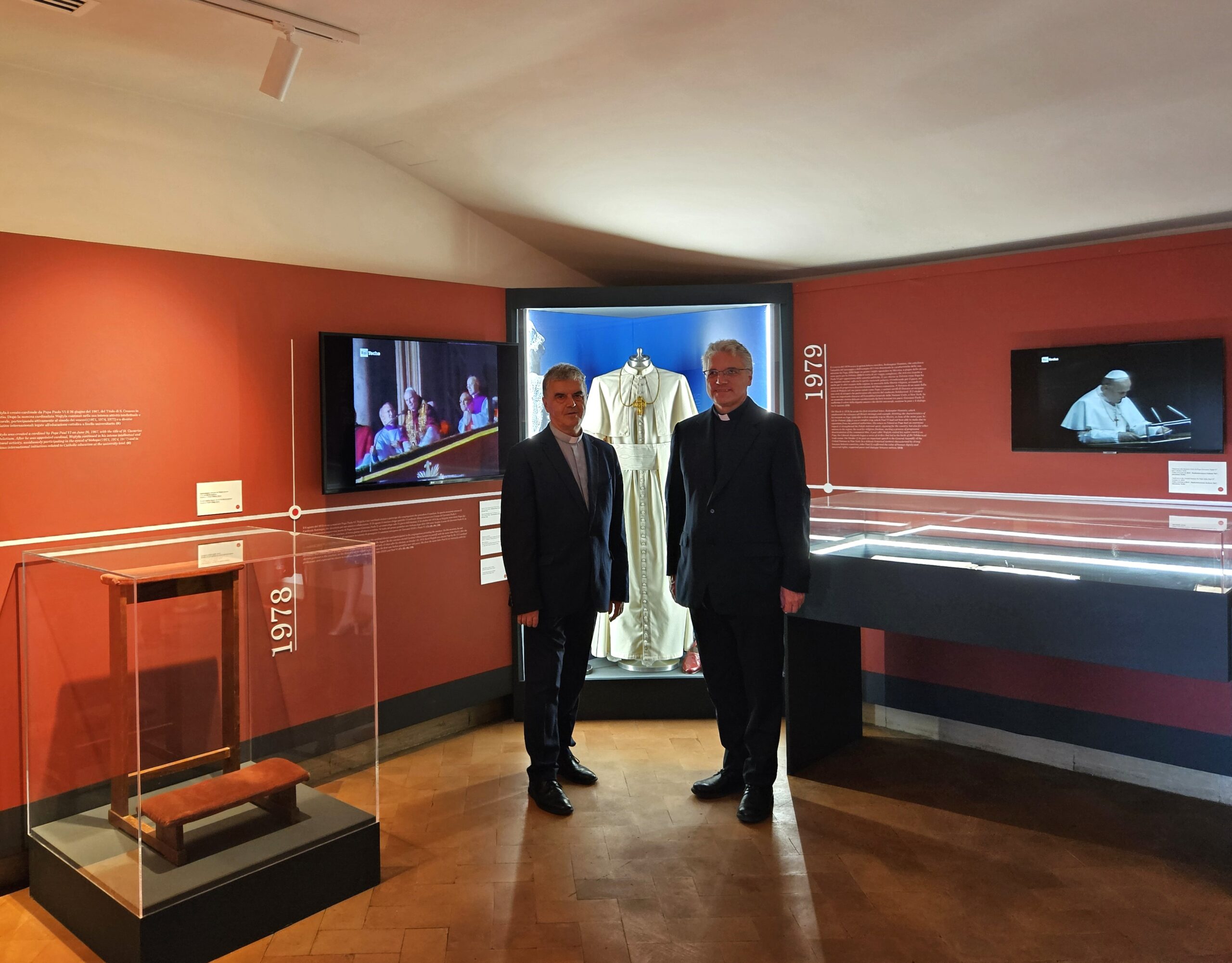
But the exhibition features more than just photographs. In the first room, relics associated with John Paul II are displayed, coming from the Polish College of Rome and the Center for Documentation and Study of the Pontificate of John Paul II in Rome. Among these objects are his white cassock and prayer kneeler.
It is worth noting that the Center’s library preserves several publications by Giansanti, and a book dedicated to the exhibition—with numerous scholarly essays—is soon to be published.
The exhibition will remain open until November 30.
On the occasion of the opening, we interviewed its curator, Professor Schiaffini.
– Professor, the exhibition you curated aims to be both historical and artistic: it tells the life of a Pope while presenting the work of an important Italian photographer. How did you approach this challenge?
– That’s right, I worked along those two tracks. It started from the fact that Giansanti followed John Paul II for nearly 27 years of his pontificate. We had a vast collection of photographs taken throughout those years. It’s important to remember that Giansanti took part in over 50 papal journeys. So I had highly representative material and tried to tell the story in chronological order. In this way, we commemorate the Pope’s great legacy. At the same time, I highlighted the photos that show the humanity of John Paul II.
It’s important to note the empathy that existed between the Pope and Giansanti. In the late 1980s, the photographer was allowed into the papal apartments and given permission to capture very intimate moments: during prayer, at breakfast (one famous photo shows him at the table with secretaries and Korean bishops). There’s also a photo of the Pope on a plane from Argentina, reading his breviary. These were unpublished, very intimate, but authentic images. Giansanti had a great ability to read situations and capture the moment. That’s what sets great photographers like him apart.

– So there’s the chronology of the pontificate, but also intimate moments, personal portraits outside historical narrative…
– Yes, there are photos that tell the story, but also “timeless” portraits showing moments of fatigue or reflection. There is one particularly striking photo of the Pope set against a red background with an expression of fatigue, almost suffering. It’s also worth noting that Giansanti was a master of color—some photos have extraordinary chromatic quality, especially the night scenes. The last photo in the exhibition is stunning: a landscape with St. Peter’s Basilica in the background—it looks almost like a painting.
– We all know John Paul II. But in preparing this exhibition, what did you learn about him that was new to you?
– I lived through those years and am familiar with the authority of a Pope who made history. What struck me newly, perhaps, is his personality—the portrait of the man, Karol Wojtyła.
Wlodzimierz Redzioch
Wlodzimierz Redzioch è nato a Czestochowa (Polonia), si è laureato in Ingegneria nel Politecnico. Dopo aver continuato gli studi nell’Università di Varsavia, presso l’Istituto degli Studi africani, nel 1980 ha lavorato presso il Centro per i pellegrini polacchi a Roma. Dal 1981 al 2012 ha lavorato presso L’Osservatore romano. Dal 1995 collabora con il settimanale cattolico polacco Niedziela come corrispondente dal Vaticano e dall’Italia. Per la sua attività di vaticanista il 23 settembre 2000 ha ricevuto in Polonia il premio cattolico per il giornalismo «Mater Verbi»; mentre il 14 luglio 2006 Sua Santità Benedetto XVI gli ha conferito il titolo di commendatore dell’Ordine di San Silvestro papa. Autore prolifico, ha scritto diversi volumi sul Vaticano e guide ai due principali santuari mariani: Lourdes e Fatima. Promotore in Polonia del pellegrinaggio a Santiago de Compostela. In occasione della canonizzazione di Giovanni Paolo II ha pubblicato il libro “Accanto a Giovanni Paolo II. Gli amici e i collaboratori raccontano” (Edizioni Ares, Milano 2014), con 22 interviste, compresa la testimonianza d’eccezione di Papa emerito Benedetto XVI. Nel 2024, per commemorare il 40mo anniversario dell’assassinio di don Jerzy Popiełuszko, ha pubblicato la sua biografia “Jerzy Popiełuszko. Martire del comunismo” (Edizioni Ares Milano 2024).
Related
Cardinal Pizzaballa and the Custos of the Holy Land prevented from entering the Holy Sepulchre to celebrate Palm Sunday Mass
Exaudi Staff
30 March, 2026
2 min
Reflection by Bishop Enrique Díaz: Blessed is he who comes in the name of the Lord
Enrique Díaz
29 March, 2026
5 min
Blessed is he who comes in the name of the Lord: Commentary by Fr. Jorge Miró
Jorge Miró
28 March, 2026
3 min
“God in the Opera” Fills the Mosque-Cathedral of Córdoba
Exaudi Staff
27 March, 2026
2 min